

Ep. #187: Getting Unstuck, Letting Go & Building a Life That Feels Better with David Fullmer
Sometimes the thing keeping us stuck is not a lack of motivation.
Sometimes it is what we are still carrying, avoiding, or trying to force our way through.
In this episode of The Energy Fix, Tansy sits down with David Fullmer for a thoughtful conversation about getting unstuck, letting go, emotional growth, and what it really takes to build a life that feels better from the inside out.
Together, they explore why motivation is often unreliable, why consistency has to be built through self-awareness and intentional action, and how our internal state influences the choices we make every day.
David introduces the B7 framework, a structured approach to personal growth that supports clearer decision-making, resilience, gratitude, forgiveness, and emotional intelligence. He shares how life experiences have shaped his perspective, communication, humility, and ability to move through challenge with more intention.
This conversation also looks at the deeper side of growth: letting go, asking for help, valuing time with loved ones, practicing forgiveness, and learning how to find meaning without bypassing the hard parts of life.
It is a grounded reminder that personal development is not about becoming perfect.
It is about becoming more aware, more honest, and more willing to take the next small step toward a life that feels better.
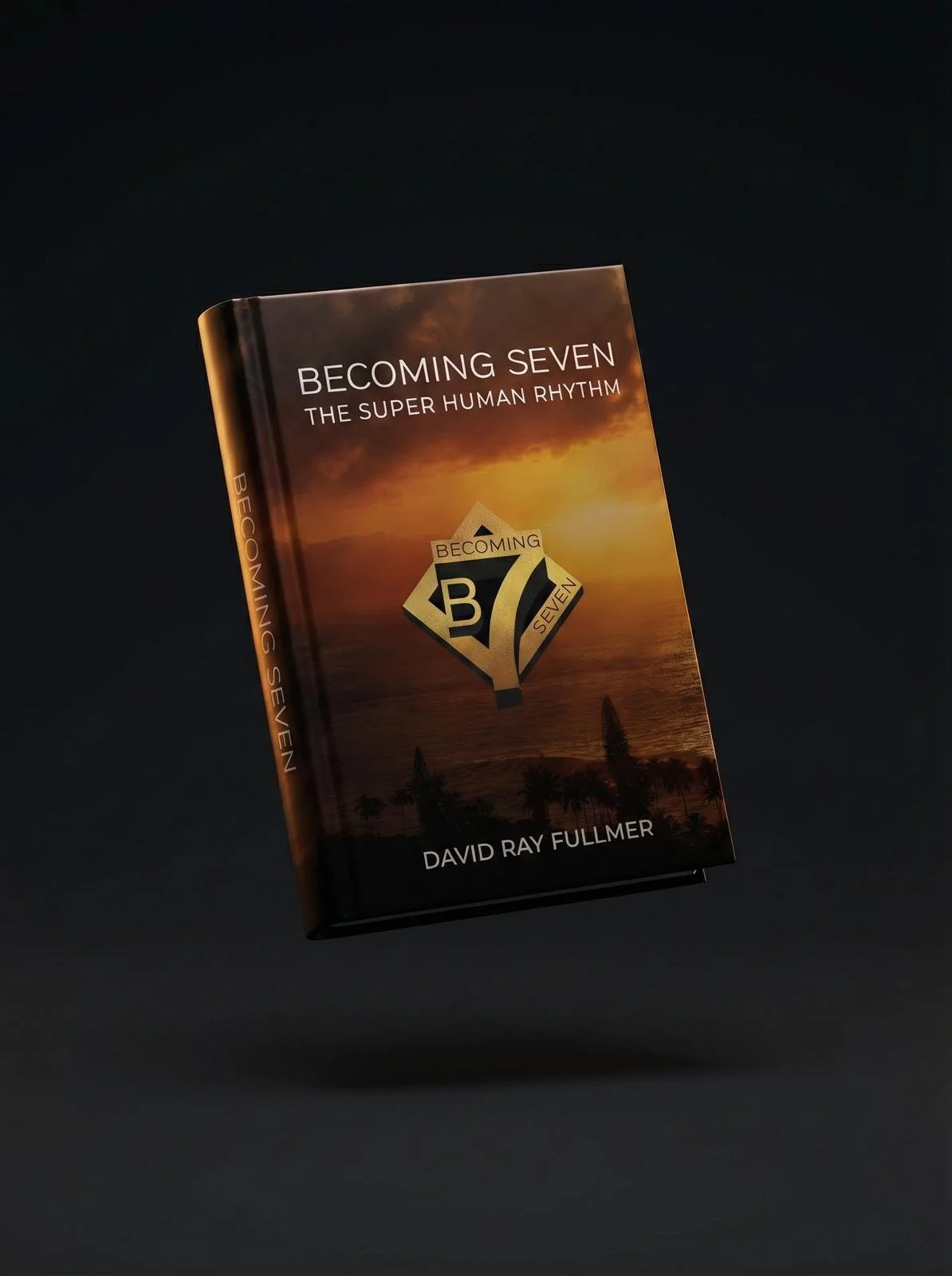
Grab his book!
Listen & Watch
🎙
Listen & Watch 🎙
What We Cover
In this episode, we talk about:
Why motivation is often fleeting and unreliable
What keeps us feeling stuck
How consistency is built through small, intentional choices
How internal “vibrations” influence choices and behavior
The role of self-evaluation in personal development
David’s B7 framework and how it supports intentional living
Gratitude as a way to shift perspective
Forgiveness as a path to personal freedom
How life experience shapes resilience and communication
Emotional intelligence and decision-making
Why we sometimes bypass our own issues in pursuit of motivation
The importance of letting go
Satisfaction and the value of time with loved ones
Humility as a life lesson
Perspective, perception, and finding meaning through challenge
Key Takeaways
Health transformation begins with addressing mental and emotional obstacles
Self-forgiveness is a crucial first step
Emotional weight can be just as significant as physical weight
Progress should be measured by behavior, not just the scale
Finding your “why” creates deeper motivation
Fear can spark change, but it is not enough to sustain it
Micro goals help reduce overwhelm and build momentum
Identity change is essential for lasting transformation
Motivation comes and goes, but commitment can be built
Whole-person wellness matters more than weight alone
You can begin again at any time
You can do this one step at a time
Favorite Quotes
A few moments you’ll want to remember:
“Let it go and move.”
“True satisfaction is not felt alone.”
“I’m tapping out and saying, I need help.”
"Our decision making patterns are based on the vibration inside of us."
"Writing things down and dreaming fulfills itself."
"Let go of the past and focus on the present to succeed."
Chapters
02:45 – Decision-Making and Your Inner Vibration
07:12 – Living with Intention and Flow
24:42 – Writing, Dreaming & Personal Growth
49:39 – Letting Go of the Past
55:04 – Living with Perspective
01:12:21 – Youth, Resilience & Life Lessons
01:16:21 – Purpose, Rhythm & Moving Forward
Why This Episode Matters
Because most of us do not stay stuck because we are lazy, broken, or incapable. Sometimes we stay stuck because we are tired. We are carrying old resentment, grief, guilt, pressure, or expectations we never stopped to question. And we keep trying to motivate ourselves forward when what we actually need is to let something go.
This episode matters because David brings the conversation back to self-evaluation, forgiveness, gratitude, and emotional growth.
The real work often looks like:
noticing where you keep bypassing your own patterns
choosing one small action instead of waiting for the perfect feeling
practicing forgiveness so you are not carrying everything forward
building emotional intelligence into the way you make decisions
learning how to let go without pretending something did not matter
finding satisfaction in shared moments, not only achievements
This episode is a reminder that getting unstuck is not about forcing yourself into a better life. It is about awareness, intention, perspective, and the willingness to return to what matters!
About David Fullmer
David Fullmer is a personal growth guide, speaker, and creator of the B7 framework, a structured approach to living with more clarity, intention, resilience, and emotional awareness.
Through his work, David helps people explore motivation, consistency, gratitude, forgiveness, and the deeper life lessons that shape who we become. His perspective blends personal experience, self-evaluation, emotional intelligence, and practical action to support meaningful growth.
Links Mentioned In The Show
Get the book! Becoming 7: The Superhuman Rhythm
TikTok: @davidfullmerofficial
Just Thrive & Just Thrive Probiotics: Save 15% off your order by clicking here!
Podcast review promo...Get 15% off a distance energy healing session or a piece of jewelry with a positive review of the show. Email photo of review (aftersubmitted on podcast platform) to info@tansyrodgers.com
Support Beyond The Episode
If this conversation hit home, and you’re craving deeper support (not just ideas, but real integration):
Join the newsletter →
If this episode resonated, take a moment to ask yourself:
What emotional weight am I still carrying?
Sometimes the most powerful first step in a health journey is not another plan. It is self-forgiveness.
If you enjoyed this conversation, follow or subscribe to The Energy Fix, leave a review, and share it with someone who may need a more compassionate way to think about health, weight, and transformation.
Transcript
-
David Fullmer (00:00.148)
Every bump in the road is for your benefit. Every turn that seems a dead end is a new bright beginning. And when we start to understand that and embrace the pain and say, I love you. Teach me more, give me more, and just let me bear it with faith and a greater perspective. My gosh, my friends, you become superhuman.
Tansy Rodgers (00:39.404)
Welcome back to the Energy Fix, a podcast dedicated to help you balance your energetic body by diving deep into the sweet world of all things health and spirituality. My name's Tansy, and I'm an intuitive Crystal Reiki energy healer, energetic nutrition and holistic health practitioner, and a crystal jewelry designer. It's time to talk all things energy. Let's dive in.
Welcome back to the Energy Fix Podcast. Thank you so much for being here today. Today, we're going to be talking about change, consistency, and why motivation is such a flaky little friend. I mean, if you feel like motivation is that concept that is constantly eluding you, you are not alone, my friend. And we're going to be talking all about that because
Most of us, most of us have had the experience of getting excited, making the plan, buying the notebooks, setting the goals. And then two weeks later, life happens and energy dips and stress kicks in, and suddenly the whole thing is just sitting there staring at us, asking us, well, are we going to continue on or not? My guest today is David Fulmer. He's the creator of
B7, the Superhuman Rhythm, a human development framework designed to help people build clarity, resilience, and consistency through structure and repeatable habits, not by waiting around for motivation to magically show up. We're going to talk about why rhythm matters, how structure can actually create freedom, what the B7 framework teaches us about self mastery.
and how to build a life that supports the person you're actually becoming because that's what it's all about. Who you're becoming. All right, David, let's dive in. Welcome to the show.
David Fullmer (02:45.974)
Thank you for having me. Aloha.
Tansy Rodgers (02:48.542)
Yes, calling in from beautiful Hawaii. Yeah. Yeah. Well, I want to start by just getting down and deep into this with a real life problem that I think comes up more than people like to actually admit. And that is why, David, why do you why do so many people struggle to stay consistent even when they
David Fullmer (02:53.314)
Yes, ma'am.
Tansy Rodgers (03:17.624)
Deeply want the change to happen.
David Fullmer (03:22.356)
it's it's due. I I've found in my own life and working with a lot of people and thousands of sales professionals and and entrepreneurs that our decision making our decision making patterns is based on the vibration inside of us. So when we're making a decision out of fear, we're making a decision out of stress or worry or doubt, that's when
It sets us back and we we start to stumble around and kind of so to speak grab for straws and this and that and we we don't stand on a foundation where we, okay, the storm is around me, but I know and I'm fixed on what I wanna do and I have to get this done. And so when the problems start popping up, it gets us out of rhythm. And when we're out of rhythm, everything gets chaotic and you just start basically
putting out any fire that's close to you instead of really understanding the landscape and living with a true perspective and breathing, understanding that things are not always as bad as we think they are, and making decisions that are sound and consistent with our goals and what we're trying to become.
Tansy Rodgers (04:38.656)
Yeah. And I a thousand percent agree with you on that. I guess my biggest question, you know, decisions are based off our vibration. My biggest question then, David, to that is well, why do you think that so many self-help books and so many self-help courses and conversations never actually talk about this? They actually talk more about the hustle culture, pushing, pushing, pushing more, more, more. Why? Why?
Why have we not really truly addressed this? Because you're totally on point with this.
David Fullmer (05:15.778)
Yeah, and Jim Rohn, one of my dead mentors, he used to say the harder you work on yourself, the less hard the the less you have to work on your job or your goals. And so really taking into account accountability of who we are personally and what our dreams, aspirations, talents, weaknesses are, self-evaluation and personal development is
is such a such an intimate relationship we have with ourselves. And when that is at the forefront, when every single decision that we make, we understand that there's an end road and that we are becoming that decision and we're very intentional with it, then we get really, really far. The problem we see is so many that I struggled in my journey of personal development is I went to so many courses. I've read so many books and there was always like
You know, this hoot har everyone get all pumped and just grind and blah blah and there are always six steps to this and five steps to that. But it's like, when exactly do I implement that step? How do I how do I go about that? Like people will talk about gratitude, and it's like you live in this chaotic world, and it's like, I do I need to have gratitude right now? And and so it w at what time do I exercise gratitude? And so
There's all these different principles, but we've never there's never been a time that we've actually been able to have a very what which is I love about B7 is it is so simple and ev the everyday person is already 50% there. They already know every day of the week. So yeah, no one's ever explained to me and said, Hey, look, here's exactly the way the framework, and this is your intention each day, and you slowly
step by step start to live these intentions, you get into a flow state. And when you're in a flow state, you see dramatic change and you see amazing, amazing results. Grinding is always a part of life. We're never going to not have to grind, but it's so much more than a grind. It's enjoying the journey along the way because that's that's what life is, is truly enjoying the process itself instead of just always thinking about the end result.
David Fullmer (07:41.292)
Because it's it's along the way that you can experience joy, right?
Tansy Rodgers (07:45.996)
Yeah, yeah. You know, for the longest time, and I'm not gonna say, I'm not gonna say the podcast name because I I still like love the podcast, but there was a podcast I would listen to every single day. And the podcast itself was just short motivational clips. And it was amazing. And it was from big, big names that you hear all over the place, right? That were on these short motivational clips. But it got to a point, David, I had to stop listening to it.
Because I found I was bypassing my own stuff. I wasn't stopping and actually like paying attention. I'm like, no, I just need to keep pushing harder. I just need to keep going. I that's bothering me. No, I'm just gonna push that in the background. But that was actually pushing me backwards because I wasn't addressing the things that truly needed to be addressed so that I could move forward. And I think a lot of people do that.
David Fullmer (08:43.571)
And yeah, and and in the day and age, this technological world it and these fantasy worlds that we see on social media and we we live what we call vicariously through others. So if we're constantly following all these people and we're so integrated into their lives, there's a form of of of momentary dopamine that releases inside us where we live vicariously through their life and we're not actually living ours.
So here's this individual living their dream life, and we have this dopamine because we're experiencing that life because technology has allowed us to be so intimately connected. And so although those motivational like as I do it, I do motivational clips. I mean, you know, we all need that little bump of dopamine, but what I found
as I did the same thing is it's just like it was just like this motivation, motivation every day. And I found out I was just a motivated idiot. I was going from motivational quote to motivational quote. It's like, I just need more motivation. And and once I realized, okay, motivation is good. There's one day set aside for that. That's the what motivates me. Like what does that word mean? And why do I move with emotion? Because motivation and emotion are really similar.
And so when I realize, okay, I'm gonna have one day a week that I literally get deep down and dive into who am I, what am I becoming, what's the end result of that, what what truly inspires me and motivates me? And I'm gonna go after that this week. But it's motivation is just like fueling up your gas tank. It's it's fuel. And if you just sit at the gas pump.
Over pumping your car with fuel and you don't get out on the road of life and chase your dreams, well then you're just you're just overfilled with motivation and you're going nowhere. So it's a balance and and it's something to figure out, but it's it's really, really cool. And that's that's where the B seven rhythm has really helped me out in my life and helped out so many other hundreds of people. So Yeah.
Tansy Rodgers (10:54.784)
If you're listening to this podcast episode, there is a really good chance that you're the person who holds a lot. And sometimes the issue isn't that you need more information. Sometimes you need your system to feel safe enough to actually integrate what you already know. That's what my Soul Stream and Enlightened Sessions are for. They're intuitive, energy-based sessions designed to help you recalibrate.
Emotionally, energetically, physically, and in your nervous system so you can move through life with more clarity and less internal noise. People book these when they're feeling stuck, overloaded, anxious, emotionally heavy, or like their energy isn't fully theirs anymore. And we work with that. We work with what's present, clear what's been lingering, and help you come back to center in a way that feels grounded and real.
If you want to book a session or you want to simply know more, you can head on over to tansyrogers.com or jump down into the show notes and click the link that will take you directly to those services. And if you're not sure which session is the right fit, send me a message. I'll help you choose. I'll help to guide you in the right direction. All right, let's jump back into this episode. Well, before we get into B7, David, I want your story.
What brought you to this work and what did you notice about people, habits, growth that made you realize this motivation wasn't enough?
David Fullmer (12:32.524)
Well, as a as a young man, I I went through a lot. I come from a family of thirteen children. And and I'm the fourth oldest, and I'm the black sheep. I'm the one that was the troublemaker. I I moved twenty-nine times by the time I was seventeen. I lived in six different states, mostly coastal towns. My dad was a surfer, which is how I ended up on the north shore of Oahu. All my kids grew up surfing and we've traveled the world chasing waves as a family.
Tansy Rodgers (12:37.983)
my gosh.
David Fullmer (13:02.808)
But because of the moving around, I was an angry young boy because every time I went to a new neighborhood or g or had a friend or a relationship, that relationship was taken from me. And so I was in a lot of pain. And I always knew every time I had a good friend that there would be a quick time that I'm I'm out of here. And so it was like, hey, I'm, you know, I'm having so much fun. This is awesome. And then okay, bye. And that repetitive cycle. And so
To me, I I thought it was my my biggest downfall while I was angry. And it wasn't till later in life I realized it was my greatest strength because it taught me communication. It taught me the importance that nothing is permanent except for who I become. And my legacy is on how I react to things. It taught me loss. There's so much we can learn from losing loved ones, friendships. there's an old saying, it take it it takes a Judas to know Jesus.
And once you embrace that and you you are you stop asking your heavenly father or whoever your God is, when you stop praying for not to have trials, but the strength to endure them and the ability to see the light, the silver lining, and say, you know, God, give me the strength to understand your will in this trying time in my life. And so
I rem I still remember the day I I I called my mom up and I just was just crying like a little baby. I said, Mom, thank you so much for moving me so many times. I would not have my communicating skills, my ability to read a room, my ability to to interact with other humans if it wasn't for all those moving events. And and it it became what I thought was my greatest hinderment or my greatest weakness became one of my greatest strengths.
And so a lot of us have weaknesses and and we don't face them like that. And so in even in my life, it's like it's a constant battle to try to face those weaknesses. But aside from moving a lot of times, I ended up landing in Utah and I got put in youth corrections custody for four and a half years. And I I went to four different youth programs. I went to a wilderness program and was facing going away for a long another long
David Fullmer (15:26.892)
long time and my PO they allowed me my my Polynesian family to adopt me for me to come to Hawaii. So I came to Hawaii when I was 17, right before I turned 18, and I was able to kind of just reflect. My dad was one of the first handful of employees for Stephen Covey. they wrote the book Seven Habits of Highly Affective People. So as a young man, I would cruise around my dad to these seminars and I'm listening to Jim Rohn and Earl Schoaf and Napoleon Hill and all
all this stuff and we think it doesn't rub off on our children, but I I'm telling you, everybody's watching and everybody's absorbing. You know, there's an old saying, you know, your action speaks so loud, I can't hear what you're saying. And words are fleeting, but our real intention is what we act out. And so we can always say, Well, I didn't I I had good intentions, but this, this, and this happened. Well, it's like, well, you know, it's we need to be really, really careful about
How dreamy we get in our mind. But moving on with that. So that was kind of like my youth. And then my parents unfortunately went through a real tragic time. I was visiting from Hawaii. It was in my early 20s. And I was the oldest that wasn't married. And my mom divorced my dad. And she had eight children at home. And I was the oldest male that wasn't married. And so I stayed with my mom for three years while she worked two jobs, sometimes three. And I watched my mom
and I was an angry little kid. I wanted to just I wanted to smash my dad and I was really mad at the way things turned out. And she taught me a level of forgiveness, hard work, and how to look at the most brightest part of life, no matter the struggle that you're in. And when I watched her and her example and her sacrifice, it changed me for for the rest of my life. I mean, she I remember I my mom wouldn't get help from the state.
You know, and sh she can get three hundred and fifty bucks a kid. And I I remember coming to her with I had this plan. I was like, Mom, I figured out you you can get three hundred and fifty bucks a kid and and you don't have to work anymore. And I remember taking me my arms, her arms and just giving me a big hug and she said, David, I know that, but there's a chance they could put your dad in jail. And it's better that we work really hard because right now your dad's going through some stuff emotionally and it's better that we work than these little children have to go visit a father in jail.
David Fullmer (17:53.228)
And so never held the kids from see my dad seeing his children, just complete love and and kindness. And there were boundaries set, but it was still was it was it the most, I would say the most kindest way to to watch a family. And now we all hang out. My dad's remarried, my mom's remarried, it's awesome. But but her example of service as well. I remember
one particular moment. I cause you know, I'm an angry kid. I just wanted to surf. So I wanted to come back to Hawaii and and hang out with chicks and surf. And here I am stuck in Provo, Utah. I was like, dude, this sucks so bad. But anyway, so I get off I get off work framing one Saturday morning. We had a half day framing and I was framing houses and I'm driving down Timp U Drive. I still remember to this day and I'm bumping my Doctor Dre and my little Toyota truck and
I remember I remember looking over and I see my mom in the dirt planting flowers at our church with all of her little children.
David Fullmer (19:05.55)
Sorry. And she hadn't had a day off in like four months. She's working a graveyard shift at Stofer's food plant. And I remember I almost ripped my steering wheel off because I was just like, God, why are you doing this to my mom? And that's when I realized like she just she just wanted to take her time to show her children to serving others brings happiness.
Instead of looking at her life like, I've been given the short stick. I have to raise all these kids and my husband's a deadbeat and blah, blah, blah. She never said any of those things. She said, Love your father. He's he made mistakes. We all make mistakes. So her perspective of how do you find joy in not looking at how terrible your life is, but looking at how beautiful it is. She looked at the flowers as a beautiful creation from God. She looked at setting an example to these little children.
Like, I didn't understand. Like, mom, you have all this why don't you go do something for yourself? And it was like, No, because that's not self doing something for myself is not where Joy's found. It's in serving my fellow community and my family. And that was heavy for me. And and so going through experiences like that and then I eventually got married. She got married and started my own business and did very, very well. And by the time I was
Around twenty-eight years old, I was racing motocross almost full time. I was an amateur desert racer, racing the Baja 1000 and had two houses in Hawaii and had houses in in Utah and was was building, was part of a development of building 400 homes out here in Hawaii and had all this crazy stuff going. I was a multimillionaire. I was like cloud nine. I was like, nothing can go wrong. And people were talking about a recession. I was like, pot Captain Positive. I'm like, I don't care about recession. I'll get through anything, right?
And then it just everything started drying up. I didn't understand it. And me and my wife lost everything. And and it was a real, real tough time for us. I I had to file bankruptcy and we lost everything. I mean, we had we had two pallets of photos and personal belongings. I I kept one little teeny fifty dirt bike so I could put my kids on it right around. But we moved to Hawaii and decided to move out there and
David Fullmer (21:30.998)
Another turning point in the importance of of principles that I teach teach in B seven, I was super depressed. I mean, I had six months, I couldn't get out of bed. It was like it was heavy. My poor wife was driving a dump dually Ford dump truck with no AC out here in Hawaii. And we were just living in the house until the bank took it. And I had this beautiful sweet wife and three sons and a little baby and I just felt like a failure, you know? I felt like
It was my responsibility to take care of my family and I had failed. And I was in a dark, dark place. And we had our our we had our dump truck shipped out. This is we're we were living over there and and we got we got our dump truck shipped out and it had our two pallets of personal deb belongings. This is when we had just moved to Hawaii and and
I I was excited to kind of go through our personal stuff and kind of get all organized. But I took my son Simeon, which is my oldest son, to kindergarten, his first day of school. So dropped him off at school, a cute little toe head, blonde hair, blue eye, a little stud. He's twenty two now, but and I come home and I'm unpacking and again, I mean, this is this has been six, eight months of just watching, just slowly selling everything and losing everything. And I I mean
We got to Hawaii, nothing changed. I still was just kind of stuck in my in this this depressional state. And I open up and I'm looking at our wedding photos, you know, and I'm just kinda reminiscing. And I get to the back of our little, you know, the the little book where everybody signs their name? And I come across one page that I completely spaced, and it was just a simple one sentence. And
And then it brought back the memory the night that we got married, the evening we got married before we left on our honeymoon, we went home to our apartment and my wife was in her wedding ground. I'm in my tuxedo and we're just sitting on the bed, like, you know, like breathing, like, my gosh. That was a gnarly run up to a wedding. And now we're sitting home. We're like, okay, what are we gonna do with our lives? And there was a contract in that book. And we had written down as a newly married couple, it said,
David Fullmer (23:55.054)
We were living in Provo at the time. It said, We will live next to the ocean by the first day of our old Now she's pregnant with my son. And it says, We will live by the ocean by the first day of our oldest son's or the his first day of school.
And I just broke, man. I was like, did I create this environment for me to learn? And like I made the decisions to go bankrupt. It's like it all came to me. It's like I over-leveraged. I bought too many properties. I didn't handle my business correctly. And it was it was complete accountability. And here I was staring at a contract I signed with my wife. We both signed it the night we got married.
I didn't know I was gonna have a successful business at the time. It was me and one other employee when when when I filled out this contract. So here I'm am almost seven years later, five years later. And I'm literally living what I signed up for. And so that's the power of writing things down and dreaming. And it wasn't under the best conditions, but it was a dream that we had and and it fulfilled itself. So moving on from that, I've n in my
professional career. I've owned mortgage companies, done development, all kinds of different things and primarily in the roofing and construction space and had a couple other mishaps and kinda had to start from beginning, nothing as heavy as that first time, but, you know, pulled my company out of a hole two other times where, you know, I was a couple million in debt and everyone's like, file bankruptcy. I'm like, nope, not gonna do it. Not till the bitter end. You know.
And so it's just going through that that ups and downs of life. And now I currently operate two roofing companies, one out of Dallas, Texas, which is a commercial division, and then here in Hawaii. And yeah, we have about a hundred and fifty employees and just cruising and it's awesome and traveling and then just started a nutrition company based around bison liver and t beef tallow and bison tallow skincare and
David Fullmer (26:11.714)
Just kind of all the health food product of health products and food products based around our pioneer ancestors and the way that we ate, kind of combating the whole food pyramid that I think has made a lot of people sick. So just through that, the last decade, I went down a rabbit hole in discovering B7. And I found out, I I it was a gift to me, finding out that we as humanity.
And as human beings, we all experience similar emotions on the same day of the week. And when I figured that out, my brain was like, what? This is crazy. I'm like, and so I just started each day. I was like, okay, I gotta find out whatever every day is. Like, what are we going through? And then Monday was like, more heart attacks happen from 8 a.m. to noon on Monday.
And it's not their ethnicity, it's not their cholesterol level, it's their why. They don't know why they're on the planet Earth. The heart's like, I have no passion. I don't like my job. Everything sucks. I'm just gonna kill over. I don't have a reason to live. Right? And so I was that's that hit me heavy on Monday. And then I was like, Why, you know, why are we always pushed to be also religious on Sunday? That's obviously the
The religious data, so when got God gave us to worship. And then I was like, well, what about Friday? And then I was like, more when do we get bad news? Friday. Excuse me. Friday. You know what happened? If when does everyone get fired? Friday. Why? You have a high stove high state of dopamine. What? It's the weekend, you got the party, you don't have to work.
So when does everyone get canned? Friday. When does bad news hit? Friday. When do they push bills in Congress? Friday. Friday, Friday, Friday. Okay? No one gets fired. Traditionally, no one always gets met let go on Monday. Because if you did, you'd have people going postal. You know, what am I gonna do the rest of the week, right? And so this isn't like it's more than just like this personal development like theory. This is literally.
David Fullmer (28:36.504)
Generational vibration that we're all going through. And how you memorize things is you attach a brain track, right? So you've got thousands of year old brain track. I always tell everybody when I walk into a room, all right, we're gonna start out this, we're all gonna learn how to become seven. We're gonna learn this vibration. And the best part is you're all 50% there. You already have half of this program memorized. I mean, when's the last time you walked in and were taught a process?
And the whole process, you already knew to the depths of your soul, 50% of the program. And that was the power behind it. It was like, wow, because that's how we memorize things, is we attach a super whatever attribute or thought or name, we attach it to something we already know. So this is thousands of years of DNA vibration. The average person has 4,098 grandmas and grandpas. I might come from a family of 13 kids. Great, but what about the only child that doesn't know his parents?
That's okay. You're my cousin. We're all 15th, 16th cousins. I guarantee you and I, if we were to chase our posterity back, you and I were, I'm talking to my cousin. You know what I mean? And and their vibration, their their DNA is inside of us and it's vi it vibrates and it passes on to the next generation. And so once you attach these seven superhuman attributes to each day of the week.
After a month, you you just you can't forget it. You just know it. When you start getting off base, you're like, whoa, this is this day. And then boom, it checks you and just keeps you in rhythm. It's the coolest thing. So that's kind of the how I came about it.
Tansy Rodgers (30:17.378)
The superhuman rhythm, is that the rhythm that you're talking about specifically with what you learned, these emotions falling onto certain days of the week? Is that the actual rhythm that you were talking about?
David Fullmer (30:29.258)
Yeah, yeah. That's what I my research is it wasn't like, I want to create a personal. I literally was living this and I started living each day myself. And then when I realized that as as a people of humanity, us all experiencing these similar emotions on the days of the week, I was like, wow. What if what if there we were meant to have seven? So I took seven superhuman attributes and I attach them to each day of the week.
They never go away. You're never gonna forget it. Ever. And so yeah, we have to be motivated. So Monday is known as the mundane Mondays. It's when these heart attacks are happening. So that's the only day, the that's the big day for motivation because I want to know that's my day. I review my why. What am I doing on the planet Earth? Where am I going? These are my goals. I'm pumped. That's when I listen to the motivational videos and podcasts. But it's not every day.
It's that's the day I get charged for the week because that's what sends your whole trajectory beginning in the week. Is and so that's motivation Monday, right? And then you move on to Tuesday, and that's tracking Tuesday. It's self-evaluation. God gave you two eyes, two ears, and one mouth. And so it's a day we track ourselves. It's the day of the avatar.
The average person has 60,000 thoughts a day. 80% of them are negative. Imagine that. 80%. And we don't we're on autopilot. We got all these little hundred gerbils in our brain on autopilot. And they're just like, you can't do that. I mean, the average little child has been told over 10,000 times, don't do that. Stop that. Don't touch that. No. No. So when we become adults, we're like, man, I bet you I could do this, this, and this. What do we hear? We hear those.
Those little subconscious no's you can't, no way. And so we have to track and be an avatar to ourselves and truly track our own progression and track ourselves. How am I communicating with my friends and loved ones? How am I showing up and really have self-evaluation and true.
David Fullmer (32:52.59)
Accountability, extreme accountability with myself. And so that's Tuesday. I make sure I'm just like listening for myself and watching the way that I listen to my friends and family. Have you ever had a a story stomper where you're in the group of friends and you tell them a story about maybe something that happened when you were on vacation and blah, blah, blah. And then your other friend tells another story, but it's like similar, but it's even more intense than that one.
Tansy Rodgers (33:19.896)
I call I call them the toppers. The people that try to top you. Yes. Yeah.
David Fullmer (33:25.134)
Yes. So we all do that. Well I started I I I read somewhere, I can't remember where it was, but it this psychology book. Did you know that actually creates distance between you and that friend?
Tansy Rodgers (33:39.958)
It doesn't surprise me, I'm sure.
David Fullmer (33:42.466)
Crazy. It's like, so now when my friend tells a story and I'm in a group and I'm like, dude, I've got a story way better than this. And then all of a sudden, I remember I'm not gonna top this. I'm gonna give them the floor. I'm gonna take it in, and one one time down the road or somewhere, I'll be able to unveil my story that's really, really cool too. But I make sure if I'm telling a story, I actually will tell a story.
And actually congratulate and say, Wow, that's intense. I had this happen, but it wasn't as intense as that. So you actually give them that cookie, you give them that love that their story is important and they're important. And it does not about the story, it's not it's about connection and how are we connecting to the ones that we love. So that's another one on tracking Tuesday. Always make sure that I'm not a story topper and that I'm being a cool friend, you know.
And it was funny, me and my wife were out in Maui eating dinner, and this guy told me that he was giving me this Mexico story. And I've been to Mexico 52 times. I had a family mine in the Chihuahua mountain range, and I mean, I had a hitman almost kill me. Like kidnap the whole it's a long story. But so this guy's telling us this story, and my wife looks over at me and she could see it on the tip of my, you know, and
She just tapped on my hand after he walked away and she said, Dave, thank you for not that. She's like, I could I've heard your Mexico stories, and there's so much more gnar in that guy. Thanks for giving him the floor and letting him enjoy his story. So it's just little things like that. And it's just, it creates connection with the human experience. And I want connection. our network is not just our family, it's all the humans we interact with. So little things, but yeah, that's tracking Tuesday. Then we move into the next day.
Which is Whisper Wednesday. If you were to interview airline pilots, cops, doctors, first responders, any lifeguards, anyone whose responsibility weight on their shoulders is for the health and well-being of human humans, they have a heightened sense of intuition. But what about all of us? There's only a few of them. Why is why why is my intuition not exercised? And how do I do that?
David Fullmer (36:03.896)
So whisper Wednesdays, it's the day of quietness, the day of meditation. Now, in my AMPM game, I meditate every day. But this truly is like I go, I teach, you get off your phone, unless you're listening to beautiful symphony music, and you walk in the woods, you walk on the beach, you get into an organic environment. What do you listen to? Nothing. You listen to your heartbeat. You listen to what I call the whisper. And we're so like.
digitally stimulated that we're just like, we can't, you know, like we stare at these screens for hours. And it's like, what about your beautiful inspiration? Your, I believe our ancestors walk among us. They they love us. I believe that the universe leaves op their pores of leaves open up to the songs of birds in the morning because that's when they get nutrients before the sun melts away the dewdrops. Well what about me? I wake up
early and I can get and just sit under a tree and be grounded on the earth and listen to what my heart and my God is telling me. And so that's what I teach on Whisper Wednesday and all day long. I mean and I listen to Whisper. There's times I ended up in the mainland. I call my office, I'm like, I'm going, I'm going to the airport, I'm going to Maui. They're like, we have meeting this morning. I was like, no, cancel. You guys already know Wednesdays and it's it's Dave's a feather in the wind. I'm going where
So I take off to Maui, I land, my friend in Maui from Maui calls me and says, Dave, hey, I really need you to come by and inspect this roof. We have a bid that we need to get in. He's like, I don't know if you can come by tomorrow or the next day, but I really need you. And he's, I'm like, dude, you're not gonna believe this. He's like, what? I was like, I just landed in Maui and I have no why no reason to come here. I just came. And so there's just little things like that where all of us have done something not knowing why we did it until we looked back and we're like,
Wow, that was just inspiration. And so I believe it's like a muscle. We can exercise it. We can be good at listening to our heart. We can be good at listening to our spirit and connect them all together so that we can overcome and live with perspective. So that's Wednesday.
Tansy Rodgers (38:15.99)
You know, before you go on, I've got to say we're on hump day, which is Wednesday, right? We're on hump day. And I gotta say, this stuff is tracking so far. As you're talking, I'm thinking the feel, because I'm very tuned into my feel. And I'm thinking the feel that I move into each day. And very much what you're saying, I'm like, that is definitely the vibe that I feel on on those days so far. This is.
Incredibly interest. It's incredibly interesting. So please go on Thursday. What do we got next?
David Fullmer (38:52.246)
Well, and and so you know, this aligns with like constellations and like I don't want to my wife's like into the constellations. It's crazy. Like this is I didn't create this. I I was it was a gift to me. This is this is us. This is all of humanity. It's the coolest thing. But anyway, moving on to Thursday. When is Thanksgiving? Thanksgiving is every Thursday. It's Thankful Thursday. It's a day of gratitude. An army of lions that is led by a sheep.
will always be defeated by an army of sheep led by a lion. And the answer to that dichotomy is attitude, because attitude and gratitude, with a true attitude of gratitude, anything can be, anything can be overcome and joy can be in any situation. I have a little nephew, he was born with no arms and no legs. And I can tell you right now, he's the happiest little kid on his little cart.
He's got his little nub and he's cruising around and he's on his skateboard and he uses his mouth to move things in his shoulder. And my brothers never raised him like he had any less than another kid had. And it's it's he's the happiest kid you'd ever meet. And I mean, we're gonna get him barreled surfing. We're gonna get him on a surfboard and get him inside the wave. I mean, this kid is just phenomenal and and it's his attitude and and so it's
It it's such a powerful antidote to the the the woes of life and when we get off kilter. And so Thankful Thursday, it's all about living with gratitude for everything. And, you know, I have a thing where you we have an a a gratitude journal. We write down all the things we're thankful for as a family in the morning. And I send out the text messages and the emails to all those that I feel inclined to. And then I look for people throughout the day to thank them. I I'm intentional.
To find someone to think. And I remember I'm at Home Depot. This is like four or five months ago. I'm at Home Depot and I I dream of being old with my wife. And it that dream of being old with my wife helps w throughout our marriage of being in arguments and stuff because I'm always constantly intentional wanting to be old and have a successful family.
David Fullmer (41:11.176)
And I'm I'm going down this aisle, the cabinet aisle, and these this the cutest couple you ever seen, they're in their 90s for sure. And this lady is just laying into this guy, and he's fighting back. It like it was about as gnarly as two 90-year-old people could scrap in the the, you know, the the the aisle at Home Depot. And they're arguing over a set of cabinets. And and I, when I turned the corner, my first thought was, wow, they made it.
They made it. And I just wanted to know how long they'd been married. So I I walked up, they're arguing. I said, excuse me, how long have you guys been married? And, you know, it was like 50, almost 60 years, right? Or something, whatever it was, and and forever. And I just was like, you know, I just want to thank you. You guys, and I mean they even had matching clothes. They were the cutest freaking couple ever. So anyway, and I just thanked them. I said, I just want to thank you for holding on.
I wanna thank you guys for living all these years together. You're a great example to all of us younger married couples that go through it. Like divorce is so prevalent these days. And to see you guys here arguing in the Home Depot aisle is like the coolest thing ever. You guys are amazing. And I just see this lady just overcome with emotion, and she's crying. And she pulled her husband to her and they started talking about their children. So it went from this thing.
That they were arguing about to wow, someone's watching us. And it's crazy, like you can always find someone that looks at you and says, How did you do it? in the very act that you yourself are saying, I'm worthless, I'm falling apart. There's always someone down the road that's watching you and saying, What an amazing human. And it's because of our perspective. And so.
Yeah, Thankful Thursday's powerful. It's powerful to instill our emotions with super, super gratitude.
Tansy Rodgers (43:15.75)
A quick pause for a gut check because gut health is not just about digestion. When your gut is supported, it can impact so many big picture things like immunity and brain support, mood and energy, and even how steady your nervous system feels day to day. And when your gut is struggling, it can show up as more than bloating or bathroom drama.
It can look like feeling run down and more reactive or foggy or anxious or like you're just not bouncing back the way that you used to. And that's why I'm a big believer in supporting the microbiome as part of a real life wellness foundation, especially if you're under stress, if you're in a busy season of your life, or your system is already sensitive. One of my consistent staples is just thrive probiotics.
I love it because it's simple, it's consistent, and it helps me feel like I'm supporting my body's baseline without turning my routine upside down. Because here's the reality. When you're supporting your gut, you're often supporting everything downstream, like your immune functioning, your nervous system resilience, and how well your body and your brain can actually do their jobs.
If you want to try it out, you can use code TANSY15 for 15% off your entire order. Jump down to the show notes, click the link, and make sure to use Tansy15 for that 15% off. Alright, let's get back into this episode.
David Fullmer (44:50.598)
And feelings of gratitude because it just can it just absorbs all the doubt and fear and helps us live with greater perspective. So that's Thursday. So you're you're high on gratitude and you know you're coming into Friday. I mean, what's Friday? Friday's the most amazing day ever. I mean, when I was a kid, I would get it, Mom, I want a dollar because they're gonna have a popsicle at the end of school and you know, and we're all going through this. This isn't like this is everybody, you know? And
Tansy Rodgers (44:59.467)
Wow. Wow.
David Fullmer (45:19.456)
It's the weekend. You got you have a party that night. You don't have to wake up early. That that we all know that, right? And so all the bad news comes on Friday. Like everyone gets fired on Friday. We talked about this. We're all going through this together, right? And that is that's why one of the most powerful superhuman emotions that we can have is forgiveness. It's forgiveness Friday. Not not to
Get people off, but t for us to live. Eagles only fly with eagles. You wanna be a little pigeon and ta and just sit and gossip? Just sit you know, you sit around and d all of us get it get wrapped into it. Like we feel there's like this little like like feeling of I'm better when we're talking bad about other people, because that's not me. And or you
Tansy Rodgers (46:11.928)
Stop doing that. I'm dying over here. You know what I'm talking about. I do.
David Fullmer (46:16.014)
The pigeons, dude. They're everywhere and all of us get wrapped into it. And it's not until we like spread our wings and have true perspective and say, Wow, the weakness that's in that person is a weakness I'm capable of. I better watch what I talk about. I'm just gonna forgive and soar. Next, next, let it go, move on. when I put this in my company, I had a I had a young man that
he he came to me on the fourth week, right? We had the I have this 28-day like kickstart guide. It's like it's four, seven day B7 rhythm, right? And he came to me on the last Friday and he pulls me aside. He says, Dave, can I talk to you for a minute? I like, yeah. And he just gives me this big hug. And I was like, are you okay, man? And he just breaks down. You know, here's this 26 year old salesman.
Tough guy out there doing sales, knocking doors like a savage, selling roofs. And and he said, it took me to the fourth Friday, Dave, to forgive my uncle. I've been holding on to this, something that my uncle did when I was younger, and it's been eating me alive in my relationships and everything. And it wasn't until today I I felt free. I forgave my uncle today.
And I just wanna thank you and and it it was just so powerful in his career after that. I mean, the guy had such a greater success after this event and this realization that being mad at others does nothing but poison us. And and so like Nelson Mandela, guy's got the military, the power of the purse, he can do whatever he wants. He's president, he's been locked away for over twenty years. What does he do? Does he go kill a bunch of people and and
And take out the people that locked him up? No. He he he said, wishing harm on another human being for what they've done to me is like drinking poison and hoping it kills my emin enemy. And so my friends, yeah, I just got back from the mainland. I was out in on a bison ranch in South Dakota, and and I flew back last night and it was an hour difference. Same plane, same distance, same pilot, same amount of people.
David Fullmer (48:43.234)
But it was an hour difference because of a headwind and a tailwind. When we fly through our lives and we are chasing our goals and in the art of becoming, when we truly let go, right, we succeed. It is our true joy. I often say you got your windshield, right? And there's this little teeny square at the top. It's called a rear view mirror. Okay.
I implore anyone and be really safe, go to a parking lot and just stare in the rearview mirror for five seconds while your car goes about two miles an hour. You'll panic. And so too many of us, we just sit and stare in the rearview mirror. We're just hitting everything in sight. We're trying to get to our goals. We're trying to be successful. We're trying to be better moms and dads and uncles and brothers and all these things. And we can't figure out why our rhythm is off. Well, you're you gotta let go.
Truly let go. And that doesn't mean you don't have boundaries, but it does it means that you love people to the depths of as deep as you can and you let it go. Sometimes it's a letter, sometimes it's a a text you send to someone else, not even that particular person, but you gotta get it out, let it go and move. So that's forgiveness Friday.
Tansy Rodgers (49:58.828)
Wow. You know, as you're talking here, I mean I I know we still have two more days to go here. As you're talking, I can't help thinking about how when you're doing this week after week after week, and every day is an intentional, intentional, intentional day, right? You're really manifesting when you're leaning into these emotions. And then that kind of carries over these emotions that you literally become this person. You
Become that superhuman person.
David Fullmer (50:32.044)
Yeah. And it's like it's like Michelangelo. It's, you know, David was always in the statue. Yeah. I just chiseled I just chiseled away the imperfections and saw him in there. Yeah. And it's the same as us. When we start out in life, we're this jagged, rough, pointy stone. And through the challenges of bumping down the river and bouncing off of mistake after mistake after mistake, eventually
We're in this beautiful beach and we're a beautiful round smooth stone. And so it takes repetition, it takes rhythm, it takes continually living with intention. And that's the beauty of B7, is it's like you don't have to memorize this big long, all these steps and everything. It's just a simple intention and you can live it to your culture and your family environment and in your own way because forgiveness is universal. Your experiences are yours.
But knowing every Friday when I have a heightened state of dopamine, I I can't tell you how many dates me and my wife are 'cause Friday's our date night, right? So we'll be on our way and it's like, where are we gonna eat? And they'll be this little Well, I don't wanna eat there, you know. And if it's ever gotten to where it's like a little argument, we chuckle and look at each other and we're like, today's forgiveness Friday, you can't be mad at me. And it's just like it's so fun and and and it's really, really amazing. And so
Yeah, it's it's been it's been a huge, huge blessing in our in all of my relationships. So
Tansy Rodgers (52:04.622)
Yeah, that's amazing. All right. Saturday and Sunday. We got two more to go. Let's let's learn. Let's learn about those the weekend days.
David Fullmer (52:15.342)
Okay, well, Saturday, no one on their deathbed wishes that they spent more time at the office. Okay. How many multi-billionaire philanthropists that spent all their time working, working, working, working, and they get to their deathbed and they're like, I need to get, you know, I'm gonna give philanthropy. They start giving billions of dollars away to all these things. Why? Why did why are they doing that? Because
There they they there's a sense in the human condition of understanding that time's running out. And sometimes we don't think about that and understand how valuable each breath and each second of our lives is. Right? And so and and so it's called Satisfaction Saturday. And what it is is making sure you're having fun with the ones that you love. Take all your money. There's there's there there's there's two
There's two types of people. There's people with F you money and there's people with love you money. I would like to say that I was a person that lived with love you money, that I took money and I took it to have moments, trips with my family, you know, golf outings with my son, not to keep score, but to just talk about life. Like really taking the money and treasures of this earth is why we seek after it, is so that we can have moments, because in the end,
We will have all these beautiful memories. And that's truly who we are, is we're, we're, we're going to be a memory at some point. And what will that memory be in the minds of our loved ones, our neighbors, our friends, and humanity? And so the only reason we make money is so we can have this a place to live. And what happens in a place you live, you make memories. And you have these cute little moments or dinner as a family or a
party with friends or whatever it might be. And so I, I, Satisfaction Saturday is true satisfaction is not felt alone. You, if you're doing something with no one watching to satisfy yourself, it is, it's, it's a fleeting enemy to the soul. I am who I am when no one is watching, when I'm all alone, am I prepping to be with my loved ones, and my
David Fullmer (54:36.238)
Prepping to be a better human. Am I making sure that I'm taking the treasures that God blessed me with to experience moments with my sons? You know, we go on surf trips. We've been able to go around the world chasing waves. And I wouldn't be able to do that if I didn't work hard. Yeah, that's great. But I could have put all that money in the SP 400. I have millions of dollars right now. And then what? Woo, great. I never saw Hearst pulling a big old freaking casket full of gold.
behind it, you know what I mean, a trailer with a boat and all the all the homes that they own, they they're all gone. and so that's that's the point is that we're living with perspective and we understand that no amount of money or success will ever, ever amount to failure in the home. And whatever your home is, whether it's your apartment and you're not married, but it's your loved ones and your friends,
It it there's no there there's no way of getting out of this world happy unless you bring it in you're bringing happiness to others.
So that's Saturday. Satisfaction. True satisfaction. Living it up. Then we then we move on to Sunday. This is a big one. So I've been in jiu-jitsu for 15 years. I'm just about to get my black belt in Brazilian Jiu-Jitsu. And I can tell you it is one of the hardest martial arts. And I have been absolutely chasing this with injuries and everything. And it's it's really, really hard. But I love it. I love being able to, you know, get my wiggles out and
Tansy Rodgers (55:44.013)
Yeah.
David Fullmer (56:07.04)
Wrestle around every week. And if you were to ask me, Dave, what have you learned? You're a brown belt in jujitsu. Have you learned to just be able to beat somebody up? And I would say, no. I've learned a very valuable lesson. And the greatest thing I've learned is humility. I've learned to do this. Because when my collar and I'm choking and I can't breathe, what do I do to get air? And he lets go. We've all seen the UFC. It's called tapping out.
Right. So Sunday is called supplication Sunday. It's to submit to a higher power. It's to be on my knees and say, God, I can't do this without you. I'm gonna tap out on this one. I'm gonna tap out and say, There is a greater spirit above me. There's someone who loves me. I need direction. I need worship. I need belief in a higher power.
Some of the greatest feats in human history were not driven by money. They weren't driven by conquests, but it was people that were driven with a feeling in their heart that God was God was behind them and they were doing his work. And so Supplication Sunday is making sure that I am humble enough to say, all the riches of this earth are yours. All the gifts that you've given me are yours.
These trials you have given me are yours that you gave me to learn something, God. I'm tapping out. I need to hear what that is. Please tell me. And I don't want to go throughout my life without you, without your blessing, without your guidance. I want to meet you one day and I want you to say, son, very well. You did good. Yeah.
And so that's supplication Sunday, making sure we're tapping out to a greater, higher power, more bigger than us. And then the next day's Monday, and I'm telling you, you just live this vibration and tension. Dude, 30 days in, you're just like getting away from the pigeons. You're like, see later pigeons, you're soreing up. You just got your you got your freaking eagle wings, you're flying everywhere. And you're like, dude, I met other eagles up there like at
David Fullmer (58:28.152)
10,000 feet and we could see everything true perspective. So perspective versus perception is I have a funny story. I I cut my arm from right here all the way in half to here. Like my bicep was I had PTSD. I had I had a construction accident. Went into my bone. My bracel artery was in the path of the saw for some reason.
Heaven spared me because I would been dead in three seconds. And this was two weeks before my wedding. Which is why I didn't take my tuxedo off when I got home. I was in pain. I was like, can I just sit here for a minute? But at any rate, so I cut my arm and I'm at my brother-in-law's house. My wife, my my wife to be, my wife, my sweet wife Rebecca comes out and there's blood all over the house, and I'm trying to cover my arm. I'm like, don't come to me, don't come to me. I'm come down to the hospital in a little bit.
Tansy Rodgers (59:03.255)
My gosh.
David Fullmer (59:27.448)
So I was able to get myself in the truck. It was weird because my arm didn't work. I had to place it everywhere, right? It was a trailer. Anyway, so we come and we're we're two intersections away from the hospital, and my brother-in-law is driving my truck and he's honking, and this big local brata, big Samoan guy. We're in Utah. Big Samoan guy stops his car because our light was red and his was green, and he's
You know, he's letting the birdie fly and it was flying and you know, your mother, you know, and he he's pissed and he's like, I'm gonna re So he comes and he's on my side. So he gets out of the car, there's big local boy, and he's coming over like, I'm gonna beat you up, you know, boy. And I picked up my arm and I set it on the truck door, and I took my arm off my wound, and I saw a man go from I wanna smash you to stopping traffic.
Going, you got it, boy. Go, go. That's that's perception versus perspective one. Okay. This all happened in this experience. Get to the ER, right? I get to the ER. Room three. I mean, it was the fastest ER visit I'd ever had. They didn't ask me for my ID or it was great. I mean
Other than fact that I'm, you know, I was in I was in downward shape. But it was like the doors parted, you know, it was like the red sea, just and you know, there's all these people in line. And it was cool because I remember their faces. everyone, you know, there was probably about 22 people in the waiting room at the ER. And I could s when I looked over at them, I could see in their faces, they're like, I'm glad that's not me. I'll go ahead and just sit out this wait, right? Because I mean, I'm covered in blood.
So they're like, all right, Mr. Fulmer, we're gonna we gotta get the specialist in here. This you we're we're gonna go get you some x-rays. The guy that can put you back together so you can use your arm again, he's about an hour and a half away. And he's the only guy that's on call. This is our guy in the valley. He's the number one doctor, Dr. Bishop. He's the only one that's gonna be able to put you back together so that you can use your arm again. I'm like, okay, great. They're like, We've texted him, he called us back, he's up by Camus, up by Park City, he's on his way. He's like, Great.
David Fullmer (01:01:43.944)
X-ray doctor comes, they get me up to the third floor. They've got all these doctors are all setting their rubbery gloves and everybody's pumping the doctor's like, Dave, it's gonna be okay. I'm like, cool. And then I see the doctor looking at my x-rays and the anesthesiologist is going to put me under. And and right, he's like, You're gonna take a nap and wake up, everything's gonna be fine. And I was like, Okay. And then he stops and he looks over, and then a phone rings, and then the doctor's on the phone, and then he's looking at the x-rays while he's on the phone.
And all of a sudden the nurses wheel me out of the room into another room. And I'm like, no, they're gonna take my arm. I I just I felt it. I thought for sure. I was convinced in my mind they're gonna take my arm. He saw something and it's like it's not working. And I didn't know I was young. I was like 24 years old. And at any rate, about a minute and a half, two minutes go by, and I'm in complete panic.
panic at the disco, freaking out. my gosh. I'm a stonemason. I'm like, how can I be the one armed stonemason? I was and I was thinking, well, maybe I could hold it with the my little nub and chisel the stone at the same time. I'm like literally planning this out in my mind. And the doctor comes in and he said, David, I'm gonna postpone your surgery. And I said, Doc, am I okay? Am I gonna be all right? Am I gonna be he said, relax. You're gonna be able to keep your arm. He said, life like
is landing on the top of the hospital right now. There's a 12 year old little girl that was in a serious accident on I-15 and she has internal bleeding and she's in real bad shape. I'm gonna work on her first, if that's okay. And I said, yeah, that's fine. Doc, save her life. I just want to know I can use my arm. He said, Yeah, we'll get you some more pain medication, but I gotta go. This girl's in serious condition. And he walked out of the room.
Does my and then he but he did caveat, he said, I want you to know you're gonna use your arm again. Don't panic. I got you. This is gonna be all good. Perfect. And when the nurse wheeled me away, I I asked the nurse, and she got choked up, and she said, That is the very doctor they would have needed to save that girl's life. And so, too many times in our lives, we see tragedy, but we don't see
David Fullmer (01:04:09.388)
The gift on the other side. We don't I don't get to see these tragic moments in my life. I don't get to see the blessing on the other side that it gives life, it gives beauty. Right? How many plane crashes and black boxes and understanding flying and travel, how many millions and millions of lives have been spared because of one tragic accident, right?
And so too many times we just look at the tragedy, we look at us, it's so myoptic and me, me, me that we don't live with true perspective. But here was a tragic moment in my life and a great mistake I made. But that very mistake gave a a heartbeat and a life to another human being. So now when I'm driving on the freeway and someone's driving like an idiot, my road rage has been completely subdued.
And me and my wife always joke, someone driving like an idiot, we're like, I hope they get in the to the hospital in time to see their baby born. And she's like, and then we'll we role play on what we think it could be. Well, what if he's trying to get a job interview? I don't know. He was driving pretty fast. What if a loved one is about to pass and he's in a hurry? And you when you put instill that emotion into your mind of true perspective, instead of honking and freaking out on someone, you're like cheering for them?
It's a crazy emotional magical moment where you just you it just leaves you the anger, the t frustration of people that drive like idiots because they do. But I can create my own emotion by thinking, I hope they get there in time to see their new little baby born. So that's perspective, my little perspective versus perception. So I always breathe, take really big breaths when I it looks like something is super negative and down and every
And I just breathe and say, you know what? There's something on the other side of this. And I dream. Like we were in South Dakota and there was bad weather and three people had to get six people had to get off the plane. The only three got off because my partner's o six nine and over three hundred pounds. So they counted three people for him. We get off the plane and we both looked at each other and we're like, it's the butterfly effect. And we just don't know. And it what if it was
David Fullmer (01:06:30.478)
A car drive, what if our lives were spared? Nothing happened on the plane when it landed. It did fine. And it wasn't that. But we can't see what if it was a car ride from the airport? I'm telling you that every bump in the road is for your benefit. Every turn that seems a dead end is a new bright beginning. And when we start to understand that and embrace the pain and say, I love you.
Teach me more, give me more, and just let me bear it with faith and a greater perspective. My gosh, my friends, you become superhuman.
Tansy Rodgers (01:07:12.51)
So many times. Well, for first off, those are incredible and beautiful stories. My gosh. So many times though, I know that that has been true for me. Like, I don't always know why I'm having a bump in the road. I don't always know why I'm being delayed. I don't always know, but sometimes I do get a I do get insight, and I'm like, I look back, thank God. Thank God that happened. Because
XYZ happen, right? And you know, so like so so I think that so many of us, so many of us don't slow down enough to actually be able to put that true perspective into practice. And it can be really hard to stay in that heightened emotion, right? Yeah, so hard.
David Fullmer (01:08:04.46)
Yeah, because what I've learned, the only thing I know is I don't know. And you'd never know what you don't know. So, like you said, all these bumps in the road. And remember, the greatest, the only reality is the one that we create. So when we look at this bump in the road as growth, we're like, All right, I'm gonna learn something from this. Right? I had ex partners one time or last year.
Shut off my twenty year Google account. We're talking about my algorithm. Okay. Completely delete it maliciously. Okay.
Tansy Rodgers (01:08:42.126)
No jokes. Heartbreaking.
David Fullmer (01:08:45.622)
And I was so pissed. I'm like, dude, it took me almost 20 years to get this algorithm. I'm like, dude, you Google my and I was like, and I couldn't just pay a marketing company. It's like, I've gotta be the, I've gotta be the wizard at Google, right? So I went down this rabbit hole because of it. And now I understand SEO and the Google framework.
Better than I ever did. And it's like I found myself the other day driving and I was like, man, I'm sure glad those guys deleted my Google account. I wouldn't be the ninja that I am at the internet. I wouldn't it wouldn't have happened. You know? So you're right. It's just, it's, it's just, it's life is so interesting and it's so for you. It's so
The elements of the universe, I call it the bank of the universe. And we either are making withdrawal, every decision is either a deposit or a withdrawal. When I live with perspective, when someone drives by me and cuts me out on the freeway, and I say to my heart, I hope they get to the hospital in time, cha-ching, it's a deposit because I'm keeping my rhythm. I'm I'm looking at the perspective of a brighter future for all. Because when I have love in my heart.
It's going to resonate with others. The average person affects 40,000 people in their lifetime. That's forty thousand for good or for bad. So I starve the butt the dark wolf and I want to feed the good wolf, the happy wolf, the perspective wolf, not the perception. You know, I it frustrated me people, this is my own reality or my whatever. It's like, okay.
Tansy Rodgers (01:10:32.43)
Realist. I'm a realist. I hate that phrase. I'm a realist.
David Fullmer (01:10:37.934)
Connected. Yeah. The real thing that's happening is you're affecting a lot of people generationally. Be a good human being. Yeah. And so anyway, so it's it's really cool. It's been so fun to watch. I everywhere I go, people I'm constantly getting texts on Thursday. Thank you, you know, thankful and gratitude and and and forgiveness. I've had so many people experience this and really live it. And it you know it.
It's not a one week thing, it's a life thing and we're all going through it. And I I just I love it. And and right now I work with the youth corrections because that's where it started. And it is the most beautiful thing to walk in and tell these kids, You guys have a greater advantage than any other kids your age. And they're like, What do you mean? I'm I'm locked up. I'm the bad kid. What are you talking to? I said, No, no.
You have a greater advantage because you've been places that they haven't. You've had your freedom taken. You have to sleep on a cold metal bed with a little teeny mattress. It's the size of a, you know, a cookie. Not everybody gets to experience that. And I tell him the great one of the greatest leaders of all time, Marcus Aurelius, used to sleep on a stone floor so he knew what the lowliest subjects in his kingdom felt. You guys are feeling something that the average kid hasn't, and that's a
building block to great things. You can use this experience and you're gonna you're gonna foundationally be able to go and do great things. And it's just changing people's perspective is is what I I love. And I love working with the kids and it's just amazing. I get to go see every Wednesday. It's really, really fun.
Tansy Rodgers (01:12:21.312)
Yeah. A quick break because I want to share something I make that's meant to support you in real life, not just look cute on your wrist.
I create intentional crystal jewelry through BEU crystals. These pieces aren't random. I design them using crystal energy, and I also weave in numerology and geometry, and I infuse the pieces with Reiki Healing Energy as part of my process to really help support you on an energetic, deep level. They're like little wearable anchors, the kind you can touch when you're overwhelmed, when you're heading into a hard conversation, or when you need a reminder.
To come back to yourself more solid, more grounded, more authentic. I'm not here to tell you that jewelry fixes everything, but I am here to tell you that having a steady physical cue can change your day, especially if you're sensitive, easily overstimulated, or your brain likes to sprint way ahead of you. If you want to browse what's available or see what is newly released, head on over to BEUCrystals.com.
I'll link it down in the show notes so that you can easily shop and check out what is available. And as always, if you have any questions or you want to do any custom work, you can easily reach out to me right there. Okay, let's jump back into this episode. I used to for a few years, I used to work in lockdown for teen boys, and I remember hearing and seeing some of those kids.
As they were going through the program and just watching the ones that took the lessons and the conversations and just started, if we talked about perspective, just starting to shift that perspective a little bit. It was the most satisfying, gratifying thing that you could ever experience to see somebody's life change through the midst of hardship, you know? I mean, you you you lived it, you know.
David Fullmer (01:14:27.372)
Hundred percent. And and and to to watch a young man or a young woman that little light you s like you were saying in their eye, like maybe I am not this person. Maybe it's just the decisions I made and I I can be better. I can change. And that is just so powerful. Yeah. And so yeah, it's been a it's been a great, great journey. I love personal development. I mean
I love being able to get up and tell stories and talk to people and have them have a better perspective. And it's it's really one of my callings in life. I I truly feel that God put me on this earth to send this message to as many people as far and wide as I can reach. And I've been blessed financially in a way that I could do that. And I'm I'm on a mission now. So I'm gonna be spreading the word, dude. Get in rhythm. You know,
A a funny thing is is if you freeze if you freeze if you must water in two silos at the same time, and in this one you play chaotic, really dark music, but in this you play organized symphony music, the water freezes, right? And it creates crystals at the bottom of these silos. And they've shown that the chaotic, real dark music, the crystals are all unformed and jagged and weird. But the ones that are beautiful and there's
wonderful rhythm and the vibration is positive and they're perfect, beautiful little sno these snowflake crystals that are all organized and glorious and beautiful. And it's so with our lives. As we live each one of these days with true intention, this beautiful, beautiful, organized, wonderful symphony of life starts to unfold. And it's a it's just amazing. And I love watching it. And thank you so much for
Listening to my long winded stories. Yeah.
Tansy Rodgers (01:16:24.026)
I love it. I love it. Before we go into rapid fire questions, I want to ask you just a quick question though about consistency. Because as you were talking, as you were talking about all this, one thing that kept popping my into my mind, like it doesn't matter if you're trying to be in the superhuman rhythm by going through the B7 program, right? Or if you're trying to change perspective, or if you're
A pigeon trying to move into eagle land. Right, right. It doesn't matter what you're doing. I want to know about your thought process on consistency because that can become such a shame word for so many people. How do you help someone build consistency without turning it into a place where they're fa they feel like they're failing over and over and over, and then they just let go of this incredible work?
That you are bringing to the the world.
David Fullmer (01:17:19.342)
Okay, so the th this is really, really simple. Do s I call it do something. The the the key is to because what happens is even in this the like January comes around and everyone sets these these big goals, right? For these New Year's resolutions. And they the average person by I think February twenty eight, eighty percent of them have broken them. And so when I I I had a shoulder injury, I had to have shoulder shoulder surgery.
So I was out of jujitsu for for almost a year. And when I was slowly getting back and I was, I was going to rehab, my one of my good black belt world champion, black belt coaches called me and said, Dave, are you back in the gym? And I said, No, I I'm, you know, I'm still just stretching and all that. He's like, why not? I was like, Well, I can't use my arm. He's like, really? You can't?
He's like, what if someone tries to rob you and your wife when you're coming out of the grocery store? Are you gonna tell me you have a shoulder injury? And I was like, hmm, good point. Stop right there. I've gone I'm I'm under shoulder surgery. May you rob the next person over, please. Ain't gonna happen. So he went on to tell me a story of a of a world another world-class black belt that tied his arm up to his waist and trained with the other hand.
And just got beat up. Of course, he was tapping left and right, but he he did something. And so I just feeling that, I went into the gym the next day, I tied my arm up and I mean it was like I cried. I couldn't I felt so good. And so I started training with one arm. and so too many of us, and and the example like say we'll set goals to go to the gym and maybe we have the worst work day, our we're in a fight with our spouse.
Everything is falling apart, and we just say to ourselves, I how can I even make how can I go work out at the gym right now when I can't even think straight? And I say, go to the gym, walk in there, and just sit there. But you went to the gym. It's like a river. We we have these goals, and and sometimes it's this rushing river. We're getting all these things done, but then we have this drought and it's a little trickle. Don't
David Fullmer (01:19:40.852)
Let it stop trickling. Do one little thing that's in correlation of you being that successful person and that intention and that goal and that consistency. Yeah, you might not be doing a two-hour weightlifting session, but you went to the gym and maybe you just went to the gym and meditated and prayed and said, God, I need help. I don't want to break my commitments to myself, but I'm gonna do something. So I always encourage myself.
Do something when everything is falling apart. I can't be consistent. I know in my heart of hearts, everyone listening can do something in regards to even if it's one little inch forward on mile and a mile, 28 mile journey. If you move one inch towards that goal, you've moved an inch. You've moved. And so when you start thinking like that, you're like, okay, because what happens is there's like
There's certain chemicals in our brain and certain things that that got off. And so you're right. If you're just like, you know what, I can't go through this, I can't do anything, and you do nothing, it actually redirects your thought process and you end up cutting off the part of the brain that says, We're gonna do this. The consistency thing in your brain. So when you just do one little thing, it's you move you move forward. It got to the point where I I ha I was
I I set a goal to wake up at 5 30 a.m. and I challenged everyone on my social media and all my friends. It's like everybody's up at five turtles every day for a hundred days. Right. And then my wife ended up having surgery. I had to travel all these places and I was plane to plane to plane. I didn't even know what time it was, but I had my phone and I couldn't figure out. And I was like, Well, I didn't get to sleep in because and I was like, no, I set the alarm.
And I was, I had gotten sick and I was exhausted. I got up at 5 30. I went through my meditation. I went through my reading. I walked around the block and I went back to sleep. So I wasn't up all day, but I kept the the consistency of at least getting up. One time I just got up at five thirty and sat there in my bed for like 10 minutes till I was aware of what was going on.
David Fullmer (01:22:04.876)
And I was like, God, I am so exhausted. What am I doing? And I just did it. I just got up at the alarm and I ended up making it, no problem. I got through, you know, my hundred days, and I'm it's still something I enjoy to do. But the point of the matter is, is you're not always gonna be. I think sometimes we we feel like we have to be this huge success in and and our consistency or we have to get s all this stuff done. No, just don't break the river.
Don't let it redirect itself. I don't care if it's it if if you you set a goal to be consistent, do this much in sales. Call one person, make one phone call, take one step, do one little inch thing because you can do it to keep that consistent habit or trait or goal alive in your life. And you believe it or not, man, you you will be consistent. You'll you'll stay consistent. Some days you'll make it 10 miles.
Some some days you can make it only ten inches, maybe a centimeter. So
Tansy Rodgers (01:23:10.51)
that is beautiful and so inspiring. I love that. All right. So before we go into where people can find you, David, let's just do a few rapid fire questions because I want people to know what you would choose to do or what your answer is in regards to the conversation we had today. So are you ready for some rapid fire questions? Three of them. All right, here we go. First one. What is one habit that looks boring but changes everything for you?
David Fullmer (01:23:43.01)
I think the tracking Tuesday, the art of awareness, because you don't really talk to anyone about it. It's like all your own little personal thing, but it's so powerful. Self-evaluation. Yes. How am I showing up? And not telling anybody. It's not like you go around talking about it. You just have that little s little conversation in the mirror.
Tansy Rodgers (01:24:03.138)
Yeah, that's a good one. That's a good one. All right. Question number two. What is one rhythm in your own life that really protects your energy?
David Fullmer (01:24:04.917)
Self awareness. Yeah, yeah.
David Fullmer (01:24:14.254)
Forgiveness. Yeah. If I'm forgiving and I'm not being a pigeon and I'm soaring, it's just like people do things, and the minute I let it go and it's gone, I'm like, I'm so happy. Yeah, but this, this, and this, I still love you. It's okay. I'm not gonna let it derail me. My my vibe is just eagle vibe. All eagles. Yeah.
Tansy Rodgers (01:24:38.604)
Yeah. Love it. Forgiveness. Love it. All right. Last one. What is one tiny but mighty rhythm that helps you come back to yourself when life really starts to get noisy?
David Fullmer (01:24:51.886)
Gratitude. That's it. Gratitude. When it when there's noise, if I can look up, I can get up. I can find something beautiful. When I when that when that life's kicking your butt, I tell you what, like it was my mom, she knew the hell she knew the answer. The answer was to beautify and plant flowers. When when when the world had given her dirt and busted her up, what was her reaction?
To beautify and plant flowers, little children, and put a smile on someone's face. Yeah. I'll tell you what, that's that's how you that's how you get out of the funk real quick. Go go to a go to a cancer go to a a children's primary cancer institute and read a book to a kid that only has two months to live. And then tell me the problem that you have is so big for you to be miserable.
I'm telling you, my friends, there are so many people suffering out there whose sufferings are way greater than ours. And it's time we live with true perspective and and have real gratitude.
Tansy Rodgers (01:25:58.988)
Yeah. This has been incredible, David. Incredible conversation. Where can people find you? Where can they get in your world? And how can they get their hands onto your book?
David Fullmer (01:26:12.906)
it's on Amazon. It's Becoming Seven, the Superhuman Rhythm. Or they can also DM me for a free digital copy at my Insta, my Iggy, and my IG handle is David Fulmer Official. That's D-A-V-I-D-F-U-L-L-M-E-R official. And yeah, that's my IG. And then tick in it if you want if you if you're a ticker and talker, it's on there. Same thing. David Fulmer official.
I I have people I have my assistant that handles my TikTok. I don't I try try to not get lost in the sauce with TikTok. But it's a little past my generation, but I have to use it because it's part of the it's part of the algorithm. So, but yeah, I I I'm and anyone that has any questions, it's also I love to do I do also corporate
consulting, how how to get all companies kind of bought in on the vision and everything that they do. I love to do that. I love to teach. I I consult a lot of small businesses on scaling and a lot of them I do for free. I just enjoy teaching B seven. So thank you so much for having me. I really, really great
Tansy Rodgers (01:27:26.054)
You're so welcome. And friends, as always, all of those links are in the show notes to make it easy for you to get your hands onto it. David, do you know you have had so many words of wisdom, but do you have any last words that you want to lay on the hearts of the listeners before we officially sign off for today?
David Fullmer (01:27:46.516)
I want everyone today or tomorrow when they go to brush their teeth. I want them to use their opposite left hand. Okay. And when they're done, because it's gonna o the awkwardness is gonna open up their brain. I want them to look in the mirror and I want them to tell themselves how incredibly beautiful, special, and remarkable they are. And that God saved.
millions of light years to bring you to this earth at this very moment to be remarkable, to exercise your talents, and that we need you. We need you in this fight against good and evil. And we need you to be remarkable and superhuman. And I know that you can. So I need you to tell yourself that 'cause it's true and I know it. Thank you.
Tansy Rodgers (01:28:35.81)
David, thank you so much. You are incredible. Thank you for being here and sharing your heart and your passion. I appreciate you.
David Fullmer (01:28:43.618)
Aloha.
Tansy Rodgers (01:28:46.222)
So many of us wait for motivation to come back before we actually begin again. But what I'm taking from this conversation is that motivation is not the foundation, it's the rhythm, the structure, the clarity, the small things that we repeat are often what carry us when the energy, the mood, or the circumstances of life, when they start to shift and shift they will.
For everyone listening, if you've been feeling frustrated with yourself because you can't seem to stay consistent, or maybe you question what is actually happening? What's wrong with you? Maybe there's a better question. What rhythm would actually support you? And what rhythm will make your life expand? And until next time, keep spreading that beautiful energy.
You were born to share.
