

Ep. #162: Shame, Trauma, Attachment, and Transforming the Shame Triangle with Jessica Fern & David Cooley


Shame has a way of quietly shaping how we see ourselves.
But when we begin to understand the inner dynamics behind it, shame can shift from something that traps us into something that guides healing.
In this episode of The Energy Fix, Tansy sits down with Jessica Fern and David Cooley for a thoughtful exploration of shame, guilt, and the inner psychological patterns that influence our relationships and self-perception.
Together they unpack the shame triangle, the role of attachment in shaping our emotional responses, and how Internal Family Systems (IFS) and parts work can help us understand the different inner voices that show up when shame is triggered.
This conversation is both compassionate and practical. It highlights how shame often develops through relational experiences and social conditioning—and how healing happens through awareness, connection, and nervous system regulation.
If shame has ever made you feel like something about you is fundamentally wrong, this episode offers a powerful reframe.
Disclaimer: For entertainment and educational purposes only. Not medical advice, diagnosis, or treatment.
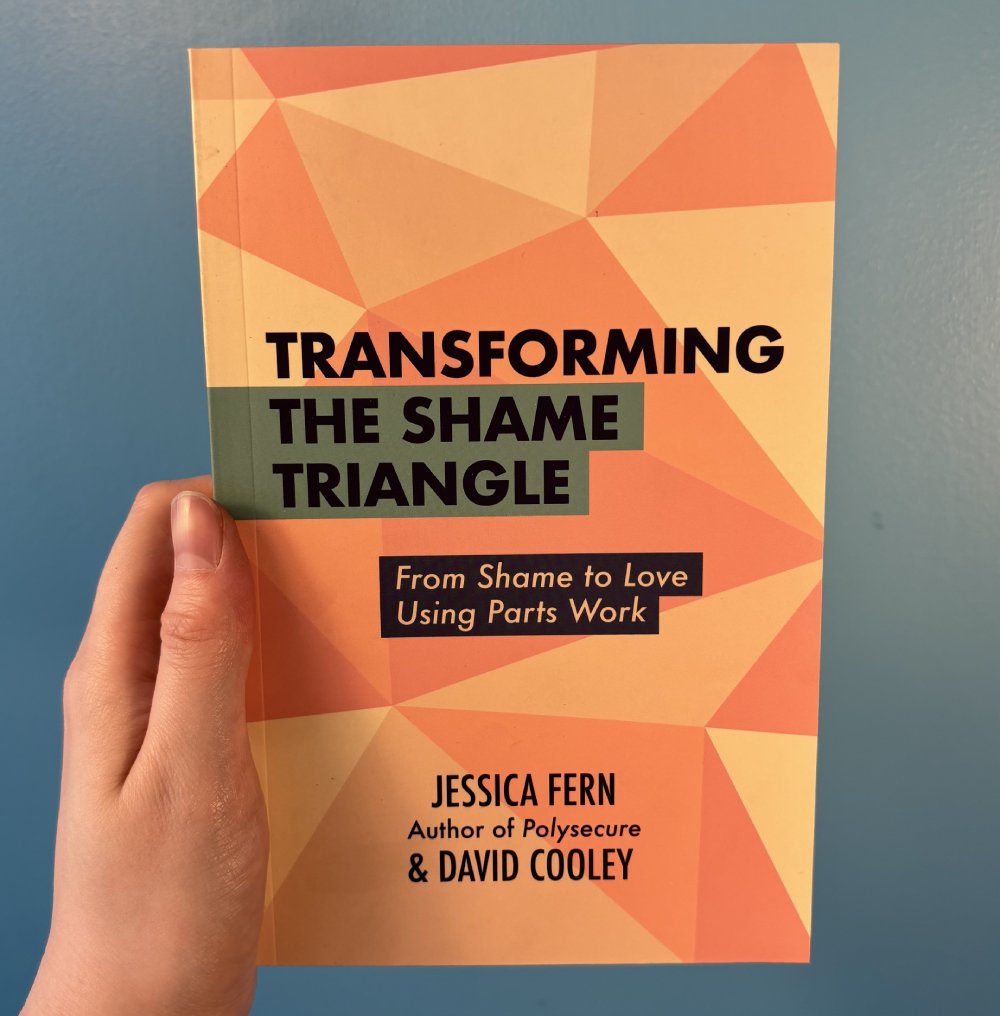
Purchase their new book!
Listen & Watch
🎙
Listen & Watch 🎙
What We Cover
In this episode, we talk about:
The difference between shame and guilt
How the shame triangle operates internally
The influence of attachment and early relationships
Why shame often becomes fused with identity
Internal Family Systems (IFS) and parts work
The role of inner states and coping strategies
How social constructs shape shame responses
The drama triangle and relationship conflict patterns
Gentle approaches to trauma healing
Nervous system regulation and emotional safety
The shift from self-improvement to self-transformation
Key Takeaways
Shame is often rooted in feelings of unworthiness rather than behavior
Guilt relates to actions, while shame attaches to identity
The shame triangle includes the inner critic, shame itself, and escaper strategies
Attachment patterns influence how shame is experienced
Parts work helps reveal the needs beneath protective behaviors
Compassion toward inner parts signals progress in healing
Nervous system regulation supports trauma recovery
Transformation involves reconnecting with the core self
Favorite Quotes & Sound Bites
A few moments you’ll want to remember:
“There are no bad parts.”
“Shame becomes this protector.”
“We’re not just one thing.”
“Self is the real core of our existence.”
“Stress doesn’t just live in your brain.”
“Shame can feel very fused to identity.”
“Seeing these parts as needing nourishment is progress.”
Chapters
07:01 – Personal Journeys and Influences
12:25 – Understanding the Shame Triangle
22:11 – Shame vs. Guilt
29:30 – Attachment and Shame
39:01 – Shame in Relationships
44:16 – Inner States, Strategies & Parts Work
57:48 – The Drama Triangle and Relationship Patterns
01:09:02 – The Role of Self in Healing
01:16:47 – Beginning the Journey of Self-Transformation
Why This Episode Matters
Because shame often hides in plain sight.
It can show up as:
feeling like something about you is fundamentally wrong
constantly second-guessing yourself in relationships
over-apologizing or trying to “fix” everything
a harsh inner critic that never seems satisfied
withdrawing when you feel exposed or vulnerable
feeling stuck in old patterns you thought you had already worked through
And the confusing part?
Shame often feels like truth, even when it’s not.
This episode matters because it brings language and understanding to something many people carry quietly. Jessica and David walk through the inner dynamics behind shame—the critic, the protectors, the parts that learned strategies for survival.
The goal isn’t to eliminate parts of yourself.
It’s to understand them, meet them with compassion, and reconnect with the deeper sense of self that exists beneath the shame.
About Jessica Fern & David Cooley
Jessica Fern holds a Master’s degree in Conflict Resolution, is a Certified Clinical Trauma Professional, a trained Internal Family Systems (IFS) practitioner, and an integrative therapist drawing on 25 years of experience in somatic, narrative, psychotherapeutic, and spiritual healing modalities. She is the internationally recognized author of Polysecure, Polywise and her newest book Transforming the Shame Triangle. Through her international private practice, Jessica works with individuals, couples, and multi-partner relationships to break free from reactive patterns, cultural conditioning, insecure attachment, and past trauma—empowering them to embody new possibilities in life and love. Learn more at JessicaFern.com.
David Cooley is a professional Restorative Justice facilitator, diversity and privilege awareness trainer, and bilingual cultural broker. He is the creator of the Restorative Relationship Conversations model, a process that transforms interpersonal conflict into deeper connection, intimacy and repair. In his private practice, David specializes in working with non-monogamous and LGBTQ partnerships, incorporating a variety of modalities including trauma-informed care, attachment theory, somatic practices, narrative theory, and mindfulness-based techniques.
Links Mentioned In The Show
Get the book! Transforming The Shame Triangle
beU Crystals: beucrystals.com
Just Thrive (Probiotics): Use TANSY15 for 15% off!
Podcast review promo...Get 15% off a distance energy healing session or a piece of jewelry with a positive review of the show. Email photo of review (after submitted on podcast platform) to info@tansyrodgers.com
Support Beyond The Episode
If this conversation hit home, and you’re craving deeper support (not just ideas, but real integration):
Join the newsletter →
If this episode resonated, follow or subscribe to The Energy Fix so you don’t miss future conversations exploring emotional health, healing, and personal growth.
And if there’s a topic you’d love to hear explored on the podcast, you’re always welcome to send it my way.
Transcript
-
Tansy Rodgers (00:13.73)
Welcome back to the energy fix, a podcast dedicated to help you balance your energetic body by diving deep into the sweet world of all things health and spirituality. My name's Tansy and I'm an intuitive crystal Reiki energy healer, energetic nutrition and holistic health practitioner and a crystal jewelry designer. It's time to talk all things energy. Let's dive in. Welcome back to the energy fix podcast.
Today, we're going to be talking about a topic that is so near and dear to my heart because it's something that I have experienced a lot in my life. It's a topic that so many people experience and talk about and struggle with day in and day out. And so that topic is really multi-leveled and it's all about shame and guilt around trauma or not around conditioning, perhaps.
There are so many nuances and that's what we're going to be diving in today. And this isn't the kind of shame where it's like, oh, I made a mistake. Oh my goodness. Now what do I do? This is actually the shame that is more like, what's wrong with me? What is wrong with me as a person and where I'm at now? It's going to show up as things like shut down and people pleasing and defensiveness and perfectionism and over-explaining, or maybe just going totally numb. And so...
I'm really excited to have our two guests here today. Jessica Fern is a trauma therapist, IFS practitioner, and author of PolySecure, PolyWise, and her newest book, Transforming the Shame Triangle. And David Cooley is here with us as well. And he is a restorative justice facilitator and creator of the restorative relationship conversations model, helping people transform conflict into connection.
repair, and deeper intimacy. Thank you so much, Jessica and David, for being here.
Jessica Fern (02:20.482)
Yeah, thanks for having us and hosting.
Tansy Rodgers (02:23.682)
This is such a great conversation and I am really excited to get into the nuances. But before we actually get there, let's dive into you as an individual and where you're at now in this journey of your life. Is there a word or a phrase that you're really embodying in this time of your life?
Jessica Fern (02:47.63)
I have it right here. it's on my desk. I wrote this a few weeks ago. It says, I am alive and there is plenty of time. And so the first piece of that, the aliveness, that comes through more in my meditation of connecting to just life force energy and my creative aliveness. And then there is plenty of time is something I have to tell myself throughout the day a lot.
And because one of my main complaints is there doesn't feel like enough time to do all the things that I want to do. And so when I slow down actually and tell myself there is enough time, I get so much more creative with how I use my time.
Tansy Rodgers (03:33.054)
All right, so Jessica, I need to ask you this because I can appreciate that feeling like there's never quite enough time. How do you really connect into that word, that feeling that you're trying to connect into when you know how challenging that can be?
Jessica Fern (03:51.18)
Yeah, what's been helping me is to think about devotion and to feel like, am I devoted to? So I might not feel like there's enough time to, let's say, do some work projects that we have coming up or even just my own personal study that is really important to me. And then when I connect to being devoted to those things, suddenly there's motivation to go, you know what, I'm going to do that instead of watch a show. Or I'm going to do that instead of scroll on my phone.
And that devotional piece just seems to be a fuel that is really working for me at the moment.
Tansy Rodgers (04:27.991)
I love.
Jessica Fern (04:28.382)
Instead of what I'm supposed to do, right? That I'm supposed to do this project or I should do the listening and the learning that, you know, is going to help me. It's more of the devotional piece.
Tansy Rodgers (04:39.734)
I love that prioritization through the intuitive piece of what you know you need at that point. How about you David?
Jessica Fern (04:47.842)
Yeah.
David Cooley (04:52.194)
think there's two things, you know, and they're interrelated and one is presence. And particularly for myself, you know, how do I show up and be present for myself? think working with other people and being present for other people is something I've learned how to do through this work really well in general. And, but for myself, it's interesting, you know, sometimes there can be challenges to be consistent.
And so I'm figuring out what does that really mean in a sincere way, an authentic way to be present for myself, my own lived experience. I used to be a professional cook for years and people would laugh because I'm a relatively thin guy. And they say, why are you so thin? you're chefs are supposed to be big, you know, and one of the interesting things that I've always found is it's easier to cook for other people. And then when it comes to just cooking for myself, you know, sometimes I can fall through the cracks.
And so it's similar with this question of presence. You know, what does it mean to be sure for myself presently? And the second piece is balance, you know, what brings balance. And so I've been really working hard on being consistent with what I call the four pillars, you know, and those are sleep, exercise, meditation, and food. So if I balance those four things, then I really maximize my sense of presence.
with self, you know, I feel like I've got what I need. I've got the internal resources to show up in the way that I really want to show up for me. So that's been working on.
Tansy Rodgers (06:25.976)
What have you found out of those four pillars to maybe be one of the most challenging on your journey?
Jessica Fern (06:31.521)
Okay.
David Cooley (06:32.33)
It really depends on sort of the day. It's interesting how some days it's easier to access one versus the other, but the thing that I noticed goes first is meditation. As soon as stress hits a certain threshold, interestingly, meditation is the first thing to go. And it's such a curious thing because I know how deeply grounding and settling it can be for my nervous system. So I'm always sort of in awe of how quickly that will go.
Jessica Fern (06:59.918)
Mm.
Tansy Rodgers (07:01.528)
And so I love these words that both of you picked because I feel like they so beautifully tie into this concept that we're going to be talking about today. I feel like it's easy. It could be easy to fall into this shame or guilt spiral by not being or doing these things that you wish to attain to. And so, and so let's talk about this journey because, you know,
Jessica, you and your devotion and David, you and your presence and your balance, they didn't just occur. They didn't just happen. Where have you been that have brought you to this place that you are now? Why are you doing the work that you're doing? And just share with us a little bit of that journey that spiraled you to right now.
David Cooley (07:52.238)
One of the things that started me on this journey is my parents. My parents were Presbyterian ministers, so I grew up in that context. I never sort of fully embraced that side of my growing up.
But there was something that they really instilled. They were really focused on social justice. So they really saw Jesus as kind of a social radical, you know, who was really advocating for universal love across all of these sort of illusory divisions that humans create between us. And so they were constantly bringing people into our home from other countries, other ethnicities, other identities, other social classes. I just grew up having a very rich and dynamic
social life. And so I was also living in environments where I wasn't always in those particular social contexts, the racial majority. And so I really got exposed to a lot of environments that were outside of a typical comfort zone for someone who's come from where I've come from. So that exposure, that sensibility to social justice, that awareness of
class and race really stuck with me. And so I was informed the way that I think about my place in the world. Another big influence in my life has been managing a relatively severe autoimmune condition. So I've had a lot of health challenges that started when I was a teenager. And so there were some really big losses that went along with that. There was a lot of depression. There was even suicidality.
because I couldn't do the things that I used to do, especially in the worst phases of my condition. So I really had to grapple with the question of why be alive? Why do this? And there was moments where I wasn't sure I wanted to. And when it came time to answer that question, I realized that relationships are really, important to me. I love deep, deep, intimate connections.
David Cooley (10:07.638)
And so that dovetailed interestingly with the sort of values that I was had internalized through my upbringing. You know, it's just how do you advocate for and support, help people support the development of relationships. And if we realize that relationships are important and a really big factor in determining our quality of life, why don't we put more emphasis on that in terms of our socialization or acculturation?
Why is this something that really seems systemically neglected? So it just started to become this burning question, you know, and I was seeing conflict really connected to this lack of conscious relational intelligence in our world. And it just started to become something that became more and more explicit in my journey.
Tansy Rodgers (11:00.43)
And yeah, mean, relationships are the foundation and the crux of who we are. They really are. And I think that when you are brought into a situation where your relationships are maybe challenged and you're forced to see how important they are to you as a human being,
than being able to share and explain that and just show others how important that is. That could really be a healing piece to your foundation as a human being.
David Cooley (11:34.688)
Yeah, absolutely. think fundamentally as human beings, our life is a network, interlocking network of multidimensional relationships. Like every facet of our existence as humans is contingent on the way that things relate. know, and so internally, externally, you know, we depend on the relationship between others and other factors and circumstances. So it's curious to me.
that this is something that feels relegated to the margins, right? Of what value and practice as a culture, as a society, as a whole, right? And we're in the context of the United States. So I'm talking about that culture and that society in particular.
Tansy Rodgers (12:17.09)
Yeah, beautiful. How about you, Jessica? How did you arrive to this point in your life?
Jessica Fern (12:25.112)
Yeah. Well, it's been many decisions and back and forths and internal moves and external moves. But Dave and I share a similar thread of a social justice background, but mine was a bit different. My grandmother was a civil rights activist and a Jewish New Yorker.
left religion because of the Holocaust. So really there was these strong cultural values of human rights for everyone. And I grew up with that. I grew up with, you know, the strong headed grandmother figure that was fighting for the marginalized. And both my grandmother and my mother, we grew up very poor, but they were, they're so generous.
And my mom still says it. She's like, I don't always have a shirt on my back, but I'll give it to you anyway, you know, like, or rub two pennies together and get to, or some phrase like that. So, so I grew up with a lot of those values of caring for everyone and generosity and fighting for the rights of all people. But I also grew up with a lot of trauma from growing up in poverty, addiction in the family, multiple divorces. And so in my twenties,
I'm on my own and I'm trying to figure out what life is. And there was a lot of attachment wounding I was still suffering from. There was a relationship that had just ended and I realized I'm just reenacting the same painful dynamics that were from my parents and around neglect and all these different things. And so there was still these trauma enactments and I switched therapists and that therapist was doing parts work.
with through EMDR was the main modality. And it was also transpersonal psychology that she was trained in. And I had done therapy for years, but that this session, like I left her office and just cried in such relief, like the methodology that she was doing like actually created a shift. And in that, I was like, that's what I want to do. I want to be able to support people in this way.
Jessica Fern (14:44.246)
And so a lot of my life became about, how do I do my own healing? But then how do I support others in working through our wounds, our traumas and our conditioning, especially.
Tansy Rodgers (14:57.932)
And so what brought you to this piece of shame work?
Jessica Fern (15:01.932)
Yeah, I think it was my clients, right? As I'm trying to figure out with clients, because they all come in with different complaints on the surface. But as I'm digging in with them, well, OK, what's going on that's causing, whether it's this perfectionism or this procrastination or this over-functioning or this under-functioning or these relationship issues that you're struggling with or the healing of the traumas, finding that again and again, it was the same internal structure at play.
that actually it feels messy, but it's actually quite predictable once I finally saw it and was able to map it out. And then as I bring that map to people, their feedback was, wow, this is helping me understand what's felt like a tangle inside myself and between people. This is now making sense of what's been going on and giving them a path to transform it.
Tansy Rodgers (15:56.362)
I love that. and so I want to really dive into each of your stories and expand on that within your work. And so let's stick with you, Jessica, since we're right here. Yeah. Let's go right into this whole concept of the shame triangle. Yeah. What even is the shame triangle? Can you explain it just real simply for us? And what the three points look exactly in real life.
Jessica Fern (16:19.042)
real simply right.
Jessica Fern (16:24.174)
Right, so if people are visualizing a triangle, it would be facing down with the point down. And on the upper left, it's, so this is an inner constellation of parts. On the upper left, we have the inner critic. That's that voice in our head that beats us up and says the you should, you shouldn't, how could you, what's wrong with you? On the bottom is shame. And so we're thinking of shame, not as just a feeling, but as a part that holds, like here's the inner critic.
and believes it, and then in first person really collapses in that there is something fundamentally broken or wrong or messed up with me, or I'm too much or I'm not enough. And then that's a pretty intense dynamic of those two. And so on the upper right, we have our escapers, which are jumping into action to give relief or a break from the inner critic and our shame.
And those can look many different ways. We tend to have several escapers, some over-function through over-achieving or over-caretaking or perfectionism, some under-function, which is like the zoning out, the numbing out, the avoiding. Some just shift into a different feeling that somewhat seems easier to deal with than shame, like anxiety or depression.
Or we can project it outward. I become an outer critic instead of having to hear my inner critic.
Yeah, and with those escapers, we can go back and forth between them. Like one works for a little bit and then it doesn't, and then we shift into another one. So it's a whole cycle.
Tansy Rodgers (18:02.602)
Yeah. And so can you explain maybe some of those first cues that this shame is present outside of, know, I'm over caregiving or I'm overdoing or I'm underdoing and I'm just escaping through substances or whatever it may be.
Jessica Fern (18:21.004)
Right, usually that's the escapers or the complaints we have. That's what we kind of do judge ourselves about or feel bad about or other people give us feedback that we shouldn't be doing things in a certain way or what we'll go seek support for. So that could be one of the cues. The other is we do feel shame. Some people don't even notice that they're ashamed and some people's shame is the most obvious for them. It's all like, which of these parts stands out more is case by case.
So shame, the signs of that can be the ways that we hide ourselves, we conflate ourselves, we try to conceal, we don't want people to see us truly, because if they do, then they'll reject us, or they'll see something fundamental about us that isn't enough in some way. And then the inner critic is usually that voice we're hearing that's commenting on whatever we're doing, and it's doing so in a very critical, judgmental way.
Tansy Rodgers (19:18.414)
pause before we really dive further into this conversation. I wanted to let you know that I create intentional crystal jewelry through BEU crystals. They are pieces that are designed to feel like this small beautiful little anchor that you can actually use when your nervous system is getting too loud, your energy is feeling too scattered, or you're stepping into something brave and you want something to really ground and support you.
is what my crystal jewelry is all about. It is supporting the place, the journey that you are on right now. And a little behind the scene updates. I have a brand new website that I am rolling out in the next few weeks and I'm so excited for it. It's gonna be cleaner, easier to shop and way more aligned with where this brand is going along with new products that have come out, new pieces and easier
ways to custom build the perfect piece for you. So for now, you can head on over to beucrystals.com. I'll make sure to link that down in the show notes so that you can easily browse. There's a few things up there. The website isn't looking too amazing right now, but that's okay because the new one is coming. Keep your eyes open. All right, let's get back into this episode. Here's Casey.
Tansy Rodgers (20:48.918)
And so when we talk about this triangle, is it pretty common that it is the inner critic, whatever either we're consciously or subconsciously saying to ourselves? Exactly. Right? Then that goes to the escapers point, and then that comes down to the shame. And does it typically go around that triangle, or can it become mishmash and go in different directions?
Jessica Fern (21:16.602)
Yeah, usually it's the inner critic then feeds the shame, right? Or we have shame from the beginning that came from the world around us. We were shamed by family, intentionally or unintentionally, right? Or the culture, the society that we're in, you know, is sort of in the business of shame, so to speak, to keep us in social line. So we feel shame, and then that inner critic becomes the way to keep us in our lane, so to speak.
It becomes the internalized voice of those that criticized us or the systems that tell us we're not okay. So those develop through time and then our coping strategies or survival strategies are those escapist parts to get away from the shame and the criticism. Yeah, but then once it's at play, yeah, it jumps around.
Tansy Rodgers (22:06.029)
Yeah.
Tansy Rodgers (22:11.422)
You said something that I think is really interesting. You said that shame is often the feeling or the word that comes to mind for so many people that they know that they're experiencing shame in the first place. Yeah. And so, David, I'm curious when you're working with some of the individuals that you're working with, if nobody is actually saying the word shame, if maybe that's not even where they are recognizing that they're at.
Are there some early signs that you're watching out for to know what's actually going on and that shame is driving the bus in that situation?
David Cooley (22:48.8)
Absolutely. And that's a really astute way to start peering into the inner workings and why this can be so hard to untangle for yourself as an individual or even as a partnership. Because I'm focused mainly on my work that I do with relationships in conflict. And so what I've found is that shame is actually one of the single biggest factors that inhibit people to repair after there is conflict.
And so what I'm looking for specifically are the way that people start to change the way that they talk and that the way that they show up in a session with me. And when I say show up, I'm really looking at people's somatic cues, their body language, right? Which to me is an indicator that they're getting dysregulated. And so what I see is that there's a real immediate correlation between dysregulation. When someone feels unsafe, when someone feels activated or threatened,
by another person, ostensibly, at least on the surface, what's often happening is there's internal messaging, right, that's working against the thing that they're interpreting, the other person saying, right? So if they're feeling something, uncomfortable emotion like anger, sadness, grief, disappointment, frustration, that's often triggering some kind of internal story about what's wrong with them.
When people are, for example, getting defensive, when someone's giving them feedback about behavior that they don't like, often shame is right there under the surface. And so if I see someone getting defensive when a partner is trying to give them legitimate feedback, the first thing I'm thinking is there's probably some shame here. Right? So I'm seeing the person start to get defensive, their voice is changing, their body language and posture is changing. They're evidencing to the other person that this interaction isn't safe.
They don't feel good about what's happening and that some kind of internal mechanism is reflecting what they think they're hearing. And so there's this distortion field that we have to slow down and deconstruct and really analyze. And once we start to do that and pull those pieces apart, what we almost always find is some element of shame.
Jessica Fern (25:03.086)
Hmm.
Tansy Rodgers (25:04.902)
So as you're talking, I started wondering shame and guilt. That can really get confusing, I think, when it comes down to understanding where these responses or reactions are coming from. how can you tell if somebody is stepping forward and saying that they are guilty of doing a thing versus they're shameful of being that thing?
David Cooley (25:35.756)
Yeah. Well, one of the things I'm listening for is the difference between shame and guilt or let me, let me back up. There's a really important relationship between guilt and regret. And usually when there's guilt and regret, there's an awareness that our behavior, even when we don't always intend it to can have a negative impact. And so it's really about linking behavior and the impact of behavior.
and guilt and regret can really hold that distinction. I see that what I've done has had an impact on you and in restorative processes, we're really focused on trying to get people to focus on the impact of decisions. How have I hurt you? Even when I haven't intended to. And being able to take accountability for that. Guilt and regret can help sort of foster
and stabilize accountability, because I can see and recognize that you have impacted you, I've harmed you. Where it clicks over is if there's any kind of fusion with a person's sense of identity. Because I've hurt you, I am wrong. I am bad. And usually what we start to hear because we're doing parts work is we start to hear very specific kinds of narratives on the part of parts that are saying things in response to feedback about how they've hurt.
someone else. So if we start to hear someone talking black and white thinking, you always, you never, this is just how you are.
Jessica Fern (27:14.619)
I always get it wrong. never I can't get it right, right
David Cooley (27:18.254)
So if you start hearing those superlatives, you start hearing that black and white, that binary thinking, all or nothing, black or white reasoning, or even like a certainty about kind of a fixed mindset, like this is just how I am. If you start hearing people talk about the quote unquote way that they are as people versus making specific choices that have specific impacts, you really start to understand, okay, there's these parts that are active that are probably connected to shame.
This is just how I am, this is just how you are, this is just how things are. This is the reality and I have a good sense of what the big T truth is of this circumstance. I'm the expert now on what truth is. These are all indicative of parts and that's something that we go over very specifically in the book as we talk about the way that parts frame reality through these specific lenses or mindsets. Another is an adversarial frame.
that I focus on a lot in my work, right? I'm really listening for when people become adversarial and turn a loved one into an enemy all of a sudden. And it can happen like that. It can happen in the blink of an eye, right? As soon as we feel threatened by someone's comments or feedback about what we're doing or not doing, I can start to very quickly embody an adversarial stance versus a restorative one. And all of these are linked in some way, usually to shame.
Tansy Rodgers (28:46.486)
And so before we get too far, you already mentioned your book. Can you tell us the name of the book so that we know exactly what book we're talking about as we're having this conversation?
David Cooley (28:55.854)
Yeah, we're talking about transforming the shame triangle using parts work to go from shame to love.
Tansy Rodgers (29:02.486)
And as always, my dear listener, you know that that will be linked down in the show notes. So you can jump on down there and grab that as soon as we are done with this conversation. But I just wanted to highlight that now since we've already started getting into these conversations. Yeah. All right. So let's come back to what you were just talking about. either David or Jessica, whoever prefers to answer this. This concept of shame, I'm curious about two things. First off.
these definitive ways that we're talking, this people pleasing, this withdrawal, this sarcasm, whatever might come up during the time of these feelings of shame being expressed. What are they typically trying to protect within somebody? Why is somebody doing that in the first place?
Jessica Fern (29:51.66)
Yeah, it's funny. It is shame, but it's not wanting to feel the shame, not wanting it to actually be true on some level, not wanting evidence in the world that there is something wrong with me. So there's often this, I'm feeling shame, but I don't want to. I don't want it to be true about me or the situation.
Tansy Rodgers (30:12.238)
It feels very ego based then. Like it's the self preservation.
Jessica Fern (30:17.614)
Yes, right. And depending on how you define ego, one of my favorite definitions is that it's not, I always mess this up, it's not a noun, it's a verb, that it is resistance to something. So ego is about the places that we're resisting actively. So yes, you could say on certain level, this is work for the ego or even shadow work.
David Cooley (30:45.528)
think what's interesting about that though is, you know, if it's resistance, what we're talking about is you're resisting a faulty narrative. That's kind of the irony of shame is that the shame is the internalized messaging that there's something fundamentally wrong with you, which existentially, ontologically is impossible. And so that's the real tragedy of shame is that you're fighting a phantom.
Jessica Fern (30:52.226)
Right, that's true.
David Cooley (31:09.422)
an assertion or a hypothesis that just in its essence can't be true, but that's what the messaging from the external world was.
Jessica Fern (31:19.214)
And I think there's experiences that were very real. We learn very early on, this part of you isn't OK. This feeling you're expressing isn't allowed in our family or isn't going to be OK in the world. And so shame becomes this protector, actually, to go, OK, I have to shut that down or hide that so that I don't get rejected, so that I don't lose my actual social survival or love.
David Cooley (31:47.916)
Yeah, that's highlighting a really important question for our nervous systems. If we start thinking about the role of attachment, you know, and that's something that's really important in our work, is we're really wanting people to understand the role of attachment in the way that they show up in relationships. And so even with the self, right, the way that I relate to me, like belonging for a human being, as we were talking about the top of the conversation, like relationships are so paramount for our survival. That's not
a psychological assertion, that's a literal existential, it's a biological fact. We need and depend on other nervous systems to survive. so belonging is fundamental for our survival. And that threat as a child is real in terms of your survival, but the nervous system doesn't make that distinction as you get older and take that attachment system that you developed into your adult relationships. And so when our attachment-based relationships get threatened,
Jessica Fern (32:20.173)
to go.
David Cooley (32:46.466)
that feels to the nervous system like literal survival threats. And so shame is actually often protecting us from the loss of potential attachment, potential connections that it subconsciously or unconsciously is thinking, I could die if I lose this connection. And so that even happens with our own sense of self. If I lose my connection to self as an okay entity, like a self that's worth living, a self that's okay morally or ethically,
If my sense of self and identity is damaged fundamentally, that can feel like a survival threat, which explains why people become so extreme sometimes in their responses to the shame triangle.
Tansy Rodgers (33:33.966)
which that just leads into this beautiful question. I'm gonna take just one step back because you've already started to touch on it, I believe. Where do you see shame often really stemming from? I mean, you just talked about how important the role of attachment is. And so that is obviously one of those root causes, but where do you see that these feelings of shame, these...
deep senses of shame that start coming out of people or maybe expanding really have been rooted from in the first place.
David Cooley (34:08.322)
They're rooted in social paradigms. They're rooted in social constructs. Right? So if we think about all the different, and this is something we talk about at length in the book, is we're looking at these different paradigms that are embedded intricately into our society. So something like the narrative around productivity, right? If we think about how important it is to be productive in our culture or successful economically, right? If you're not productive,
or successful economically, depending on what your relative scale to determine those things is, then your sense of identity can very quickly become compromised. I feel that every time I get sick. I get sick, I can't work, I have to take a day off and I start to feel the activation of shame. I'm not being productive enough. I'm lazy. What's wrong with me that I can't get stuff done? I'm just laying in bed, right? So a biological imperative to rest and take care of myself, to heal is now
overlaid with this superimposition of shame because I'm not being productive. So where did that narrative of productivity come from? It comes from these Western ideals that are really embedded in our particular brand of capitalism. There's a host of others. If we start deconstructing religion and a lot of the messages that are implicit and explicit in religion, what does it say about us and about having our body?
We could just start talking. I could talk to you for hours about just sexuality and the implications of shame and the relationship to pleasure, sex, and shame in the religious context. So these things are really inherited as social constructs. At least that's our assertion.
Tansy Rodgers (35:54.478)
It's so interesting because as you were talking, know, one of I know personally for me, one of my biggest areas of shame was exactly that. If I'm not doing enough, if I'm not being productive, if I'm not pushing myself, even though I'm tired, then there is something wrong and I should be shameful. I am not worthy. I am not okay. I am not a hardworking, whatever it is that the narrative in my brain tells me. And it's so interesting because
I have worked through so much of that, but back in the day when it was really strong, that was a huge conditioning in my life from so many angles and so many people that were important to me where I valued their opinion and I valued their thoughts about who I was as an individual. And so I love that you emphasize that because I think that that's a huge one that so many people struggle with.
Jessica Fern (36:49.262)
Yes.
Tansy Rodgers (36:50.754)
Hustle culture, right? I mean. Yeah.
Jessica Fern (36:54.164)
Exactly. Hustle culture, purity culture, beauty culture, or just normative culture. The idea that there's the norm and then you're not normal or you're outside of the normal range and how much shame people feel for that. Dave is mentioning these are social constructs, but they're enacted and embodied through the people around us.
And the way that little or overt comments are made about who we are or what our behavior is or what we did or what we didn't do. And we just wind up soaking it all up. We learn very quickly that these sides of me are okay and these parts of me aren't.
David Cooley (37:38.126)
Yeah, and social media is just exacerbated and taken to level, right? So the messaging that we're getting from these paradigms of these social constructs is just not only are we getting it from friends and family in our immediate social circle, we're getting it when we look at the external world. The reflections are, this is what makes you a good person. This is what makes you worthy of being alive. This is what gives you value. And if you're not, then what's wrong with you?
Tansy Rodgers (38:06.626)
Yeah. Let's go back to this whole concept of role of attachment. And I want to dive just a little bit deeper on that because you were talking, I couldn't help to stop thinking about, well, people that are coming to you, people that are feeling these moments of shame, that are bringing it up in conversation or that you are intuiting that that is exactly what is going on.
How do you move someone through shame of disconnecting an attachment that's not healthy or that's not sustainable for them in the first place, even though they're stuck in that place of feeling the shame around maybe wanting to leave the relationship or wanting to leave social media or whatever it is, right? Like how do you work somebody through that to get on the other side and have that realization?
Jessica Fern (39:01.518)
I think it will talk about the specific steps in a moment, but at its base is often normalizing the feelings that people are having or the attachment ruptures that they've gone through, that those were real and difficult or the relationship they are in, there are legitimate needs that they have that they don't need to feel bad and ashamed of because that's usually what's happening in relationships.
that you have valid needs or there are healthy standards that actually are not being met. so it can first be just about acceptance, acceptance of where someone is, who they are, what they need, what they want.
And then feeling being with us as someone who is validating and acknowledging. so many people with these different shame triangle parts, they feel like it doesn't make sense. And a lot of what we're doing is going, of course that's what happens. Like, of course this is how your system organized. It's actually quite wise that it's doing it this way. It's just not working for you anymore.
Tansy Rodgers (40:10.156)
Yeah.
Jessica Fern (40:10.84)
Yeah, so that's more of the bigger approach that we're values that we're embodying.
David Cooley (40:17.006)
You're normalizing person's lived experience as not as it should be or shouldn't be.
Jessica Fern (40:22.282)
Exactly. So being a counter to their own self judgment. But then in the book, we really walk people through in many different ways throughout the chapters with many different practical exercises and questions and contemplations to do. How do we start dialoguing with each of these parts?
Tansy Rodgers (40:28.822)
Yeah.
Jessica Fern (40:49.386)
and unburden them, the pain they hold, the roles that they have that are outdated, updating them to the current moment of who we are as an adult, not the two or 10 or 18 year olds that we were in the past that needed those parts to function previously how they did. And that is the transformation process.
Tansy Rodgers (41:13.038)
Mm.
And so, okay, so let's talk a little bit more about this dialoguing. What exactly do you mean by dialoguing? Can you explain that deeper?
David Cooley (41:24.386)
Yeah, I when you're talking to parts, it's almost like talking to another person in some cases. Sometimes people have a more vague sense or experience of their parts, but often, especially as you guide them and people get practice, it starts to feel very much like a dialogue with somebody else, a somebody. And so in that sense, these parts have a real sense of what's important for you. So values, priorities.
that they're advocating for. And so we're trying to elicit that. We're trying to create space. Like, what is it that you need me to hear? And so one of the things that we're starting with as a value in this work is there are no bad parts and everything that the part is trying to do is in your favor. What's problematic or challenging is the strategy, the way that they're going about. So we're starting with curiosity. What is it that you're trying?
to show me. This is all information. So we want to learn about what's valuable to the part. So we're asking questions. What is it that you're wanting me to see? And then we're asking, what is it that you need? What do you need from me strategically? What do you need me to see? What do you need me to do? Do you need reassurance? Do you need me behaviorally to stop doing something, to start doing something? So really inquiring.
What's the parts value and what's the parts need on sort of a high level, right? That's what we're really trying to get to. Right. That's the same thing I would do with partners, right? If I was partners in conflict, I'm first trying to get people to reveal the authenticity of their lived experience beyond the defensive mechanism. So what are you really feeling right now versus your projection or your interpretation of what the other person's trying to do to you? What are you feeling right now? So first we have to get to a feeling.
then we have to get to a need, right? Because the feelings are really the signposts that something in our attachment system is getting activated. I need to feel safe. I need to feel respect. need to feel like I can have autonomy in this relationship. I need to feel important. I need to feel special. I need to feel like there's reciprocity or consistency or predictability, right? There's a list that I have that I help people sit through in terms of attachment needs.
David Cooley (43:50.104)
So I help people learn how to speak in the language of attachment needs. Because often what happens is people confuse strategy with need. You think, I need you, and you'll hear this a lot, right? I need you to stop coming home late, or I need you to respond to my text as soon as I message you. That's actually not the need. The need is something like I need to feel special, or I need reassurance.
That's the state, the inner, the need is an inner state. I need to know that this state can be possible in our relationship. need to know I can feel this way and that this is possible in our connection. The strategy is if you respond to me when right within an hour, then I know that that's what is true for you or for us in this relationship. So we're helping people learn how in this case now going back to the parts language, we're helping parts recognize maybe it's your strategy.
Maybe we can meet the same need with a different strategy and we're helping parts become more nuanced, more sophisticated, more capable of holding complexity, right? And learning how to become more creative in the development of strategies that actually don't cause harm.
Tansy Rodgers (45:07.138)
Did you know that stress doesn't just live in your brain? It actually lives in your gut too. Because your gut is the center of it all. When your nervous system has been under pressure, digestion starts to get really weird and cravings start to feel out of control. Sleep may get lighter and you feel like you don't get the rest you need and your mood, well, it can get super spicy. so supporting your gut is such a big part of supporting your
resilience. One of my go-to staples is Just Thrive Probiotics. It is the first probiotic that I found works so well for me and has worked so well for many, many of my clients. I love it because it's simple, it's consistent, and it fits into real life without turning your morning into this supplement overwhelm. You don't have to keep it in the fridge. It is shelf stable and you can take it
wherever you need it is quite easy. But my favorite thing about Just Thrive probiotics is how it made me feel. The bloating started to go away. I felt like my digestion was running so much smoother. My immune system started to improve. I just feel better when I am taking Just Thrive probiotics consistently.
Head down to the show notes, click the link for Just Thrive Probiotics and when you use code TANZY15, you get 15 % off your entire order. That's TANZY15 for 15 % off your entire order. I know you're gonna love this product. I can't wait for you to try it out. And just to clarify for maybe those who aren't quite sure exactly what you mean by parts.
Can you give a little bit of a definition of what that is? Because you've used that word a lot today.
Jessica Fern (47:04.332)
Yeah. Yeah, and we're inspired by internal family systems, IFS, which is one of many parts modalities. But the overall concept is that as humans, we have inner parts or sub-personalities to ourself or different sides and aspects to ourself. We're not just one thing. And we all, even if we don't think in parts, we all know that.
David Cooley (47:05.486)
images.
Jessica Fern (47:30.734)
from intuitively when we want to go out, yet another side of us also wants to stay home. Or something like, we know that there's a different side to me when I'm parenting versus a different side to me that shows up when I'm with a friend or my partner or with my clients. Those are different parts or sides to who I am. So that's the basic premise. As humans, we are multifaceted. We have a lot of internal parts.
And the human psychology, it is healthy actually to have different parts. Each of these sub-personalities has their own perspective and thoughts and feelings and even sensations. And then where it becomes challenging is not that we have parts, but when certain parts become dominant over others. So when the inner critic is more in the driver's seat and it is taking over and it's the only perspective.
or shame is in the driver's seat and we're only experiencing our life through the lens of shame itself. It's called being blended with one part. Instead of having more of this flexibility of there's a capital S self and then there's a variety of parts that might jump in depending on the context.
David Cooley (48:48.544)
And it's the development of that capitalist self that's really fundamental to the internal family systems work. And this is the starting point of the work and the place to where we're returning over and over again. So we're really a big part of the work that we're doing is helping people cultivate a conscious and deliberate and consistent relationship to their sense of self, which is distinct from parts.
And so self is interesting. It's this kind of spacious, wide open agenda lists. Aspect of our consciousness, right? It's the real being sort of core of, of our existence that we can tap into. One of the metaphors I like are the images is like standing under a waterfall, right? And when you're standing under the waterfall, you're just in the flow, very in the moment, right? Very present with just the experience of having this energy be
on you, in you, moving through you. And then you step out of that and you can step in and out of that waterfall as you need to. We're wanting that to be something that people choose and have access to when they need to. Because it's the self that can hold space for all of our parts without blending with them. And another way to say that is it's able to speak for them like an ambassador versus from them like a puppet. Right? So when you're blended,
You're just, are the part's consciousness. You are the part's perspective. And this often happens where, you know, in conflict, someone will say something really intense and extreme in the heat of the moment. And the other person's shocked, like, well, this is now we're seeing the real you. I hear that a lot. now I'm getting your quote unquote truth. And that's really tragic because it's actually a part that's feeling really overwhelmed or afraid or scared.
that should not be interpreted as the totality of someone's truth. And it's really humanizing and regulating to recognize, no, that's a part that's flared up like a child having a tantrum, screaming something that it doesn't mean really when it's regulated and feeling safe and connected. So this is something that's really important for people to understand the difference between self and parts.
David Cooley (51:08.162)
Not that parts are bad, it's that parts are feeling scared and overwhelmed and are usually holding memories of pain or trauma.
Tansy Rodgers (51:18.082)
That is so beautifully explained. I love that. And so that really gives a great foundation to my next question. Going back to what you were talking about earlier, David and Jessica or David, whoever wants to answer this, I'm really curious. Now understanding what PARTS is and that concept, and also knowing that many people, when they're doing this work, confuse their needs with strategies.
What do you see as forward movement in this repair conversation? You when there is this confusion, when they're realizing, they're understanding that these parts need to be nurtured, what is actual confirmation that you are moving forward, that that person is moving forward and healing?
Jessica Fern (52:10.104)
Well, actually, part of it is what you just said. Just seeing these parts as that they even need nourishment or validation is now a compassionate stance towards the part. Often we're initially in an adversarial grapple with these parts. We want to overpower them or get rid of them or they're overpowering us and we're victim to them and it's intense and stressful.
So just the shift is actually so much progress to go, wow, this is a part of me that's struggling. This is a part of me that served a good intention. This is a part that came about for a really good reason. So that's one of the first shifts is seeing it more fully with a compassionate perspective.
And then we feel different towards it. with that shift too is what Dave's talking about self. When we have that self to part space, suddenly we realize, I'm not fully this part. That isn't all of me. And that is usually a developmental shift for people. it's actually a psychological developmental leap that we see our clients take.
when there's space between them and parts, now they have choice. Now there's agency where previously there was just reactivity. That's huge. So it doesn't mean that the part never comes up again, but when it does, it's like, I have choices now. I can tend to it, or I could say, hold on, I need you to wait. I'll come to you later. But at the very least, I have this compassionate view that now I'm holding.
David Cooley (53:38.126)
Yeah.
Jessica Fern (53:55.8)
for the part.
David Cooley (53:57.378)
Yeah, and one way to contextualize this is to take a step back in terms of the sequence of the book. And one of our, I think the first chapter is called the drama triangle. And so we're using a relatively well-known model for interpersonal conflict that was developed by Steven Cartman. And it diagrams the way that people kind of unconsciously unwittingly fall into three specific roles.
So the drama triangle is the model or the template that we used for the shame triangle. And so if we extrapolate the sort of model that we've outlined through the shame triangle and back up, the inner critic relates to the perpetrator or the persecutor. So it's literally in this case, and on an interpersonal level, someone is projecting the message that whatever has happened or is happening is wrong.
and someone else is to blame for it and the persecutor is the one that's bringing that judgment. The victim corresponds to shame. So the victim is the one that succumbs to the assessment of the persecutor. The persecutor blaming the victim. In the way that shame is taking on the condemnation of the inner critic, the victim is really taking that on from the part of the persecutor.
And the escapers are rescuers, right? So someone swoops in to save the day, often unsolicited, right? So I could be in a fight with my brother. He's the, he's perpetrating against me from my perspective and I'm the victim, right? And I'm sort of taking a victim's stance to him. My mother hears what's going on in the other room and she swoops in, even though no one's asking for it. She comes in to save the day, right? And takes away the agency of
me and my brother to resolve the problem ourselves. Right? So this is the dynamic that people just get stuck on over and over again. And in the same conversation, you could switch roles. You might start the perpetrator and then the victim to protect themselves becomes aggressive and starts to say really intense things. And now all of a sudden the perpetrator feels like the victim. Right? So it can really be a very complex and messy process.
David Cooley (56:20.152)
But the signature facet of it is that wherever you are on the triangle, you have no choice. You're just playing this role that you're not even choosing. It's just, you're getting swept up in this dynamic that's very, very universal and ubiquitous. And the first way to get off of it is to recognize that you're on it. I'm playing this role. I'm really feeding into this adversarial narrative that's perpetuating my role on the triangle. So once you become aware of it,
that's the first sort of opportunity to have choice. so becoming aware of these models is what we're saying is a very important developmental leap for people.
Tansy Rodgers (57:02.168)
What's so wild about this is the majority of people probably don't even realize, number one, that they have all these parts and they play all these roles. Number two, where they may even be at at any given moment on this cycle. And then number three, that you can actually say, hey, this part you can take a back seat for right now so that we can move forward and heal said.
relationship or said situation, right? And so I find that so fascinating because we as humans have been in these cycles and roles since we've been born. And the majority of us don't even realize that we are playing this, these parts.
David Cooley (57:48.728)
Absolutely. And I think this is the one of the things that really underlines a lot of our work is we're wanting to make these meta structures of consciousness, these meta consciousness structures that influence how we relate and see the world to be explicit because for so many people they aren't. And when they aren't, then we just internalize the messaging that we're getting from the external world as if that's me, that's my truth. Like the inner critic sounds like a very literal
in convincing reflection of external or objective truth. And that's so interesting. Like, if we don't ever make that connection, if we don't ever see that and start to differentiate and create some externalization and see the process of internalization of these socially constructed messages, then we just take it all on. And that's the real tragedy of shame is that we just take it on. I am the judge, the jury.
victim, you know, it's just, it doesn't have to be that way.
Jessica Fern (58:52.214)
Yeah, we take it on as a personal failure when it's actually not internal where it began.
Tansy Rodgers (58:59.832)
Yeah. And so I want to I want to kind of sidestep just a little bit in this whole conversation that we're just having about the drama loop and where people are at on their cycle and these parts that they are experiencing. For those with trauma histories, shame can really feel very fused to identity and it can be hard to see any of this that we're just talking about. So
I would love to talk about maybe some of the gentlest ways to really start separating this as a pattern and recognizing that it's more of a pattern versus it's who I am and it's not necessarily my identity.
Jessica Fern (59:42.444)
Right. Yeah, think some of the gent, well, yes. So what we've seen is that most or all people we've worked with have this shame triangle, whether you've had big trauma histories or not. mean, one of my beliefs is that just the average, quote unquote, normal way of being raised in this culture without even a lot of trauma is actually traumatizing.
But then we have people that have overt traumas in addition, and we do see that their sheam triangles are that much more severe and that much harder to unblend with. And their escapers tend to be more in the self-harming or aggressive categories. So it is. It's weighted. It's a heavier burden to unburden, but it's completely possible.
And so the gentle way is just first thinking about it this way, just mapping it out, drawing it out. So I'm thinking of a client I work with weekly that it's hard for her, was hard for her to do the parts work and actually dialogue. We'd have to spend two or three sessions just talking about the part in general and understanding why it would have come up or
what it's trying to do. So it was just more fleshing it out through talking, not actually going into it, which can activate some of the feelings. Or we put in the book ways to sort of play with parts without getting too much into them. And it's ways of creating space, like imagining it across the room, pretending there's a dial.
Usually the volume of the part is at a 10 or 11. Imagine if we dial it down to a three. One of my favorite things is changing the channel. So what genre is this part in? Is it horror or thriller or a murder mystery or a courtroom, you know, story? Well, what if I change the dial and we change the channel and the genre on this? So now we're having fun with this kind of work that actually is quite deep and could be difficult to explore.
Jessica Fern (01:02:02.658)
So we've done a bunch of that, of ways of wanting people to be able to play and have some levity.
Tansy Rodgers (01:02:11.182)
And I love that because I feel like concepts like shadow work and doing all of this inner child work can be so daunting for so many people because it can bring up a lot. And especially if you're not working with a therapist or somebody that is a trained professional to help you work through it, it can be very challenging to even allow yourself to be there. So moving.
and pulling you away as an individual and just being a little bit more objective. That is such a beautiful approach.
David Cooley (01:02:42.99)
Another facet is the working with the nervous system. Yes. The things that the nervous system is programmed to do is to scan all of our experiences, whether internal or external for safety or threat. so understanding that we're really wanting to help people have a developing agency over how they approach something that a situation or a part, even a thought, a memory that generates a sense of threat.
Right. And so we're really wanting people to understand that you're not forcing yourself into exposure to an experience that feels not manageable. We're wanting you to stay within your window of tolerance, but we're wanting to help you little by little increase that window of tolerance, right? Of staying in presence with a part when you feel nervous system dysregulation.
A lot of times what happens with trauma is that you start to disconnect from your nervous system because it doesn't feel safe to be in your body. And so a lot of people have a hard time even tracking their physiological signals when something starts to feel scary, overwhelming or threatening. So getting people back into a relationship to their somatic experience in real time as their dialogue with parts is huge.
And so you can gently just start to invite people to notice what's happening on a physiological level, right? And start to just really train the nervous system to normalize exposure little by little. Okay, you're feeling it where you're noticing that. How is it to notice that? Does it feel safe? This is a question that you're asking throughout that, that sequence. Does it feel safe? How does it feel to be
in dialogue with this part, how's it feel to even imagine being in dialogue with that part? Right? And when we say feel, we're talking about very literal, sensational experience. Emotional as well, but just we're really trying to dial in, make sure that people are re-engaging their nervous system, but with awareness.
Tansy Rodgers (01:04:59.692)
love that you brought that up. That was actually on the tip of my tongue to really talk about was the nervous system regulation. That is huge in the work that I do. And I know that when anybody is dysregulated in their nervous system, it can cause a slew of health issues, of course, a slew of mental and emotional obstacles, of course, but especially if we're trying to heal on these deeper levels in the constructs of shame and guilt and
and trauma. so David, are there certain tactics or techniques that you found that need to happen for the nervous system to best get regulated to be able to expand and do this work more efficiently? Are there things that you have found that you that that either you like more than others or that you have just found to be more effective in general?
David Cooley (01:05:58.092)
Yeah, there's first I'll say that the most effective thing tool that I've found, which is, more like tools slash process is helping people connect to self. So self is the single best thing that I've found to help people navigate this question in particular. Now, different people with different nervous systems and different historical precedents.
have different ways to access self. And so one of the things that we have in the book, one chapter that we have is called the self-centered model. And so we're playing off that concept of self-centered, not as something that's narcissistic or only focused on one's own wellbeing to the expense of others, but we're talking about this big S self and being centered and grounded in it, in our parts work. And so this is divided in
the body, the mind and the heart. So some people are able to really meet self first and more thoroughly through the mind. So this is the thoughts, the beliefs, the stories, the narratives, right? It's through the kind of our cognitive center that we're able to access self. That's actually my first, just because of my history, personality type, all the different things that make me.
The mind is the easiest access point first to self. And once I get there, then I can access more of the somatic experience. So that's the body. Some people go somatically first, right? For some people to even understand or have a clear sense of what their perspective is or what their beliefs or thoughts are in any given moment, they need to first connect through the nervous system. And then the heart is really kind of the bridge between the mind and the body. And that's really where our relational center is.
And this is the part of us that's able to, or the facet of our being that's able to really have clarity around what are my feelings and what are my needs? Right? We talked about that before. It's really the language of attachment. The heart speaks the language of attachment, the language of connection. Right? And so if we can connect to feelings and needs, then we can get into the self that way. So any facet, right? Whether body, heart, or mind.
David Cooley (01:08:21.346)
can be this doorway into self. And so we're trying to give people a relatively wide spectrum of ways to access self to be able to start to do this work in a way that feels really grounded and safe.
Tansy Rodgers (01:08:33.742)
And so for somebody who looks at this and they say, OK, so I'm regulating the nervous system. I'm doing that work. I'm I'm doing the somatic work. I'm doing the mind work. And then they step in and they start doing the relationship work and their understanding this whole concept of parts. And they step back and they think, I've been doing the work. I've been doing this. But shame is still showing up.
Jessica Fern (01:09:02.124)
Mm-hmm.
Tansy Rodgers (01:09:03.371)
What's usually missing? What do you see is typically missing in that equation?
Jessica Fern (01:09:08.728)
Yeah, what we see consistently is that there hasn't been a self to part relationship that's established that people are doing all of that personal development and healing work from other parts. Phenomenal parts, well-intentioned parts, but there can still be this seeker part or personal development that's trying to achieve or get over or manage and fix. So it's usually a manager part.
And you can get a certain level of progress and traction, but it's all seal plateau. And that's where a lot of people are like, but I've done all the things for years, right? And there's still this, and so we go, yeah, we get it. We've done it ourselves. And then once we had that shift of no self is actually the inner presence that is loving and healing shame.
Self is the one that is setting the boundaries with the inner critic and telling it, no, I need you to be my inner coach, please. Self is the one that tells the escapers, here, I need you to turn towards me, not away. Or here's how we're updating your system. Then the inner experience of these parts will actually change. It's not that you'll never have them come up, but sometimes they actually do dissolve.
and they come up very differently. They're in the new updated self-love triangle is what we call it.
David Cooley (01:10:40.056)
So if we go back to the beginning of our conversation, right? You asked us those really awesome questions about kind of what are we feeling right now? What's, what's alive for us? What's, what's sticking out? And, know, when you're talking about these, you know, was talking particularly about, you know, the question of wellbeing, balance, presence, and my four pillars. And you were, you were reflecting, yeah, what that can often be sort of a source of shame, right? We think, I
should be exercising more, should be meditating, I should be doing all of these things that are good, I know are good for me. That's a perfect example of when a part is driving an experience. It's very different to work on those things because you're connected to the embodied joy of well-being versus I need to get somewhere, I need to be this kind of person.
The self is living in the moment. It's the facet of our being that can only be really present in the way that we talk about presence, kind of in a spiritual existential way. So grounded in self, there's not this same kind of agenda. There's not this, I'm doing this transactionally to make X, Y, and Z happen versus when I do this, I feel good. This just feels good.
And I like the way that this feels. It's very different to exercise because you're enjoying it versus it's going to get you somewhere, right? Even getting you to good health. There's still a disconnect, right? And that's evidence of a part trying to make something happen.
So that's, that can be subtle and it can be ordinary, or it could be really profound and revolutionary, you know, depending on sort of the way that you understand that and the way that your internal experience is relating to the behavior that you're thinking, the strategy that you think is going to get you what you want. but it's really the energy with which you're doing whatever you're doing. So there's a very, once people start to really feel that difference of doing exercise,
David Cooley (01:12:48.866)
because of a part, being driven by that part versus connected to self, that's a pretty profound thing.
Tansy Rodgers (01:12:59.286)
But that is a profound, I think that's a really profound message to even highlight right here. Because how many of us live in this culture of just chasing our goals, completely disconnected from what we actually want to be doing, right? Versus what we think we should be doing.
I mean, that is just running rampant in our society. And again, I'm talking our society here in the United States, right? That is the underlying message for even so many courses and programs and all of these things you can buy to be more.
Jessica Fern (01:13:38.872)
Better. Better. Better. Yeah. Better yourself.
David Cooley (01:13:42.606)
One of the things we say on our, you know, we're developing a business together called the Azurite Williams quick subtle plug there, but quote unquote, there's something that we have on the website and we're saying that this work is not self-improvement. It's self-transformation. And it's really the transformation from parts to self and making self-centered a consistent reality for us.
Jessica Fern (01:14:10.222)
Yeah.
David Cooley (01:14:10.99)
We're not trying to improve or fix anything.
Jessica Fern (01:14:13.94)
And improvement, your life feeling like it's improving or your relationships actually improving is a byproduct. It is a result, but when it's just the main goal, it becomes this thing that we never really get to.
David Cooley (01:14:33.006)
Yeah. The place I see this a lot in couples work is sex. You know, it's really interesting. Like when you talk about what's necessary to be present, what, when, when you talk to most people and if they have a clarity around what's missing or what they're needing to really feel intimacy and to feel safe and connected in physical intimacy, it's presence. Is the person really there with you versus
them interfacing with their own construct about what the experience should look like. This is one of the places where people get the most stuck and the most frustrated. It's because of how difficult it is to be in self in physical intimacy because parts so dominant because of so much of the social messaging for both men and women, right? What we should and shouldn't be doing, what we should and shouldn't be feeling, how we should and shouldn't be looking, what should and shouldn't be happening.
Right. It's very different to just be present with the moment with someone allowing whatever feels authentic to emerge versus, is he climaxing? did she reach orgasm and what all of the messaging about that means. And it's just a small example. And yet it's so prevalent. It's so big. Right. So this is one of the places specifically in the couple's work where I'm really wanting people to have access to self on a genderless presence. Like, can you do that?
Tansy Rodgers (01:16:00.078)
Yeah. And, you know, even through that quote unquote small example, I think that's actually a huge example because it and it also really reflects so many other ways that we live and express ourselves each and every day. And so I yeah, I mean, just you talking about this shows how important this work is and how it plays out in our lives.
Jessica Fern (01:16:25.058)
Mm-hmm.
in so many different places.
Tansy Rodgers (01:16:30.846)
Yeah, yeah. So if somebody is just starting out in this journey and they realize that they have some work that needs to be done, they want to transform, not just improve, where would you suggest that somebody starts?
Jessica Fern (01:16:47.118)
Well, I'd say start with our book. Go at your own pace or learn about the other modalities of parts work. Dick Schwartz's book on IFS, No Bad Parts is a great place. Self-Therapy by Jay Early is a great place, really walking you through a bunch of different ways to connect with self, to ask your parts questions.
Tansy Rodgers (01:16:49.262)
Well, that's an obvious.
David Cooley (01:17:15.36)
I love it. would say exploring polyvagal theory and nervous system regulation is really big too. Learning how to regulate your nervous system because self and a regulated nervous system are really two sides of the same coin. So learning how to take care of your nervous system, learning what the ventral vagal state is and how to do real time exercises to calm it when you're feeling overwhelmed.
That's a huge thing. That can make some really significant changes pretty quickly. And then learning about attachment and the impact of attachment on your nervous system and the way that you relate to yourself and others. So Deb Dayton's work on attachment can be really helpful.
Tansy Rodgers (01:18:05.324)
Yeah. Incredible conversation. Yeah. And I know that we've only scratched the surface. So the book is going to be really important for everybody to read. But incredible conversation to really start out and just allow people to understand that the shame that you're feeling isn't something to be shameful about. It is really just this opportunity and your body's signal saying there is something that is
disconnected and off. Alert, alert, alert. Let's, let's move through this, right? All right. So before we get into where to find the book and where to find both of you and to connect deeper, let's just do a few rapid fire questions to, to find out a little bit more about where you're at at this point. And also,
how you're connecting into the work that you're doing. That's what these rapid fire questions are all about. All right, so whoever wants to start, we're only gonna do two. We're only gonna do two of them. Wherever or whoever wants to start. All right, first question. What's a phrase that you say to yourself that instantly makes you feel a little bit more human and a little less hard on yourself?
Jessica Fern (01:19:25.358)
It might just be that I'm human instead of going into the perfection.
Tansy Rodgers (01:19:35.008)
reminding yourself that you're
Jessica Fern (01:19:36.594)
I that I am, yeah, human. This is okay. Or that I'm a work in progress that I'm learning.
David Cooley (01:19:46.87)
I that. something I've been working with recently is I'm not responsible for saving the world.
Jessica Fern (01:19:56.43)
I know.
Tansy Rodgers (01:19:58.094)
That is a good one and I feel that maybe that has been a sticking point for you.
Jessica Fern (01:20:06.826)
of Presbyterian ministers.
David Cooley (01:20:10.647)
The martyr complex is just always at the surface. Am I doing enough to help humanity, regardless of how far I'm stretching myself?
Tansy Rodgers (01:20:21.598)
I love it. All right, second question. If shame had a ridiculous mascot, what would it be and what would you name it?
Jessica Fern (01:20:33.826)
think shame a lot of the time is sort of can be this Eeyore kind of presence.
but in me, when I named my shame part, it was the, like deflated dandelion, like seeing like a flower that's just has wilted.
David Cooley (01:20:54.222)
What an interesting question. I think I've ever heard of it that way. But what's coming to me initially is how rigid I get and feel. Like I feel really serious and really intense. Like one of the things I lose immediately is my sense of humor. So it's interesting to note that for me, it's, you know, it'd be some image. I don't have it at the tip of my tongue. Jess could probably come up with something funny.
I'm it's making me think of when our son imitates me. He has this great imitation that he does a man is this. Or a brow and just like, you know, this totally ridiculous, serious, curmudgeony. So maybe it's like a curmudgeon is kind of a joke that that's one of my spirit animals is the or archetypes kind of one of my core archetypes. So it's probably that.
Jessica Fern (01:21:31.24)
and body man of-
Tansy Rodgers (01:21:51.884)
Yeah, yeah. Well, and I love that question, though, because sometimes when we can take something that feels so heavy and just give it a ridiculous name or a ridiculous vision in our brain, it takes some of that seriousness out. So I was just curious what each of yours was. Kermit and a dandelion or Eeyore. Yeah, love it. OK, so where can people find you? Where can they buy your book?
David Cooley (01:22:09.336)
Love it.
Tansy Rodgers (01:22:19.646)
And what do you have going on in your work right now that you're excited to share?
Jessica Fern (01:22:24.396)
Yeah, people can find us. Well, they can find the book on all the places where you can find books. So local bookstores, you can ask to get the book, but all the places online like Amazon or other booksellers will have it. Also directly from our publisher, Thornapple Press. My website is jessicaferne.com.
David Cooley (01:22:47.778)
Yeah, my website is restorativerelationship.com. And then as I mentioned before, we have a joint project that's, we've just launched, which is called the Azurite Way. And so this is a platform where we're hosting online, virtual, and in real time courses. And so we have a course now that's available that's, dedicated to helping people immerse themselves in the shame triangle work.
So for people that are wanting to take a deeper dive and have a more experiential process, guided process, that's way to do that. So the asrightway.com is the way to find that.
Tansy Rodgers (01:23:29.324)
And all of those links will be down in the show notes so that you can easy access of getting your hands onto the book, to the courses and getting into Jessica and David's world. Do you have any last words that you would like to lay on the hearts of the listeners today before we sign off?
Jessica Fern (01:23:48.002)
Just if you're hearing this and it feels like a lot on one level, it's like, it's because it is, it's a lot to look at this. And yet what we found is that it is so doable. We're here because we've seen the transformation that we've lived, that hundreds, potentially thousands of clients we've worked with have experienced these shifts.
Yes, they are neurodivergent clients for those of you asking. And yes, they are clients that have had a lot of trauma and other challenges in their life. yeah, so just really want people to know it's possible, even if it's slow.
David Cooley (01:24:25.71)
Yeah. And at the core of the work, again, we're not trying to make something come into being. We're not trying to create an idealized self. It's we're trying to really just sift through the obstacles and reconnect to just what has always been, which is this beautiful self, this glimmering awake self at the center of your being. So there's nothing that you have to do to make that happen. You're just
returning really to your home. So you're already there. You can't help it or hurt it along. It's just being consciously reconnected to it.
Tansy Rodgers (01:25:07.064)
Thank you so much for doing this work that you're doing, this incredibly important work that you're doing, and for also sharing your passion and your heart to help change the world. Right, David? One person at a time. Not everybody all at once, right? One person at a time. Thank you so much.
David Cooley (01:25:26.284)
Yeah, thank you for having me to meet you and have this conversation.
Tansy Rodgers (01:25:32.312)
Some episodes don't just teach you something, they soften something.
because shame and guilt have a way of making everything feel personal. Like there's something wrong with you as a person, not just something that happened to you or something you learned to do to survive. If this conversation stirred something up inside of you, I want you to hear this very clearly. You are not behind and you are not broken. And you don't have to force your way into healing anything. You can move slowly and still and
still move forward.
It is all about perspective and meeting yourself where you're at in this point of your journey. And if you only take one little tiny step from this episode, let it be this. The next time that you notice shame starts spiraling, try saying to yourself, hey, I'm here. I'm listening. You can take that backseat for right now. Because this isn't about performance or masking.
This is about that small signal of safety to your body and just allowing your body to know you are listening and that you are giving it permission to step aside can really help to catapult you forward. You'll find Jessica's and David's links and resources down in the show notes and as well as any of the other links that we talked about in today's episode. Thanks for being here. Thanks for doing this work.
Tansy Rodgers (01:27:10.928)
It's the kind that really changes relationships, not just the thoughts about your relationships or the thoughts about how you're living this life. It changes you in the biggest, most beautiful ways. And until next time, keep spreading that beautiful energy you were born to share.
