

Ep. #161: Microdosing, Trauma Healing & Psilocybin with Kayse Gehret
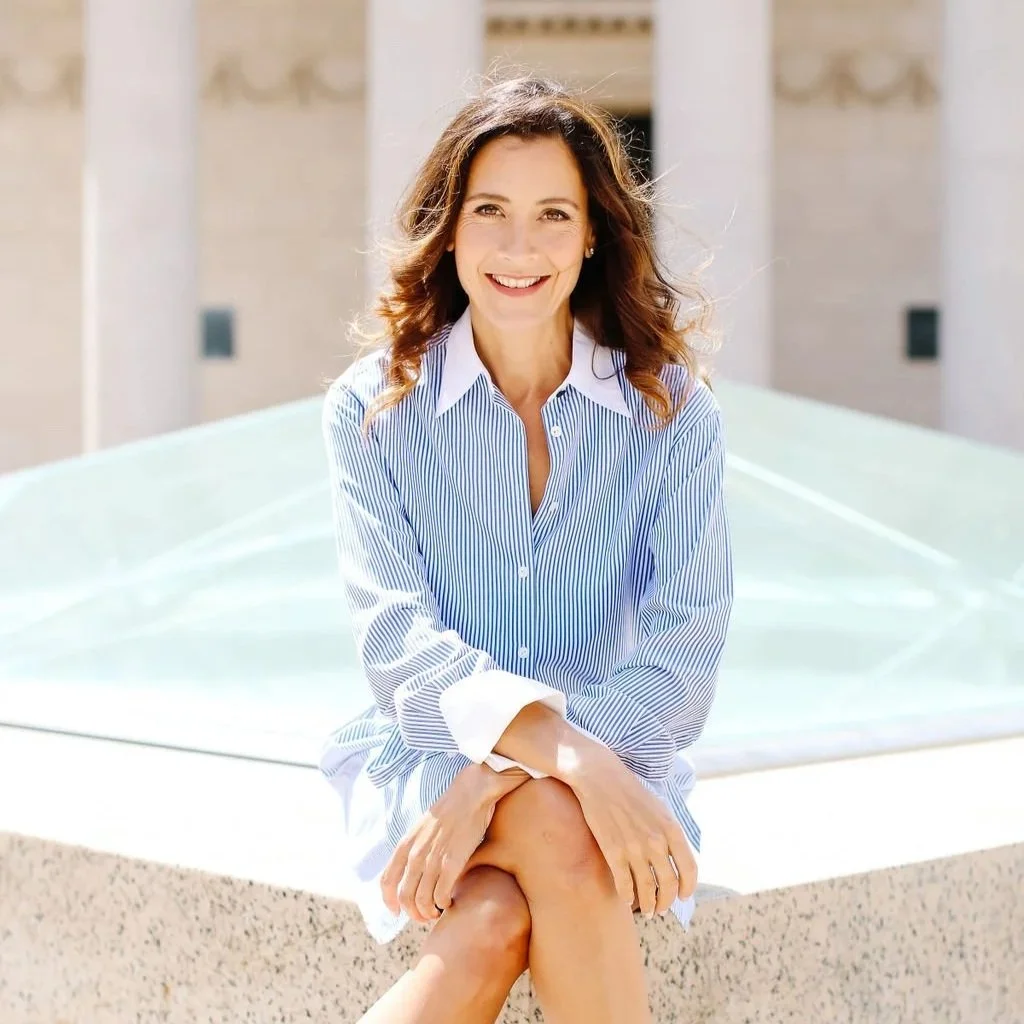
What if healing isn’t about forcing change — but about building capacity?
This week we explore microdosing, trauma recovery, and the quiet intelligence of plant medicines.
In this episode of The Energy Fix, Tansy is joined by Kayse Gehret for a nuanced conversation about microdosing with psilocybin and its role in trauma healing, nervous system regulation, and identity transformation.
This is not a hype-filled conversation about quick fixes.
Instead, Kayse speaks to thresholds — the emotional and psychological edges we reach before change — and how microdosing, when approached with readiness and structure, can support deeper healing.
We explore myths, science, ritual, consistency, and the growing acceptance of psychedelic therapies in medical settings.
If you’ve been curious, cautious, or quietly wondering whether there’s another way to approach healing, this episode offers grounded perspective.
Disclaimer: For entertainment and educational purposes only. Not medical advice, diagnosis, or treatment.
Listen & Watch
🎙
Listen & Watch 🎙
What We Cover
In this episode, we talk about:
What “thresholds” mean in the healing journey
How microdosing differs from recreational psychedelic use
Nervous system dysregulation and trauma recovery
The intelligence of plant medicines
Emotional readiness before working with psilocybin
Myths and misconceptions about microdosing
Why consistency matters more than intensity
Creating personal rituals around healing
Identity shifts that can occur through this work
The evolving medical and research landscape
Community support in psychedelic healing
Key Takeaways
Healing is something your body already knows how to do
Microdosing can support cognitive clarity and emotional resilience
Trauma healing requires a felt sense of safety
Consistency and structure matter
Ritual deepens integration
Identity shifts are gradual, not dramatic
Research on psilocybin is expanding in clinical settings
Community reduces isolation in the healing process
Listening to your intuition is part of responsible exploration
Favorite Quotes & Sound Bites
A few moments you’ll want to remember:
“The word that came through for this time was thresholds.”
“It’s you that’s doing the healing.”
“Psilocybin helps us build a capacity within.”
“These medicines have an intelligence within them.”
“We expect everything to be solved in 30 days.”
“It’s a very different way of healing.”
“Just listen to your soul. That would be my best advice.”
Chapters
00:00 – Thresholds and Life Transitions
12:05 – Microdosing & Personal Transformation
22:43 – Trauma, Nervous System & Healing
31:58 – Emotional Readiness & Intuition
48:09 – Protocols, Consistency & Ritual
55:35 – Healing Timelines & Expectations
01:01:14 – Research, Medical Acceptance & History
01:10:55 – The Future of Psychedelic Healing & Community
Why This Episode Matters
Because a lot of people are exhausted!
Exhausted from:
trying medication after medication
doing years of talk therapy without body-level relief
feeling stuck in trauma loops
overthinking every decision
wanting change, but not knowing what feels safe
And when it comes to psychedelics, there’s even more noise:
Is it dangerous?
Is it legal?
Is it spiritual bypassing?
Is it just a trend?
This episode matters because it slows the conversation down.
Kayse emphasizes emotional readiness, consistency, ritual, and nervous system safety — not intensity.
Healing isn’t about chasing peak experiences.
It’s about building capacity, one threshold at a time!
About Kayse Gehret
Kayse Gehret is the founder of Microdosing for Healing and creator of the Professional Microdosing Facilitator Program, a trauma-informed certification now taught globally. After healing her lifelong seizure disorder through intentional microdosing, she has dedicated her life to helping others use this practice for nervous system regulation, trauma resolution, and intuitive awakening. Her approach blends education, ritual, and harm reduction, empowering a new generation of facilitators to safely and skillfully support others on their microdosing journeys.
Links Mentioned In The Show
Microdosing For Healing: www.microdosingforhealing.com
beU Crystals: beucrystals.com
Just Thrive (Probiotics): Use TANSY15 for 15% off!
Podcast review promo...Get 15% off a distance energy healing session or a piece of jewelry with a positive review of the show. Email photo of review (after submitted on podcast platform) to info@tansyrodgers.com
Support Beyond The Episode
If this conversation hit home, and you’re craving deeper support (not just ideas, but real integration):
Join the newsletter →
If this conversation sparked curiosity, approach it slowly. Do your research. Ask questions. Stay regulated.
And if you value nuanced conversations about healing, follow or subscribe to The Energy Fix. Reviews help this podcast reach people looking for grounded, thoughtful discussions.
If there’s a topic you’d like explored next, send it in!
Transcript
-
Tansy Rodgers (00:13.73)
Welcome back to the Energy Fix, a podcast dedicated to help you balance your energetic body by diving deep into the sweet world of all things health and spirituality. My name's Tansy and I'm an intuitive crystal Reiki energy healer, energetic nutrition and holistic health practitioner, and a crystal jewelry designer. It's time to talk all things energy. Let's dive in. There's a difference between
chasing an experience and choosing a healing path. And there's a difference between I want to feel different and I'm ready to feel different. And if you've ever been in this season of your life where your nervous system feels completely maxed out, your emotions are so loud, some days you can't even feel like you can hear yourself think, or you can tell something inside you is asking for a deeper
more responsive reset, then you know what I'm talking about. It's that need to step into just something different. And so today, as you know, on this podcast, I love talking about things that are just outside of the conventional norm and really allowing you to experience and open up to different opportunities and different healing experiences. And the topic that we're going to be
on today is really one that I've actually brought a couple times now, but each guest that I've had on has had a different flavor. And I've loved that. I've loved exploring the opportunities and the flavors that each guest brings to the show. And so today we're gonna be talking about microdosing for healing and how intentional earth medicine may support emotional balance.
spiritual connection and personal transformation when it's approached with education and safety and integration, not these shortcuts that maybe you feel that you see other people are stepping into. And I want to be really, really clear. This isn't some kind of trendy conversation. This is something that I have found really fascinating for quite some time. And I wanted to approach this in a grounded response.
Tansy Rodgers (02:33.014)
It's about this personal responsibility allowing you to step in to this healing path with more information and more education and more grounding. It's about understanding that real healing doesn't come from one perfect tool. It comes from how you use a tool, how you're supported and how you integrate.
what comes up afterwards. Because that's the key thing here, especially you're going to find out in this conversation. It isn't about the tool of microdosing, regardless of what your medicine is. It is how you integrate what comes out of that and how you use that to expand and open up your overall conscious awareness and your evolution as a human being. And so my guest today is Kayse Gehret She's the founder of Microdosing for Healing.
and creator of the Professional Microdosing Facilitator Program. It's a trauma-informed certification that is now taught globally. And after her own healing of a lifelong seizure disorder through intentional microdosing, Kayse has dedicated her life to helping others use this practice for nervous system regulation, trauma resolution, and intuitive wakening. Her approach blends education,
ritual and harm reduction, really helping to empower a new generation of facilitators to support microdosing journeys with more skill and care. And so in this episode, we're gonna be talking about not only Kayse's personal healing journey and why she's so passionate about this work now, but we're also gonna be talking about microdosing as a support for nervous system regulation and trauma healing.
We're gonna talk about breaking the stigma by shifting the conversation into empowerment, safety, and responsibility. And that's one of the things that I loved about this conversation. She really brought a lot of the educational piece into it, brought a lot of the talk in regards to what kind of backing and research there has been on how this can be such a powerful tool if that is something that you are looking to step in towards.
Tansy Rodgers (04:50.7)
She's gonna talk about why ritual and intention matter as structure. And she's gonna talk about the rise of trauma-informed facilitators who are bringing more integrity to this space and using this with power and intention rather than just something willy-nilly. Now, a quick note, this episode is educational. It is not medical advice. It is not encouragement to do anything illegal.
Laws are gonna vary by location and psychedelics aren't appropriate for everybody, especially if you have certain medical conditions or on medications, you need to make sure that you are keeping yourself safe. And so what I would recommend is that if this is something that you're interested in, make sure to reach out to Kayse directly so that you can have that confidence that you are on the right track and that you are doing what you need to do.
Okay, let's get into this conversation with Kayse. Let's dive in.
Tansy Rodgers (05:56.802)
Hi, Kayse. Thank you so much for being here on the podcast today.
Kayse Gehret (06:00.632)
Thanks so much for having me.
Tansy Rodgers (06:02.912)
We're going to be diving deep into a whole conversation around microdosing, protocols, trauma, nervous system support, really supporting the healing process. And this conversation is going to be incredibly rich with information, but also inspiration and giving you a little bit of know-how of how to move forward. But before we really dive into that,
Kayse, let's get to know you. You know, you've had quite a journey, I'm sure, and we're gonna hear all about that. But I wanna know you right now, where you're at. Is there a word or a phrase that you're really embodying in this season of your life?
Kayse Gehret (06:48.078)
Beautiful question. Thank you for the opportunity. The word that came through for this time for me was thresholds.
For me individually and all of us collectively, I see it in all of my community, my fellow guides and colleagues, we're all kind of being asked to have one foot in the past, one foot in the future right now, and really take stock of everything that we have experienced and been through, kind of our collective wisdom of our lives. And how do we metabolize that, embody that, forgive...
parts of it as necessary to move forward into kind of this next iteration of both individual lives as well as our collective societal experience.
Tansy Rodgers (07:35.438)
Kayse, I've been having so many of those conversations, feeling like we are being asked or tested or put into situations to really be in who we were, re-evaluating that, creating that opportunity to either stay there or to move forward, and then also being shown that potential future and how we can expand and
Where are we going to be? Where are we going to choose? So your word is so perfect for the conversations I have been having. I would love to know, how are you standing at that precipice, that threshold? How are you looking back, but also looking forward and staying connected to that?
Kayse Gehret (08:26.734)
Well, I have a big birthday that's days away as we speak. it'll be my 50th birthday. But I remember being a little girl and thinking like 50 is magic. Like 50 is gonna mean like you step into some threshold at 50 and you embody. I've been in healing arts now for.
30 years and I've had a lot of elder female mentors over the course of my career. I'm so grateful for them and I always look to them and the way they held their practices, whatever it was. And I always held 50 out as a marker ahead. And it's so, it's really beautiful to kind of be approaching that and in this moment really looking back across half of a life, right?
and seeing how our experience builds and you come to this place where everything all starts to make sense. Every failure, every stumble, every time you went through a pattern several times before learning that lesson, it all starts to come into coherence in a new way. And I think it's because it's a time in our life when we are about to
support and mentor the next generation very naturally based on everything that we came up came in with to learn in this lifetime.
Tansy Rodgers (10:00.664)
Quick pause before we really dive further into this conversation. I wanted to let you know that I create intentional crystal jewelry through BEU crystals. They are pieces that are designed to feel like this small, beautiful little anchor that you can actually use when your nervous system is getting too loud, your energy is feeling too scattered, or you're stepping into something brave and you want something to really ground and support you.
That is what my crystal jewelry is all about. It is supporting the place, the journey that you are on right now. And a little behind the scene updates. I have a brand new website that I am rolling out in the next few weeks and I'm so excited for it. It's gonna be cleaner, easier to shop and way more aligned with where this brand is going along with new products that have come out, new pieces and easy
easier ways to custom build the perfect piece for you. So for now, you can head on over to beucrystals.com. I'll make sure to link that down in the show notes so that you can easily browse. There's a few things up there. The website isn't looking too amazing right now, but that's okay because the new one is coming. Keep your eyes open. All right, let's get back into this episode. Here's Kayse.
Mm, yeah, you're absolutely right. And you know, as we talk about it all making sense, these pieces of the puzzle coming together to create this picture, this vision of where we come from and where we're going, I would love to know about your journey, Kayse. Where were you? What was happening in your life, your body, before you really stepped into microdosing? And what was the first moment that you realized
this is actually changing me.
Kayse Gehret (12:03.278)
Beautiful question. So I was, and many of my clients and people I work with are very tentative spirits. So I grew up wanting to be a doctor. So I've long wanted to help people and serve people's health and wellness. However, I had a grand mal seizure disorder.
when I was a teenager and also was Gen X, you know, I grew up during the 80s and just say no era. And so for those factors, I didn't do any kind of drugs, let alone psychedelic drugs. So was very far off of my radar. I was very fearful of losing control of my mind, destabilizing my already trick brain more in the time.
But years later, after I had studied many different healing arts modality, I was very steeped and trusting in my body. I came across the concept of microdosing and that I could kind of get my head around because it was very gentle. It was subtle. It was sub perceptual. I wasn't going to be leaving the earth realm. And I thought, I didn't really have any great expectations for it. I didn't really have any expectations for it. I didn't know anybody else who was doing the practice.
on a regular basis and I began and immediately started feeling shifts. The first things were definitely cognitive benefits, just a sense of clarity, a sense of uplift, peacefulness, intuition expanding, my connection to nature and just life just took on a new nuance, a new texture and my seizures stopped.
and have never come back. So it took about a few months before I realized, hmm, you know, I haven't had a seizure. I haven't even had an aura and I've not had one since. I also used to get a lot of headaches from the time I was a young child and I've had maybe one or two headaches in many, many, many years. So when life came up with the opportunity to,
Kayse Gehret (14:20.92)
bring my girdersing forth into the work to serve others. I was at the time living in Northern California in 2020. We were closed for the pandemic and it was really just at the time a way to bring healing to our community in a way that we could. We were all locked down, we were at home, we couldn't gather, we couldn't touch people. That's what we did in our studios. So it was just an opportunity I thought to bring people together.
and stay connected and bring this work to people to see if they might have the same healing that I experienced. And fast forward, five years later, we've had now 32 groups through our process of microdosing programs, have a global community of many hundreds of people around the world doing this practice together, as well as training other guides to bring microdosing support to their communities as well.
Tansy Rodgers (15:16.238)
Mm, that's beautiful. know, Gen X as well. So growing up in that whole era of just say no, I mean, you really are in this place of when these kind of these kind of conversations come into play, you're really into this place of, don't know. I don't know. Because subconsciously, I've always been told this is going to harm.
more than it's going to do good, right? And so I would say, a handful of years ago, I've really started hearing about microdosing and about the effects, the potentials, the possibilities of psychedelics from different biohackers. I remember Ben Greenfield being one of the biggest. He would talk about it all the time. And I thought to myself, this is really interesting. And I don't know if you know any of my background, but
I'm huge in holistic health work. that is what I have, mean, holistic health and body work and physical therapy. And so I'm very much my fingers on the pulse of what is healthy and what's not. What is conventional healthy versus what is root foundational healthy? How do we heal the root causes? And so when I would hear Ben Greenfield talking about...
microdosing and how he was using it for opening up to creativity and expanding into this knowingness. I thought, there's something, there's something here. And then this year it just all exploded where these conversations, I feel like they're all around me and I'm seeing how it's been helping people and healing people and the effects is just so beautiful. Yeah. Wow.
And so, Kayse, for those who are brand new to this, let's just explain it. Let's put it all out on the table in plain English. What is microdosing? What is in it? Let's just talk. Let's take the scare out. Let's take out the hype and just be real.
Kayse Gehret (17:26.59)
Wonderful. Let's do it. Let's do it, please. Yeah. So I think the one of the biggest misunderstandings and the thing that prevents people from exploring it is the notion that this is a drug experience. A lot of people think that working with mushrooms, psilocybin mushrooms is going to be like working with, you know, drinking alcohol or a drug that takes you outside of yourself.
Right? That alters you and takes you away in a sense that it dissociates. Mushrooms actually work in the very opposite way. You are actually brought home to yourself. You are clearer. You're more articulate. You're more centered. You're actually better in almost every way. My clients who often have the most hesitancy, they come to me and they're like, case, cannot be weird for like a second. I'm drawn to this, but
I have a big job, I have young kids, I have a lot of responsibility. I can't be off my game at all. And they come back in a few weeks and they're like, why is everybody not doing this? I'm not only better in the way that I hoped, I'm like better in every way. I'm clear, I'm smarter, I'm sharper, my reflexes are better. And it's a shame that it's taken us this many years to kind of come full circle.
because for many years we did have these medicines as part of our culture and part of our healing modalities. We've just been in an era that pharma has been king for a very long time. And we're now in this moment where we're starting to reawaken to the natural world and all of the healing gifts that it possesses.
Tansy Rodgers (19:13.688)
Do you feel like this is going to shift? Do you feel like we're going to move into a stronger era where this is going to be more acceptable, more open, more public?
Kayse Gehret (19:28.044)
Undeniably, yes, yes. And due to conversations like this, it's really people powered. This movement and this practice is growing not because of top down authority, but because of people just coming together and sharing their results and sharing their stories with each other.
Tansy Rodgers (19:46.414)
I think people too are craving it more. I think that there is a desire for opening up to something different, deeper, more expansive that is outside of what Big Pharma has told us for so long.
Kayse Gehret (20:04.648)
Mm hmm. Yes, that would speaking of misconceptions, I'd say that's the other big misconception that we hear is people often because we're so steeped in pharmaceutical thinking and conditioning, people equate microdosing kind of like a pharma experience where you take the substance outside of yourself, and it quote unquote does things to you, right and the gifts and the healing you receive are dependent upon the mushrooms.
actually it's you that's doing the healing when you work with plant medicines and the plant medicines are just igniting this innate healing within you and you get to keep that. It's you that's doing the healing. It's just think of the mushrooms as like the key to unlock that healing. So people are often quite surprised to know they don't have to keep microdosing consistently to receive the benefits and gifts. Like I'll go many, many, many months.
I've gone, you it's been many years since I began microdosing. I never, ever worry my seizures are going to come back when I'm not microdosing because I have a new set point of my nervous system that I get to keep and just carry through the world with me. So I would say those are the biggest misconceptions and also that you're going to feel altered in any way. Microdosing, you're taking about one-tenth of what would be a quote unquote trip.
right, where you are going elsewhere into other liminal states, microdosing is subperceptual. And so part of the beauty of working with like a culture guide is kind of pinpointing the dose that's going to be perfect for you, where you're feeling enough gifts and benefits, but you're not feeling altered in your day to day life.
Tansy Rodgers (21:48.62)
You've talked about nervous system. You've said that a few times here. And I know that in all of the research and the reading and the listening that I've done with microdosing, that nervous system regulation is one of the key things that it can help with. And so let's talk about that. Let's really dive into how it helps the nervous system to regulate on just any random afternoon, right? I'm curious.
When you have been doing, when you have been on this journey and you are feeling the effects of regulating your nervous system, what does a calmer system actually look like? What do you notice? Maybe sleep, breath, reactivity. What says something is shifting and this is working?
Kayse Gehret (22:43.214)
Beautiful question. Well, one of the things that surprises people is so many of our conditions that we medicate for are actually rooted in nervous system dysregulation. We don't always present that way in the Western model of things, but everything from concussions, TBI, headaches, cluster headaches, migraines, to neuropathies.
nervous physical nervous system damage, also addictions, ruminating, OCD, many eating disorders. All of these things are based on kind of the canalistic ruminating mind, the looping mind. And the way psilocybin works is it opens up new pathways, lights up different parts of the brain, forms new connections, and it's got a window of neuroplasticity.
to enable you to make new connections, form new thoughts and pathways to break out of that canalistic thinking. And what's incredible about it why it's so effective, it goes straight to that root cause. And when you regulate and reset your nervous system in this way, the symptoms just kind of disappear, right? Seemingly, magically, but you're not treating the symptom.
you're treating actually the underlying nervous system and the symptom dissolves on its own as a consequence.
Tansy Rodgers (24:11.36)
Yeah, well, and trauma healing is such a big terrain. Like you said, trauma healing can look like something very traumatic, like, you know, a sexual abuse or a physical abuse, right? Or it could look like something small and show up in ways like eating disorders or headaches and migraines. And so let's talk about microdosing and trauma and
How it can help to really, if there's, unless you just answered that on the very basic level, like I would love to dive deeper with that. How can it help with really getting to the root cause of some of these traumatic issues, no matter how big or small t that trauma is? And also, where does it not help?
Kayse Gehret (25:01.614)
Mm, yes, I'd love to talk about trauma because the way microdosing and natural medicines work with trauma is again, so different and novel from the way we tend to healing around these things. So in our Western model, we typically think of talk therapy.
And I have worked with so many people who have experienced significant trauma in childhood. And they're like, I've done all the things. I've done all the things. I've tried all the medications. I've tried all the programs. I've done all the talk therapy. And I understand my trauma, but I can't get past a certain point. And this is where mushrooms can be so incredibly effective as are, especially when combined with somatic.
practices and body work because so much of our healing of trauma needs to go beyond the mind, needs to go beyond the story of the thing. And it needs to be a felt embodied sense of being of calm, of safety. And it's that felt sense within one's body that actually builds the capacity that talking about our trauma can never quite get to. So whether you're talking about
Big T Trauma or Little T Trauma, I love that. It's really about building, psilocybin helps us build a capacity within which to hold our life experience and it stretches us. And I've seen this again and again where someone who came in with this trauma they experienced was such an overwhelming dominant part of their life and their identity. It doesn't take away the trauma, it doesn't...
diminish or discount their life experience, what it does is their own perception of themselves has grown and been stretched so expansively that it just becomes one part of their human story. It doesn't define their life anymore. So that's how it works with trauma and it's so differently than so many other modalities.
Tansy Rodgers (27:10.572)
Well, and I think you, Ry, you raise a really good point. You said about people that come to you and say, I've done all the things. I've talked about it. I've done talk therapy. I've done all these modalities and it only takes me so far. Because I feel like sometimes when you're not really getting to that route, well, first off, I mean, all of us.
subconsciously, we may have these big blocks up that don't allow us to actually push past that fear and see what needs to be seen in order to heal on a deeper level, right? And then when we do some of these other modalities, and I'm just going to say talk therapy, for example, there's many, many others, it can get to a point where you're just reopening wounds and never actually getting to that root cause of healing, right? Again, I...
I'm a big advocate for talk therapy and for so many of other modalities, but depending on who you are, where you're at, it can be limiting. It can stop you.
Kayse Gehret (28:12.75)
Yeah, I think for so many years, like the healing modalities we have are the best our human minds could conceive of, right? We come at things as humans, as humans, right? But when we work with plant medicines, these medicines have been around for millennia. They have an intelligence within them that goes beyond our human mind.
Even like our most innovative technology, it's like they are their own innovative technology. And it's so fascinating witnessing and guiding people because I see the medicine's unique way of communicating to each person. Some people are very somatic people, very physical people, very connected to their body. And so the medicine will...
speak to them and work through their physical body. Other people are very intellectual, heady people, and the medicine will work for them and they'll have like lots of ideas and creativity starts to pop and their intuition starts to light up. Other people have a very more creative, like spiritual, spiritually expansive soul and spirit. And when that is the case, the medicine could speak to them in that language and connect. And so
It's so far I often witness like nothing I could have conceived of as a human. I learned from the process of the medicine itself probably more than anything along the way.
Tansy Rodgers (29:42.186)
What have you seen as some of the best practices that go in, that go well in conjunction with it?
Kayse Gehret (29:49.29)
So many, probably far and away, the one I work with the most, recommend the most is somatic practice. Body work, energy work, reiki, polarity, any kind of massage therapy is a beautiful accompaniment. We store so much in our physical body. We tend to favor the mind and talking about things so much, but we hold such a wisdom and intelligence in our body.
And so when you work with particularly mushrooms, mushrooms work by amplification. They are very expansive. They bring up emotion. They bring up truth. And so when this energy comes up, it's really beautiful to work with bodywork to move that energy, to really get in touch with that energy and help release that energy at the same time. In addition to bodywork, I love helping people.
about their own blueprint. Like everybody is different, right? We're all kind of wired differently. And so some people will really thrive with more inward practices, more yin yoga, more quiet journaling, being reflective inwardly. Other people are typically like that when they start working with mushrooms, they come out and they kind of come out of their shell and they really thrive with more relational practices. So for those people, I might encourage them to do more.
Dancing, go dancing, go in a group class, go take spin class, go row together in a group, things like that. So it's really, really different for each person, but I'm always, when I'm thinking of the modalities that I'm going to encourage them to check out, it's always in alignment with how the medicine is working with them and what's going to support them in their own unique energy.
Tansy Rodgers (31:37.422)
Let's talk about your journey with this. Were there areas of trauma or areas of your life that you were really able to dissolve outside of the seizures, that you were really able to dissolve and help to regulate your nervous system and get you back on track?
Kayse Gehret (31:58.777)
Yes, I have a very personal one that I'll share with you guys. So I lost my father when I was seven years old and he was a suicide. So it was very abrupt. We didn't have a lot of preparation time and he was in this lifetime, like one of my soulmates in this lifetime. he was meant to do this one together. And after that, I remember being even like eight or nine years old.
That's when my headaches started. I spent lots of school days in the nurse's office getting headaches. And then I think later that was the same thing that morphed into my seizures. And so my trauma from that experience, that loss rooted deeply into my nervous system. And I did lots of talk therapy. I did lots of healing. I went into healing. And I studied lots of
different religions, different spirituality. I spent a lot of my childhood trying to intellectually understand. Went into the Haleon Arts and I would say I came to a place of understanding, but I didn't really come to a place of peace around it until I started working with mushrooms.
And through mushrooms and deepening that practice, I, like I said, I was very hesitant for many years. I started off very slow and gently with microdosing. I microdosed strictly for a very long time. And in the course of microdosing, at one point I decided that that was something I wanted to work with that intention was to become closer to his spirit. I was able to feel him at different points throughout my life, especially in times of transition.
I could feel his presence, but it was always very briefly and very unpredictably. And I wanted to have this sense of him, closeness with him. And as soon as I did that, I started having more dreams. He would come into my dreams. I could feel his presence more. I could just sense him in our lives with my sister sometimes too. But it wasn't until I...
Kayse Gehret (34:19.625)
journeyed for the first time. For those of you who are listening don't know what that is, it's a higher dose where you do move beyond the earth realm into different liminal states with a higher dose of mushrooms. in that journey, and every journey I have ever had since he has appeared in it, he
We've been able to sit down in them. We've been able to have conversations in them. He's allowed me to ask him questions to come to understanding. He gives me instructions that he wants me to do back over in Earthrealm. And most of all, there was one point where I was asking him and told him I spent so many years trying to understand. And he took my hand in his journey. And he took his arm and he kind of
where we were sitting in the journey, we were sitting outside in an apple orchard and sitting both on fallen trees. And he took my hand and he kind of unzipped the sky. And he took my hand and he put my hand into this place and time and space. And I instantly just intuitively knew he was allowing me to feel how he felt in that moment. He was allowing me to be.
inside himself in that moment. And it was, was so hard. It was so hard. And I won't go on to describe it in detail, but it was in that moment that I found peace. I found peace. I found compassion. I found complete and utter understanding. And also a sense that he could not go on in this particular form and he was going to catch the next one.
So to speak. So thank you for letting me share. It's a really personal story. And since then, I have worked with many, many, clients who have lost spouses, who have lost children, who've lost people very close to them, who are hoping to be supported by nature in finding the same peace.
Tansy Rodgers (36:33.806)
Thank you for sharing that beautifully emotional but also pivotal and transformational. Do you feel that that was that pivot point for you to really show you that this microdosing, this journey, this work that you were doing was really, it was really working for you? Like it was that key that was unlocking that next level.
Kayse Gehret (36:59.246)
Mm, great question. Well, there were lots of signs along the way from the start. I remember the first day I took my first microdose and I was like, I don't really notice a whole lot. And I was inside and I went to go take my dog out for a walk and poof. As soon as I opened my front door, the light caught my eye in a different way. I could smell the jasmine.
four blocks away in my neighbor's yard, I could smell the salt in the air from the bay that I had never noticed before hanging in the air. it just, all of a sudden, like life just kind of turned up a bit. And I was like, okay, there's something, there is something to this after all. And then what most people experience as you intimated a little earlier is you go through,
life day to day and it's not until life gives you something to reflect on that you really see your nervous system growth and potential. So many times people say to me, yeah, it's really, really subtle. I feel the uplift. I'm definitely more productive, more creative. I'm sleeping better, but man, I had this encounter at work the other day and normally I would have been triggered and I would have been upset and I would have been stewing about it for days. And it was like, poof.
I I kind of couldn't believe how I handled it and how quickly I metabolized it. This is really working. It's usually something like that where they notice like they're quite different than they were.
Tansy Rodgers (38:33.742)
Maybe their road rage isn't quite as extensive as it typically is when they're in the middle of traffic, right? Yeah, those big moments that I think so many of us take for granted as just part of who we are, our normal reactions, when in reality it could be triggers and wounds and subconscious training.
Kayse Gehret (38:59.796)
Mm hmm. Yeah, people often describe to it as they notice their reaction is different and they're like, they also can instantly have compassion for other people's behavior to kind of see beyond the obvious and the behavior and go straight to that person is fearful. That person is anxious. That person is this, that and the other.
And they're like, it doesn't take away the fact they're still an asshole. So but they're like, I can really find compassion and I can see what's really going on with that person. Totally.
Tansy Rodgers (39:35.17)
which is part of the evolution of our souls and where we are meant to expand to when we're on this journey is finding that compassion, seeing past the human eyes of the 3D experience and expanding into something much deeper, much greater, much more deeper dimension, right?
Kayse Gehret (39:58.958)
There is so much more, so much more. And I guess I think we're just at the tip of the iceberg. And the reason why this work is kind of coming forth now is it's to serve as a bridge in helping us get there, for sure.
Tansy Rodgers (40:14.722)
That's the first time I heard it explained that way. I love that. Yeah, to serve a bridge because it's something that somebody tangibly can do, can take to help expand instead of constricting and compressing and masking the symptoms or masking the emotions and the feelings. Yeah. So thinking about that.
you had a beautiful experience. I know many that have had beautiful experiences, expansive experiences, but the reality too is not everybody should be microdosing, right? Not everybody this is appropriate for. So let's talk about the other side of the coin. Who should not be microdosing or maybe just needs some extra screening? And what are some big red flags or medications perhaps that
people need to consider if they are looking at doing this style of work.
Kayse Gehret (41:15.672)
Fantastic question. So when someone's coming to me and they're interested in working with psilocybin mushrooms specifically, I'd say the biggest, and people always go, really? The biggest quote unquote contraindication to me is if someone, I question if someone is in a place where they are emotionally resourced enough to be at least momentarily more emotional than they already are.
because mushrooms, the way mushrooms works is they bring things up, they make things bigger so we can see them and work with them. But if someone comes to me and say they're raw with grief, they just lost a pet, or they just lost a loved one, or their wife just left them, like if they're in this very raw, vulnerable place, I'll ask them, can you imagine feeling more emotional than you do right now?
And if they say, no way, no way, that's a sign to me that it's not that they can't work with mushrooms at some point, but I'll typically work with them with other lifestyle practices first before we move into psilocybin. Or we might start with a different microdosing medicine like Amanita muscaria, the cute little red mushroom with the white dots, the Allison wonderland mushroom. That's another mushroom that we can work with to microdose that doesn't necessarily amplify a motion.
So as strange as it sounds, like emotionality is typically the biggest contradiction for people. The other thing I'm really listening for when I first meet someone is, is this person ready for honesty and big truth?
Especially with psilocybin, psilocybin is really going to show you the truth. lots of people coming, the majority of people coming that I work with are really ready for that. That's why the mushrooms called them. It's time, they're ready in their soul development for that, to be honest about themselves, to be honest about the world, and to take that on and face that fully. But I think as it comes more into the mainstream and people equiv-
Kayse Gehret (43:34.872)
think that the mushroom experience is going to be like a happy pill or an antidepressant. They don't really understand that the process of working with mushrooms isn't to be happy and comfortable all the time. It's to be honest with ourselves. And in that honesty, we can get to a place of joy and alignment and peace through it. So those are the two main things I look for.
Tansy Rodgers (44:00.066)
Did you know that stress doesn't just live in your brain? It actually lives in your gut too. Because your gut is the center of it all. When your nervous system has been under pressure, digestion starts to get really weird and cravings start to feel out of control. Sleep may get lighter and you feel like you don't get the rest you need and your mood, well, it can get super spicy. so supporting your gut is such a big part of supporting your
resilience. One of my go-to staples is Just Thrive Probiotics. It is the first probiotic that I found works so well for me and has worked so well for many, many of my clients. I love it because it's simple, it's consistent, and it fits into real life without turning your morning into this supplement overwhelm. You don't have to keep it in the fridge. It is shelf stable and you can take it
wherever you need it is quite easy. But my favorite thing about Just Thrive Probiotics is how it made me feel. The bloating started to go away. I felt like my digestion was running so much smoother. My immune system started to improve. I just feel better when I am taking Just Thrive Probiotics consistently.
head down to the show notes, click the link for Just Thrive Probiotics. And when you use code TANZY15, you get 15 % off your entire order. That's TANZY15 for 15 % off your entire order. I know you're gonna love this product. I can't wait for you to try it out. Do you think that people in this mainstream part of this conversation, do you think that people maybe get into that?
thought process, it's a happy pill, it's is an antidepressant because we're so used to taking medications for our concerns, our health issues, our mental and emotional status.
Kayse Gehret (46:09.974)
It's a lot of it is our conditioning, but it's a lot of just being uncomfortable. I still, I still have there. It's still three decades in still fall for it. Right. It's like, we're just trained in condition. Like if we have a headache, we're trained in condition to make the headache go away as quickly as possible. We're not trained to be curious about what's causing this headache and how, how can I get to a place of honesty around that and support that versus.
nearest pill, right? So it's a lot of conditioning and a lot of it is just continuously bringing ourselves back to that curiosity because it's giving ourselves a break because it's been many, many, many decades of conditioning that we're kind of turning the ship around in.
Tansy Rodgers (47:01.388)
Yeah, well, part of this conversation, I really wanted to drive home the concept that this is very open and honest and possible and not scary per se. That we're taking the fear factor out of this, right? This is something that could potentially help to open up somebody's healing journey.
And so with part of that, for those that this is appropriate for, for those who it is the right leg of the journey where their soul is calling them to, let's talk a little bit about some of the essential elements when it comes to creating a protocol. Let's take some of the questions, the fear out. What does a typical, especially if somebody is looking to balance their nervous system, to move.
past some of the traumas and some of the things that have been holding them back. What is typical for a dose cadence? Maybe intention setting, tracking. How does somebody get the most integration out of this?
Kayse Gehret (48:09.612)
Hmm, beautiful, sure. So ultimately, your relationship with the medicines will become intuitive over time. Once you establish a connection, you know how it feels and you work with the medicine. But I love to start with a fixed protocol at the beginning, just because we thrive. Humans thrive with support and structure, especially on the front end. And so it's really nice to have some consistency and kind of a scaffolding.
to your experience. And so I often liken it to meditation practice, right? You're gonna get a lot more out of it if you dedicate yourselves to every day being consistent, 10 minutes a day on the cushion, rather than being very sporadic around it. Same thing with microdosing. there's many different protocols and I'll sit with each person and assess with them how much contact they'll have with the medicine in any given week.
versus not depending on what their intentions are, their level of sensitivity, what they're working through, are they on other pharmaceutical medications that may have a blunting effect requiring more psilocybin. So typically the range will be a protocol that is more contact would be a 5-2. This is what I worked with for many years and that protocol I tend to still work with when I'm actively microdosing is five days on, two days off.
Typically I do Monday through Friday just because it's easy to remember for most people, but I work with a lot of sensitives, a lot of creative people, a lot of very spiritually open people who it really doesn't take a lot of medicine to have a beautiful effect. So I find them very much supported by a very, very low dose, but more consistent. So a very low dose of five days a week. Other people will assess.
they'll do better with less overall dosing, but a little bit higher of a dose. So maybe an every other day a week schedule, or sometimes even one day on, two days off, one day on, two days off schedule.
Tansy Rodgers (50:17.046)
And what about, is there a buildup effect at all when it comes to the actual medication or what if people don't feel like they're really feeling anything anymore and they're curious if they're still gaining the benefits?
Kayse Gehret (50:32.046)
Great question. So it's a very different experience than say an antidepressant where you have to be on it for X number of weeks for it to ramp up and people typically have a lot of side effects along the way until your body calibrates. And then if you choose to go off or taper, it's a whole host of side effects and tapering on the way down. Cilicide is instant. So you can start, you can stop. There's no side effects in starting. There's no side effects in coming off and metabolizes through the body very quickly.
And the medicine doesn't have a ramping effect, but your spiritual connection with the medicine does. So that is what tends to build and grow over time. So I've worked with many people who are now, they've been working on and off with the medicine for five or six years, some of them. And so I see where they were five years ago, they worked with the medicine for one intention.
And now many years later, they have solved for that intention. And now they're working with the medicine for some completely other intentions. So that's how it tends to work.
Tansy Rodgers (51:37.67)
Mm, that makes sense. That makes sense. And so you had mentioned the word consistency and about being on that schedule and allowing yourself to flow through it. But you also talked earlier about the intuition and bringing that piece into it. So let's talk a little bit about ritual without the rigidity. Are there some small doable rituals that you've seen consistently deepen outcomes?
regardless if you're trying to be on a schedule or use your intuition to help you, especially, especially those with busy brains.
Kayse Gehret (52:15.798)
Yes, yes, I work with a lot of those too, and a lot of artists and it's counterintuitive, but people once they get into a schedule, they realize that it's actually the structure that allows them to have a more expansive experience in it. It's so interesting and counterintuitive in so many ways, but beautiful to witness. so, yes, my goal for someone is to have...
a structure and a consistency enough for it to have people something to anchor into to make their nervous system feel soft and consistent and safe with being held in a container of care and support and also consistency of practice. But then also within that have a lot of freedom to do different practices, do different things that call to them. Like a very common one is people come in and they're like, do I have to journal? Everybody tells me to journal. I'm just not feeling the journaling. Do I have to journal?
No, some people will thrive. I've seen many people start microdosing and they can't write enough. It's just their journals from the weeks somebody start microdosing, it pours out of them. Other people, it comes through in other ways. And so that's the beauty of it is, is you can really create your own ritual that you're drawn to. We've had a lot of people come to practice are led to things that they never even heard of.
before, but things just drop in. meet people, they make connections, and they get led to the thing that's meant to support them. A lot of people, when they complete a microdosing cycle and they're taking a break from the medicine for some time, the number one thing they share with me is they miss the ritual.
They still feel very much connected to the medicine. They still feel things flowing and growing and shifting and healing without taking the medicine. But they're like, I miss the me that was doing the ritual as part of the thing. It's interesting.
Tansy Rodgers (54:11.822)
And so would you recommend even in that? I mean, really, the reality is they've shifted, they've grown, they've expanded. They're now creating these rituals and this consistent marker to allow themselves permission almost to be a different human being, to be a different soul really.
And so would you say that even just them taking a different style of ritual that might be outside of the microdosing would be a great substitution while they're taking a break?
Kayse Gehret (54:47.118)
100%. Yes. Yeah. And it's so naturally effortlessly happens. And I have the privilege of seeing people over time because I'll go from their intake call and then some of them stay in our community for years later. And it's so fun having our calls and seeing someone and remembering and reflecting on the very first time I met them and their intake call and how far they've come and how much they've grown. They are, like you said, a completely different person in so many ways.
Tansy Rodgers (55:16.174)
I love it. love it. Well, let's talk about the growing part of it. Realistically, what do you see as a realistic timeline for things to start to shift? And are there some tiny markers along the way that may get overlooked, but to you, they're kind of a big deal.
Kayse Gehret (55:34.894)
Yes, this is where us, especially Americans, are notorious around the world. We expect everything to be solved in 30 days. When I work with people and guides in other countries, they're like, you guys think you're so unrealistic. You build up these experience over lifetimes and you think you're going to solve for it in 30 days. 30 days? That's just us.
Tansy Rodgers (55:56.492)
That long
That long? That's forever!
Kayse Gehret (56:02.87)
Yeah, no pressure, no pressure. Nature just laughs, nature just laughs. So I love working with six-week cycles. I just chose that at the beginning and it just worked really well because I think most people I have worked with at six weeks, most people have experienced significant shifts and breakthroughs. They're connected with the medicine they feel. Most people in my experience microdose for about three months.
their first time when they begin microdose. I see some people do less who have a lot of growth and a lot of healing, a lot of movement. Sometimes they get to six weeks and they're like, wow, okay, I just want to integrate and take a beat and experience my life as this new, new experience. This is especially true when people can clear significant health conditions that they have battled with sometimes for many, many decades. It's just nice to experience and kind of grow into their new.
skin and experience of life. But most people on average, find it's about three months. And then at that point, we'll just take time to integrate. They'll work on a new ritual, continue the ritual they already had, just integrate and take about a month off usually between cycles.
Tansy Rodgers (57:21.132)
Hmm. As you were talking, I was thinking to myself how many people might be really apprehensive to even trying microdosing, not necessarily because of any of the hype or the fear or the questions around it, but because of being so tied into a certain identity that their wounds, that their triggers, that their emotions allow them to really
identify and be, right? And so like, as you were talking, I was thinking to myself, like with you and your seizure disorder that you had experienced, how did you talk to your doctors after that? How did you talk to your family? How did you talk to yourself and just like pull yourself? I am not a person with seizures. I'm a person who experienced seizure.
Do you see what I'm saying? Like, it feels like it can really open up a ball of convoluted conversations to yourself and to others, especially your professional medical team.
Kayse Gehret (58:27.768)
This is a very, very insightful inquiry for so many different reasons. And one of the things I've seen, because this is a little, quote unquote, out there still for people to step into, I work with a whole lot of people who, if you asked them a year ago, would you be working with psychedelics? They would be like, me, who? And then they come, because many times they have tried everything else.
And sometimes they'll microdose for six weeks and clear whatever it is. And it's exactly as you said, then the practice becomes opening oneself to receive.
to take on this new identity, to release my old identity. And some people have built their entire life around being a survivor of X or a sufferer of Y, right? And these boxes that we put ourselves in. And we're so conditioned, so many of us, I see this in so many people I've worked with, that we need to work hard for our healing. We need to earn love.
We need to earn our value and our right to be happy and healthy and free. It's so hardwired in so many of us. And so that becomes the coaching and guide ship and support is helping people step into this new reality. And that sometimes is way harder for people than getting their heads around working with mushrooms. Right? That's when, when the real work starts is kind of having their
mind catch up with what their soul already knows. Having the conversations, having people grow along with us. When you have grown and healed sometimes so quickly, giving the people around us who love and support us time to kind of catch up to us too. And having, you I often say it's you shift and change first internally, and then you need to give the architecture of your life time to catch up.
Kayse Gehret (01:00:41.218)
to you, yeah.
Tansy Rodgers (01:00:43.854)
Ooh, give the architecture time to catch up. I love that. So you, on your journey, when you were having, when you had your seizures pretty regularly, did you have a whole medical team involved with following that? Yeah. So what, how did you transition and allow your medical team to catch up with the architecture of where you were building and what shifted for you?
Kayse Gehret (01:01:14.444)
My experience is a testament to how far this work and field has come since I started. Because when I shared it with my doctors, I had three physicians that I worked with at the time, and all three of them were adamantly against it. It was, their reaction was so fearful. One, was immediately about, I could damage my brain, harm could come to me.
I should be very fearful. I should be fearful about going off my Western Pharma medications. And they didn't want any responsible, any responsibility, if anything, what happened to me. One of them said they wouldn't be my doctor anymore if I chose to try this. So I was just, I was just really disappointed in that I wasn't centered in any of the conversation.
And there was such a lack of curiosity afterward when I decided to go off my medications and pursue natural methods. None of them were even curious to see what happened. Like I would be so curious to see what happens as it being in a field to support people's healing and health. And that was very lacking. However, fast forward to the present day, I have so many physicians.
nurses, clinicians, pharmacists, every stripe of professional in my training programs today to learn about medicines because their clients are asking them for it. When I asked the doctors and nurses and clinicians in my programs, like, now? Like, what brought you around? They said two things. It's they've been keeping an eye on the research. They've been following along and their clients
keep bringing it to them and they want to be able to, even if they can't serve it in their practice, they want to be able to be educated enough to know which of their clients and patients will benefit from it so they can be encouraged to go get the support they need to explore it. And then also a number of them are coming for their own health and wellbeing. Lots of them say, I can't introduce this into my practice.
Kayse Gehret (01:03:35.138)
but I believe in it and I wanna work with the medicine so that I can be a better doctor, healer, nurse, what have you, and really be in touch with my clients and patients in a new and different, more helpful way.
Tansy Rodgers (01:03:51.758)
which shows that thirst, that desire, that need for something deeper, something bigger. I love that. And so you mentioned research. Can we talk about some of the research? What is research showing right now that's allowing people to say, whoa, especially some of the medical professionals, whoa, there is something going on here and I might want to know more about it.
Kayse Gehret (01:04:19.744)
It's been pretty phenomenal. The research tends to be focused on high dose psilocybin work because it's far easier to study. We can control for variables. A mushroom journey is usually five, six, seven, eight hours. can test that. Microdosing, there's so many variables in a person's day-to-day life over time. It's much more difficult to track data in a quantitative way.
with microdosing. So that said, it's been pretty remarkable. So from the start, the studies around alcohol addiction, cigarette smoking addictions, any kind of addictions, the research has been pretty remarkable. Depression and anxiety. They've also studied psilocybin for end of life distress and terminal illnesses. It's becoming more and more accepted in palliative care. Also,
Two studies that came out recently that were so excited because we've seen this in microdosing, just witnessing it anecdotally, and we've just been kind of waiting for the research to catch up and show that Parkinson's. So psilocybin is really supportive for people with Parkinson's diagnosis, also longevity. So psilocybin is showing that people, they studied it in mice or rats.
that the actual, the telomeres lengthened and grew back and which totally tracks with what we have seen in real world practice because we've had so many people come to practice who have these diagnosis of things that Western science tells them can't heal. Like we can manage your symptoms, but you can't heal this. Like we can prevent more damage from happening, but we can't go back.
and heal you backward, back in time. We have actually seen this to not always be the case. Like my seizures, I've worked with other people who had seizure disorders that they were told there's nothing they can do. I've worked with people who have stroke where people said you have damaged your body, there's no repairing this, also to show improvement as well as Alzheimer's and dementia as well.
Tansy Rodgers (01:06:40.814)
Wow, it's yeah, it's absolutely mind-blowing that this has not well It's not that my I Like I'd like to cuz that was because you were talking like well technically it's still considered illegal and so How does one safely implement this into their life without fear, right? But also easily
Kayse Gehret (01:06:52.888)
We can talk about that.
Tansy Rodgers (01:07:10.188)
Let's just pull the cloth away and look behind the curtain and see what exactly is going on. And will we see the day where it does become legal that we can work with this medicine more easily and freely?
Kayse Gehret (01:07:28.43)
Mm hmm. Yeah, it's it's such a shame. And to be honest, I have seen especially early on, when I started practicing with groups, a lot of people expressed a righteous anger that this healing has been available all along. And it's natural and it's effective and it's so safe. It becomes quickly absurd. And it's like, why is this being withheld from us?
when we know, when we know. And several reasons. So in the 50s and 60s, there was a lot of research underway with psychedelics, with LSD especially, but also psilocybin. And it got caught up in the politics of the time. So very long story short, under Nixon, these substances were placed on the schedule one DEA list, even though
Mushrooms do not qualify for any of the scheduling requirements. It's not addictive. It's one of the safest quote unquote drugs there is. They're non-habit farming. None of them qualify as a schedule one drug yet. Yet they were placed there for political reasons to drive a wedge in those populations in society that were associated with these substances.
Fast forward now.
What was political now is a different kind of suppression and repression that is driven by big pharma. I think it was fine as long as it was weird and it was fringe and it was, you know, it just a few people on the side like doing this work. But now that the research is coming up and we're legitimizing this work with the science, with the research, with people coming forth and sharing.
Kayse Gehret (01:09:25.037)
Now pharma is taking notice and it's a very different way of healing, right? Rather than being beholden to a pharmaceutical drug for the rest of your life, right? Versus you could do six weeks of mushrooms and heal this and be free. You can see why that would be concerning to a multi, multi-billion dollar global industry, right? So I think...
I think that the true, what we truly face now isn't just government legality, it's also the suppression and the repression and the censorship of this work because it rocks a big boat. Yeah.
Tansy Rodgers (01:10:17.378)
But yet alcohol and nicotine are fully legal and profitable and very publicized. But yeah, I could go down a whole rabbit hole. know. But yeah, you're right. And I think that it really, especially now that this research is coming out and there is no way to monetize on it from that bigger level.
Kayse Gehret (01:10:23.182)
Very profitable.
Tansy Rodgers (01:10:48.44)
I'm not surprised that there's still a lot of suppression and a lot of issues around bringing it forward.
Kayse Gehret (01:10:55.48)
Mm-hmm. Yeah. It's like anything novel and new in society is like, as long as we can laugh at it and make fun of it and make it small, but then when we can't do that any longer, the next step is controlling it.
Tansy Rodgers (01:11:08.942)
Yeah, yeah, yeah, you're right. Well, but what I love too is that in your work, you've started to make it easier for there to be more accessibility. So can we talk about your facilitator program? Yes. So tell us about what you have in the works or what you're doing in your business to help make this more accessible, easier and.
Kayse Gehret (01:11:26.636)
Yes, sure.
Tansy Rodgers (01:11:37.056)
more healing for people that are needing it, thirsty for it, wanting it.
Kayse Gehret (01:11:41.198)
Mm-hmm, thank you so much. One of the joys of this work, I never in million years thought I would be working online. I was one of those people. I don't think before the pandemic I'd even been on Zoom. And so it's hilarious now, but the beauty of that is this work is global in nature. And so people, we have people from all 50 states and 30 countries who they can't talk to anybody around them.
They're like, come and they're like, am I the only one in Iowa here? Like, no, you're not alone. And so it gives people this practices practice beautifully brings people together in a like-minded connected way, which is, is one of my favorite aspects of, the practice. And really over since 2020, our programs really grew exactly that to make more education and more access available. And so while we started with group programs,
everybody in the group program wanted a means to continue and also to open it up outside of the programs to a more broad, diverse community. And so we created our community program, which is just an easy peasy month to month accessible, is very cost effective to come in. And what enabled us to do that is fast forward to the present day. There are some brave souls that are providing sourcing.
publicly, they have religious protections in place so that they can source high quality, high integrity medicine so that if you live in a place where you're like, would don't even know where to start to find sacred mushroom. They are available to source people directly all over the United States as well as Canada at this point. So that allowed us to grow the community. And then the facilitator program really grew out of
So many people, so many people in our six week program got to the end of that program and said, I think I want to do this for work. Is that crazy? And many guides were kind of just born out of that original program. And so fast forward this year for the first time, we put together a really beautiful, diverse, structured 12 week program with all practicing guides on the teaching team.
Kayse Gehret (01:14:02.274)
to support people in all the aspects of practice. So we teach them the science and the research, but also how to work with dreams, how to work with addiction and recovery, how to work with other mushrooms beyond psilocybin, how do they sync and play well together when you're working with people. So it's been really, really beautiful and we look forward to expanding that in 2026.
Tansy Rodgers (01:14:27.15)
And so the facilitators that you've been working with, are they all over the US?
Kayse Gehret (01:14:32.908)
Yes, internationally.
Tansy Rodgers (01:14:34.926)
International, that's amazing. Wow, wow. And so for the person that's sitting here listening and saying, I think that this is right for me, this might be the next step. Perhaps they're looking for a facilitator or maybe they're just trying to figure out what that next step is. What would you recommend somebody to get started?
Kayse Gehret (01:14:58.606)
hop into the community. That's what it's there for. So we welcome a lot of beginners, a lot of people who are just curious, but they go online and try to get information or just completely overwhelmed. There's just so much information. It's like who to trust, what's real, what's not. And so the community, you can just come in. We gather as a community two or three times every month. And it's a great time to just pop on. You get to hear people's stories. There's always newcomers. There's always people who've been practicing for years.
And I lead all the calls, but we always have a lot of the guides from around the world that are professional guides there to take coaching questions, answer your questions, any concerns you have. It's, yeah, that's the perfect beginning step.
Tansy Rodgers (01:15:42.764)
Honestly, I think it's probably the smartest step because especially when you're doing this work and if you've never done it before or if you have all these questions, like you're not sure if what you're experiencing is normal or maybe how to shift when you feel like you're upgrading and you need to take that next step, having a supportive community I would think would be really beneficial.
Kayse Gehret (01:16:06.734)
Mm Especially because the process is so the opposite of how we've typically thought of healing what it looks like. Yeah.
Tansy Rodgers (01:16:16.418)
Yeah, that's so amazing. This has been such a great conversation. I've had a few of these conversations this year so far on microdosing and I've loved them. But I feel like we really dived into the nitty gritty and like just being real about it and just pulling back all of the airy floaty stuff and just being really solid in the conversation. So thank you for that.
Kayse Gehret (01:16:43.326)
My pleasure. My pleasure. Yeah. I mean, there's so many entry points to this work. I've worked with a lot of people who were like, case, don't, you know, none of that woo. I don't want any woo. And they're, they're very steeped in the science and the research and they're, they're usually for the intellectual benefits and gifts of the medicine. But the beauty is we get all of it, you know, no matter what you come in for.
It slowly opens your mind to all that is possible. So whatever is drawing you to practice, just know that like that's just the beginning.
Tansy Rodgers (01:17:18.514)
Mm, I love that. I love that. Well, before we find out where your community's hanging out, how to get in touch with you, where you're hanging out in your work, let's do a few rapid fire questions. How does that sound? Sound good? Let's really allow the listener to hear you as some of the personal points on your own journey based off the conversation that we've had today. OK, I'm going to ask you three different questions.
And it's just going to be some rapid fire, whatever comes to your mind first. All right. Are you ready? Ready. OK. All right. Number one, what is a micro movement that always re-centers you in under 20 seconds?
Kayse Gehret (01:18:02.498)
Breath, the breath.
Tansy Rodgers (01:18:05.934)
Powerful, powerful breath work. Yes. I love that. Okay. Number two. What is a myth about microdosing you would secretly love to debunk at dinner parties?
Kayse Gehret (01:18:20.622)
I already shared a couple. Let me see if I can come up with another.
Kayse Gehret (01:18:36.926)
I think that a myth is that we can necessarily control the outcome. I share this because I've been continuously amazed at people set the intention and the expectation and over and over again, spirit and the medicine kind of goes above and beyond anything we could have conceived as possible. So hold your expectation, but
Save Room for Magic is what I'd like to share on that.
Tansy Rodgers (01:19:08.472)
I love that one. Yes. All right. And number three, when we talk about integration, integration being such an important part of this, right? What is one song that you would put on your integration playlist to really help keep you motivated, especially on some of those tough mornings?
Kayse Gehret (01:19:33.262)
Ooh, this is a good one. I listen to music almost every morning. Lately, I've been listening to a lot of Aurora, so that's what I would share, yeah.
Tansy Rodgers (01:19:46.36)
And why?
Kayse Gehret (01:19:49.118)
She just has this otherworldly quality to her voice and music that I think I can just feel the earth speaking through her in her voice. so I think, yeah, it's just a beautiful compliment to this work we're doing.
Tansy Rodgers (01:20:08.886)
I love it, I love it. Kind of opens you up to being able to allow the medicine to do its work. Beautiful integration. Where can people find you? Where are you hanging out? And let us know where people can go to get into your community.
Kayse Gehret (01:20:25.134)
We're easy, all the same place. We're at Microdosing for Healing. All the things live there, so you can just go to microdosingforhealing.com.
Tansy Rodgers (01:20:33.486)
And I will have that link down in the show notes to make sure that you can get right into the world of Kayse and all of the beautiful work they're doing. Do you have any last words that you would like to lay on the hearts of the listeners for today?
Kayse Gehret (01:20:51.182)
Just to listen to your soul. That would be my best advice. Like so many people share with me when they first come to practice. They're like, I know I'm supposed to follow my intuition, but my intuition hasn't talked to me for long time and I don't know if I have it. We all have it. So just know like trust your soul and oftentimes your soul is leading this process.
So things will start to happen, things will just people or practices will just start to come into your field in a way to kind of catch your attention. And that's a sign and a symbol of your soul at work. So just listen to that when it happens.
Tansy Rodgers (01:21:35.63)
Thank you so much. Thank you so much for the work that you're doing. Thank you so much for the conversation and for being here today. I'm really grateful for you and this work and I can't wait to see how it expands.
Kayse Gehret (01:21:50.264)
Thank you so much.
Tansy Rodgers (01:21:52.654)
If you felt yourself really leaning into this conversation, it might not be that you need a new method per se.
It might be that you're really just craving a new relationship with your own healing. One that feels more resonant. One that feels like it's more supportive. And one that feels more intentional. Actually integrating into your real life. And I think that that's the thread that I want you to hold onto here. That the medicine is never ever ever the whole story.
Intention matters, support matters, integration matters, your nervous system matters, and you don't have to rush your way into this transformation. It is all about the process. And so here are two questions I really want you to sit with this week and just connect in and see how they make you feel.
Number one, where am I craving real change and what kind of support would help me pursue that change with more safety and less pressure to perform?
And number two, what does integration actually look like for me right now? Is there a small practice that helps you stay connected to yourself? Is there something that feels meaningful that you can shift and help to support you a little bit deeper?
Tansy Rodgers (01:23:16.876)
And remember, if you want to learn more about Kayse's work, her links are down in the show notes. Make sure you jump on down there and grab a hold of everything she's got going on and just get onto her world and start learning more if this is something that's intriguing you.
Thank you so much for being here. And thank you for exploring conversations about healing with both an open mind and good boundaries and just allowing yourself to intuitively connect into what you need in this season of your life. And until next time, keep spreading that beautiful energy you were born to share.
