

Ep. #179: Manifestation Beyond Mindset, Somatics & the Nervous System with Brian Trzaskos
What if you aren't blocked from manifesting...
What if your nervous system is simply trying to keep you safe?
Manifestation has become one of the most talked-about concepts in personal growth—but what if we've been missing one of the biggest pieces?
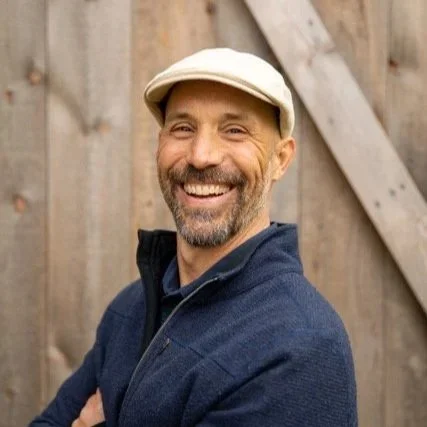
In this episode of The Energy Fix, Tansy sits down with Brian Trzaskos, physical therapist, somatic educator, and trauma-informed practitioner, to explore the powerful connection between manifestation, the nervous system, and the body.
Together, they unpack why mindset work alone often falls short, how subconscious patterns become stored in our physiology, and why true transformation happens when we begin listening to what our bodies have been communicating all along.
Brian explains concepts like interoceptive literacy, the window of tolerance, and cheerful indifference, while offering a refreshing perspective on confidence, self-sabotage, limiting beliefs, and authentic manifestation.
If you've ever felt like you're doing "all the right things" but still can't seem to move forward, this conversation offers a compassionate explanation—and a completely different path.
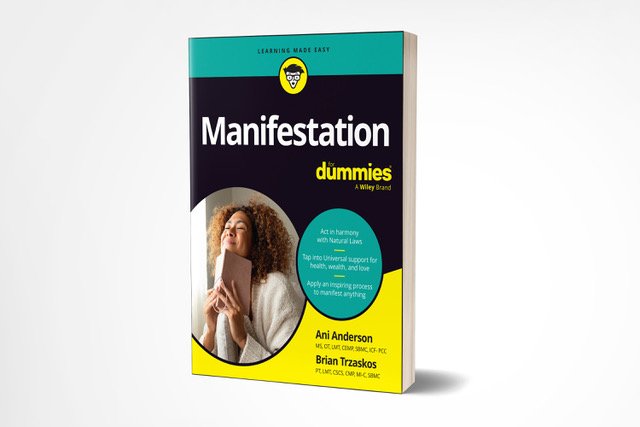
Purchase their new book!
Listen & Watch
🎙
Listen & Watch 🎙
What We Cover
In this episode, we talk about:
Why manifestation is more than positive thinking
How the nervous system influences what we create
The body's role in subconscious programming
Why mindset work sometimes isn't enough
Somatics and body-based healing
Interoceptive literacy and body awareness
Chronic tension as a sign of unresolved stress
The window of tolerance and emotional resilience
Self-sabotage through a nervous system lens
Creating internal safety instead of forcing confidence
Authentic intentions versus ego-driven goals
Turning limiting beliefs into opportunities for healing
Key Takeaways
Manifestation begins in the body—not just the mind.
Nervous system regulation supports lasting change.
The subconscious often communicates through physical sensations.
Chronic tension may reflect unresolved stress or trauma.
Interoceptive literacy helps us understand what our bodies are telling us.
Confidence grows from internal safety, not force.
Self-sabotage is often protection, not failure.
Expanding your window of tolerance builds resilience.
Authentic intentions create greater alignment.
Healing happens when we stop fighting the body and begin listening to it.
Favorite Quotes & Sound Bites
A few moments you’ll want to remember:
"We're always manifesting subconsciously."
"Your body is a massive reservoir of information."
"Cheerful indifference is a Taoist concept."
"The nervous system lives in the body."
"Self-sabotage often goes unnoticed."
"The affliction itself becomes the medicine."
"You don't get what you want when you manifest. You get who you become."
"You have to stop feeding the limiting belief."
Chapters
00:00 – Manifestation Beyond Positive Thinking
03:18 – Brian's Journey into Somatic Healing
07:23 – Conscious vs. Subconscious Patterns
15:42 – Trauma, Tension & the Body
18:26 – Integrating Body, Mind & Spirit
27:42 – Creating Internal Safety
32:53 – Childhood Patterns & Manifestation
36:12 – Nervous System Regulation Practices
39:01 – Self-Sabotage Through a Somatic Lens
43:46 – Accessing the Body's Hidden Patterns
53:49 – Building Confidence Through Internal Safety
01:02:56 – Turning Affliction into Healing
01:06:48 – Authentic Intentions & Manifestation
01:13:07 – Daily Somatic Practices for Manifestation
01:15:17 – Final Thoughts on Trust & Embodiment
Why This Episode Matters
Because so many of us have been taught that if we just think positively enough, believe hard enough, or visualize clearly enough... everything will fall into place. But it often doesn't.
It can look like:
repeating the same patterns over and over
feeling stuck despite doing mindset work
chronic tension that never seems to go away
constantly second-guessing yourself
feeling disconnected from your intuition
wondering why confidence feels forced instead of natural
And the frustrating part? Many manifestation conversations skip over the body entirely. This episode reminds us that the nervous system plays an enormous role in what we believe is possible. When the body doesn't feel safe, it will often prioritize protection over possibility.
Brian offers a grounded, trauma-informed perspective that helps connect the dots between your physiology, your subconscious patterns, and the life you're trying to create.
About Brian Trzaskos
Brian Trzaskos, PT, LMT, SBMC, CSCS, CMP, MI-C, is a somatic science expert, co-creator of the trauma-sensitive Sensation-Based Motivation Coaching method, and co-author of Manifestation for Dummies (published by Wiley Press). As a practicing physical therapist and student of eastern movement and mindfulness practices for over 30 years, Brian is a nationally recognized expert for his work in training health, wellness, coaching professionals, and small business CEOs how to successfully transform core limiting beliefs, mental wellness, and chronic pain challenges with trauma-sensitive, Sensation-Based coaching practices. He has owned and operated two integrative wellness centers in Northern New York, created two internationally attended training institutions and has trained over 75,000 professionals. Brian currently acts as the co-founder and Director of Education at the Somatic Coaching Academy.
Links Mentioned In The Show
Get the book, Manifestation For Dummies! www.MyManifestationGuide.com
Check out the website! www.somaticcoachingacademy.com
beu Crystals & The Gaia Bloom Collection: beucrystals.com
Energy Healing opportunities over at tansyrodgers.com
Podcast review promo...Get 15% off a distance energy healing session or a piece of jewelry with a positive review of the show. Email photo of review (after submitted on podcast platform) to info@tansyrodgers.com
Support Beyond The Episode
If this conversation hit home, and you’re craving deeper support (not just ideas, but real integration):
Join the newsletter →
If this conversation changed the way you think about manifestation, don't let it stay as information. Take a moment today to check in with your body. Notice where you're holding tension. Notice where you're feeling ease.
Because sometimes the biggest shift isn't changing your thoughts. It's learning to feel safe enough to believe a different future is possible!
If you enjoyed this episode, be sure to follow The Energy Fix, leave a review, and share it with someone who's ready to experience manifestation from the inside out.
Transcript
-
Brian Trzaskos (00:00.152)
The other big thing that I think concept that's really important to understand in terms of manifestation is that manifestation can be often thought of as being a very selfish pursuit, like as something that I want, I wanna manifest something, I wanna get that thing, I wanna get that thing. And then I'm gonna think about it, I'm gonna visualize it, I'm gonna write about it, I'm gonna journal about it, I'm gonna say positive about it, and it's gonna show up and everything's gonna be better. Well, the fact is that manifestation, the way manifestation actually works is that you don't get what you want when you manifest. The truth of it is you actually don't get if you're manifesting sustainably, let's say.
If you're manifesting holistically, you don't get what you want. You actually get opportunities to become the kind of person who can have what you want. And that's actually the truth that happens with manifestation. You don't just get what you want, you you become the kind of person who can have and hold what you want.
Tansy Rodgers (00:59.042)
Welcome back to the Energy Fix, a podcast dedicated to help you balance your energetic body by diving deep into the sweet world of all things health and spirituality. My name's Tansy, and I'm an intuitive Crystal Reiki energy healer, energetic nutrition and holistic health practitioner, and a crystal jewelry designer. It's time to talk all things energy. Let's dive in.
Welcome back to the Energy Fix Podcast. Thank you so much for being here. And today is going to be a really special conversation. This conversation is all about the things that you love and the things that you simultaneously probably get so frustrated about. And that is manifestation talk. Today we're talking all about manifestation. Not just though, the think positive and wait kind of version. We're going to talk about the practical pieces.
And how to really bring manifestation in in a real life way. We're gonna be talking about somatics, which is the body, the nervous system, and the subtle ways that your physiology either supports the life that you're trying to build or keeps you back, keeps pulling you back into old patterns, even when your mindset is right. And I use air quotes here, right? Right.
So many people have these visions and these goals and these big desires around health and wealth and love and purpose, but their system is still really compacting and clenching and bracing for this impact that their old mindset thinks that they're going to hit. And so today we're going to be really talking about how to create that safety so that you can move forward in a completely different way.
My guest today is Brian Trzaskos He is a physical therapist, somatic science expert, co-creator of trauma-sensitive coaching method called sensation-based motivation coaching, and he is the co-author of Manifestation for Dummies, which keep your eyes out, because that book is going to be coming out July 7th, 2026. Brian has spent decades bridging.
Tansy Rodgers (03:18.722)
Body-based healing with belief change and pain science and nervous system work. And he teaches this all from a very practical, grounded way, which is why I am so excited for him to be here. I think this is gonna be a completely different conversation than what so many of you have heard. Now, before we really dive in.
I want to just throw out a quick reminder that my latest collection, Gaia Bloom, is live over at BEUCrystals.com. You can go check out all of the latest pieces that I've created to help support you to bloom and grow and transform. Man, this feels really timely for this show. yeah, so definitely make sure you head over there because there may be some pieces there to help support you based off of what you hear today. And
Make sure that you check out tansierogers.com for all the latest events and offerings going on. We're in prime season right now. So there's so much happening. Events and classes and new sessions and updates. Make sure you jump on there, jump on over there and check it out. All right, Brian. Let's dive into this conversation. Welcome to the show.
Brian Trzaskos (04:28.29)
Tansy, thank you so much for having me. What what an introduction. I've been listening to the Energy Fix podcast now for several weeks since you know, we got introduced and connected. And I have to say, you are so mindful and with your introductions and and really it you could tell how much time you take to really kind of get to learn who's gonna be on your on as your guest on the show and who you're gonna be chatting with.
I appreciate that so much. That's not something that's lost on me because I recognize the time, effort, and intention that that takes. And so I'm really super honored to be here with you and really, really grateful.
Tansy Rodgers (05:03.114)
Thank you so much. That is a huge compliment because I and I say this all the time on the show, I love doing this show so much. It is one of my favorite things. And so being able to connect with incredible guests and and make acquaintances and and and do these beautiful conversations is it's it's a blessing. So thank you so much.
Brian Trzaskos (05:24.918)
Yeah, it shows. It absolutely shows and it's exciting to be here.
Tansy Rodgers (05:29.024)
All right. Well, Brian, we're going to dive right in. I want to start with a real question, something that I feel is gonna resonate with a lot of people. Why do you think that so many people do the mindset work? Again, I use air quotes here, the mindset work, the visualization, the journaling, the affirmations, and still feel like they're hitting this invisible wall.
Brian Trzaskos (05:54.604)
Yeah, especially around manifestation, right? So, you know, w we've been conditioned as as humans very early in our lives to overemphasize the activity that happens between our ears. Right. I mean, we've been we've been taught to intellectualize, to rationalize, we've kind of overesteemed the value of our big rational brains as humans. And this happens really, really early on, even when kids are coming into like grade, like kindergarten sort of thing.
And we've been taught actually to override or de-emphasize the information that happens in our bodies. And it really comes from this body-mind kind of disconnect that happens. I mean, think about even in grade school, when kids are you know, in in kindergarten or first grade and they wiggle and they move, right? Kids are like six years old still and they wiggle and they move to what? To self-regulate themselves. And what are they told? They're told to sit still.
you know, what do you got? Ants in your pants, they're shamed for moving, they're put in the corner, dunce cap, whatever it is, they're told to go outside, leave the room, they're you know, kicked out of the club for for doing things that self-regulate their bodies. And the reason I bring that up is because this is what actually leads to this profound disconnection or de-emphasis or repression of body stuff and over emphasis on intellectualization. Because we're taught to sit still, read, learn.
Add, subtract, all those kinds of things. So of course it would end up being with manifestation practices that we're going to lean heavy into all the stuff that happens between our ears, visualization, affirmations, right? Journaling, that's those are all very heavily brain-dominant activities. And so we're going to lean heavily into those things. But the problem is that those are what we call conscious mind activities.
Right, they're their cortex, their cortical activities from brain function. And your conscious mind is only about 5% of your total mind power is conscious. About 95% of your mind power is subconscious. And so when you realize that, and just from a processing thing for a second, so your conscious mind, the intellectual part of your brain, your cortex, can process, get this, can process about 40.
Brian Trzaskos (08:15.874)
Bits of information every second. So if you look around you right now, there's all kinds of information around you. There's colors, there's sounds, there's lights, there's all these things. So your your cognitive brain can process about 40 things per second. You think that sounds like a lot, right? Until you realize that your subconscious mind processes 20 million bits of information every second. So if your subconscious is processing 20 million bits of information every second, and your conscious brain is processing 40 bits.
40 period bits every second. What do you think's running the show? What what is really like controlling like how we perceive things? It's really our subconscious dominantly. And our subconscious is body oriented. And there's parts of our brain that are subconscious centers, but our subconscious primarily exerts its influence through the physiology that's occurring in our soma, in our bodies.
And so when we're affirming, when we're doing and I'm not saying affirmations are bad, they're actually great for a couple of reasons that most people actually don't don't realize. But affirmations, visualizations and journaling are actually heavily influenced number by what's going on in the soma. And so we think that we're really conscious beings, like we're highly conscious or evolved beings around using our conscious brain. But really what's happening is that 20 million bits of information are subconscious.
is telling our conscious mind what to pay attention to. And if our subconscious doesn't want our conscious mind to pay attention to something, it won't give it that information. It'll send it off on a little on a little wild goose chase somewhere. And and then we actually ultimately don't create what we want to create.
Tansy Rodgers (09:56.206)
all right. I have so much to say. So, Bright, and first off, this is fascinating that the that the percentages are so largely different. And so I want to just call out here to all of my neurodivergent folks, did you hear that? The fidgeting, the moving, the the stimming, the stimming, and getting the body to exercise that energy.
Out of it. You're literally moving the energy through your body and releasing what needs to be your conscious thoughts are energy. They are being released. And so simply by doing that, Brian, I'm curious, does that allow you to tap back into your subconscious a little bit better if you're getting all of that other stuff out? So you can really be connected into the body.
Brian Trzaskos (10:50.544)
yeah, 100%. And that's another reason why I love being here because I'm an absolute engine energy nerd. And so I just I love all things energy as just I'm just a nerd about it. So you can kind of think when you think about energy and you think about even energy flowing into your home, for instance. Now, if you have too much energy flowing into the house, you're gonna burn, you're gonna blow up circuits. And if you don't have enough energy moving into the house, then you have brown downs, right? And then other and then of course that can damage.
things with like you know semiconductors in them like your TVs and your computers can be damaged by not having enough energy moving into the system also. So it's the same thing with the human body. We have to have just the right amount of energy coming through that can be regulated in a in a really important way. Now everybody has a little bit different capacities for that also. You can actually upregulate your capacity to have more energy flowing through your system. we all kind of have like a threshold, but that threshold can be changed like changing a thermostat.
The thing is that the fidgeting, the moving, those are self-regulation techniques when there's too much energy in the system. And so it's almost like there's a surge coming in. And if we just try to sit still and contain it, we're going to actually fry some circuits using the analogy that we're using. So when we move and kind of you know, do that self-regulation, we bring the energy back into a a flow or an amount that is just right for whatever nervous system needs to be able to function with.
So it again helps the system kind of regulate. Same thing when we're really feeling shutting down, shutting down, then to do some things to upregulate to bring ourselves into more of a even capacity flow will help us to be able to have optimal nervous system functioning on all levels. Now, in if we can't do that, if you can't regulate your nervous system, you really cannot consciously create what it is that you want or consciously manifest. So when we talk about manifestation, we can actually
Interchange the words, conscious creation and manifestation. I think you can kind of interchange those because when we think about manifestation, most of the time that's something that people want to consciously change in their life, right? They have a conscious, they want to create something consciously different. And they're saying, I want to manifest that. Right. The truth is we're manifesting all the time, whether we consciously realize it or not. So whatever you have in your life right now, you have manifested. But the question is, are you doing it consciously or unconsciously?
Brian Trzaskos (13:09.698)
But manifestation oftentimes I just in the colloquialism of how we use it in in language, what goes along with that is I I consciously want something different. So I think to answer your question, in order to really tap into the subconscious effectively, you have got to have a regulated nervous system. You can't do it if you're dysregulated. Just doesn't work doesn't work.
Tansy Rodgers (13:30.604)
Yeah, yeah, that makes complete sense. And so as you talked about the con most of the stuff that we have around us that we've manifested, we've manifested the world around us, has come from a conscious standpoint. Just think what could actually happen if we tapped into that other 95% of the subconscious.
Brian Trzaskos (13:53.012)
Yeah, absolutely. Because we're again, we're always manifesting all of the time. And if we're if we're not paying attention to what we're manifesting, we're actually manifesting the same old things again and again and again. And those things are actually subconscious patterns that are showing up again in our outside world. So we're always we're always manifesting subconsciously. We're always manifesting subconsciously. Now we can consciously choose to change our subconscious patterns and then get something else on on auto-repeat.
So when I say we're always con we're always manifesting subconsciously, it's on repeat. Our subconscious is just always on patterns of repeat. It'll just create in the same thing again and again and again and again and again. And it'll also always protect those patterns. Now and here's the crazy thing, Tansy. The subconscious is more interested in keeping the same thing, the same thing in your long term in your in your in your short term staying the same than any long term improvement or gain.
Like the subconscious d can't tell time. Right? Your conscious mind tells time. Your subconscious doesn't can't tell time. So the subconscious always thinks like now is the now and it needs to gain or get something now to be safe and secure. It doesn't care about the future. C our conscious mind wants to change something in the future oftentimes, and our subconscious is like, no, what's good now? And that's the fight that people get into because consciously what they want in the future may seem better, like better health.
or a better financial situation or better you know relationships or something like that but they really can't get themselves going in that direction and they're like what why can't I do it? Like why can't I take the steps to improve my health? Why can't I take the steps to improve my financial situation? It's because their subconscious mind is gaining something in the present moment. And so it's just fine right where it is.
Tansy Rodgers (15:42.542)
Wow. Well, before we really get into this method, Brian, and and talk about the act or the way that you work with people to move through this, I want your story. How did you go from physical therapy into somatics and belief work? And what did you see in patients that made you realize the body is really running the show here?
Brian Trzaskos (16:07.446)
Yeah, okay, I'll give you the short story because this the long story is pretty long. but the the short story is, yeah, so I was trained as a physical therapist and one of my first one of my first jobs out of college was at a world renowned neurological rehabilitation center. And I was working primarily with people who had traumatic brain injuries. And this is back in the this back in the nineties, early nineties, tells you how long I've been doing this. So the
The interesting thing is we are we're a world-renowned rehab center. And the T and the doctors were just like the best of the best doctors. And they were of course, you know, would offer a prognosis for the patients, because that's what you do in medicine. You're like, okay, so this is what we're looking at, this is what the scans say, this is what the blood says, all that kind of stuff, and this is what we think's gonna happen. And what I realized is that we we're pretty bad actually at prognosticating recovery.
even in these really traumatic injuries. And people who people got better who weren't supposed to get better. And other people who were supposed to get better didn't get better. And I was really, as a young therapist, I was like, what is up with that? I just graduated from school and I was told that if you look at this scan, like this is the predicted recovery pattern. This is what you're gonna say. And but I wasn't seeing what I had learned. And the prognostications weren't matching
what I was seeing. And I got like, what is going on here with this? And so what I actually made a study of was studying people who healed when they weren't supposed to heal. And what was it that they were doing different than the people who weren't healing? And I really wanted to understand that. And that kind of launched me off into a whole world of body mind medicine, if you will. Wanted to understand what I realized pretty quickly is that the body is not solely responsible for recovering itself.
And you know, and really recognizing that we live on three planes of existence simultaneously as humans, right? We live on a body plane. Like right now, all of our all of our listeners can say, Hey, do you have a body? And if you have a body, like, how do you know? And we get all kinds of answers. I ask this question a lot when I teach. And it's like, well, I can feel it, I can, you know, smell it, I can taste it, whatever. I've got a body. And I'm like, Well, what on a mind? Who here has a mind?
Brian Trzaskos (18:26.338)
And then people are yeah, maybe I left it home this morning, but I they have a relationship with their mind too, right? And then I say, who here is or has a relationship with spirit? And almost everybody raises their hands. And I say, well, explain it to me. Like, how do you I I'm just curious, what do you say? People say it was something I believe or something I feel. And there's no wrong answer. What I'm trying to elucidate is that we're all living on three planes of existence simultaneously: body, mind, and spirit. And if we're only focusing on the body portion of that, we're leaving off two-thirds of your experience.
So of course, of course, your body is gonna have something to do with something intangible about it, the mind and or the spirit. So after after working at this hospital for almost a decade, I moved back to where I live now in the Adirondacks and and opened up a an integrative wellness center with with a couple of a couple of friends that worked in the area as well. And one of those people that opened it with happens to be my my wife and partner now, Ani.
Because she actually was doing a lot of the same work I was doing. She was w is an occupational therapist by training. So we kinda and but we were both doing a lot of body work, energy work, massage therapy. We both had a lot of that Eastern kind of training. And then in in 2012, together we went through a a kundalini experience that lasted six months. And it was super intense, Tansy. It was super intense. So where energy just kind of flushing through the
flush flush flushing through our systems for about six months and and when energy to that amount of energy flushed and I didn't know what was happening at the time. I didn't know that this was a Kundalin experience. All I know was that there was a surge of energy coming through my system w that was flushing out trauma, flushing out old traumas. And it was really it was pretty interesting because it we're going a three day cycle. I would have this energy surge that would flush up an old trauma that I'd have to deal with. And then
The the next day I kinda had like this integration day where I would kind of be like, What just happened and how does it mean and all those kinds of things, or take whatever action I had to take. And then the third day I felt like I was enlightened. Like like literally, I I'm pausing because I I I there's no words for it. There's really no words for it. That it was just one with everything. That the walls between separation came down and
Brian Trzaskos (20:54.54)
the patterns of I mean everything was just patterns to be honest with you. Everything was just patterns. I was a I was an energy pattern living in a huge energy field of patterns. And so Ani and I were were actually going through this simultaneously, but one day apart. So that when I would go through my trauma flushing day, she could be there to support me. And when she was going through her trauma flushing day, I would be there to support her. And over a course of six months, it was it was really, really intense energetically. But
After going through that for six months and having the cycling of of the wall, the veil dropping of everything around and understanding that everything is essentially patterns and everything is energy. Everything is energetic patterns. And our body is a a massive reservoir of information, of patterns that is archived, I would say, in our in our bodies in a lot of ways. It's our history, right? Our DNA holds history and our bodies full of DNA that holds all this history.
And the way that it lives and the way that it works and breathes. And even during that period of time, during this Kunlin experience, like as I was working with my patients at the time too, I could see their patterns. I could literally see energetic patterns in their bodies and I could touch their or their bodies or ask them certain questions in certain ways to work to the root of the problem that they had going on. Now it's not everybody's ready for that. So I had be very, very careful with with who I was asking what.
Because you know, what I was experienced was everything that came to the surface really spontaneously, I had to be able to manage and deal with. So there was a a lot of periods of time of dysregulation trying to get regulated, dysregulating, trying to get regulated, trying to understand and sort out what was going on with things. But that really made me believe and understand or know something actually that's a that's a truism for me now, is that the beliefs that we have are literally woven into the fabric of our physiology.
They're literally woven into our physiology and they express themselves as somatic patterns. And so after having that experience, we started to train people, started to train other healthcare professionals. We have a couple of learning institutes now where we train rehab professionals and somatic and somatic coaching practices and techniques, all the things that kind of we developed as the course of our own process of healing and going through that experience.
Brian Trzaskos (23:10.018)
And that's kinda how these processes kind of came to place. And that's how I moved from being a body oriented person to more of an integrative, holistically oriented person.
Tansy Rodgers (23:19.22)
Mm. Brian, I have to share with you my my situation very similar. So I worked in physical therapy full time too for quite some time. I did, yeah, yeah. For many years. And and I remember there was a young gal that I worked with. She had sh I worked with her for many years, many years. probably like 10, 10 years or so. And she had a lot of trauma in her background, a lot of
Just a lot of really deep trauma that she was working through. So, so when she came to us, she ended up coming to us for some different regular things. She was an athlete, so she had a couple different, you know, injuries. But eventually she started to develop or it started to become activated, Ehler Danlow syndrome, which for those who aren't familiar, that is a connective tissue disorder. And so for her.
All of her, I should say all of the main areas that were her most afflicted was her shoulders. And her shoulders literally locked up and would start to round in. And, you know, I would do stretching work on her and I would do manual work on her. And the only person, now granted, at that point, you know, I was doing some energy healing work too. Nobody really knew it, but I was. And so, and so
At that point, like the only person she would really trust to put her hands on her because of her trauma that she had was me. And so I would come in and I would just sit and I would start doing my work. And the energy were the energy healing was already just flown through me naturally. Right. And so that was coming through. But as I really stepped into it, I was like, no wonder her shoulders are her most afflicted area. Because
All of that energy, her chakras, everything was trying to just curl up into itself and close her heart, her throat, her empowerment down. That trauma was literally woven in her soft tissue. And so I love that you're sharing this because I too saw that. And it's so interesting when you are when you are trained in this body work.
Tansy Rodgers (25:38.39)
And then you can start to step back and see the bigger picture. How many lives you can really impact for people who are like, I'm doing all this stuff, but I'm not healing. Why? Why are things not getting better? Yeah.
Brian Trzaskos (25:54.294)
Yeah. I love that story. I'm so thanks for sharing that with me, Tessie. I didn't realize you're in that PT world too. Yeah. So it's like yeah, and then you're doing closet like, you know, you start off with closet energy work, kinda like I did too. You're like, I'm gonna do some stuff over it, but I'm not really gonna say what I'm doing until you until you realize that wait, I'm gonna claim it because people well the funny story I had is you know, one of the hospitals I was working at is that patients would would come into the clinic to see me and I'd go we go in like the back treatment room and I would do energy work with them back there.
And different kind of you know, breath practices and all the kind of stuff. And then they just come like skipping out of the room and they'd be like, Thanks so much, I feel so much better. And the other therapists are like, What are you doing with people back back there? And I was like, you know what? Maybe there's something to this. Maybe it's time to come out of the closet and actually start doing this work out in front of people. because they because the results that we were getting and also like my my caseload was starting to grow so much because they're like,
Brian, they're they want to come see you because you're what I don't know what you're doing with them, but they want they're lining up to see you. I like, Well, maybe there's something to this. and step out of the closet after a while. I'm I'm sure you probably had the same experience. Yeah.
Tansy Rodgers (27:02.294)
I love that, yeah. If you're listening to this podcast episode, there is a really good chance that you're the person who holds a lot. And sometimes the issue isn't that you need more information. Sometimes you need your system to feel safe enough to actually integrate what you already know. That's what my Soul Stream and Enlightened Sessions are for. They're intuitive, energy-based sessions designed to help you recalibrate.
emotionally, energetically, physically, and in your nervous system, so you can move through life with more clarity and less internal noise.
People book these when they're feeling stuck, overloaded, anxious, emotionally heavy, or like their energy isn't fully theirs anymore. And we work with that. We work with what's present, clear what's been lingering, and help you come back to center in a way that feels grounded and real. If you want to book a session or you want to simply know more, you can head on over to tansyrogers.com or jump down into the show notes and click the link that will take
Take you directly to those services. And if you're not sure which session is the right fit, send me a message. I'll help you choose. I'll help to guide you in the right direction. All right, let's jump back into this episode. Well, Brian, where you were and where you have now grown, where you're at now in this season of your life, is there a word or a phrase that you feel that you're now stepping into through this whole growth of?
Expansion that you have made.
Brian Trzaskos (28:45.026)
Yeah, absolutely. For the past s a few years, maybe even several years, I've really been I've really been honing in on a on a phrase that's become more and more and more important to me. It's actually a Taoist phrase. It's called when through the practice through practice of Taoism, which is you know similar to Buddhism in a lot of ways, there's some there's some subtle differences there that are important. Maybe less than subtle, but there's some differences. That when when someone in
that kind of the Taoist canon achieves enlightenment, or they say, you know, kind of swallows the golden pill. There's a bunch of interesting phrases around it, is that you have an experience of what's called cheerful indifference. Cheerful indifference. And there's there's a wonderful little stanza from Stephen Mitchell's version of the Tao to Ching, where he says that when you return to source, when you return to source, you become tolerant, disinterested, amused.
as kind hearted as a grandmother and as dignified as a king. And so when I first read that phrase, I was like, that's it. Like that's that's what I want to have my life feel like. And so, you know, it's a cheerful indifference, you can also think about it like lighthearted detachment or lighthearted kind of you're just you're disinterested with the thing that other people are disinterested with because it's not at the heart of what's true. it's not at what the heart of what's at what's real, what's real.
there's another kind of idea of becoming what's called a real person. A real person is someone's returned to their core, recur who is in touch with their essence, right? Who's connected with the part of themselves that is never sick and does not die. You know, the eternal part of themselves. And so to live in the world but not be not be of the world sort of thing. that that idea of cheerful indifference is is a a a characteristic marker of someone who lives in that in that way or that field where there's just
A constant sense constant sense of cheerfulness. It and difference is not apathy, by the way. It's not that you don't care about the world, but you also realize that your locus of control is limited on the world, right? And primarily you have a lot of responsibility for your own beingness and how you perceive and see the world. And then just to allow that to trickle out as it will and allow the people who want to be in receipt receipt of that to be in receipt of that.
Brian Trzaskos (31:06.626)
But it's not it's not our job to try to change the way that other people live their lives or the way that they're think that they think, but it's rather to live in confluence with just the way that things are, the higher sense of way that things are, and to be an example in that way. But so this idea of cheerful indifference has really resonated resonated with me for some time and it's something I spent a lot of time thinking about and being with.
Tansy Rodgers (31:28.686)
That's beautiful. And such and such an important concept when it comes to overall self evolution, human evolution, to really just detach from all of those things that don't serve. But also too, Brian, isn't that really at the crux of this manifestation conversation too? But I think so many people get really hung up and get really
discouraged when they try to surrender. They try to have the cheerful indifference and just detach in a healthy way, but yet their fears, their traumas, their triggering. Everything just keeps pulling them right back in to staying so connected into that. So I love that you have been expanding that and really stepping into that concept in general.
Brian Trzaskos (32:23.746)
Yeah. Well, that's just so so true because you know, we are we are a bundle of patterns, right? We're just a we're a bundle of patterns and we we learn these patterns very early on in our lives before we're even conscious, right? The first seven years of our life, we're a hundred percent subconscious beings because of our because of our brain waves, right? Our brain waves are dominantly operating at theta brainwave states before the age of seven. And and theta brainwave states are the same brain wave states that hypnotists use when they hypnotize their subjects. So what happens when like
If you've ever seen a hypnotist work or you know you've been been hypnotized or something, the hypnotist puts somebody into a trance, right? And when they're in a trance, their brain waves move from beta brain waves, which are kind of like the active busyness brain waves, which are typically between like 14 and 20 hertz. People, different people have different numbers for them depending on the resource, but that's generally where they go. You know, and then below that is alpha waves, and then you have theta waves, which are somewhere between like four and seven and a half hertz or four and eight hertz, again, depending on who you're reading.
But when you go into a trance and you go down into that theta brain waves, you can't resist actually what's being given to you. So the hypnotist can plant a suggestion in a person's subconscious mind when they're in theta brain waves. When we're under the seven years old, we're being subconsciously hypnotized all of the time. And and what what else is happening at seven under seven years old is your body is developing very quickly.
Right. Your body's changing very quickly before the age of seven. So it's not only that you're being hypnotized with everything around you as being the reality of what you're living in, but those messages are being baked into a body that's growing very quickly, growing and developing very quickly. And and that's just kind of a short story to kind of understand how these beliefs get baked into our physiology. But our physiology runs on patterns, right? It just runs on patterns and sequences and those kinds of things.
very complex sequences, very synchronized sequences, very just like miraculous sequences, but they're still pattern sequences that are happening in our physiology all of the time. And so they're just running, they're kind of just running on subconscious that that way underneath the surface of things. and if we want to be able to again change something, we have to be able to understand how to work with that. How we have to understand how to work with the body itself and the subconscious patterns in the body in order to create the change that we want to
Tansy Rodgers (34:43.134)
Right. Which is so just to be clear for the listener, when you say somatics in the context of manifestation, that's what you're talking about right here.
Brian Trzaskos (34:52.767)
Yeah. So somatic means body centered, right? It means body so if you're soma means body in ancient Greek. So it's kind of like soma, body, that's what it is. Now somatics is kind of taking on kind of a life of its own, actually, in our common vernacular, where there's there's an idea that there's some type of holistic nature associated with it. That somatics has kind of brought on a more body-mind kind of association with the common way that we kind of think and talk about things.
Yeah, so what I'm really honing in as idea of somatics is the information that is patterned into the physiology is accessible to us. And ultimately, if we want to create change in our life, we have to be able to unlock that information and then put new information into your somatic system that will go on repeat again to create the thing that is that you want to create.
Tansy Rodgers (35:47.638)
Yeah. And what you had said earlier, going back to what you said earlier about the nervous system, you said that that is one of the first places. It's kind of like that foundational level of making sure that your nervous system is regulated when it comes to manifestation. I'm curious, what does it look like when someone wants expansion, but their system is really stuck in this protection place? What what do you do?
Brian Trzaskos (36:12.876)
Yeah, so we do a whole set of practices we call core centering practices and they're all they're all based in a lot of ancient practices. They're things like a self-massage practice where we lean pretty heavily into acupressure points, like how do we work with the acupressure meridian systems in certain ways to open up certain parts of the body, right? How do we help the body find safety? How do we help it find safety first so that it can regulate?
we're doing things like mindful movement practices, right? And the way that because the way that you move, I wrote a whole book on this too, that different principles in these ancient practices, especially the traditional Chinese medicine practices, will change and shift your nervous system in predictable ways. So when you look at like mindful movement practices that are slow and fluid and rounded, there's a reason why practitioners move like that.
Because those movements actually have a direct effect on the autonomic nervous system in a predictable way. So they help help regulate the nervous system. and then of course we have breath work practices, right? And of course, then meditation practices also. Those are what we call kind of the four elements of practice. So when someone's having trouble regulating their system, we're going to tap into that four, that set of four practices. But we will I will say this. Most people
tend tend to jump to the meditation practice first because they because there's so much research around it, right? And meditation is amazing. It's awesome. And then also people tend to jump to the breath work practice because breath work is becoming very, very popular. Another amazing, amazing practice. What we've seen though is certainly with meditation, a lot of people with dysregulated nervous systems or dis or regul or nervous systems that trend toward dysregulation have an
very, very difficult time with meditation. And they get very frustrated and then very self incriminating around it and and they they stop. And so we're like, you know, it's actually better to start on the other side of the spectrum. Instead of trying to start harnessing a nervous system that's just like running wild, go to your body. Start on the body end of things. And this works same for the breath work stuff. Same thing for a lot of people who do breath work, what we found out. Breath work's amazing.
Brian Trzaskos (38:32.608)
and the and there are some breathwork practices that for someone who trends toward dysregulation can be very dysregulating. And we and I've had those experiences of being in classes like that, and I've worked with people who had those experiences. So again, we're like, let's go back to the body. Let's go back to where the nervous system actually I mean it lives in all those places, but in a very physical way, it lives in the body. You can touch it. Everyone can touch their body with their hands, and they're touching, they're literally touching their nervous system. When they touch their
arm or their or their neck or their head or whatever it is. And all of that feedback gets moved then up the sensory pathways up into the parts of the brain that can actually do something important with it to create regulation practices. Right. This is why kids crave a hug when they're really disacculated. Right. Kids aren't going to be like, I'm gonna I I feel like I should meditate or I'm gonna do some breath work. They're like, they just want a hug because the hug
Right, sends information through the through the soma, through the exteroceptive and interoceptive systems into the nervous system, into the brain that says you're safe. And I think that's a really underutilized thing that we're that people don't do enough of is actually resource the body first when they're hoping to find some regulation.
Tansy Rodgers (39:48.626)
I couldn't agree with you more on them on the meditation and the breath work piece. I've seen that so many. I I get a lot in my practice, I get a lot of individuals with nervous system dysregulation. and so I have seen that over and over and over, where there's like, I literally don't feel that I can sit and meditate. It doesn't work for me. Or I've had some clients tell me that when they've tried breath work, they start to hyperventilate.
That was an issue for me too for the longest time. And so I agree with you, really just getting back into the body. Now, Brian, I'm curious though, from a somatics perspective, a body-based perspective, where do you see people really self-sabotaging themselves? But maybe they don't even realize that they're self-sabotaging them, their somatic, body-based healing.
Brian Trzaskos (40:45.37)
Yeah. So I think there's actually two things to think about with this. I think in one way it's not so much a self-sabotage, it's just a lack of what we call interoceptive literacy. So, you know, I was just actually on a class call with some of our certification students yesterday. And we send them off into the world to do like practice case studies and that kind of stuff, right? And so they're reporting back in the case studies saying, my God, like I'm we're I'm working, and more than one student said this.
Like the person I'm working with, they have such a hard time describing what's happening in their body. Like, like, why is that? We're like, well, again, goes back to what the very first question that we talked about today is we've been we overemphasize the intellectual ness of being a human and we de-emphasize or devalue what's going on in our bodies. And by the way, we're repressing stuff down into the bodies almost all the time. So most people don't even want to go down there because what's down there for a lot of people.
does not create comfort for them when they pay attention to what's going on in their bodies. But at the same time, what you're not paying attention to is potentially creating more of a problem for folks also. And that's where dis-ease patterns come from. So the thing is that on the first level, it's a lot of people just don't sense into their bodies well. They don't have a great amount of what we call interoceptive literacy. They just cannot describe what's happening in their system. It's like learning a foreign language in a lot of way, Tansy. If you want to be able to get information, you have to understand the language.
And the language of the body is of sensations. And because here's the other thing about energy that's really cool. All sensations are are they are they are flags for energy shifting in the body. That's what a sensation is, right? When a sensation is a sensation is either more electrical activity around an around a sensor in the body, or it's a change in blood flow to the area, or it's a change in neurohormone profiles to an area that activates certain sensors or receptors. Those are all energy shifts.
Essentially in the body. So when we talk about sensory systems, actually what we're talking about is energy changes. But energy energy, when we talk about energy, it's a little too amorphous for people to understand. But sensations are very, well, tangible, not to be no no pun intended, but they're tangible. You feel them in a lot of ways. So people can learn to work with their sensory system. And when you're working with your sensory system, you're actually working with your energy system. So that's part one. around self-sabotage, this is interesting thing.
Brian Trzaskos (43:06.624)
Remember if your subconscious is kind of running the show and your subconscious is pretty usually pretty happy with what's going on right now because you're not dead. That's kind of how their subconscious works. Your subconscious interests in you not dying. And it's if and if you're not dead right now, your subconscious says you're doing a good job, keep doing what you're doing. Even if it's killing you in the process, but you're not dead now. But consciously, you're like, I want something different, right? So we consciously decide we want something different.
And maybe we realize at a certain point in time that maybe that's something different is maybe we want a little bit more money to come into our house, just as a really practical example. And so we decide we're gonna go ask our boss for a raise. Okay, we're gonna ask our boss for a raise. And we're like, today's the day. I'm gonna ask him for a raise. my son's going off to college. We need to bring in more money. I'm doing a really good job, you know, all and and maybe you are doing a good job. You definitely deserve it, right? And you did all that stuff's true.
And then on the way to your boss's office, you like you just get to the door and then something comes up in your body and you find yourself like taking a right hand turn and not going into the office, right? Or if you do make it into the office and you say the boss says, Hey, what can I do for it? And you're like, you know, I would really love love to I think you're doing a great job, boss. Thanks so much for being here. I really appreciate you and you walk walk out without actually asking for the raise.
Well, why didn't you? Because something happened in your body. Right? So something came up in your body. And you might not recognize what it is, but there's some signal in there telling you, don't do that. Do not ask for the rays. And so that's more of that self-sabotaging thing. But what's really happening is your subconscious is flooding your flooding your system with sensations that your conscious mind deems as threatening and tells you not to carry through with the activity that you just said you were going to do.
Tansy Rodgers (45:01.011)
Yeah, yeah. Wow. And so, okay, so let's let's expand on that a little bit. Unresolved stress and unresolved trauma. I'm curious, I'm I'm curious because those two are some of the biggest things when it comes to dysregulation of the nervous system. I'm curious what kind of things show up in this in the body.
before they actually show up as behavior for those people who are connected into their body and for those who aren't connected into their body, can you give any ideas or tips for them to be able to notice when this is a pattern that is becoming an issue for them?
Brian Trzaskos (45:44.46)
Yeah, it's almost always some type of chronic tension. Like if I was just gonna say one thing to look for, that's gonna be the most important thing. It's some type of chronic tension somewhere. Kind of like how you're describing with the with the client you were working with with her shoulders, right? It was a lot of chronic tension. The body was rounding in on itself. So you're seeing contraction in the muscles. Because the muscles in our body contract and relax, right? And they have to contract and relax for us to move. Even to get up and walk, you have to have muscles contracting and some relaxing, contracting, relaxing, contracting, relaxing.
Now, what the problem is when the muscles that contract stay contracted and they don't relax, they start to develop then chronic tension in the area. So if there's areas of the body that seem to always be tight, always be tight, you you cannot relax them very easily or or at all. Maybe you go to even a massage therapist and you have like work done on the area and it feels better for a day, but then the next day it's back again and it's tight again. These areas of chronic tension are the
Are the the the light bulbs, right? Those are the red flags. Because every disease process, every single disease process, or most common disease processes in the Western world are always associated with some type of chronic tension in the system. Right? Acid reflux, high blood pressure. And my blood pressure, for God's sakes, is chronic tension through the vascular system, right? Acid reflux is chronic tension through the gut system, IBS, Crohn's, right? And it chronic tension stops blood flow and going into areas. So we have blood loss.
Which creates more inflammation in the system. Chronic tension is associated with inflammation. So every, every really kind of like modern ailment that we have as humans are always associated with chronic tension. And that's what's gonna tell you where kind of the locus of the core patterns are in your body. And this is why also, you know, think you've noted this too, when people go to have like connective tissue release done, Rolfing release done, that kind of stuff. I've done this work for a lot of time for a with a lot of people and for myself too.
Is that when you have connective tissue kind of work through and released, very, very frequently energy is released into the system and that energy is then interpreted as being emotions. And I can't tell you how many times that people have had memories also are associated with those that energetic release and emotions that are associated with working through connective tissue with certain parts of the body. I think the connective tissue for me is
Brian Trzaskos (48:08.8)
the more research that happens in the connective tissue as we go forward, I think we're gonna find out that that is a massive missing piece in terms of somatic information and understanding and acts as a again, a reservoir of information, but a connectedness throughout our entire nervous system. And of course, who we are bioenergetically. I mean, I could I'd love connected to stuff. I could talk about that for weeks, if not years.
Tansy Rodgers (48:31.456)
Yeah, yeah. You know, I remember before I was aware of any of this stuff, before I was in this world, in actually even before, well, no, I might have just started my physical therapy journey. I remember I was going and getting some roughing work done because I was having some massive issues going on. And it didn't help me at all. And you know why, Brian?
Because I wasn't actually taking care of the emotions and the energetics that were tied to it. I was a hot mess at that point in my life. And so, and so going through a bunch of stuff and and I realize now looking back at that time, that was why it didn't work for me, because I wasn't actually healing the root cause of what was happening.
Brian Trzaskos (49:18.454)
Yeah. And and there might have also been, you know, a part of your nervous system that was like, listen, I'm not ready to deal with whatever's whatever's in here. Yeah. And so we gotta keep it we have to really kind of just keep it repressed and keep it down. and that happens a lot also. And that's why, you know, being as a practitioner, being trauma sensitive, being trauma informed is so critically important. To your point again, working with your client, that when you are when you're trauma sensitive and you understand kind of how these things work, you can hold that space for for your clients.
and when practitioners are not trauma sensitive informed, they can't hold that space. Oftentimes as a as a a client of that, you know there's something about your nervous system that says, I am not ready to release this right now because why my nervous system won't be able to handle what's happening.
Tansy Rodgers (50:04.896)
Yeah. Well, okay, so thinking about the toler the toleration of the nervous system, I would love to know what is really the difference between I want this and my nervous system can tolerate this. And then also, how do you help somebody to build capacity for that thing that they really desire if their nervous system is not tolerating it?
Brian Trzaskos (50:27.98)
Yeah, I love that. So there's the whole there's the whole theory of the window of tolerance, which I'm sure yours you know about, right? So you've got the window of tolerance. And what that means is that above this in in the middle of the window of tolerance, you've got optimal nervous system function or optimal nervous system arousal. And above the window of tolerance, you have hyperarousal. Below the window of tolerance, you have hypoarousal. And so the any of us can flip into any of those areas depending on what's going on in our lives and contextually.
We're gonna operate best if we are inside of our optimal arousal window. Now, the problem is for someone who has a a low or a nervous system that can't tolerate a lot, the n the window of tolerance is very small. And so it doesn't take much to kick them into either hyper or hypo arousal. So the kind of the image we use is of widening the window of tolerance. Widening the window of tolerance. And the way that you learn to widen the window of tolerance is you have to do this with
again with somebody who knows how to do this that can hold this space for it. If you're doing it yourself, just have to be go slow with it. The idea is is you have to you have to be able to just go outside of your window of tolerance a little bit and then get yourself back in. Be able to go outside a little bit and then get yourself back in. And that's how you slowly widen the window of tolerance, which is which is essentially what resilience is if you think about it. Resilience because
resilience is the ability to not get knocked out of the window of tolerance. It's the ability to get back into the window of tolerance when you've been knocked out. Because life knocks us out of the window of life, life dysregulates us. That's what life does, right? When we something happens upsetting in the world, or in your life, or in your environment, or whatever it is, we get kicked out of the window of tolerance. The question is, can we get back in or not? And so the way that we do that is with some some somatic practices. And this is one you got to just kind of be careful with.
is we actually pay attention to those areas of chronic tension. Right. So we we actively pay attention to them. We we kind of focus our awareness on them. Now for some people, that alone could create like dysregulation. So that's why I mean you have be careful when you do this. Again, depending on how deep someone's trauma experience in history is. So but when you focus on that area, what'll happen is it'll just it'll just expand a little bit, it'll grow a little bit because you're focusing on it.
Brian Trzaskos (52:51.084)
And so you expand a little bit and then you go to something else, like a like an anchoring sensation or a grounding sensation. We have a process we teach people called cross mapping. It's one of the things I developed through my years of of PT and that sort of stuff, where it actually helps you to learn how to toggle your sensation experience in your body to different ways to actually be able to embrace what's happening that is a problem in the body, the area of tension. And then you go to another sensation.
So you anchor, you resolve, you come back to the area of problem, you go back to the resolving sensation, you come back to the area of problems, you go back to resolving sensation. And in that regard, you're training the nervous system to be able to come back into its anchor or its balance whenever you want to consciously. So that when you're out in the world and you get kicked out of the window of tolerance, you're like, wait, I know how to get myself back in. I practice this in my body actually. Rather than trying to think about how to do it, you've actually practiced that as a skill somatically.
Tansy Rodgers (53:49.784)
You're creating safety. Yeah. Yeah. Yeah.
Brian Trzaskos (53:53.678)
an and a safety someone can take with them anywhere. Right? I mean, there's different levels of safety. Like sometimes we need like we need to be with someone else to feel safe, and that's really, really important. And also, isn't it a great skill if you can just take safety wherever you go? Because you know you can generate it for yourself internally in your soma, actually in your system. Because when you're generating in your system, then that that feeds up into the conscious mind that you're safe. And then you'll actually look for
Validation of what you're experiencing internally. Because that's actually how our nervous system works, right? Like every manifestation project every manifestation project starts on the inside. Any change project starts on the inside. And it's ultimately what's happening on the inside of us that determines what's happening on the outside of us. And so when we have really good internal locus of control, the outside world actually becomes less important of how it shows up.
Tansy Rodgers (54:49.0)
Mm. What do you see really starts to change when people choose to be or expand that area of safety within themselves versus landing in a place of scarity scarcity? What do you see really shifts?
Brian Trzaskos (55:04.664)
You know, what the one of the biggest shifts that happens is people become much less charged by what goes on outside of them. So, you know, think about this. You can go you can go to a family dinner at like holiday dinner, right? Wherever you're going on Thanksgiving to see your family. Maybe you go see your family for once a year. You know, we all go to we all go back for holidays and we end up in a in a house where maybe we haven't been there for a whole year, but it's like the same thing happens year after year after year.
And it's the same old uncle that says the same old thing that pisses you off the same old time. Every time you get charged by it, you're like, I don't want to go there because I'm gonna get charged by the same thing, how they are, everything they do, how they chew, everything's just gonna make me so angry. Right, we get charged by all these things outside of us. And what happens when you make that change is you're not charged by it anymore. And they're chewing and you're like, you're like, that's not even like I don't even feel it. Like why that's so weird. Why am I not affected by that right now?
And that's when you know that you've shifted a pattern internally because you're there's just no charge to it anymore.
Tansy Rodgers (56:05.132)
Yeah, yeah. And and it's not about the forcing. It is literally about the expansion that you've created through that inner work. A quick break because I want to share something I make that's meant to support you in real life, not just look cute on your wrist. I create intentional crystal jewelry through BEU crystals. These pieces aren't random.
I design them using crystal energy and I also weave in numerology and geometry and I infuse the pieces with Reiki Healing Energy as part of my process to really help support you on an energetic deep level. They're like little wearable anchors, the kind you can touch when you're overwhelmed, when you're heading into a hard conversation, or when you need a reminder to come back to yourself more solid, more grounded, more authentic.
I'm not here to tell you that jewelry fixes everything, but I am here to tell you that having a steady physical cue can change your day, especially if you're sensitive, easily overstimulated, or your brain likes to sprint way ahead of you. If you want to browse what's available or see what is newly released, head on over to BEUCrystals.com. I'll link it down in the show notes so that you can easily shop and check out what is available.
And as always, if you have any questions or you want to do any custom work, you can easily reach out to me right there. Okay, let's jump back into this episode.
Okay, so then that that leads to an a follow-up question with that. So if we are working on the expansion, and I want everybody to kind of keep in mind the concept between traditional or most talked about manifestation work versus what we're talking about today. Okay, that's important here in this question. I feel like when people are trying to step into a manifestation practice, they're literally forcing confidence. There is the whole
Tansy Rodgers (58:13.196)
And I'm sure, I'm sure that this works to a certain degree, but it makes my eye twitch because it just doesn't feel right when when the biggest thing is, you know, just just fake it till you make it. Yeah. Fake it till you make it. I'm sorry, Brian. I don't think that that works very well. I when I hear that, my nervous system clenches up and I automatically am like, but I'm not.
dot dot dot right and so i would love to have you kind of follow up to all of this of well how do you work with all of this without forcing confidence without faking it till you're making it without that concept because there is just something gross that doesn't sit well with me for that
Brian Trzaskos (59:03.288)
Yeah, I th I I'm just smiling as you're kind of talking this. This is something we hear we hear a lot from people. so kind of kind of two things. the first thing is the way we way I think about confidence is that confidence isn't something you have, it's something you allow to flow through you. Because if you look in the natural world, like everything in the natural world is a hundred percent confident. Like trees
Like trees aren't like, you know what? I don't think I'm gonna grow any higher. I'm a little afraid of heights. I'm not sure I'm gonna do it. Like squirrels aren't gonna be like, I don't think I'm gonna go after that bird feeder. No, you know. No, they're in the bird feeder all the time. Like trees are just growing. So confidence is an energy that flows through everything at all. So
Tansy Rodgers (59:43.672)
confidence of my cat, I would be set. Go on, Brian. Go on.
Brian Trzaskos (59:46.9)
Exactly. Maybe we have the same cat. Our cat's the same thing. You know, so the the thing is like it just fade it flows through everything. So it's not that confidence is something you have or don't have. It's something you either allow or don't allow. And when we're when your nervous system is open, your body's relaxed, when chronic tension drops and the spaciousness in the body opens, confidence just flows naturally through the system.
So that so we don't work on like building the system up so much, like like kind of becoming a tough person. We're like, you have just open the system up and allow to tap into the flow of confidence. You have to understand what it feels like to be in that flow of life, flow of the animating force of all things is the most confident experience on the planet. So that's part one with confidence. Now the other thing I love what you're talking about in terms of fake it till you make it is if in order to manifest whatever you want.
Whatever you want in the future, or whatever you want, whatever you want next, you have got to accept what you're experiencing now. You cannot create anything different without accepting fully what you're experiencing right now. Because here's the problem. When you fake it till you make it, what you do is you drag into your manifestation project everything you're trying to leave behind because you haven't accepted it. So when you're not accepting it, you're repressing it down into your system. And if you're repressing your system, it's still with you.
And so it becomes a part of what you're do next. And so you see people do this all the time, right? They they create what they think is success and then something blows up. They create what's something successful and then something blows up. Or it blows up like right before or right when they're supposed to have the success. It just blows up because they have not fully accepted who they are, like where they're coming from, what they've created right now in the moment. I'm not saying you have to like it, but you have to accept it.
Because once you accept it, then you can move forward. And to go even a step further, goes back to what we were talking about with like kind of scanning the body and looking at these areas of chronic tension and those types of things. you're gonna feel in your body, you're gonna feel in your body the things that you have not yet accepted. You will it like you will feel in your body what you have not yet accepted, what you're trying to push away, push down, get rid of. Like just think about those things. You're gonna feel those in your body someplace.
Brian Trzaskos (01:02:08.02)
in those spots exactly is the solution to your problem. Because when you work in those spots specifically somatically and you work on expanding and learning to shift that specific tension point, that specific sensation, whatever it is, now you're creating alchemy, what we call alchemy, right? You're turning the dross into gold. You're actually, you know, the the what's the phrase? There's this wonderful phrase, I just kind of I just lost it, where the
the affliction itself becomes medicine, where the affliction itself becomes the medicine. Right. So you're actually the medicine is right in that spot. But when you're trying to push it away and fake it till you make it, you're actually dragging that energy with you and you're repressing it further down and it's influencing you in shadow ways that you don't even realize.
Tansy Rodgers (01:02:56.574)
Mm. Yeah. Well, so thinking about all of this and and manifestation culture in general, is there a concept in your book, manifestation for dummies? Is there a concept in your book that's gonna challenge this narrative?
Brian Trzaskos (01:03:12.79)
Yeah, I think the I think probably one of the big concepts you want to kind of think about are the natural laws are one thing. We d we talk a lot about the natural laws in the book. Where when you when you come in actually into alignment with how nature works, right? Let go of how you were taught. Let go of how humans taught you to become successful. Because the way that most humans taught you to become successful is limited. Look how nature is successful. Because nature has been successful for
Billions of years over and over and over again and it has done it effortlessly. Nature doesn't strive. It works in it works in natural cycles, it works in natural flow. It just keeps moving. It never becomes deterred. So I think just kind of if you can learn how nature works, since we have two chapters on the natural laws in there. And a lot of the work that again then is into the book around the somatic practices that we've have filled the book with, because it's
This is this book, what I'm really proud about it with Tansy is that of all the manifestation books that I've read, we wanted to write one that was not only practical and really straightforward and had a roadmap in it, but one that had more body knowledge, more body wisdom than any other manifestation book because we feel like that's the thing that's really, really been left out. So all the somatic practices in the book are based in natural law. They're based in how helping you to align your physiology with how nature functions and how nature works.
The other the other big thing that I think concept that's really important to understand in terms of manifestation is that manifestation can be often thought of as being a very selfish pursuit. Like as something that I want, I want to manifest something, I want to get that thing, I want to get that thing. And then I'm gonna think about it, I'm gonna visualize it, I'm gonna write about it, I'm gonna journal about it, I'm gonna say positive about it, and then it's gonna show up and everything's gonna be better. Well, the fact is that manifestation, the way manifestation actually works is that you don't
get what you want when you manifest. The truth of it is you actually don't get if you're manifesting sustainably, let's say, if you're manifesting holistically, you don't get what you want. You actually get opportunities to become the kind of person who can have what you want.
Brian Trzaskos (01:05:28.876)
And that's actually the truth that happens with manifestation. You don't just get what you want. You you become the kind of person who can have and hold what you want.
Tansy Rodgers (01:05:39.074)
I think that that is one of the most brilliant things to say about this, Brian, because you're absolutely right. And I think that that's why people get so discouraged, because they get into this this cycle of working in different capacities to you know, put out I want this, I want this amount of money, I want this kind of relationship, I want this kind of home, whatever it is, right? And when it doesn't show up.
Perfectly or it doesn't show up quickly or the way that they want it, then all of a sudden manifestation doesn't work. Right.
Brian Trzaskos (01:06:18.146)
Yeah. Yeah. Exactly. Exactly. That's I mean, it's it's it's a hundred percent true. and the other the other critical thing that as you're talking kind of I mean, there's so much stuff in this book I could just kind of keep blathering about. is that, you know, when it comes to setting intentions for what you want to create, we have a whole roadmap in the book. And one of the one of the steps in the roadmap is creating authentic intentions. And when you're setting a really good authentic attention, it's gotta have like a cup three parts to it basically. the attention has to be the intention has to be
real and important to you, to you. And this is one place people make a mistake is they actually send tensions based on what other people want or on what other people tell them they should want. And that's always doomed to failure. And so people are like, I can't manifest the million dollar business. So it's like, do you really want a million dollar business? Do you know what comes along with that? Do you know like the whole story? It's not just like a million dollars in your bank account. A million dollar business means that this is how much you're probably going to be working. This is who you need to be networking with.
This is what I mean, there's things that go along with having a million dollar business. Is that really what you want? And they're like, you know, you know, maybe that's not what I want. But if no one they never really thought about what that they really want. Do you really want a fancy car? Or do you want to be able to have like live in the middle of the woods? I mean, it's all right. Like everything is right, but you have to know what's right for you. And if it is that you want obscene wealth and that's really, really what you want, then that's great too. But the thing is, it's you really have to know what's right for you. So that's the first mistake people make.
is they try to actually intend to create something that not what they really want, but what other other people want for them or someone else told them they should want. The next thing is that you have to be aligned with your purpose. Like all really true manifestation is aligned with what your purpose is here on the planet. And purpose isn't a doing state, it's a being state. It's way of being in the world. And the third thing is your manifestation must serve the collective. There must be what we call the law of positive reciprocity, must be a part of it. Otherwise it's doomed to failure. It must in
It must create more life for everyone involved, not just you. And those are the three parts of an authentic intention. And that's the other thing that just as we're talking about it, I just want to kind of bring forth for people in terms of why sometimes manifestation projects don't work. Those are three failure points that that show up for people pretty often.
Tansy Rodgers (01:08:31.19)
Mm, yeah. And so maybe what you just said is gonna answer the next thing that I have to this. and if it does, please, please note that. But if someone wants to consciously create a new life, what is the most important thing that that person stops doing? But then also what's the most important thing that they start doing?
Brian Trzaskos (01:08:51.03)
Yeah. So two so two things. So the thing that they need to stop doing is well the first step in it in the roadmap process is to under un undercover undercover, uncover, uncover your limiting beliefs. You have to know why you are where you are right now. And that goes back to that acceptance step. Right. So know why you created what you have right now. Right. There's like and w why ever you've manifested whatever you have in your life right now, it's because of a belief in something. Like you must believe something to create what you have right now.
And that belief, if you want to create more than you have right now, then by definition, what you believe right now is limiting you. So you have to know what your limiting belief actually is. And then what you stop doing are things that feed your limiting belief. That's what you stop doing. Stop feeding the limiting belief. And then what you turn around and start doing are things to help you navigate through the resistance to creating what it is that you want. That's the other big barrier for people. It's the
Because when when you navigate through the resistance, the thing that you want naturally happens. It's just we have resistance to it. And that resistance is subconscious. Because remember your subconscious doesn't want you to change what you have right now. Even if consciously you don't like it, which is a mind bender, but that's how it works.
Tansy Rodgers (01:10:07.202)
Yeah. Yeah. Brian, I could talk to you forever about this. This is so fascinating. I love it. I love it. I love it. And so I will absolutely, we're going to talk about where you can find Brian and get into his world in just a moment. I will have, just so we make note of this, I will have the link for this book down in the show notes over on the show notes page. Make sure that you jump there and click on that link and get your hands on this book because this is definitely a
Practice when we talk about the somatics, it is a practice that I have never really seen highlighted. I think this is completely unique. And Brian, I'm all on board. I love this so much. Cool. Very, very cool. Wonderful. Now, before we get into all the logistics of where to find Brian, Brian, we're doing those rapid fire questions. Let's talk about you and what you do with manifestation. All right. Are you okay? All right. Three questions. Number one.
Brian Trzaskos (01:10:49.698)
Thank you so much. It's great. Yeah.
Brian Trzaskos (01:11:02.99)
I'm ready.
Tansy Rodgers (01:11:07.23)
What is the telltale sign in your own body that lets you know that you are going into protection mode?
Brian Trzaskos (01:11:15.414)
For me personally, it feels like a can it feels like a twisting in the left side of my chest. I mean, it's like my best friend at this point. I'm like, I know exactly what it feels like, twisting in the left side of my chest.
Tansy Rodgers (01:11:26.616)
That's incredibly specific. I love that.
Brian Trzaskos (01:11:29.838)
I'm like, there's a twisting. There it is.
Tansy Rodgers (01:11:32.334)
All right, number two. What's something you believed about manifestation 10 years or so ago that you don't believe anymore?
Brian Trzaskos (01:11:42.114)
The law of attraction actually. Yeah, because it it
Tansy Rodgers (01:11:44.323)
We haven't talked about that. That's so interesting.
Brian Trzaskos (01:11:49.624)
So ten so over 10 years ago, I thought like I attracted things into my life that I that I was manifesting, right? And actually it doesn't work that way. Law of attraction is kind of it's a combination of other laws because the fact is, this is another mind-bending thing. The fact is the opportunity to manifest what you want, if not the thing itself, is actually in your life right now. You just can't see it.
it's in a blind spot or your resistance to it or it's not in the form that you think it's supposed to be in. And so it's not a matter of attracting it. It's actually a matter of revealing it. So I don't consider it the law of attraction. I consider it the law of revealing. And we reveal it when our nervous system function changes enough so that we can see it. So that we come in harmony with it. And then we can actually it reveals itself that way. But it's in your life right now. I have so many stories about that.
For us that stuff then right in our lives for so long, we'd be like, my God, how do we not recognize that that was the opportunity to create what we wanted?
Tansy Rodgers (01:12:55.79)
I love that. yeah, that is perfect. Yes. All right. And then Rapid Fire question number three. What's your favorite manifestation practice that you do right now?
Brian Trzaskos (01:13:07.948)
so mine, it's a somatic practice that I do I do every morning. So every morning I do a practice, it it's kind of a giving and receiving practice. And so I I kind of get moving energy moving from my root up into my heart. And then I kind of move it out into the world and I ask, I basically say, said, say, you know, I I call it Gus, God Universe Source. So Gus is kind of my acronym that I work with. So I'm like, Gus, just show me what I'm supposed to do in the world.
Like show me how I'm supposed to serve the world. And then I and then I and accept back in. I say, and I will I am willing to receive any support, any support to help me do that. And then I'll do it again. Gus, show me what to what I can do in the world. And I'm willing to receive any res any support to help me do that. That's my daily practice that I do.
Tansy Rodgers (01:13:58.606)
Awesome. Awesome. Brian, where can people find you? Where can they get their hands onto your book? And what do you got going on in your work right now?
Brian Trzaskos (01:14:07.224)
Yeah, so they can always find us at the Sematic Coaching Academy dot com or just Somatic Coaching Academy dot com. You can actually find the book at mymanifestation guide dot com. And if you go to that link and you get onto our website, you actually get a whole bunch of bonuses that go with the book. so there's a whole page there that tells you the bonuses that you get when you order it through the site. so you definitely want to go check those out for sure. That's really great stuff. find us there.
And then what are we doing? You know, we're we're gonna be doing a book tour afterwards. We're gonna be at Kropalu in in the fall doing embodied manifestation workshop. That's actually kind of an extension of the book as well. So that's gonna be a whole bunch of fun. yeah, I mean, that's that's the sort of stuff we're into. I mean, you can just check us out at the somatic cushionacademy.com. We have all kinds of things happening over there. You can always send us an email. Happy to answer any questions at all that you have.
Tansy Rodgers (01:15:01.78)
You know how this works around here. All of those links will be down in the show notes so that you have easy access to get into Brian's world and of course get your hands onto that book. Brian, do you have any last words that you would like to lay on the hearts of the listeners for today?
Brian Trzaskos (01:15:17.058)
You know, I think for well, I I would just come back to cheerful indifference. You know, the thing is that the the world is a is a crazy, crazy place right now, it would seem. And it can it can feel so tempting to fight and to struggle and to gosh, get anxious or filled with whatever that is that it is. And the idea is just to come back into presence with yourself. Do the practices to help you center and share as much love and safety as
With other people as you can.
Tansy Rodgers (01:15:48.152)
Thank you so much for being here and sharing your heart and your wisdom. I appreciate you.
Brian Trzaskos (01:15:54.84)
Tanzy, thank you so much. This is a fantastic conversation. And I keep listening to your podcast. It's amazing.
Tansy Rodgers (01:16:01.676)
Remember, manifestation is not just about what you want, but it's about what your body feels safe to open up to and to receive. Not just mindset, but capacity, not just vision boards, but the nervous system patterns that decide what you actually follow through on. If you're listening to this and you've been feeling stuck in the gap between I know what I want and why can't I sustain what I want, then this
Conversation is for you, and you are in exactly the right place. And I really hope that this episode gave you that new lens and a kinder starting point of where you are and where you need to step into. And until next time, keep spreading that beautiful energy you were born to share.
