

Ep. #182: Trauma Healing, Energy Loops & Nervous System Regulation with Lillian Eve Moore

What if the parts of you that feel broken are actually highly developed protection strategies?
In this episode, we explore trauma not as something to shame, bypass, or “fix,” but as energy, information, and a doorway into deeper self-trust.
In this episode of The Energy Fix, Tansy sits down with trauma expert Lillian Eve Moore for a powerful conversation about trauma, energy work, nervous system regulation, and what it means to truly meet yourself in the healing process.
Lillian offers a fresh and deeply compassionate way to understand trauma as energy loops that continue to move through the body, psyche, and nervous system until they are witnessed, understood, and supported.
Together, they explore how old survival strategies can become patterns of self-sabotage, why the body must be included in trauma healing, and how practical tools like walking, shaking, tapping, and kind inner dialogue can help create more internal safety.
This conversation also moves into spiritual growth, intuition, identity, desire, and the danger of trying to bypass pain in the name of positivity.
If you have ever wondered why certain patterns keep repeating, why your body reacts before your mind can catch up, or why healing sometimes feels like entering the underworld, this episode offers a grounded and hopeful perspective.
Because sometimes the thing you thought was “wrong” with you is actually a clue.
And healing begins when you learn how to listen!
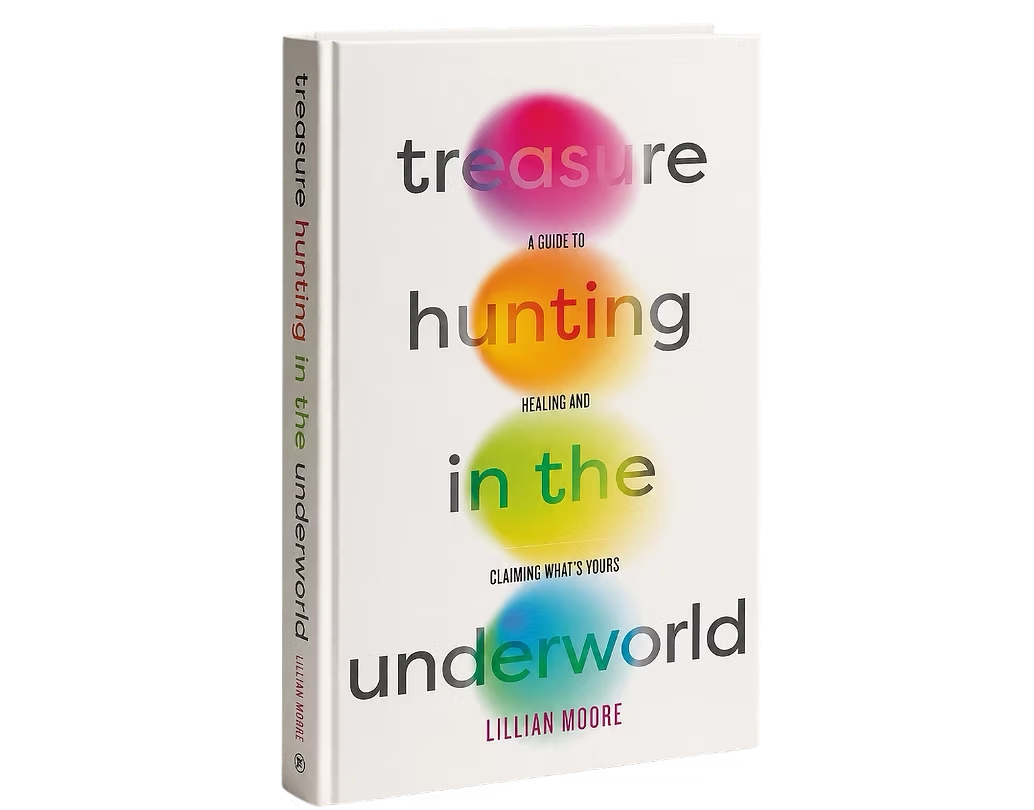
Purchase her new book!
Listen & Watch
🎙
Listen & Watch 🎙
What We Cover
In this episode, we talk about:
Trauma as energy loops in the body and energy field
Why maladapted traits are often highly developed survival skills
How trauma can show up in daily life through reactions and patterns
Lillian’s journey into trauma work and healing
The role of desire and internal motivation in transformation
Moving from reaction into choice
The psyche as an “underworld” worth exploring
Nervous system regulation tools like walking, shaking, and tapping
How inner experiences can become valuable information
The danger of spiritual bypassing
Why forcing breakthroughs can backfire
Rewriting the past and shifting identity
How self-sabotage connects to old protection patterns
Partnering with your psyche instead of fighting yourself
Distinguishing intuition from fear or fantasy
Beginning with a kinder inner voice
Key Takeaways
Trauma can be understood as energy that continues looping until it is met
Old survival strategies are not proof of failure; they are proof you adapted
Healing requires the body, not just the mind
Nervous system regulation creates the safety needed for deeper work
Pain, tension, and emotional responses can all carry information
Spiritual growth requires honesty, not bypassing
Desire can be a powerful guide when rooted in self-trust
Self-sabotage often begins as protection
A kind inner voice is not optional fluff; it is part of the healing process
Transformation happens when you stop fighting your psyche and begin partnering with it
Favorite Quotes & Sound Bites
A few moments you’ll want to remember:
“Trauma is like a skid in your energy body.”
“Good humor and kindness keep healing easier.”
“Everything is information, even pain.”
“The affliction can become the medicine.”
“Start with a kind inner voice.”
“Partnering with your psyche is part of healing.”
Chapters
00:00 – Trauma as Energy Loops
02:01 – Survival Skills That Become Patterns
04:57 – Maladaptive Traits in Daily Life
07:27 – Lillian’s Journey into Trauma Work
10:07 – Desire and Internal Motivation
12:44 – Moving from Reaction to Choice
17:19 – Treasure Hunting in the Psyche
23:35 – Nervous System Regulation Tools
29:32 – Inner Experiences as Information
32:34 – The Danger of Spiritual Bypassing
37:33 – Forced Breakthroughs vs. Natural Expansion
44:17 – Rewriting the Past and Identity
50:21 – First Steps Out of Self-Sabotage
57:24 – Partnering with Your Psyche
01:00:05 – Intuition, Fear & Fantasy
01:03:13 – Starting with a Kind Inner Voice
Why This Episode Matters
Because trauma does not always announce itself loudly.
Sometimes it shows up as:
reacting before you even know what you feel
over-explaining, over-giving, or over-controlling
shutting down when something feels too much
feeling stuck in old patterns you thought you had already outgrown
struggling to trust your desire, intuition, or next step
carrying pain in your body without knowing what it is trying to say
And the complicated part? Many of the patterns we judge ourselves for started as protection.
This episode matters because Lillian reframes trauma healing as a relationship with the body, the psyche, and the parts of us that learned how to survive. Not every response is a failure. Not every pattern is proof that you are stuck forever. Sometimes what looks like self-sabotage is actually an old strategy asking to be updated.
This conversation is a reminder that healing does not require you to reject yourself…It asks you to meet yourself with enough honesty and kindness to finally create something new!
About Lillian Eve Moore
Lillian Eve Moore is an author and executive coach with over twenty years of experience in trauma-informed work, emotional mastery, and leadership development. She is the founder and CEO of Mindlight, a personal development company she has led since 2018.
Her work spans enterprise and nonprofit sectors, including collaborations with Google Vitality Labs, the YMCA, SAFE Alliance, Furovial, and Ottobox. She has led trauma-resolution and resilience work with first responders, facilitated group healing programs for survivors of sexual assault, and ran mental wellness teams during natural disasters and throughout the COVID-19 pandemic.
Her book Treasure Hunting in the Underworld, provides a practical framework for meeting your inner world with radical self-acceptance. Treasure Hunting treats emotion, grief, and desire as forms of intelligence. It guides readers to stop fighting their pain, extract what is valuable from even the most difficult experiences, and move forward deeper, stronger, and happier.
Links Mentioned In The Show
Get her book "Treasure Hunting in the Underworld" by ordering here!
Here's where to go next: https://hello.lillianevemoore.com/podcast-entry
Instagram: @asklillianevemoore
Facebook: @asklillianevemoore
Podcast review promo...Get 15% off a distance energy healing session or a piece of jewelry with a positive review of the show. Email photo of review (aftersubmitted on podcast platform) to info@tansyrodgers.com
Support Beyond The Episode
If this conversation hit home, and you’re craving deeper support (not just ideas, but real integration):
Join the newsletter →
If this episode gave language to something you have been carrying, take a moment to pause and ask:
What part of me has been trying to protect me?
Sometimes healing begins with one honest, compassionate conversation with yourself!
If this episode resonated, follow or subscribe to The Energy Fix, leave a review, and share it with someone who may need a more compassionate way to understand their own healing journey.
Transcript
-
Lillian Eve Moore (00:00.078)
From an energetic perspective, your trauma is like a skid. It's a part of your energy body that is going in a direction that is outside of your control. And typically with trauma, it's more like a loop. So you've got energy that belongs to you that's looping in a way that you don't have any control over it. Now, in order to meet that energy, you have to meet it as it exists. Because if you meet it with something else, it's like you bounce off of it. You create more resistance. You end up creating pain on pain, where you're now ashamed of the fact that you're sad and the fact that you're
That you were enraged. And it's layers more and more protection so that that energy can keep looping in that same pattern. You want to regain control of that that loop. You got to meet it as it actually lives in the body. And then, like I said, it's a course correcting. It's like now, okay, now we got all of ourselves, all that information in alignment, in congruence with the natural state of our body.
Tansy Rodgers (01:04.524)
Welcome back to the Energy Fix, a podcast dedicated to help you balance your energetic body by diving deep into the sweet world of all things health and spirituality. My name's Tansy, and I'm an intuitive Crystal Reiki energy healer, energetic nutrition and holistic health practitioner, and a crystal jewelry designer. It's time to talk all things energy. Let's dive in.
Welcome back to the Energy Fix Podcast. Thank you so much for being here with us again today. Today's conversation is going to dive deep into something that I think is very relatable to many, many, many people. We're going to be talking all about trauma, but not in the sense of just digging around in the corners of our past. Rather, more from an angle of what happens when life has let you down, your nervous system.
Has learned to protect you. And yet some part of you still feels like it wants more, like it needs more, like it wants more aliveness or more love or more creativity, more possibility, more life. Because sometimes what we call self-sabotage is not laziness, it's not weakness, it's just really old protection strategies, old protection strategies that we haven't actually updated yet.
My guest today is Lillian Eve Moore, an author, executive coach, trauma expert, and founder of Mind Light. She has spent more than 20 years working in trauma informed healing, emotional mastery, leadership development, and nervous system work. Her work has supported first responders, survivors of sexual assault, helpers, leaders, parents, and
People who are ready to go beyond surviving and begin creating an exceptional life. And her book, Treasure Hunting in the Underworld, really offers a beautiful practical framework for meeting the inner world with radical self-acceptance. We're going to be talking all about this in a deep way and expanding out in whatever feels like it needs to be called upon or come into light.
Tansy Rodgers (03:30.806)
All right, Lillian. Thank you so much for being here today. Let's dive in. How are you?
Lillian Eve Moore (03:37.27)
I'm so well and thank you so much for having me, Tansy. It's an honor to be here.
Tansy Rodgers (03:41.134)
Well, we're gonna start just really getting into the heart and the root of this, Lillian. When someone says, I keep sabotaging myself, what are they usually misunderstanding about what is actually happening inside of themselves?
Lillian Eve Moore (03:58.008)
Such a great question. So there's this concept called maladapted traits. It's a psychological mumbo jumbo that's talking about how we've adapted in ways that were very useful when we were children and not so useful now. What I love to teach people though is that these are highly developed skills. I don't think that they're maladaptions. I don't think that they're something gone wrong.
Because those skills that you develop for your survival, it's it's skills that you develop under pressure. They're like diamonds, they're precise, they're highly sophisticated, they're wildly intelligent. The only issue is that they're not consensual, like they hijack us, they take over. But when you heal and you no longer have the fear running in your system, then you can choose when and how you use those same strategies.
Tansy Rodgers (04:57.334)
Yeah. So can you give us an example of how you see that this shows up in the people?
Lillian Eve Moore (05:03.958)
Absolutely. I'll I'll use myself as an example. So I had two crazy moms. One, my biological mom is schizophrenic and my stepmom was not diagnosed, but probably would have been helpful if she had been. And I developed a wildly sophisticated skill at mapping other people's psyches. Now you can imagine how helpful that is in my romantic relationships. How fun it is to be, you know, an employee.
In that kind of an environment where you're being psychoanalyzed and not just psychoanalyzed, but really well psychoanalyzed. It could be weaponized when I felt under threat, but I'm also a genius at what I do. And when my fear of other people's dysfunction was resolved and I felt safer in my body, I stopped doing it involuntarily in my relationships and was able to create an outlet where it would be of great service to the world and also my own life.
Mm.
Tansy Rodgers (06:04.342)
And what was your outlet?
Lillian Eve Moore (06:06.176)
My practice. You've practiced. Yeah, with people who are coming to me and saying, Hey, I don't know what's going on in my psyche. Please help me. And then suddenly that capacity to map and understand and and predict and see patterns became something that I could build on and do on purpose and and become not just voluntary, but yeah, high h specialized skill. But it came
It came from a calling, it came from an instinct that I developed as a kid.
Tansy Rodgers (06:38.464)
Yeah. And so I think that's really helpful for us to understand and to wrap our head around the concept of the maladaptive traits that you had just talked about. Because, you know, not a lot of people actually realize that maybe they are running on a narrative of that. And they just think that everything is going wrong or the world's out to get them or all of these other things that are popping up.
And so, and so you having quite an experience with that, I want to go even deeper into your story. What brought you, you know, you taught you talked about your your moms. What brought you to trauma work otherwise? And what taught you that healing needed both radical love and surgical clarity?
Lillian Eve Moore (07:27.758)
Mm-hmm. I think that my story is very relatable. And I think that anybody who who is listening for their own calling will find this to be true, that we are given curriculum. Like we're given sort of a raw material that we have to sort through. And that raw material is on purpose for what it is that we are meant to do.
And it it's related to what I was just saying about this idea of maladapted traits, that you think it's a problem, but it's actually a superpower. So I was given a lot of experiences that were traumatizing for me, that made my psyche a mess. And and yet I also had this inner knowing that healing was possible. I had some sense of
An internal integrity or alignment, probably because I spent so much time in nature as a kid, that had me always seeking healing, seeking support. But you don't look for things that you don't think are possible. So there was that was one of the gifts of my childhood as well is that something inspiring me that it was possible to find healing. And then I just went after it like a monster, just from 10 years old onward looking for teachers.
and then again, this part I think is something I'd love for anyone listening to consider. I didn't just heal myself and then I was well. It was always oriented around something that I wanted and who I wanted to be. So I can't tell you one major transformation story. I was broken and crippled and depressed and anxious, and then I was enlightened and whole and complete and rich and happily married with my babies. no.
It's more like project one project at a time. The first project was recovering from my anxiety and depression, getting to figure out how to support myself as an adult, how to get out of bed in the morning. But I've had projects that were more dealing with my attachment wounds and being able to form the stable loving marriage. And but it was always centered on where am I headed next? What do I want next? And then healing and alignment with that.
Tansy Rodgers (09:51.174)
And I think that's important for people to hear, Lillian, that it is such a journey. And sometimes those healing projects are literally learning how to get out of bed in the morning. Something so small in the grand scheme of healing, but yet so powerful.
Lillian Eve Moore (10:07.404)
Yeah. Yeah, absolutely. And I think that the desire piece is really underrated in the conversation of healing trauma. It's like, what's the point? What's the point of healing anything? Why are you going back there and looking at your past unless unless it lo unlocks something for you about what you want and then it's worth it, really worth it.
Tansy Rodgers (10:27.752)
Do you feel like do you feel like a lot of the looking back at your past and really diving into that can actually be re-traumatizing for you?
Lillian Eve Moore (10:38.25)
totally. I that's why surgical, you you know, the surgical approach is ma it matters. And I I hear people all the time say, I've done so much work. And I'm like, Probably more you've talked about doing work, you've thought about doing work. You've sat with people who said that this was the work. But the actual work is a relief and it's palpable. It feels good. It it moves you in the moment and undeniably. So
I say don't look at your past unless you're doing that kind of work. And usually you're doing that like for an hour, maybe for forty five minutes. It's in a session structure. It's not like ruminating for days or months or years.
Tansy Rodgers (11:20.492)
Yeah. And I think a lot of people get stuck in that rumination spiral, right? Like
A and it also gets misjudged as I'm doing the work when actually it's just rumination. Yeah.
Lillian Eve Moore (11:35.094)
Yeah. And to some degree, I feel like talk therapy is catching up, but talk therapy perpetuated this because it's like, okay, we're gonna sit and f and we're just gonna talk about what happened and we're gonna build better coping strategies so that you can live with those internal monsters a little bit more comfortably, but you're not actually moving anything. Yeah. Now, you know, there's been an upgrade and there's more somatic work and there there's an understanding that that
The things that we experience, they hit us on an interdimensional level. And when we want to create change, we need to create change interdimensionally, meaning at the level of the psyche, at the level of the spirit, the the body, mind, emotion, you're you know, you're working on a causal realm when you're doing healing work at that, you know, with those foundational pieces of your identity.
Tansy Rodgers (12:26.838)
Yeah. thinking where you were when you started this work, all the way at the ripe age of 10 or so, to where you're at now, is there a word or a phrase that you're really embodying now as you move forward and have healed so many different layers?
Lillian Eve Moore (12:44.586)
Yeah, I would say probably good humor. I know like good humor, kindness, something in that vein. I just keep getting gentler and gentler and the work keeps getting faster and faster. I keep getting sillier and sillier and the work just gets easier and easier with myself and with my clients.
Tansy Rodgers (13:04.108)
Yeah. And so what do you feel that you do when it comes to self-care or it comes to getting yourself back on track when you feel like maybe that humor piece is not feeling very humorous or joyful? Like, how do you kind of steer your way back into this evolution that you've pushed forward into?
Lillian Eve Moore (13:26.166)
It's so similar to physical health. It's so similar. It's like, what do you do when you haven't moved your butt in like three months? And you're like, God, this like I don't want to because I know how bad it's gonna feel because I haven't been doing it. And I could just wait longer and it's just gonna feel worse. It's very similar. So this is what I do physically, and we'll we'll play it out mentally and emotionally. I will trick myself. I will say, don't worry, we're not gonna go for a run.
I would never do that to you. Just put on your shoes. Just put on your shoes. We'll just see what happens. I will not make you go on a run, but let's just get our get our our sweet, beautiful selves out the door with our shoes on. And we're just gonna see what happens. We're gonna go start moving down the street at the pace that we happen to be moving at. And just remember that running is an option. And and you can hear like my inner relationship with myself is it is there's one that's
It's embedded with humor. It's embedded with love. It's embedded with understanding. And it's I can say this to anyone, and everyone knows exactly what I'm talking about. Do you know what it's like with the junk drawer? That you've just let it accumulate and now there's like something sticky at the bottom. You don't want to clean out your garage because it's it's like too overwhelming. Everybody feels this. We all understand it's not a disorder, it's not neurodivergence, it's so human, it's all of us.
That we we make messes and if we take too long cleaning them up, we want to clean them up even less. So with that understanding that that already brings in a lot of humor because I have compassion for you, Tansy. I have compassion for you, Lindsay listeners. I have why wouldn't I have compassion for my own cute human self that also deals with that? So it's very similar. It's like, all right, honey, you're having feelings. Do you want to talk about them? Should we get out a journal?
Do I need to schedule you an appointment? Let's go for a walk. Let's talk it out. Let's do some tapping. Maybe we'll do some breathing. It's coaxing myself in in the gentlest way, kindest way possible, but also not putting on my shoes isn't an option. I'm not gonna, I'm not gonna let myself rot. I'm not gonna, there's a bit of grit. There's a bit of of knowing where my line is with myself.
Tansy Rodgers (15:54.622)
Knowing that line, I think that that is one of the most important things in that part of the conversation is knowing what line you're not crossing.
Lillian Eve Moore (16:03.66)
Yeah. Well you great you gain some ground and then you don't want to lose it. There there might be dips that I can get to, but I I don't go back to depression. I don't go back to panic attacks. Cause that it's like I've gained too much ground. Now, of course, there could be a cata cata catastrophe, excuse me, catastrophe in my life. You know, we all can be humbled by life, but I'm not gonna lose.
Tansy Rodgers (16:08.077)
Yeah.
Lillian Eve Moore (16:32.054)
my knowledge of how to get out of that. So my standard, we've all experienced this as well, you know, maybe through relationships where our standards raise. And it's not even about boundaries. It's just like this is how reality works for me now. I can't imagine being talked to in the way that I was talked to as a child. Or I can't away imagine, you know, being in a kind of relationship like I was with that first relationship. We all outgrow things, making that conscious
makes a line in the sand for yourself.
Tansy Rodgers (17:04.704)
Yeah. Your book is called Treasure Hunting in the Underworld. What is the underworld the underworld in your work and why do you believe there is treasure there instead of just pain?
Lillian Eve Moore (17:19.436)
The underworld is the psyche. So I think about it like the unconscious, the subconscious, the psychospiritual, the emotional realm. And it's it's the majority of yourself. It's like the iceberg underneath the surface of the water. So it's most of what you are is that is the underworld. And bringing that to light is like moving into your own home. It's it's self-possession, it's sovereignty, it's it's a
A reclamation of who you are and your identity and your life. And in the beginning of our conversation, we talked about choice, that the difference between self-sabotage and specialized skill is choice, that it's not reactionary. It's not a compulsion. So reactions and compulsions happen because we don't have insight into our own underworld.
And then those reactions and compulsions become treasure that we can use in our life when we know what they are, we know how they work, we know what drives them and how to utilize them in a good way.
Tansy Rodgers (18:35.438)
So how do you bring the unconscious into the light without reliving every painful story every single time?
Lillian Eve Moore (18:45.644)
Yeah, really, really good question. So, first of all, I don't recommend that everyone with all kinds of trauma do their deep is trauma work alone. It can be very, very valuable and sometimes necessary to have an anchor that can hold well-being for you. that being said, first thing is establishing well-being internally. So knowing how to feel good on purpose, knowing how to have that kind inner voice and practicing it.
outside of the context of trauma work. So that you're the only time that you're talking to yourself is when you're trying to fix yourself. The only time you're in relationship with yourself is when you're trying to be better than you were or trying to get yourself to do something. Then what kind of relationship do you expect to have? What kind of safety? Yeah. I have a a something that I say to myself when I fill the water filter, like when the water filter is full and I go and I just pour like clean drinking water in I have a Berkey.
And I'm like, somebody who loves me filled this. Who loves me? Who who filled it? Who is it that bought this car that I like? Who is it that made this money that feeds my family? Who is it that got my my beautiful self to Colombia to sit in this chair and have this lovely conversation? Somebody who cares deeply about me in my life got me here to this conversation. So this is a conversation that if we cultivate, then we have internal safety. We've got f a friend that we are much more willing.
to tell our secrets to, to share our our pain with, and we know it's going to be productive. Versus we have somebody in our in our psyche, in our in our own head, that when we share something, they go, ooh, that's ugly. It's a lot, it's like that's that's not it. so that's the first thing. You have a basis of safety internally. And then the second piece is that we want to be systematic.
So we want to approach things from the outside, from that place of well-being, in a digestible pace. We say slow is gentle, gentle is fast.
Lillian Eve Moore (20:56.878)
So we have different guardians, gates, anybody who's done parts work, even when we're talking about coping strategies, there's ways that the psyche protects itself from itself. And this is why we have parts of our psyche that are unknown to us that can sort of drive us into walls. But if we approach those deeper places and we honor each gate and we process and digest what information is there at each gate.
then we can move through and you're integrating as you go. It's very much like digesting food. We need to digest our experiences, digest the things that have happened to us, digest our own emotions. And then we get to be wise and compassionate and generous and funny.
Tansy Rodgers (21:44.578)
Break because I want to share something I make that's meant to support you in real life, not just look cute on your wrist. I create intentional crystal jewelry through BEU crystals. These pieces aren't random. I design them using crystal energy, and I also weave in numerology and geometry, and I infuse the pieces with Reiki Healing Energy as part of my process to really help support you on an energetic, deep level.
They're like little wearable anchors, the kind you can touch when you're overwhelmed, when you're heading into a hard conversation, or when you need a reminder to come back to yourself more solid, more grounded, more authentic. I'm not here to tell you that jewelry fixes everything, but I am here to tell you that having a steady physical cue can change your day, especially if you're sensitive, easily overstimulated, or your brain likes to sprint.
Way ahead of you. If you want to browse what's available or see what is newly released, head on over to BEUCrystals.com. I'll link it down in the show notes so that you can easily shop and check out what is available. And as always, if you have any questions or you want to do any custom work, you can easily reach out to me right there. Okay, let's jump back into this episode.
So you said you talked about the basis of safety. You need to have a basis of safety to really be able to step into this. And so as you said that, I started thinking, well, what if somebody is coming to the table and they have a very dysregulated nervous system right off the bat, that that level of safety does not feel easily accessed.
Is it healthy or safe to really start addressing trauma when the nervous system is so dysregulated? Or do you need to do something else something else first before stepping in to start to address that trauma? Cause I feel like it's a big cycle, right? Like the trauma can make you feel dysregulated and vice versa.
Lillian Eve Moore (23:58.038)
Yeah, but it doesn't have to be like years of regulating yourself. It can be two minutes of regulating yourself. You can get to a level of regulation that would enable you to process a sideways emotion in a few breaths. Because our basis is a one of well-being. And even when we're dysregulated, we're still mostly regulated. I mean, regulation is that you are digesting your food.
And I love that you talk about gut health because we know that emotional well-being and digesting your food actually are related. But you you don't even you can't even your brain would just pop off your head if you could really understand how many things are going right in your body at any given time. You're mostly working very well. Even if you're even if you're not well, even if you don't feel good right now, even if you're dealing with chronic illness, you're still mostly functioning very well. On a planet,
that's mostly functioning really well. So you got that to be pulling from. You know, you've got a, you know, God unit, whatever you want to call it, just so even if you even if you just worship the amazing ecosystem that we're all a part of, you you can clearly see there's an organization of thing. There's it just beyond comprehension, things are going well. Things are working so well. So that's always accessible. Always. That's why the breath
Why the breath regulates the way the breath regulates. Cause right there, me breathing in, what I'm surrounded by is exactly what I need in my lungs that is brought in by a thing that I don't even have to think about doing. What is that about? That's regulation. That's well being.
Tansy Rodgers (25:40.274)
And so maybe you just answered this, but is there a favorite practice or tool that you like using for quick regulation?
Lillian Eve Moore (25:50.144)
yeah, I think walking is just about the best thing you can do for your nervous system, but good to have good, like a lot of tricks on up your sleeve. For for maintaining regulation when I'm doing very deep trauma work, we do a lot of tapping. We do tapping, we do shaking. those kind of our go-to and we remind about the breath, the quality of the breath. Because when you breathe like you're safe, your body believes that you're safe.
You got bilateral communication, which is like EMDR. You've got your breath working for you. I mean, it just does a lot of things.
Tansy Rodgers (26:25.482)
Yeah. Walking and shaking are two of my favorite tools too. Yeah. Great. Yeah. And and as well, you know, walking, you're also out. It's nature and nature can have such that such a calming effect. The fresh air and the sunshine is helping to detoxify the system and balance everything out. There's a lot going on there. Yeah. Now, Lillian, a lot of people think trauma healing
Lillian Eve Moore (26:29.1)
Okay.
Lillian Eve Moore (26:48.694)
Yeah, yeah.
Tansy Rodgers (26:54.304)
really means that you have to go back and unpack everything. Do you find that there's times when that is quite helpful versus when it's not so helpful and and maybe need to be looked at with a different perspective or a different lens?
Lillian Eve Moore (27:11.974)
So I don't that's not exactly where I would draw the line. I think first question is what do you want? And if you're in a place where you're carrying an amount of undigested experiences, which we call trauma, if you're carrying so much of that that you're not able to regulate, you're not able to find stability for yourself in a consistent way. It keeps coming up, it keeps coming up. And all you can really imagine wanting is just peace, it's a good idea to go ahead and do a sweep, do a proper sweep.
Now, this isn't a going and dissecting. This isn't a going and talking about forever. This isn't a going and understanding. It's about rewriting your past, actually creating resolution in the body. So the body body does no longer registers that as relevant information. Where you're no longer, that's not gonna come up because that's not the important, you got updated information about that experience.
And I highly encourage people to do that, especially if they're dealing with chronic illness, but they're in a a stable enough place to do that level of work. We call them trauma sweeps. Highly recommend. Then I like to orient around desire. So you want to make more money, then it's a good idea to look what experiences am I identifying with from my past that say I can't, that say I am unworthy of, that say that's not possible for me, that say that that would be wrong or bad for me to do or have or be. And clearing
along the line. We call it a trauma train. It's like when you have, you know, you're left at the grocery store when you're four years old, and then your clique of friends ditches you when you're in middle school and then your first boyfriend abandons you and then maybe, you know, a grandparent l dies when you're in your twenties and you're broke and you don't have anyone in your life. You know, you have these sort of sequences of events that sort of hammer in the same lesson. Maybe that you're, you know, ki unworthy of something or that people are gonna leave you or whatever it is.
Clearing along those lines can create radical freedom in terms of how you can relate to yourself and who you believe you can be.
Tansy Rodgers (29:13.388)
Yeah. Well, the trauma that you're talking about, I mean, this the these emotions, the grief and the desire and all of these things that pop up around trauma, they're really just beautiful bits of information to give us ideas of how to better move forward and to heal, right?
Lillian Eve Moore (29:32.918)
I love that, yes. Mm-hmm. Yeah.
Tansy Rodgers (29:35.756)
Can you explain that a little bit deeper? Can we go a little deeper into that and what that means, what these inner experiences are trying to tell us?
Lillian Eve Moore (29:43.09)
Yeah, so this is a delicate one because if you're like you've got red hot trauma that's hard to touch and scary to touch, and and there is such an important moment in people's process of being able to look back at something and say, that was not okay, that was wrong. We don't have to build a house there, we're not gonna live our whole lives from that perspective, but that moment has therapeutic value that should not be skipped.
And a lot of times we want to skip to the part where we have higher perspective and we have like, like I see the meaning and the wisdom and compassion for everyone and love and light and whatever. But the that moment where you say, no, that was not okay. That was not okay for a three-year-old to experience. It is corrective. It adjusts your compass around what is right and what is wrong for you. It realigns your own body's energy so that you're working in congruence with yourself.
Versus when we introduce this concept that everything is a gift, everything happens for a reason prematurely, it creates an inner attack because it's not true to our experience. So that's my my that's my preamble. But that being said, I really do believe everything is information. Everything is information, and that we're here for expansion. And the things that help us expand the most are the things that are highly contrasting. That when we
believe and know one thing to be true, and then we experience something totally different. We we grow. Our sense of well-being is in one world. And then we experience something outside of that world, either we live with that division our entire lives, or we expand our definition of well-being. And then you do start to get into these places of radical compassion and also wisdom and insight.
to where you you just see things with a lot more harmony and there's a lot less battling life and nothing works and why like you're in a fight with how it is. We get peace when we start to let things be a part of who we are. You get interesting, you get deaf.
Tansy Rodgers (31:59.116)
Yeah. I I want to take one step back because you talked about how it's so important to be in that certain phase where you are saying it is not okay what I experienced, rather than jumping into what I call the spiritual bypassing of all of it. And so let's talk about I I just want your viewpoint here, the spiritual bypassing. How does that actually hold us back in our healing if we don't, if we don't address that really important step of
seeing, understanding, and saying, No, this wasn't okay. Mm-hmm.
Lillian Eve Moore (32:33.934)
Well, I think it's helpful to recognize that spiritual bypassing may be a coping strategy to help us not feel the pain. And and that I'm not I'm I'm not really mad at it. I think there's a time and a place. It's very Abraham Hicksy law of attraction y to just like look at where you want to go and don't think about anything else. and I know that there's a lot of value there. I just also think that trauma has value. And I know in order to work with trauma, you have to meet it as it lives, you have to
It's sort of like turning into a skid. If you're on ice, do you know this principle? Mm-hmm. You're sliding and you're going in the direction you don't want to go. It's counterintuitive, but you gotta go, you gotta turn your wheel in that same direction. And then you regain control. So you can think about it from an energetic perspective. And I know a lot of your listeners are down if we're gonna talk about energy. From an energetic perspective, your trauma is like a skid. It's a a part of your energy body that is going in a direction that is outside of your control.
And typically with trauma, it's more like a loop. So you've got energy that belongs to you that's looping in a way that you don't have any control over it. Now, in order to meet that energy, you have to meet it as it exists. Because if you meet it with something else, it's like you bounce off of it. You create more resistance. You end up creating pain on pain, where you're now ashamed of the fact that you're sad and of the fact that you're that you were enraged. And it layers more and more protection so that that energy can keep looping in that same pattern.
You wanna regain control of that that loop. You gotta meet it as it actually lives in the body. And then, like I said, it's a course correcting. It's like now, okay, now we got all of ourselves, all that information in alignment, in congruence with the natural state of our body.
Tansy Rodgers (34:21.964)
And so, where do you typically see where have you seen that trauma really lives in the body? I mean, the most common understanding is in the psoas and the hips, but like I'm curious where you might have seen trauma existing, getting trapped in, getting tight, and also how it then shows up physically. What kind of symptoms have you seen starting to come up from that trappedness?
Lillian Eve Moore (34:51.009)
I don't think that there's any limitation. I mean, we're yeah, you if you think about it from the perspective that we are energy systems and that the psyche is the causal realm, meaning the place that our our selves are manifested from, that the psyche generates what we are. It generates our physicality. So I've heard, you know, I've had people talk about getting
what's it called structural integration work around their eyes and clearing trauma from that experience. and I think that that that type of diagnostic work for me typically isn't where it's at where it's like, well, this part of the body means this. I think it's typically faster to talk to the psyche directly and say, like, hey, what you got going on in your toes? You know?
What's you got going on in your colon? Colon, what are you needing right now? What's happening? And talk to it at the psyche, like the psyche level of the colon. What's the psyche of the colon have to say to you? And you're gonna get better information from that versus, you know, there's all these kinds of books that are like, you know, a a hot spiky pain in your left toe means this. And I was like, nah, maybe. It's I think we have personal metaphors that matter more.
Tansy Rodgers (36:15.264)
Yeah. And so do people do you feel that people discover that by asking themselves that question? Like taking that moment and hey Toes, what's going on down there? I mean, just literally having that conversation. Yeah. Yeah.
Lillian Eve Moore (36:28.588)
Mm-hmm. We ha yeah, I have a client that I was working with for a long time. She had Lyme disease and she just cured it with one of the audio sessions that I have that where you you just do body scans and presence well being throughout the body over and over and just kind listen. And she'd done all kinds of trauma work. And I think, you know, that was sort of like the last switch. But people disappear chronic illnesses in this way all the time in our work.
Tansy Rodgers (36:54.23)
Yeah, wow.
I feel like, especially when it comes to trauma or healing these deep levels of psyche that feel like they're holding us back, you know, when when we feel like we're at this place where we're being held back, I feel like we can fall into this trap of almost forcing a breakthrough rather than building up this capacity to receive new life, to receive that expansion. Can you talk a little bit about?
maybe what the difference that would look like. Mm-hmm. Where you're forcing that breakthrough.
Lillian Eve Moore (37:33.868)
Yeah, it's the premise that I you know, I was sharing with you is kind of my personal moment that I'm in right now, or moment being the last dec decade. and it's the context of of self-love. That are you feeling like you're broken and if you don't fix yourself yesterday, you're gonna die and no one's gonna love you. Or are you doing it cause wouldn't it be cool to have more mobility?
More emotional mobility, more financial mobility, deeper love, more safety, to have things be more spontaneously awesome. that context is it changes everything.
Tansy Rodgers (38:15.584)
Yeah. Which is really a big conversation around manifestation, you know, goal setting, manifesting. And I feel like sometimes that really backfires when trauma is getting unresolved. So what happens when the mind wants this expansion? When you want this expansion, but the body is still really bracing for this disappointment. And that could even be on a subconscious level that you don't even know, or an energetic level, you don't even know this is happening.
Lillian Eve Moore (38:44.16)
Well, I do think people people maybe don't identify it, but it's identifiable is how it how does it feel? Because sometimes you really, really, really want something, but it feels terrible to think about. And you want it so bad, you want it so bad, but it still feels terrible to think about. You feel you think about the dollars actually landing on your porch. They have arrived. You know, the husband or whatever is there. You have the baby. You have what I don't know what you people want, but
You're in Hawaii. You're living the life. It has arrived. Do you feel good? Do you feel all the way good? Or do you panic a little bit when you think about it, when you go there? And that's to me the indication about what you're manifesting. Cause you're gonna be a manifesting what it is that you feel, not what it is that you think you want. And that that's palpable.
Tansy Rodgers (39:35.16)
Do you think that that is also part of partnering with your psyche? You know, like like looking at things that that can help us to stop bullying ourselves or or start cooperating with parts of ourselves that are scared. I don't know if that makes sense.
Lillian Eve Moore (39:54.35)
Absolutely, it makes sense. It's sort of like I want this thing, and my psyche is just working against me, and my mind is working against me, and my whole past is working against me. And it's sort of like, how do I get you to behave yourself so I can have the life that I want? And it's a bit of an abusive conversation, but how could we not feel that way when we want all these beautiful things and we keep messing it up or not taking action or not having the confidence? We've
it we've lost our trust in ourselves. We we've earned our mistrust in ourselves. It's gone both ways. You know, I'm it's very cute and all to talk about how, yeah, like can you imagine being in a relationship with me and me psychoanalyzing? Actually imagine that. It's not cute. It's dangerous. It's mean. It's it's violent. It's abusive. I was abusive. You date me at a as a 22 year old. You barely get out of there alive. Not cute. Not cute.
So I would be right to want to cage my psyche. I would be right to want to banish her, banish my own mind. And this is I know we all experience this. We we experience betrayal at our own hands. But the conscious aspect has to go first in rebuilding the relationship. There's no other way.
Tansy Rodgers (41:17.28)
Yeah. Do you think that this is an identity issue? Who you're identifying with?
Lillian Eve Moore (41:23.552)
Mm-hmm. Yes. I like this. So we talk about trauma and identifying with trauma, like this conversation about having to go back and resort through things. A lot of that is about identific identification. So you're going back and you're retelling the story of your life to validate and back up how you feel and who you be. So it all makes sense. And all that does is just practice and reinforce an old identity.
Like, yeah, that makes sense why I am the way that I am. I must really be the way that I am. And this must that really did happen and this is who I really am. And it all matchy, matchy, matchy, matchy, matchy cycles through our sense of reality to become very firmly established. And to do to step out of that is takes radical courage. But that's how we do, you know, people are into this whole like timeline shifting.
Uh-huh. Quantum leaping. I don't know. It's like the thing that people are into. I'm into it. that that's how you do it. That's how you do it, is that you you abandon that you have any idea who or what you are. You clean up what's actually present in your body now. And if you need stories to help access it, that can be very helpful. But you don't believe in the story. The story is an access point.
And then you start telling different stories once there's space to do so. Once it's not a violation to tell a different story, as soon as it's not a violation to tell a a different story, you start telling a different story. And that different story has a new identity.
Tansy Rodgers (42:56.822)
Yeah. So is that the point when you start to tell the different story, is that the actual point then of when you are shifting the timeline? Or is there other ways that you jump that you do that timeline jump?
Lillian Eve Moore (43:10.21)
Well, you're you're doing it the whole time because we're talking about rewriting the past. So as soon as you are rewriting the past, you are a different self. You're in a different reality. I have a different childhood today than I had two decades ago. I mean that with every fiber of my being. My past is different.
If you take a minute with that one, my past is different. Don't we all believe that we have what we have because of our past? We made this change, we made this change, we were given this opportunity, we did this with that opportunity, we taught were taught this, and now this is the today is the final product of our of our past. But if we can change our past, what can't we change? What can't we change? But how we change our past?
And this is why I keep say talking about desire and knowing what you want, we change our past in accordance, in agreement with what it is that we want. So that our past supports who we want to be, supports what we want to create in the world.
Tansy Rodgers (44:17.486)
How hard do you find it? And I I guess this is more of a you could answer this from your own perspective, but I'm curious, even with people that you work with, how hard do you see it that people experience this challenge to actually choose a new identity, to have that courage?
To step into that because that can be really scary to let go of all of these things they I've that they've identified with for so long. And now all of a sudden you're this new person and you're rewriting your past.
Lillian Eve Moore (44:57.984)
Yeah, so there's three components. And because they fit together, they support expedience. They export they support it being fast. The first component is the trauma work. And when you change your past, a lot of the stuff changes automatically. And people don't always go into the trauma work to change timelines, to quantum leap, to change identity. They just want relief from pain. And so that's an easy buy-in. It's like I don't want to be stressed about this anymore. I don't want to wake up with nightmares. I don't wanna have flashbacks.
I I want to be able to sleep through the night, you know? It's that's the motivation. And then with that comes so much more liberty than they were expecting that they start wanting something different. They're able to desire beyond who they could desire. The person that they were could only desire eat little bit. But who they are now can desire wow.
And so now we've got a motivating force. We call this creative tension, where there's a desire that is pulling you forward. And I believe that this is actually part of the soul that's already there that's like a tug, very similar to trauma. Like trauma can tug you backwards, a desire can tug you forward. When you collect both, expansion. Anything's possible. So the third component that I think is helpful to look at, it has to do.
It has to do with gratification. It has to do with like just what do you like about how crappy it is right now? What feels good about it? And and to own up to that in a way that's not shaming or disregarding. Like, yeah, you don't you want to eat that cookie. You don't want to run cookie good, run bad. I feel you. Yes. I'm I agree. I I don't know who could argue with that.
And if you relax into that, it loses its power. And then these other forces, the relief from the trauma and the motivation from the desire, have more power. But when we kind of try and encapsulate how gratifying it is, and I'm talking the full spectrum of how we're attracted to people who are just like our parents or or food addictions or you know, what how we like being punished or whatever it is.
Lillian Eve Moore (47:20.63)
Way we like poverty, big things, little things. When we de-identify with them, we say, that's not how I am, that's not how I feel, it gains power in the same way that we were talking about before. It gets momentum of energy that is divergent, that you don't have control over, that has free rein to snowball. But when you're like, okay, yeah, I get you. You like that bad boy. You want somebody who's gonna abandon you. don't you love waiting for that text message?
Don't you love, isn't that kinky? It's just like being handcuffed and blindfolded in the dark, just waiting for your lover. I love it when he doesn't text me. You start owning up to that, you lose your taste for it.
You s it stops being appealing because you're actually o you're you're letting yourself have that part. And when we when we daylight the psyche, it naturally matures. It naturally evolves.
Tansy Rodgers (48:19.424)
If you're listening to this podcast episode, there is a really good chance that you're the person who holds a lot. And sometimes the issue isn't that you need more information. Sometimes you need your system to feel safe enough to actually integrate what you already know. That's what my Soul Stream and Enlightened Sessions are for. They're intuitive, energy-based sessions designed to help you recalibrate.
Emotionally, energetically, physically, and in your nervous system so you can move through life with more clarity and less internal noise. People book these when they're feeling stuck, overloaded, anxious, emotionally heavy, or like their energy isn't fully theirs anymore. And we work with that. We work with what's present, clear what's been lingering, and help you come back to center in a way that feels grounded and real.
If you want to book a session or you want to simply know more, you can head on over to tansyrogers.com or jump down into the show notes and click the link that will take you directly to those services. And if you're not sure which session is the right fit, send me a message. I'll help you choose. I'll help to guide you in the right direction. Alright, let's jump back into this episode.
Lillian Eve Moore (49:44.726)
Mm.
Tansy Rodgers (49:45.774)
I love that. Okay, so let I I want to expand on that just a little bit. You've talked about this creative power. You talked, you just said about putting light onto that psyche. When someone starts to move out of self-sabotage, when they're when they're here, they're recognizing this, they're starting to move out. What do you see really starts to come online first? Is it clarity or desire? Maybe it's anger or or imagination. I'm just really curious. What do you see is typically the
First things that come online for someone.
Lillian Eve Moore (50:21.898)
Well, I think first people become aware of how much aversion they have to themselves. And that instead if you're not just c compulsively avoiding yourself, then you become aware that you're avoiding yourself.
And I I mean I'll own up to this any day. I sit down on my meditation cushion for the first time in a long time. I'm like, you, you again. I don't want to feel what you feel. I don't want to know what's going on in you. This is a mess. Smells bad. Strong aversion. Why do we avoid meditating? Meditating is so good for us in every way. Ugh. Myself. Ew.
I don't know. It's the the messy garage. It's the drunk drawer. It's the first run. It's the same same thing. A little inertia.
Tansy Rodgers (51:21.242)
Meditation avoidance over here for sure. Because sometimes I just don't I don't want to let my mind run amuck. I just don't wanna be there.
Lillian Eve Moore (51:35.926)
Yeah, you're you wanna let your you want your l to let your mind run ab run amok on its own without you watching it. Yes.
Tansy Rodgers (51:43.212)
Yes. Let it do its thing. Yeah. Yeah. But when you but when you're stuck in even like ten, fifteen minutes of silence, it's like, now I have to see this and sometimes I don't want to see it.
Lillian Eve Moore (51:47.276)
And I'm gonna be somewhere else.
Lillian Eve Moore (51:59.756)
Mm-hmm. Yeah. Yeah. Totally. And it's the same thing. This is a perfect example of the the reward that awaits you on the other side of any personal development work that's good is that you get through that period of avoidance and then you get to have yourself. So instead of having this insane monkey running your life, you start to have like a highly sophisticated seeing eye dog that's like your best friend. But
You know, that takes training. Like your average dog is not a highly sophisticated best friend seeing eye dog and the average mind is not your friend. It takes training.
Tansy Rodgers (52:39.338)
Yeah. Yeah. I I want to touch since we're talking about meditation, I want to talk a little bit about the spiritual path of trauma healing. How do you really hold that sacredness of transformation and know that trauma healing isn't just mental and emotional. It's not just physical healing. It is really transcending us into the next level of our being.
Lillian Eve Moore (53:04.82)
Well, you probably aren't gonna like my answer, but I'm a bit of a nihilist and I'm not sure that anything matters, but my relationship to that is one of great love and humor. And I don't know, so that's that's there's something in that that gives me a lot of liberty and freedom to ride the way that I am skilled at riding without it.
needing to be more than that.
Tansy Rodgers (53:35.648)
Yeah. So just knowing you you you are you are totally fine just knowing that whatever level of healing that tr of the trauma that you're doing is going to heal you on whatever level it's meant to heal you.
Lillian Eve Moore (53:51.38)
No, I'm strategic and I'm s I'm I'm surgical and I look at what's done and not done and I'm very results oriented. But I find that deeply gratifying. Like, cool, look what we just did, and it only took us 15 minutes. Look at all these jokers saying that this is gonna take eighteen eighteen EMDR sessions for this, where we're gonna have to relive every single smell and sound and everything, and we just knocked it out in 15 minutes. That's gratifying. That's cool.
Tansy Rodgers (54:06.209)
Yeah.
Lillian Eve Moore (54:18.284)
And I think part of my nihilism and part of my like light humor with it all is because it's actually really, really easy. Let me just let's broadcast this piece to the world, all of you. Repeat this as a mantra to everyone you meet. Everything is healable and it's not that hard and it doesn't take that long.
So easy. It's so easy and fast. So it doesn't feel like this heavy spiritual burden. It feels like, I don't know, I guess how a mechanic feels about changing oil. Like we should do you should do it. You should change the oil of your car. And I I know how.
Tansy Rodgers (54:58.702)
You I you just brought up a really great point though, Lillian. You brought up an excellent point. I feel like I feel like it's easy to think because we're told this, it's easy to think this is going to be so hard and it's gonna take so long. And so why do I even want to go down that road? Because it's gonna be such a long healing. What have you found to really help to?
Expedite the process and make it realize that it's not actually this long drawn out process.
Lillian Eve Moore (55:29.868)
Well, starting with where you started is a great place to start. I just would say, like, if you're my client and you're like, Well, it's so hard, why bother? I'd be like, right? Let's just not. And be and you'd be like, okay. And we would hang out there for like 30 seconds, and you're like, but I want to have love in my life. And I'm like, ooh, tell me more about that. What what's love like?
And then you get you kind of start to goose that up a little bit. And then you're like, but I don't trust fucking anyone. Sorry if I'm not allowed to curse I don't trust fucking anyone because men are whatever and I learned that I have to be this if I'm gonna get loved. And I'm like, okay, well, do you wanna just c clean that up? And then it's like, yeah, I do. And now we have the light of this inspiration or something that you want and that you care about to carry in. There's something that's
Tansy Rodgers (56:05.365)
No, you're fine.
Lillian Eve Moore (56:25.57)
There's an alignment that's already present for you because you want love. How do you even know what love is to want it? You do though. Somehow you do, because some part of you has it. Some part of you is already more intimate and more identified with that relationship and that love than with the trauma. And when you're in that position, it's just like it's just work. There's things that you do that are way less pleasant work.
For a lot less gain than having the love of your life.
Come in and, you know, sex you good.
Tansy Rodgers (57:03.022)
Well, and I think too, I think too, like on this whole concept. I mean, I I I think that a lot of people struggle with being able to access what they know is love or what love actually feels like because there's so many layers that have covered over top. It's like it's hard to access that.
Lillian Eve Moore (57:24.504)
Totally. So right now you and I, because I'm talking to you and you know, you have an a you have an availability for something very good. Yeah. You have you're you're ready for it. Like you're ready for good things. So I'm speaking to your scope, but somebody else's scope might be sleeping through the night. They're like, I don't want to do trauma work. I just want to be able to sleep through the night. I'm like, sleep through the night. Hmm. What's sleep through the night like? it's like peas.
It's like being well rested. It's like feeling good in my body. And like that may be the most that they can imagine for themselves. And maybe that is even a stretch. And they start oscillating. I can't even imagine. It's been so hard. And they're, you know, they're back in the old vibration. But we can now, again, there's something aspirational that we can use to sort of give the energy that's required to go back and make it worth it. So that's one thing. And there's a lot of different things I'm demonstrating in this. One is the no resistance. Two is
The well-being, but sort of amped up in a way that it's emotionally significant. Emotional significance is like the only thing that the brain cares about. So you get a level of engagement that makes things go fast. The lack of resistance on my part creates psychological safety. So if I'm not fighting you and I'm saying like it's totally fine with me if you want to be like a lazy bum, that sounds great. Like just eat potato chips and be traumatized. Sounds good. I could I can get behind that.
Then there's a degree of trust where I'm not criminalizing them, I'm not punishing them, I'm not shaming them. It's radically different. Again, emotionally significant. So the brain is coming online and exposing itself in a way that it wouldn't otherwise because of the level of safety and non-resistance and then inspiration, emotional significance. And so all of that things start happening a lot faster. Doors start opening. The reason why trauma work is so slow typically is because you're fighting the psyche the whole dang time. You're like, I don't like this, but I'm gonna do it anyways. And it's like,
eking in a little bit of healing loving medicine that you can barely squeeze in between the resistance. It's mostly just fighting. That's why people love parts work, because they're like way more interested in the part that's fighting the process than they are with the part that's engaged and interested and wants the part, the the progress.
Tansy Rodgers (59:37.112)
Yeah. I want to shift the conversation just a little bit because I feel like this will resonate with a lot of people. The concept of intuition. Intuition is such a powerful piece when it comes to healing, but trauma can really distort some of those signals I have found. And so I'm curious, how do you help someone tell the difference between intuition, fear, fantasy, or just a nervous system alarm that's going off?
Lillian Eve Moore (01:00:05.61)
Mm-hmm. Yeah, I like that you brought in fantasy as well, because that's an important distinction. It's a survival emotion, just like fear is. So, first is I yeses are more important than no's. Yeses give you better information. No's require unpacking. So when your system says, scary, bad, that's not a reason to not do something. That's a reason to slow down, to look, to understand. But when you have a yes for something,
It feels like a clear yes that you can hold in your body, that's good information to move forward with, to make decisions off of. Now, usually a yes that's more of like a fantasy, you can't hold it in your body. You have like you have to leave your body to go there. You have to pretend reality is different in order to feel it. If you can feel it right now, I love this when people are talking about manifesting money. There's this like kind of wonky idea that you should act as if.
I love this idea and it's it's very real and good pre good mat magic, good medicine, but it's a misunderstanding because you don't act as if you have a million dollars and then go spend a million dollars that you don't have. That's not the move. You act as if you are a millionaire that has the two dollars that you actually have. So this is what I mean by you have the feeling in the reality that you're in today. And that feeling will propel you to a new reality.
So that's intuition. That's something that you can act on.
Tansy Rodgers (01:01:35.092)
Mm, yeah, yeah. And so are you able to use your intuition to actually heal the trauma?
Lillian Eve Moore (01:01:44.598)
so I consider desire to be intuition. So that's that's it. And then I mean if we if we just go back to what I said about yeses and no's. So the yeses I'm getting are things that I'm gonna act on. And I will actively pursue what is in my psyche based off of what I want. So if I know that I'm taking my business to another level and I know I have since I don't have it yet, my psyche is creating something different. So I'm gonna treasure hunt on that. I'm gonna treasure hunt where is
Where are the goods that are having me be here instead of there? I'm gonna hunt on that way based off of what I want. But then also the psyche will present no's. The psyche will say, uh-oh, that's too high. You can't charge that. And then I get to slow down and unpack it. Is that integrity? Is that in alignment with my values? I always like to use those three gates: the is it absolutely true? Is it kind? Is it useful? And I I edit my beliefs according to that.
So that's how I would use a no. Sometimes the no is more about just emotional charge and that's just undigested undigested emotions. And so that again, that causes pause. I'm gonna digest that emotion. I'm gonna breathe, maybe tap, work through my feeling on it, and then with the the freedom, see where the yes is now.
Tansy Rodgers (01:03:02.638)
When someone reads Treasure Hunting in the Underworld and only takes one practice into their week, what would you want them to try first?
Lillian Eve Moore (01:03:13.43)
A kind inner voice. Mm. Yeah, it's really the only one that matters. Everything else everything else can happen pretty naturally. Mm.
Tansy Rodgers (01:03:15.938)
I like that.
Tansy Rodgers (01:03:19.638)
Yeah,
Tansy Rodgers (01:03:26.338)
This has been a great conversation. Now, before we get into the logistics of where people can find you and get their hands onto your book, let's do just a few rapid-fire questions just to dig deep into what Lillian would do. Are you ready for those? All right. Question number one: What is one emotion that you think gets a bad reputation but carries incredible wisdom?
Lillian Eve Moore (01:03:43.042)
Let's go.
Lillian Eve Moore (01:03:54.263)
Anger.
Tansy Rodgers (01:03:56.428)
And why is that?
Lillian Eve Moore (01:03:58.682)
because anger is corrective. Anger is course changing. Anger helps us define w desires. Anger has a lot of energy and power and it's one that good people don't indulge in. Kind people are taught to keep that under a lid so we transfer it into another emotion very quickly instead of using it for what it has to give us.
Tansy Rodgers (01:04:23.214)
It's true. Very true. All right. Question number two. What is one sentence that you say to yourself when an old pattern tries to come in and take the wheel?
Lillian Eve Moore (01:04:34.446)
Huh. Is that a sentence? Yeah, it's kind of like, huh, look at that. Look at that again. How about that? I'm very enlightened, Tansy. We've learned nothing else.
Tansy Rodgers (01:04:37.262)
Sure.
Tansy Rodgers (01:04:52.526)
Sometimes the most enlightened questions are the most simplistic grunts and groans of them all. So yes, it works.
Lillian Eve Moore (01:05:07.026)
Yeah.
Tansy Rodgers (01:05:07.758)
All right, last question. If your psyche could send you a postcard from the underworld, what would it say to you?
Lillian Eve Moore (01:05:18.69)
Wow, it is so cool. It's cool in here. It's cool out there. Keep going. Keep looking. Keep hunting. There's more.
Tansy Rodgers (01:05:33.878)
Lillian, how can people find you? Where can they get their hands onto your book? And do you have anything exciting coming up that you'd like to share with us?
Lillian Eve Moore (01:05:42.954)
Yeah. Okay. So I have this the link is it's a little annoying to read it, but hopefully we'll have a link somewhere else as well. We will. Yeah. Hello.lillianed more dot com forward slash podcast dash entry. And that gives you a really broad option, really broad options in terms of how to start working with my work, including joining my app.
Tansy Rodgers (01:05:54.05)
But it everything will be in the show notes.
Lillian Eve Moore (01:06:12.946)
but the best way is is to get into my app. That's the best thing. You can get the audiobook there. I have a lot of free courses that teach you how to work with yourself. And and you'll also be in my little ecosystem. So you can ask me questions and we can keep keep keep jamming on it.
Tansy Rodgers (01:06:33.324)
Right, sounds great. Do you have any last words that you'd like to lay on the hearts of the listeners for today?
Lillian Eve Moore (01:06:41.534)
just that you're great, that there's nothing wrong with you and anyone who told you that w was dealing with their own crap and it had nothing to do with you.
Tansy Rodgers (01:06:52.174)
Thank you so much, Lillian, for being here and sharing your heart, your passion, your wisdom. This was amazing. I love this conversation so much. I love going deep into this work. Thank you. Healing is not always about becoming a brand new person. Sometimes it's about understanding why the old protections formed in the first place and really just honoring what they have done to help you survive.
Lillian Eve Moore (01:07:03.094)
Me too. Thank you for having me.
Tansy Rodgers (01:07:21.688)
But then also learning how to create from a deeper, freer place. For everyone listening, if this episode has stirred something in you, please be gentle with yourself. You do not have to go digging for every painful story. Just start with curiosity. You can start with one pattern or emotion or one place inside you that may be asking for attention instead of snapping into this quick judgment.
And if this show has resonated with you, please share it out with someone that you know could use it, that you know is going to help to guide them in the right direction too. And until next time, keep spreading that beautiful energy you were born to share.
