

Ep. #170: The Power of Relationships & Trauma in Spiritual Growth with Blaise Kennedy
Most people think of relationships as something to “figure out.”
But what if relationships are actually the place where we grow, heal, and come back to ourselves?
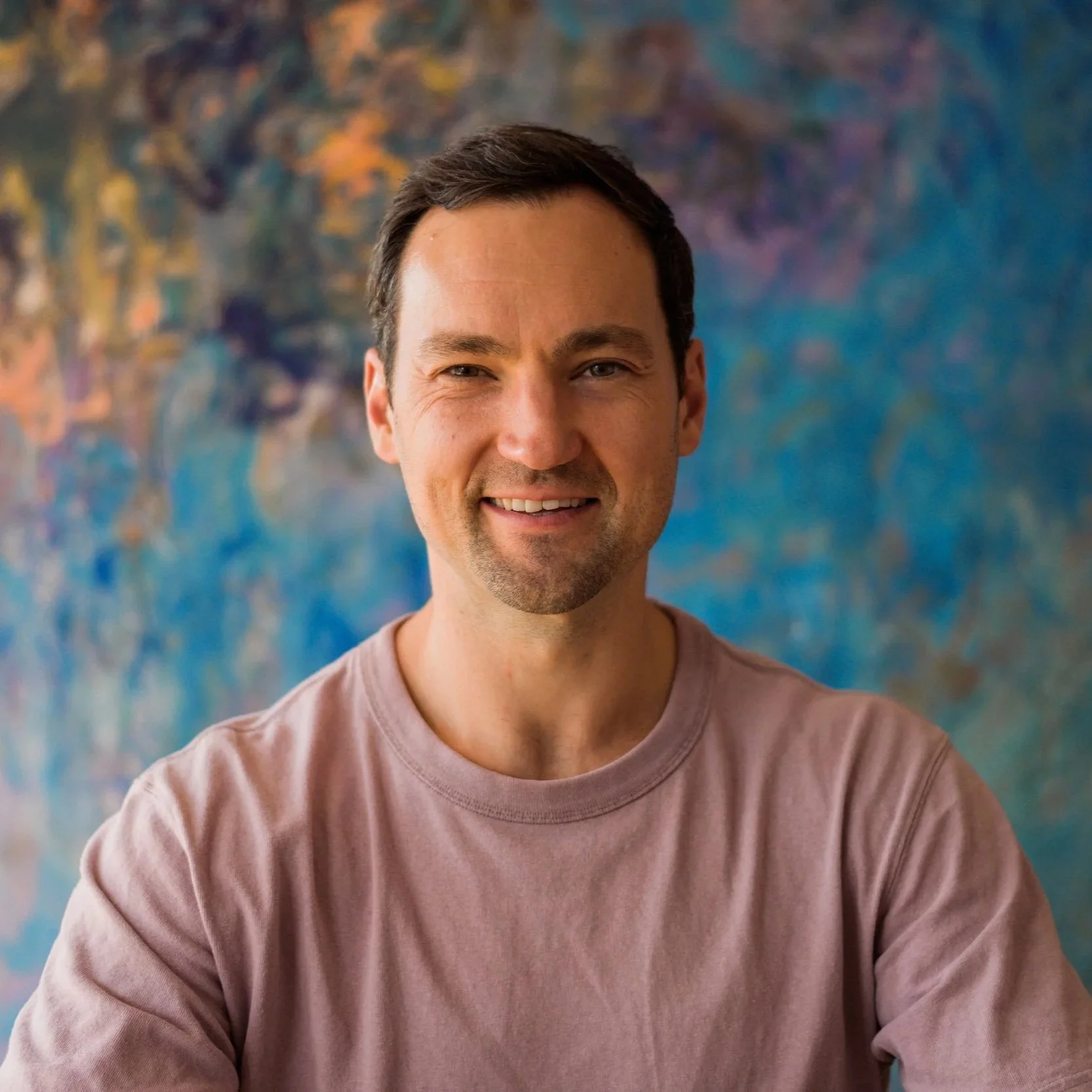
In this episode of The Energy Fix, Tansy sits down with Blaise Kennedy for a layered conversation about relationships—not just as connection points in our lives, but as powerful containers for healing and personal growth.
Blaise shares his journey from emotional numbness to deeper awareness, and how that shift required understanding trauma not as a story, but as something held in the body.
Together, they explore how relationships shape our development, why many of us enter adulthood with unfinished emotional patterns, and how safety, presence, and communication become essential for growth.
This conversation also weaves in spiritual perspectives, including insights from Tibetan Buddhism, and reframes healing as something that happens with others, not in isolation.
If you’ve ever struggled in relationships, felt disconnected from yourself, or wondered why certain patterns keep repeating—this episode brings clarity without oversimplifying the work.
Listen & Watch
🎙
Listen & Watch 🎙
What We Cover
In this episode, we talk about:
Why relationships are central to personal and spiritual growth
How the body holds relational history
The connection between trauma and emotional disconnection
Blaise’s journey from numbness to awareness
The role of presence and embodiment in healing
What “integration” actually means in real life
Why safety is foundational in relationships
The importance of having the right container for growth
How conflict can either create distance or deepen intimacy
The difference between destructive and connected conflict
Communication as a skill for emotional safety
Why healing happens through connection, not isolation
Key Takeaways
Relationships are one of the primary places we grow and heal
Trauma often lives in the body, not just in memory
Disconnection from self is more common than we realize
Integration requires presence, not just insight
Emotional safety is built through consistent connection
The right environment (container) supports real healing
Conflict can become a pathway to deeper connection
Communication skills are essential for navigating relationships
Personal growth changes how we relate to others
Favorite Quotes & Sound Bites
A few moments you’ll want to remember:
“Relationships are the place that we grow.”
“The body carries relational history.”
“We don’t actually feel our trauma.”
“Integration requires a lot of presence.”
“It is all about the container.”
“You can’t do this alone.”
“Conflict can create intimacy.”
“Slow down, sink into your body, and soften.”
Chapters
02:25 – Embodied spirituality in real life
05:20 – Exploring higher consciousness
15:08 – Personal transformation & awakening
20:11 – The challenge of integration
24:11 – Nervous system dysregulation explained
30:14 – Moving from insight → embodiment
34:45 – Creating safety in relationships
42:16 – The role of safe containers in healing
49:12 – Why relationships shape personal growth
56:47 – Conflict & emotional availability
01:02:40 – Transforming relationships through growth
01:11:14 – Building capacity for communication
Why This Episode Matters
Because relationships aren’t just something we navigate.
They’re something we’re shaped by.
It can show up as:
repeating the same patterns in different relationships
feeling disconnected, even when you’re with someone
avoiding conflict or feeling overwhelmed by it
struggling to communicate what you actually feel
wanting deeper connection but not knowing how to create it
feeling like you’re doing the work… but still getting stuck
And the difficult part?
Most people try to solve relationship issues with logic alone.
This episode shifts the focus to something deeper:
safety, embodiment, and connection.
Blaise reframes relationships as learning environments, where unresolved patterns surface—not to break us, but to show us what still needs attention.
Healing doesn’t happen in isolation.
It happens in the presence of others, where we can be seen, felt, and responded to differently.
About Blaise Kennedy
Blaise Kennedy is a teacher and guide, working at the intersection of embodied awareness, relational attunement and spiritual awakening. He supports growth-oriented people who are spiritually curious, emotionally honest, and ready for change that shows up in daily life, not only in meditation. His work was shaped by a turning point at age 24, when he entered recovery and began a serious path of self-inquiry, healing, and integration. This led to the creation of Developmental Architecture: a staged, embodied map of growth that weaves together awakening, nervous system capacity, trauma repair, and relational maturity into a single developmental process.
Rather than chasing peak experiences, Blaise focuses on recreating the conditions that allow insight to stabilize — safety, consistency, slow pacing, and genuine connection. People come to his work when they feel stuck between awareness and embodiment, and want grounded pathways toward agency, intimacy, and lasting transformation.
Links Mentioned In The Show
Website & Resources: https://www.blaisekennedy.com
FB: /BlaiseHere
IG: @BlaiseHere
YouTube: /@BlaiseHere
Explore beU Crystals — Reiki-infused, Intentionally Crafted Jewelry
Podcast review promo...Get 15% off a distance energy healing session or a piece of jewelry with a positive review of the show. Email photo of review (after submitted on podcast platform) to info@tansyrodgers.com
Support Beyond The Episode
If this conversation hit home, and you’re craving deeper support (not just ideas, but real integration):
Join the newsletter →
If this episode resonated, follow or subscribe to The Energy Fix for more conversations that explore the deeper layers of healing, connection, and personal growth.
And if you’ve been navigating something in your relationships, take this as a reminder:
You don’t have to figure it out alone.
If there’s a topic you’d like explored on the podcast, you’re always welcome to reach out.
Transcript
-
Tansy Rodgers (00:13.73)
Welcome back to the Energy Fix, a podcast dedicated to help you balance your energetic body by diving deep into the sweet world of all things health and spirituality. My name's Tansy and I'm an intuitive crystal Reiki energy healer, energetic nutrition and holistic health practitioner, and a crystal jewelry designer. It's time to talk all things energy. Let's dive in.
Today, we're gonna be talking about something that sounds spiritual, but is actually painfully human. And painfully human because it's all about relationships, relationships as the place that we grow and we expand and we step into a deeper sense of who we are, not only as a human, but as a spiritual being. Because most of us don't actually get super.
activated when we're in this quiet room, when we're in the good places, when we're by ourselves. We get activated in silence and conflict and longing and misunderstandings and the everyday frictions of being close to other people and what it means to be in a relationship. My guest today is Blaise Kennedy.
a teacher of embodied relational spirituality whose work integrates nervous system healing, developmental psychology, and contemplative practices. He guides people through structured relational containers, basically environments where growths don't start just theoretically. It really becomes this place of living it and experiencing it.
We're going to be talking about why relationship is the primary context for development and how the body carries relational history, what a stable container actually looks like, and what the differences between having an insight and actually becoming someone new, someone transformed, someone expanded. All right, Blayz, we're going to get into this. Thank you so much for being here. Let's dive in.
Blaise Kennedy (02:25.026)
What a great introduction. Yeah, let's talk about all those things. Yeah.
Tansy Rodgers (02:29.26)
Yeah, thank you. Thank you so much for being here. You know, as we start this podcast out, as we always start this podcast out, I really want to know about you and about where you're at now at this point in your life. So is there a word or a phrase that you're really embodying in this season of your life?
Blaise Kennedy (02:49.453)
Hmm.
Through my life, the heavens and the earth will be unified.
through my life, the heavens and the earth will be unified. That's what I'm doing here.
Tansy Rodgers (03:06.678)
And so can you expand on that a little bit and just tell us what that means to you?
Blaise Kennedy (03:11.368)
Absolutely, that's my poetic language.
Blaise Kennedy (03:18.114)
My experience of living on the earth is that we've lived in a kind of a closed system and spirituality is a way to try to break through that and to have some sort of higher perspective or higher reality. And for most of human history that's been very difficult. Even 30 years ago, the ability to break through, to have transformative experiences was much more challenging. There's been a great density.
on the earth and it has really impacted what has been possible. people who listen to this podcast and you and I, we're all for a different reality. They're trying to expand beyond what has been normal here. And every day that's getting easier and it's getting easier actually through our living presence. It's getting easier because we incarnate. We actually come through.
process of arriving here and being born, we come with higher consciousness. So it can get lost, it does get lost through the course of living our life, but we are all actually like the threads or the anchors that bring higher consciousness into this world. And so for me, the purpose of incarnating, the purpose of being born, the opportunity is to sort of drag or stitch together the realities, the levels of reality that we live in. And through my life, I
bring the light into the world. That is so clear that what I'm doing here and each time, every moment that I do this and every moment that all the other people in the world who are arriving do this, the earth gets less dense and the gap between our lower reality and the higher potentials that are possible is closed and gets easier and easier for people to live in a really abundant
connected living way.
Tansy Rodgers (05:20.398)
You know, you said something that I really would love to expand on. You said that as we go through this life, we start, our higher consciousness starts to get lost. And so I would love from your perspective in all of this, why do you think the higher consciousness actually gets lost when we live this life of learning great lessons? How does that actually serve our soul?
Blaise Kennedy (05:50.351)
Yeah, well, there's one way to look at it is that the process of getting lost and forgetting is like a great game and you get to rediscover it and you get to awaken it, awaken to it. And there's some value in this. There's some value in taking on hardship and taking on the suffering of being. Evidently, there is value in it because we are all doing it and we all have our own process of learning.
the value of suffering and the value of the hardship of life and the value of forgetting. But to be honest at this point, most of my focus is on moving us beyond that. think that there absolutely is so much to learn about being here and forgetting. But my real dream is that no one ever has to forget, that no one actually has to.
awaken in the traditional sense. I right now, as it has been in my life, most people who get into spirituality forget entirely. And as in their adult life, they begin this quest to discover what's really real and true. And so it's my intention to create the conditions on earth that our entire life is lived in an awakened state. And we are always
living from that higher potential. And so question is to why, how is it that currently that it gets lost? I can get into my perspective on that if you'd like, but it's a big question.
Tansy Rodgers (07:22.38)
Yeah, I would love for you to dip your toes into that perspective because I think that's a question that gets asked so much. know, you know, especially when I was first on my, beginnings of my own spiritual journey, I would ask that question, why do we have to lose this insight? Why do we have to lose this knowledge in this reincarnation? Because this earth school is hard. And so if we could come here with a little bit of that knowledge, that remembrance.
It might make it easier, but I have my own insights, my own sole answers, but I would love to know yours a little bit.
Blaise Kennedy (07:59.326)
Well, maybe we can start with a model that has been created in the world and the history of the earth to try and correct that. And we can use that as a way of understanding and compare to the lives that we live now. And the model that I want to present is the Lama system in Tibetan Buddhism, which to me is such a beautiful answer to this challenge. so what they do is they contact the souls
of those who are arriving, they find them, they recognize them, and they actively shepherd them into their body and into their life. They're actively trying to reweave the light from those who are reincarnating back into this world. And so the way that they do that is they rely on the subtle perception of all of the living within their community or religion or organization.
And they actually find people. They find them and then they recognize them. And it's through that deep seeing and honoring of this child who actually is bringing so much light into the world, they treat these children as if they are sacred. And the entire purpose of these lamas' early life is to have them incarnate. They don't take it for granted that because you are alive, you have somehow completed the process of arriving here.
They're very aware that there are very specific conditions that allow light to really land in this world and in your body. And so this is the whole purpose. This is how they raise their young people. This is how they do that. so by the time these young lamas are in their teens and twenties, they're very grounded in their soul and the entire conditions of their
of their teaching and education are to promote and create and bring more light and wisdom into the world. That's the context of their entire civilization. And what makes that possible is that there is a, like you could call it a leadership class, or they're adults who really see that potential and are able to hold that for the next generation. And so they were, you could say at least, very successful in keeping
Blaise Kennedy (10:26.176)
maintaining and even growing a body of wisdom and light that really blessed the world for centuries. And if you transition that to what happens outside of this kind of world in our regular families, have parents and you have teachers and you have a world that really does not have that subtle perception and does not orient to that as the purpose of a child's life.
couple hundred years people had children to help take over the farm. People had children for all kinds of reasons that aren't intentional and they do so without the real subtle perception of what is happening. How does it actually happen spiritually in the structure of consciousness that a soul coming from higher consciousness lands in utero in the body and what does it actually need to stay present? What conditions need to be present?
When you look at my early life or the early life of most people that I know, that question is not part of the equation at all. No one is really looking to that. No one is trying to contact this being or shepherd them into the world. And beyond that, the conditions emotionally and relationally between all of the beings on the earth, between our parents, between our neighbors, between nations, are filled with conflict and pain and
trauma from thousands of years of violence and difficulty. And this creates a of a density and fragmentation that we're all pushing through. So when we arrive, we actually land in and move through all of this, you could call it karma or trauma, which is stored here and which is active in the lives of those who are present. So we're in this model that I present to you in Tibet. The adults have cleared the space.
very actively and made the field very transparent so that they can see and shepherd light into the world. In our world, this isn't something that we've come around to yet. And so as a result, the light does not really get recognized and land in every human being. In the model that I'm describing in Tibetan Lamas, these are special sacred beings, but this is a universal principle. This is true with
Blaise Kennedy (12:50.676)
every single child that is born, and you and all the children that will be born in the future. And so because we are not currently attending to this process, we're not clearing the field, especially emotionally between us and in our own bodies, we are not able to perceive and shepherd this light very directly. But this is changing. This is changing now and it will continue to change.
Tansy Rodgers (13:18.142)
And I think this is such a critical conversation to have and to really highlight because the reality is that as people come in here and if they don't have this luxury of helping to be shepherd, helping to be expanded and that consciousness is potentially lost, is potentially dampened, right? That's gonna affect everything in their life, their relationships, the nervous system.
everything in their life until they can kind of get back into that spiritual connection and that understanding and that awakening again. A quick break because I want to share something I make that's meant to support you in real life, not just look cute on your wrist. I create intentional crystal jewelry through BEU crystals. These pieces aren't random.
I design them using crystal energy and I also weave in numerology and geometry and I infuse the pieces with Reiki healing energy as part of my process to really help support you on an energetic, deep level. They're like little wearable anchors, the kind you can touch when you're overwhelmed, when you're heading into a hard conversation or when you need a reminder to come back to yourself. More solid, more grounded, more authentic.
I'm not here to tell you that jewelry fixes everything, but I am here to tell you that having a steady physical cue can change your day, especially if you're sensitive, easily overstimulated, or your brain likes to sprint way ahead of you. If you want to browse what's available or see what is newly released, head on over to beucrystals.com. I'll link it down in the show notes so that you can easily shop and check out what is available.
And as always, if you have any questions or you want to do any custom work, you can easily reach out to me right there. Okay, let's jump back into this episode. so, Blaze, I want to know about you. Now, you mentioned a little bit about your past and your start. Let's take a step back and look at that. How did you come into this work and...
Tansy Rodgers (15:33.738)
What was the turning point where spirituality stopped being this concept or this idea and became something that you really lived through a relationship?
Blaise Kennedy (15:43.414)
Yeah, well, I've definitely lived the life that I describe here in the West that I forgot. Most of my life, until I was really in my 24 years old, spirituality or consciousness was so far away from what I was aware of. I liked sports and I liked music and I liked hanging out with my friends and I didn't really see the value in feeling or being present. I didn't understand that. saw no—
examples of that in my culture. I don't think I ever saw anybody heal from anything in my life. That wasn't even a concept for me. So I did really what my culture told me to do, which is I think quite common. I unfortunately was not able to be successful being a normal or mainstream person. I really wanted to be. For most of my early life, I just wanted to, you know, be an athlete or be good in school or be a
famous something or whatever. I really longed for excellence and I struggled immensely. And so I came into spirituality because I was struggling a lot because I had nowhere else to turn. And I could tell my turning point in many different ways. One of them is I got really stuck. I actually got sent to a treatment center for addiction. But I'll back up even before that. I had this great friend who
that I knew when I was really struggling with addiction. It was into the Kabbalah. And he also had the book Power Versus Force on his shelf. And he was into spirituality. And I remember I listened to him talk about it. And for some reason I thought I just had the realization, well, I've never really considered consciousness or spirituality. I think that's what I'm going to spend my life doing. I just think that's what I'm going to do.
It was a moment in which something in my world kind of touched the light or the aliveness in me. And so I kind of made a decision, you know, what I'm doing is a dead end. I'm going to get into spiritual. And it took me a long time to bring that spark to life really to be able to generate my own direction and be super motivated.
Blaise Kennedy (18:08.046)
So before I was able to do that, I got a lot of help. I had a lot of people pointing me in the direction. Again, when you go to a treatment center, you basically turn your life over to people who say, let's start again. Let's learn the very basics. What I realized is I thought I screwed up my whole life. And as soon as I got there and I started hearing these basics, I thought, this is fascinating. This is so intrinsically interesting. And I am so lucky that I'm hearing this.
And really at the time I was 24, which was 16 years ago yesterday that I went to center treatment, I have really not had a problem with direction or motivation since. So it just took a lot of time to finally have something click with my inner knowing and my own inner experience. And then I got a lot of help and worked hard, I should say, and worked very hard.
Tansy Rodgers (19:02.606)
I'm sure. And the addiction center really was more of like a rebirth for you. It was an opening into that next phase of your growth.
Blaise Kennedy (19:15.864)
There were so many people who were there who would say like, I want to get back to my life. You know, I run a business, I have a family, and this isn't the real world. I want to get back to my, the real world. This is some bardo you've put me in. And for me, it was very different. I was like, I don't have a life. There's really nothing in the world that I want to go back to. This is it. This is it for me. And I made the most of it. And I was just so grateful.
And I knew at the time that the modalities that I was being given, the models of spirituality, I wouldn't stay with forever. I wanted to move on to something greater, but I was just so, such a willing pupil at the time. And I was just so happy to be disciplined and motivated and making good decisions. I didn't rush the process at all. I was just very happy to be, have an opportunity.
Tansy Rodgers (20:11.736)
Yeah. At that point in your life, what were some of the biggest obstacles or challenges that you found with going, being, living for what you said, 24 years in that conventional mindset, that conventional world, and then shifting into some of these deeper spiritual philosophies? What were some of those biggest obstacles? Because I know that that is one of the biggest challenges.
it was for me, was switching over and trying to understand that there is a whole new world out there that I've never known or really didn't become truly aware of.
Blaise Kennedy (20:51.502)
The biggest challenge, and I think this is true of everything we're going to talk about today, is that the reason I couldn't feel spirituality is because I was numb. Whenever spiritual principles are not accessible, that's a sign that there is some block in some level of your body or development that prevents you from experiencing it. And so what I, at the early time, is I had to really recognize, I can't feel myself.
It was a very profound awakening for me to realize that I was very disconnected from myself. I was numb. I didn't have any self-knowledge. And that it was going take me a lot of time from the very basics to learn how to actually feel myself. And I tell this story all the time. The first time I ever realized this, I was in a group counseling with someone and they said to me, you know, I'd made some witty comment or I don't know what I'd said, something that sounded clever and that
The said, the counselor said, you know, Blaze, that's really clever. Maybe you could put that in a book someday. But can you tell me how you feel right now? And I realized I have no idea how I feel. I have no idea what's going on for me. And it was a shock to me. Like, I've been just talking my whole life. I've been living in my head. And I knew this. As soon as I recognized that, I I knew this. But I didn't know how to correct that. I didn't really know.
what to do for the first 24 years of my life. Nobody was giving me access or guiding me towards living more deeply in myself. I essentially that's my job right now. My job is to guide people to live more deeply within themselves. so without a guide, without any framework, I was very disconnected from myself. And this is the biggest challenge. And fortunately, I got some, a lot of direction how to start to do that. And one of the main things that came up was
that my father had died when I was 12 years old. And if he'd asked me for the, that was 12 years ago at the time, if he'd asked me for the 12 years prior, like, where are you with that? I would have told you that happened in the past. I was, I'm over it. No big deal. And what I realized when I started feeling my body was I was supposed to far away from the truth as possible. The truth was that I couldn't handle what happened to me. I froze.
Blaise Kennedy (23:18.766)
and I left my body. That's the truth. And when I started to recognize that, I started to realize that I was carrying a lot of trauma in my body. Again, in my world, between the time I was 12 and 24, I don't think the word trauma ever was spoken. Nobody suggested that it happened to me. I was not aware of that. And so it's a very profound shift to realize like I am a traumatized person and this is why I have so many problems in my life. This is why I'm lost. And again, fortunately for me,
I actually discovered I have a very high willingness to feel emotions after all. It didn't look like that before. And I started to get guidance on how to work with that. And I saw profound changes in my life and I just thought like how far can you take this? Like how deep does the rabbit hole go?
Tansy Rodgers (24:11.69)
Yeah. And I want to highlight something here because we're really getting into the whole nervous system regulation or dysregulation conversation. You talked about being disconnected. And I think it's really important to highlight here, especially for our neurodivergent folks, especially for them, that disconnection can look like so many different things. It can be anything from freeze to being disconnected or aloof.
to being overly reactive, right? But you not really understanding what your body is feeling or doing at any given point is that trauma, that triggering. so, Blaze, when someone says, I don't know why I'm so reactive. I don't know why I'm freezing. I don't know why I get so disconnected and pull away. What are you really listening for that tells that this is old relational patterning that's showing up in the presence?
Blaise Kennedy (25:08.93)
Yeah, that's a great question. And I'll start by one of my favorite quotes that really landed for me. I eventually met a teacher named Thomas Hubel who really guided my way through understanding trauma. And he would say, we don't actually feel our trauma. We feel the symptoms of our trauma. And so again, to all the qualities that you described, I have had, I am, all of those things, all of those show up. And I never knew why.
So for most of my life, I was quite aware that there was a problem. You know, I could see the challenges of my life, but I couldn't see what was causing them. the model that started to work for me is to realize that you have to access more of yourself. You have to learn how to sink into more of yourself to find the answers. And I can give a lot of space to describe what I mean by that.
So, we'll find some pattern of behavior or some agitation or some challenge in our life and we name it. And then so what do we do? How do we find where it comes from? Well, our nervous system works and our body kind of works like a river. You could think about it as like downstream and upstream. So, outside my house there's a stream. And if the stream stops running, what do I do? Well, I would walk upstream until I found the source of the block.
and then you'd clear it and then the water would flow downstream again. So the skill that we have to learn is through presence and through embodiment, how to move back to the source of whatever pattern or distress we are finding. And this is a skill. Again, the reason we aren't connected to that source is because of the way trauma works. Our body's trying to protect us from whatever happens. So it is intentionally moving away from the beginning and the origin.
because that was overwhelming or could you be shared or was not able to be alive to live in this world and body. So we move away from it as a way to protect ourselves. So when I sit with people, my job is really to feel what happened before or what happened underneath. And basically we're going to find that generally lower in our body, like, mean, directionally, like we're going to feel it in our.
Blaise Kennedy (27:35.542)
in our chest, our solar plexus, in our hips, in our legs. And to access that information, we're going to have to sort of redirect our attention away from what we're currently aware of into something that we don't know. We're going to have to reconnect with more of ourself. And as we do, our body's going to start to give us information. Our whole life history is actually contained in our body. The problem is not that the answer isn't here.
The problem is just the answer we don't currently feel. We don't currently feel what happened. So we have to learn how to shift our focus away from whatever the symptom is for a moment or from the symptom to go deeper into our body. so someone will say, you know, I feel whatever, agitated or ungrounded. What we want to see is what's happening in the rest of my body when I start to talk about this, when I start to see whatever symptom is.
And we will get more and more and more information. Suddenly I'll notice actually I'm clenching. I didn't notice this before, but I'm holding my chest and go, wow, this tension is actually underneath whatever pattern is that I'm recognizing. And if we soften into that, it's very essential that we learn some skills to navigate and soothe the body of the nervous system, including softening and sinking.
eventually relating to other people, learning to tune into our world. We will learn how to go deeper and deeper and we'll realize underneath this tension there's an emotion that needs to be felt. And so we're working backwards. We're working kind of backwards in time from what's happening now to what happened earlier in our development. And I'll give you another metaphor to think about this. If you are in your house and the water stops running in your tap,
You you wouldn't just keep rattling the tap to figure out what was going on. What you would do is you would start to work backwards. You would see, well, is there a blockage in the tap? No. And then you would look at the water lines and then you would eventually go back to the source. You would just work your way backwards. And so this is the skill of healing from trauma that's really essential. Learning to work backwards by sinking into the body, softening into whatever's present and becoming more attuned, more aware of what's actually happening.
Blaise Kennedy (29:57.09)
And my primary job is to be very capable in feeling you and seeing and feeling what you currently don't have access to and relating to that in a way that actually helps it come to life and helps resolve the challenges that you are experiencing.
Tansy Rodgers (30:14.99)
Okay, and so people have these ahas. They're connecting into their body. They're seeing the patterns. They are realizing and learning and learning skills. Blaze, what's the difference then between bringing this insight, these connections into this embodied integration? I mean, how do you take, how do you go from, okay, this is what I notice, to I am embodying this now and I am now transforming and shifting?
Blaise Kennedy (30:46.126)
The shortest answer would be time present in the body. This kind of healing, this kind of integration that you described requires a lot of presence. It requires us to be in our body and feel in a way that supports the body to reorganize. Because this is a really essential principle is that trauma is a response to life, but it's not ideally what our body or consciousness wants to do.
from the nervous system to the soul, there is a blueprint of well-being. There's something that's trying to happen through us. And the primary way that this can be realized, that we can support our body to reorganize and do what's essentially in our highest potential, is to hold space or be present. And this means that we learn to really stay in our body, feel consistently, and give this life-giving resource of presence
to whatever the body is going to want to do. And so this requires a very consistent effort and support. And so I don't suggest that people do this by themselves. This is the nature of what therapy is or all the programs and teachings that I do is that this is something that we do together. And that the reason is, is because our nervous systems are not designed to be separate entities. They're designed to be wired into life. That's the blueprint of how children grow up.
in relationship to their families, we are by nature relational. Our nervous system, our whole consciousness is relational. Again, what I described with the Tibetan lamas, are relational beings. are seen. So there are these sort of two fundamental things. One is that the individual learns to stay in themselves and feel, and they develop the capacity to support whatever feelings and emotions need to move.
to support the reorganization of their body organism. And then the second thing is that there are other people there to feel and see with us, so that our process is not separate, that it actually gets wired into the shared or collective reality that we are all a part of. And it's through these two, a heavy dose of these two things, presence within myself and presence with other people, that I think we most efficiently support.
Blaise Kennedy (33:09.27)
this integration and deep transformation that makes it possible for us to achieve our highest potential. Again, as I described with Tibetan lamas, this is their whole life. These wonderful beings begin very early in life. They spend a tremendous amount of time as children being supported and learning. And then often spend 80 years of their life in...
the next 80 or 60 years of their life on retreat. So they devote their entire life to it. And we don't have to do that in the West. We're not all monks. But what we do need is we need an intensity of presence that honors the fact that that's what life is. Life is presence. And so to get that intensity of presence, we don't need to move to Tibet. What we need to do is develop skills to really be with ourselves and be with other people that live in life.
Being present and relating to people is what we do in the highest conversations. We do talking to our coworkers. It's what we do with the family. Our life is actually set up for us to be present. That's the purpose of it. That's what makes things work. That's what makes us feel connected to people and allows us to exchange. So with some skill development and a lot of support, we can turn our sort of worldly life into a constant state of presence.
that matches the intensity of a deeply realized and devoted spiritual being. think this is the way.
Tansy Rodgers (34:45.004)
I love that. You know, as you were talking, one of the things that kept popping up for me, know, if integration is the goal, if that's what we're sapping, and I'm going to use myself as an example here to ask my question. One of my, two of my core wounds since I was young is worthiness and safety. It is where I've struggled the most in my own personal transformation. It's where I've always come back to those
core questions of it, am I worthy, am I safe? And so my question for you, Blaze, is if integration is the deepest goal here, what needs to change in the nervous system to actually update our old beliefs and patternings about safety, love, belonging, et cetera, right? Because I know that you can't just always just push through that. I know.
that it doesn't, if you're not healing some of the foundation, not everything is going to be able to quickly or sufficiently change and transform the way that you truly want for a regulated nervous system, but also a better life and relationships.
Blaise Kennedy (36:00.91)
Well, thank you for sharing your living experience, which makes us so tender and rich. Where I start all my groups on and where I work with people is that there two things that are going to make life safe for all of us. There are lots of personal ways to try and create transformation and safety, but I'm going to focus on connection. There's two things that make relationships safe. One is that you and I stay here together.
that our container is consistent and slow and there aren't breaks or ruptures in the experience of you being in your body, me being in my body and us being here together. And the second thing is that I will feel with you, that we can feel together. And so if the nature of our relationship is that I will stay with you no matter what and I will feel anything that you feel, we are creating safety now.
And so when you or anyone else says to me that they don't feel safe, where I immediately move towards is what's occurring in the base of your body and your root. And I immediately go to actualize these two qualities of consciousness. I will be here with you. I will rest into my base and relate to you and your base. And I will feel with you. So before we feel safe, we are going to feel not safe.
And if not safe is something that you and I can hold together and that can be really appropriately and tenderly met, developmentally appropriately met, then safety will occur. It will become built into the system. What we're describing is kind of like reliving the basics of attachment and the basics of arriving here in the world. This is what it takes to be safe. So if somebody says they don't feel safe, then I would say,
These qualities are missing from our early life. And so to create safety is to correct that, is to provide these basic conditions now in the present moment. And through this sort of moving upstream process, we can feel your early life. We can access that information and we can learn to hold it together. And this is where I spend most of my time is helping people really recognize
Blaise Kennedy (38:25.482)
the power of accessing the past and holding it in a new way in the present. So many people, the reason that I emphasize this so much is there's so many things in spirituality and healing that say, like, I can do this myself. But I would suggest safety is not something that is created by an individual. It's created between a child, essentially at the beginning of life, between a child and parents or a holding field.
that is very present and attuned and that is safe and that is developmentally safe. And so it's not supposed to be the case for me that individuals should feel safe. What's supposed to be the case is that we live in a world that gives us the experience of safety. And so rather than asking people like, people will say, you know, what's wrong with me? I still don't feel safe. You I would say, well, it's really not up to you. I again, people have radical personal transformations all the time.
And this is something that we can create together. And in doing so, I think not only do we heal the individual or your sense of safety, but our world learns more about interdependence and interrelatedness. Like if I don't feel safe, it's a reflection of my world. It's a reflection of our world. It's something that we all need to care for. There is no personal well-being or safety. There is only our collective well-being or safety.
through the process of relating, we realize more and more like we are all sharing the same reality. We are all dependent. We drink the same water. And so what is harm for me is harm for other people. And I learned to contribute and be a part of this – I become part of the awakening of human consciousness to these higher principles of interrelatedness and interdependence.
Tansy Rodgers (40:15.702)
We all drink the same water and what's good for you is good for me. I love that because that it's really about the right containers. It's really about being in those right containers to be able to facilitate safety or whatever it is that you are trying to facilitate and move through because I found, and I'm curious if you've seen this, most people will stop right there when it starts to become really uncomfortable.
because maybe it's not the right container, and maybe it's not feeling safe and supportive.
Blaise Kennedy (40:48.814)
Well, you are speaking it so directly. It is all about the container. And this is why I reference the Tibetan Lama system because their entire civilization is designed around creating the right container for these young people, these reliving, reincarnating masters. And so what is their outcome? They're super successful. This is also how we treat Olympic athletes.
Nobody would say, you know, go out and learn to be the best skier all by yourself. We don't think like that. We think, well, if you're a really dedicated skier, we're going to support you in every possible way. We're going to give you all the resources and the best coaches and the best training and the best nutrition, because we know if we pair your personal intelligence capacity with the right container, that's the recipe for excellence. So in spirituality healing, it's no different.
We absolutely need the right container. through my work and through our practice, that container grows in its intelligence and sensitivity every day. And in terms of feeling uncomfortable, I would say whether or not you have the right container, discomfort is going to be part of the process. But I make a large point every time I talk to anybody that I encourage you.
to seek the right container. really, I couldn't put a higher value on anything for your healing process than the most present developed integrated field or individual to be with you in your process. Just like if somebody wanted to be a skier, I would say get the best coach, the best skis, spend the most time on the mountain. I would want you to have the best resources possible. And so this is what I emphasize is.
We have to create these resources in the world because there is so much trauma and there is such a lack of embodiment. It's not obvious. You can't go in any direction in your life to find excellent resources. this is the impetus of much of my training is not just to help individuals feel safe, but to create fields, groups of people that know what safety is and that can offer that to each other. So as we all become more integrated together,
Blaise Kennedy (43:11.606)
We all have more to offer each other. And this can be the foundation of more and more more transformation that's more precise and effective,
Tansy Rodgers (43:23.15)
Yeah. Well, we're talking about these containers, and we're talking about the relationships that you keep and the ones that really fulfill you and hold that space for you. And so, you know, and you've said a couple of times now, you can't do this alone. And so I want to just take a step back a moment and talk about those relationships. Why are relationships so critical and such a learning ground? I'm curious, Blaze, do you see it as just that they are a mirroring factor?
Or do you find that is something much deeper than that?
Blaise Kennedy (43:56.182)
Well, I'll start by saying that I think in the human design there are a number of functions that we master or that we grow through, through the course of our childhood, that then make us effective humans that can move through the world intelligently. And I would name them sort of from our base up through our higher chakra system. And so the first is safety. At the beginning of life, our job is just to receive. We don't have any...
personal power we just receive. And so in our base, we have to sort of master or learn the experience of feeling safe in the world, of feeling like I will be held and there will be others with me. And into this, then we start to have needs. Out of this come our needs. We express our needs into the relationships that we have early in life. And then we learn that my needs will be heard. We learn how to have needs.
We learn how to feel them, we learn how to express them, we learn how to be the received. And if this, as we complete this, we sort of move into our solar plexus and we learn to have sort of a personal wanting. Again, I had young children in different ages and my youngest is really just starting to want things and be frustrated when he doesn't get them. And so the job of this stage of his life is actually build up enough will energy.
Again, that's built on top of the foundation of us really feeling him and holding him and creating a safe place for him. So if we can create a safe place for him and listen to his needs, then he can sort of get frustrated about things not happening and he can develop his own will. And if his will gets strong enough, as he gets older, he can grow into this ability to care and recognize the experience of self and other that comes from the heart. can, as my my older children are learning.
I have my needs and you have your needs and how do I take care of us? That's a developmental stage that my children are at, my older daughters are at. And then we move out into the world more autonomously and we become our own sort of personal authority. We make personal decisions. We don't have to ask our parents for everything. We have enough facility with these sort of lower in our body, earlier developmental qualities that we can start to make good decisions. And so on it goes. move up into our higher centers and begin to have
Blaise Kennedy (46:21.384)
metacognition and a deeper connection to life and direction. And so why I think relationships are hard fundamentally is because we move into the world as adults without those skills completed. That's the basics of it. I'll give you my favorite example of this to use is I got married and as everybody gets married they say, I'm getting married because I love you, right? And we're in love and we're going to be together. And then I found that there were all these points of conflict that made it hard
for me to hold that loving vision. And my favorite one to describe is when we moved into our house, my wife said, I think I should be able to choose where the furniture goes because I care more about it than you. You don't really care that much where the furniture goes. I should be able to decide. And intellectually, I thought, you know, that's a really good, I get that. I think that's true, actually. I think, you know, you do care more than I do. I don't really care that much. But in my gut,
I was so angry because I wasn't being listened to and I wasn't getting my way. And it didn't really actually have much to do with what was happening in my relationship with my wife. It had to do with the fact that much earlier in life, I didn't develop the kind of will that I described my son as learning. And so when I show up in relationship, I'm hearing her higher truth. I'm hearing this higher reality of what our relationship is as adults.
The development earlier in my life has not been completed. It's actually begging me for me to complete it. And so I feel so angry that I'm not being listened to. And I feel so angry that I don't have a choice. I feel so angry that I'm not getting what I want. And I had to realize over and over and over again, that's actually a signal to go back to earlier levels of development and work through those things. It doesn't have much to do with what's going on in my current relationship. And so many years later,
I've worked tirelessly to create safety in my base, to develop connection to my needs and find people who will feel them for me, to develop my will center, to open my heart and all the other things that I've mentioned. So now, when I relate to my wife and she says something, it's not so threatening. It doesn't trigger me so much because I've really worked through all those stages of development. So that's my basic model is that we grow up, we get older.
Blaise Kennedy (48:44.77)
But that doesn't mean we actually go through all the developmental stages in tremendous movements of energy that actually make us a sort of blossomed and awake, alive nervous system or adult. so relationships are always going to signal that to us. They will signal the development that hasn't occurred, and they will also signal the pain that we carry from the past. Those are the two reasons I would suggest why relationships are.
Tansy Rodgers (49:12.096)
If you're listening to this podcast episode, there is a really good chance that you're the person who holds a lot. And sometimes the issue isn't that you need more information. Sometimes you need your system to feel safe enough to actually integrate what you already know. That's what my SoulStream and Enlighten Sessions are for. They're intuitive, energy-based sessions designed to help you recalibrate
emotionally, energetically, physically, and in your nervous system so you can move through life with more clarity and less internal noise. People book these when they're feeling stuck, overloaded, anxious, emotionally heavy, or like their energy isn't fully theirs anymore. And we work with that. We work with what's present, clear what's been lingering, and help you come back to center in a way that feels grounded and real.
If you want to book a session or you want to simply know more, you can head on over to tansyrodgers.com or jump down into the show notes and click the link that will take you directly to those services. And if you're not sure which session is the right fit, send me a message. I'll help you choose. I'll help to guide you in the right direction. All right, let's jump back into this episode.
That's an incredible example. And I love that because, you know, as you were talking, all I could think about was that classic, and I know that there's more to this as well, but that classic honeymoon period of relationships, you know, everything feels really good. You're still in that heart love. You're still in that vision of expansion and growth and all of these things. But if you haven't balanced out or developed some of that chakra energy and those...
lower chakras or the early developmental stages has not been adequately followed through, then there can be some real struggles and some real issues that pop up.
Blaise Kennedy (51:19.978)
I'll use another example again, since you shared the word safety. mean, this has also come up a lot, is I haven't felt safe earlier in my development. so when I'm with my wife or my partner or my friend, I'm kind of saying two things at the same time. One, I love you and I want to be with you and I want to have an adult relationship with you. On the other hand, I'm saying I don't feel safe. And so how do we honor
How do we realize, like I'm carrying from earlier in my life a feeling of safety, and this is actually limiting. It's actually putting a limit on how much, how the potential of our relationship. And so we have a kind of a choice. Either our relationship is going to have to hold the fact that I feel unsafe, and this will help me to integrate it in the relationship, or I'm going to have to find someone else essentially.
who can help me integrate that safety. And more often than not, in my experience, intimate relationships and even friendships are not really the place to hold that earlier material because it requires a lot of skill and because the other person has early material coming up at the same time and it gets very messy. So I think the imperative is knowing this, knowing that the past is active in me. I'm going to have to find places in the world that are sort of dedicated to helping me integrate this material so I can keep
recognizing it as it comes up in my relationship with my parents, children, coworkers, all the worldly relationships. I recognize that it comes up and I take it to someone who really has the skill and the time and the presence to help me integrate it. In this way, I can grow through my relationships and just keep showing up for life even when my stuff is present. But having our spouse be able to fix or hold that for us or our boss or our children, I think puts a lot of
pressure on relationships and is a huge source of why relationships don't work.
Tansy Rodgers (53:22.89)
Yeah. And I mean, let's be real. In relationships, a lot of people either over function or they under function. know, over function, maybe they fix, they explain, they try to control. They under function, maybe they withdraw, they shut down, they start to disappear. There's a lot of that that happens because, and I am assuming because of what you just said about this development of what has been developed or maybe overdeveloped. How do you blaze?
Work with these two poles. How do you do this without shaming one or the other?
Blaise Kennedy (53:56.92)
Well, I think the first thing is to recognize that this is, as you're describing, a sign that we're managing. We're always managing the conflict and disconnection in our relationships. And it's a great model that we can be overactive or people-pleasers or have an attachment style that has us do more or we can withdraw and do less. within relationships, often we become polarized.
So we can get very stuck in relationship patterns where the relationship itself is a polarization. So to break out of that tension, I really suggest that people go to another relationship or another process. That can be another person altogether without their spouse or in some sort of couples counseling, that there is another force in the room that can hold and see that pattern without getting into it, without being
polarized in it. So when I sit with people who are active or withdraw, again, the basic framework is I will stay with you no matter what. And we have lots of time and space. And I will feel everything that you're feeling. And as we create that container, people move out of managing and they move into a different way of being. Our body is looking for that kind of containment and stability in connection.
And as it experiences that, it does something different. So if we're going through our life, whatever it is, withdrawing or people pleasing, that's, I would say, just a sign that we don't really have the relational context available right now. There's not enough resource here for us to do something different. And most of our interactions happen sort of at the speed of life, where it feels like everything's kind of going too fast and there's a lot going on. So for me, I...
Again, I create this container with people where we are here, we have lots of time and space, we're not trying to fix anything, we're just seeing what it's actually like in you and in me and together. And as we shift into that, we are able to see what's really true and the body will do something different. And this is also the premise of meditation in general. Like if you go to a Vipassana retreat, what they're going to say is, as soon as you start meditating,
Blaise Kennedy (56:19.692)
your body is going to start unwinding these karmas and samskaras. And if you just sit there long enough, all of it is going to unwind. And that's a path, that's a very personal path. But it really relational practices I'm describing are being with someone in presence where you create this relational container is no different. You're just creating more capacity and resource and a sort of deep presence that allows the body to do its natural cleansing process.
The body doesn't want hold onto the past. It doesn't want to actually be in either of these pools. It wants to move towards its highest potential. When we create the resources to support that, the body will shift. And a lot of that actually has to be demonstrated over and over and over again by someone really feeling us and being with us and responding to us in an attuned way. Again, the principle of meditation is just if you sit long enough.
If you just sit deep enough and long enough and quietly enough, you will signal to your body that it's possible. But I think because we are relational, a lot of those cues actually need to come relationally. They need to become because someone feels with us and responds in an appropriate way. And these signals can work very quickly and very dramatically. And this is why I favor that over sending people into...
long periods of isolation by themselves. think meditation is wonderful, but I just don't think it's enough to create that signal within our body consciousness.
Tansy Rodgers (57:50.446)
Mm, yeah. know, I just was having this conversation the other day. I was listening to a well-known spiritual person talking about some spiritual concepts. And what I love so much about him is he always brings it back to this grounded place. And one of the things that he said specifically was, you know, you can do all of this work. You can do all this work on your own, but sometimes just picking up the phone.
to call a friend is more healing than it is for you to sit down and try to work through all of your past issues. And I thought, you know, that is just so true because sometimes it is that connection that pushes you over that edge into the healing landscape. You know? Yeah.
Blaise Kennedy (58:42.744)
to build on that. I absolutely believe, and that's why all my programs are oriented around creating those spaces. It's a phone a friend space that you described. And the reason that I think that that's so true and that I found that over and over again it's so powerful is because of the nature of the stuff that we're trying to work through. The history, the feelings, what we store in our nervous system, all of these developmental layers that I described, what happens in our ancestry, our soul history.
the history of the universe itself. All of this is information that is by design, its purpose is to be expressed and shared. Again, the universe is by nature relational. It's a shared dream. It's a co-creation. And the purpose of my feelings isn't just for me to learn the lesson of feeling angry. It's actually to communicate. So for example, take it back to the simple example of my child who is angry.
He's angry to develop his own will, but the anger is actually also designed to communicate to me. That's its purpose. Its purpose is to be expressed through his body out into the world so the world knows him. This is true for all of our inner content. The purpose of our inner content is to be expressed and received. And so when we talk about why it's so helpful to have someone listen to us and be with us, in part it's because we're fulfilling the destiny.
of all our content. It's not meant to be kept inside. When you think about poetry or songs, we don't write these for no one to ever hear them. We write them to share our love of music or of life or whatever it is that we're sharing. Everything within us is by design meant to be expressed and received. And just because we have a world that doesn't operate like that and because that hasn't happened earlier in our life, it's often not obvious that that's true. It's obvious. So people will go like,
I have this anger, what am going to do with it? How do I work through this? How do I get rid of it? And what you realize is, and what I tell people over and over again is, why don't you just, I shouldn't say it in a nicer way, I invite you to show me that you feel angry. Because that's the purpose of your anger. It's not actually for you to work through. It's actually for someone to feel that you're angry with you. That's its developmental purpose. That's what it's here to do.
Blaise Kennedy (01:01:09.24)
And so instead of having you deal with it or wrangle with it, let's just fulfill his destiny. Just show me and I will feel with you that you're angry or sad or scared or whatever it is. And when it completes its journey and the message is sent and received, its life cycle changes. It's in a different stage. It's not trying to over and over again, get the message to someone to be heard. It is heard. And so it moves into a different stage of life. It moves into a learning.
immigration stage. I have been hurt. I now have the experience of being angry, having that be received and respected. And now I'm in different stage of life than I was before.
Tansy Rodgers (01:01:54.726)
I'm over here laughing because I know that that communication can really, it can cause so much conflict and I feel like so many people pull away and I'm gonna shout out again to my neurodivergent folks that are listening to this. Conflict can really make people shy away from that communication and not want to say because they're so worried about the rejection or any of the hurt that may come out of it.
Lays, I want to talk about some of this conflict. What is the difference between a conflict that's really destructive versus one that's creating intimacy? How do we know when it's safe to really go into that, especially for more sensitive beings?
Blaise Kennedy (01:02:40.038)
Well, a couple things. So first, the imperative that we all have is to be coherent. And coherent is kind of a word to be honest. So an example of that would be that when I feel really angry, there's an impetus to be like, you left out the margarine. I'm so angry. But is that really what my energy is saying?
Often the first way that we go to express our feelings and our thoughts about our feelings aren't really that accurate. So as we as beings and people who are in relationship, we have an imperative to be more and more coherent with what we're feeling. So again, I'll use the experience with my wife and the furniture. And so I could say, in fact, I probably did say the first thing out of my wife was, you never let me make decisions.
Okay, that's my first pass. And you know, with some work and some attention and support, I would say, actually, I think a more true is I'm angry because I don't feel like I have a lot of personal power. That's what's true. That's what my energy is actually telling me. And it takes some work, often when we get triggered, especially to move from my story about my feelings to a much more vulnerable and coherent expression of what is actually happening for me.
And what I notice is, if I tell my wife, you never let me make decisions, it's actually very hard for her to receive that because she's going to say, is that true? How do I make sense of the energy in the story that don't really line up? It's actually very hard to digest. But if I say, I'm angry because I don't feel like I have a lot of personal power, I'm sending her something that's actually much more digestible. Of course, she still has to have some level of emotional intelligence and attunement and presence to receive that.
But I'm making, I'm being much more transparent and honest actually. So this is a skill that we all have to learn. On the other side of that, of this dance of relationship, I have to be in relationship with someone who is willing to feel with me, who's actually willing and able to receive whatever truth and vulnerability that I have. And that's not universal. As our world is right now, if I were to say, you know, I'm angry because...
Blaise Kennedy (01:05:02.43)
I don't feel like I have a lot of personal power. If I were to be as transparent and vulnerable and coherent as possible, someone on the other end might listen to that and then they might say, well, have you tried doing martial arts? When I didn't feel like I had a lot of personal power, I tried martial arts. They might try to fix me. They might sort of think about what I'm saying. They might not respond at all.
So the ability for someone to actually hear me say or hear anybody say what's really true for them to take it in and feel with them is a skill that the listener has to have too. And it's really about their development and embodiment and their recognition of how much integration they have. And so as the world stands right now, currently, we have to kind of go to special places and special people to find this kind of connection, to have these sort of positive experiences. And as the world is right now,
Each time we go to people who are learning about this and who are growing in their capacity, the world grows through these positive experiences. We all become more wise and there's more potential every time we have a positive experience. So I really invite you, whatever the classic thing is, you're going to go see your family at Thanksgiving and you're going to be around a lot of people who aren't a lot emotionally available and you're going to have all your family stuff covered.
Whatever, go there, you're going to go there. But I think what our world really needs is success, positive, effective experiences. So I also invite you to cultivate relationships with people who can really feel you and who want to learn through this process. Because every time that happens, our world becomes actually a little bit more connected and unified. And not to take it too far, but this is actually how higher consciousness lands in the world.
It lands through a healthy web of life. It lands through a healthy connection. Again, back to the story of these Tibetan lamas, they're landing in a culture that is very coherent and clear. And as a result, the light can actually pass through. So every time we create a successful connection in the world, more light can land here.
Blaise Kennedy (01:07:23.116)
So there are times in which I think it's very important, we will all feel it, to go out and be in places that are not so supportive and conscious. But at this time, the more positive experiences we have, the more connection we can experience, the more growth we can experience, the better. Because our world needs that. We need to deepen in our collective wisdom of what is possible and how to intelligently relate to each other.
Tansy Rodgers (01:07:48.578)
I 100 % agree with you and I know that as we do that, it starts to change the collective consciousness. It starts to change the energy of the world. I guess, you know, as you were talking, I mean, that's really the hardest part, isn't it? When the listener isn't very emotionally available or when you're in a collective energy, i.e. a family, a familial system.
that maybe just is not open, they're shut down, there's traumas and triggers and old belief patterns, but yet you're trying to shift change and open. So I guess, know, as we start to wrap up this conversation and move into some of our rapid fire questions, I guess I really just wanna know your take on what if you are in those situations that don't really allow or invite that expansion, but you can't necessarily just
cut them out of your life. Again, it could be somebody that's familial or whatever. How do you approach that? What do you do?
Blaise Kennedy (01:08:52.109)
It's a huge challenge and one of the biggest challenges is in my experience that you don't know what the right answer is and you may not for a long time. What I would say is what is going to the higher perspective or the new way of relating to the situation is going to come because you get what you need and you get the transformation that you need and you change and you see the situation in a new way and you bring a new capacity and you cannot, it's not prudent.
depend on those systems that are not so conscious to help you create that transformation. So my orientation again, repeating myself, is you don't need to confront your parent necessarily or your spouse necessarily. You need to have those experiences with someone who feels and receives you. It doesn't have to be that person. If someone feels you and receives you.
your process, your body consciousness, your reality will shift. And how you go back to those old relationships and what you see and what you feel when you've gotten more of what you need, we don't know. But my recommendation is create the change with support that you need and then just see how it changes those relationships. Maybe you turn out as it has been many, many times to me, maybe it's fine. Maybe it's really okay that they're not that present and conscious. Maybe your work takes a lot of
pressure off of it and you're just in a deeper place of acceptance. I have more of what I need. I've done more of my work. I feel more confident and I feel more fulfilled. As a result, I can tolerate the fact that this person in my life doesn't meet me in this way. That's wonderful. Our relationship evolves in that way. Sometimes also, I do the work, I change, and I realize this relationship isn't right for me.
try to make those decisions without the transformation and before the transformation. I would really emphasize do the work with someone that can support you and then see what happens after. That way you're not waiting for those people to change. You're not waiting for your family or your situation to change. with support, be the change and then see how that changes your reality and your perspective on what's possible.
Tansy Rodgers (01:11:14.19)
Yeah. And you know, I will even say from personal experience, I've done exactly that. You know, built up my own confidence in containers that felt safer for me. And I notice, and I'm sharing this with you so that I can also share it with the listeners so they can understand some of that transformation from a personal experience. I noticed three things happen. Number one, I just didn't care as much. I just didn't care. Like, I was like, whatever.
You're not, we don't speak the same language. It just doesn't matter anymore. Number two, I had more confidence to speak up when I felt called to speak up. And number three, I just started distancing my time to that person. And again, not really caring quite as much. So I agree with you. I've seen the transformation for myself. And I do think that sometimes we use that as like that excuse to say, I can't, I can't.
I don't want to hurt their feelings. I don't want to be that person. So, yeah.
Blaise Kennedy (01:12:17.59)
Well, you had three and I only said two. And your second one, I didn't list, but it's also very important. I'm so glad you speak it, is there are things that you are going to have to confront your family about. There are things that you're going to have to say or going to have to have known. And by doing the work, you're bringing more capacity. You call it confidence. But think about doing the work as a way of building more capacity. So many of the things that we're going to talk about are going to have us be dysregulated.
going to have us get confused. We have a lot of charge about them. They feel insurmountable or like they've happened. They're really stuck in them. So when we just describe what you're doing, when we're able to get support with these issues, we come back with more capacity. And so the things that you do have to tell your parent or your coworker, you can do from a more empowered place and the results will be better. So that other possibility for me, other than it's fine and
I leave the relationship, but actually I have more capacity to transform and put a healthy pressure on the relationship. This is also really important and I'm glad you named that.
Tansy Rodgers (01:13:20.482)
Yeah. Well, as we round this conversation out, I just want to bring it right back to you, Blaze. And I want to do three rapid fire questions, just getting to know you, but also giving the listeners some tangible ideas about concepts that we talked about today. All right? OK, so first question for you. What is a phrase, wait, I'm sorry. What's a phrase someone can say in conflict that
instantly lowers your defenses.
Blaise Kennedy (01:14:00.845)
Yeah.
Blaise Kennedy (01:14:04.888)
Well, I'm not going to call it a phrase, but I think there are three things that we can do, changing your question a little bit. Slow down.
sink into our body and soften into what we're feeling. Every argument or every conflict that I've ever witnessed has three things. We tend to come up out of our body, everything moves faster, and we sort of lose control. It just gets away from us. And so over and over again, as we move into experiences where there's charge or conflict, we're going to need to be able to ground ourselves, slow down,
and soften into what's happening. And this takes it from so that it's not a runaway experience within my own body, but I also am providing some of this for the person that I'm in conflict with. And so this is not a phrase, this is a skill or capacity that develops over time, but this is really essential.
Tansy Rodgers (01:15:07.148)
I love that, I love that. All right, question number two. What is one spiritual habit that you quietly let go of because it didn't actually make you any better in your relationships?
Blaise Kennedy (01:15:18.702)
My favorite one is any thinking about when I will be done, when I won't have any more stuff, when I will get there. I've been extremely, we haven't really talked much about my spiritual journey, but I've received as many blessings as I've asked for. And what I've found that
is that there's no value in having a story about yourself. There's no advantage to that. So previously I've been thinking like, I can't wait till I get there. I don't have any more stuff, right? I don't have to experience this anymore. And my development and maturity is like, it really actually doesn't matter to me. I don't have any more fear about that. And so placing some sort of fixed identity about where you are spiritually is really important.
Tansy Rodgers (01:16:15.468)
Yeah, yeah, mm, that is, yeah, very, very true, which I think is so easy to get stuck into that.
Blaise Kennedy (01:16:23.438)
One of the main reasons I would say is because you don't know what you don't know. And you're better off just holding reality open than you are trying to make it fixed in any way. There's no spiritual advantage to having a fixed identity or reality. You don't know what you don't know and it's best just to be open.
Tansy Rodgers (01:16:45.206)
Yeah, yeah. All right, last question for you. If your nervous system could leave a little sticky note before a hard conversation that you're about to have, what would it say?
Blaise Kennedy (01:17:01.918)
this happens to me all the time. And I think my primary message is I will do whatever it takes for the highest outcome. Not afraid of the work. I'm really thoughtful and diligent. I'll do whatever it takes. So we have lots of time and I'm really committed to finding out what's in the highest good for all of us.
Tansy Rodgers (01:17:26.584)
Beautiful. Flay, this was an incredible conversation. Thank you so much for being here. Let's talk about where people can find you. Where can people find you? What do you got going on in your work right now?
Blaise Kennedy (01:17:38.232)
Yeah, in the show notes on this page, I'll leave a link that's going to have all the things I offer you. I've run free meditations every week, and I'm also going to start a live call-in show where I work with people, because I love working with people. It's my favorite thing to do. So I have these sort free offerings that I invite you to come and attend.
I programs of all different kinds. I have a really rich curriculum. I work with people one-on-one and in groups. I spend a lot of time focusing on integration and developing through both the nervous system in this developmental model that I've described, but also through consciousness as a spectrum and the process of incarnation in the higher dimensions and all the way to the path of liberation. if any of this resonates with you, I'd love to meet you and work with you.
It's part of us building a larger body of consciousness. would be wonderful to work with you. And also, I make content on the internet. I share about my ideas and you can follow me on all the channels and platforms and watch all my stuff. So those are the three things that I invite. Get involved at any level that feels right for you.
Tansy Rodgers (01:18:58.55)
And as always, all of those links will be down in the show notes, so make sure you jump on down there and get into Blaze's world. Do you have any last words you'd to lay on the hearts of listeners for today?
Blaise Kennedy (01:19:13.784)
Yeah, two things. One is that whatever you are going through, from my perspective, it's part of a global and collective movement. Your challenges are not isolated. They're part of the evolution of our human consciousness. And so if you're having challenges, then you are part of a great movement. And I think we can often feel very isolated or small in the challenges and pains that we have. But I like to remind people that it's possible to learn how to
network and connect in a way that makes you feel that you are part of a great movement of life. And this is very important.
Tansy Rodgers (01:19:49.09)
Lace, thank you so much for sharing your heart. Thank you for sharing your wisdom with us today. I appreciate you so much.
Blaise Kennedy (01:19:58.978)
Thank you. I've had a great pleasure talking to you.
Tansy Rodgers (01:20:06.222)
Some episodes don't just give you new ideas, but they give you this new way to really hold your life, to be in your life, to look at your life with a brand new perspective. What Blaze kept pointing us back to is that relationships aren't just something that we have. They're actually something that we're shaped by and your body, it really carries this history of your relationships. Your nervous system remembers what was safe and what wasn't.
so much spiritual growth. It isn't about ascending out of this humanity within yourself. It's about coming back into it with more presence and more honesty and more capacity. It's really about the whole picture.
And that is what I just love so much about this conversation. I love that this conversation was such a beautiful reminder that integration isn't just this mindset shift, it's actually this pure embodiment. And we're learning how to stay with ourselves. We're learning how to stay with ourselves and to soften and to build safety, but often with the support of the right people.
And so maybe the most important truth of all today is that you don't have to do this alone. Healing is relational, growth is relational. We learn ourselves through connection, our connections, our relationship. So here's a question that I really want you to sit with this week. Where in your life do you feel that you need a safe container so that your nervous system can soften enough for real healing and real connection to
Thank you so much for listening today. Thank you so much for being here and being willing to build a life where love and safety get to exist in the same room. I love it. And until next time, keep spreading that beautiful energy you were born to share.
