

Ep. #191: Reclaiming Your Identity After Faith Transition with Audra Phelps
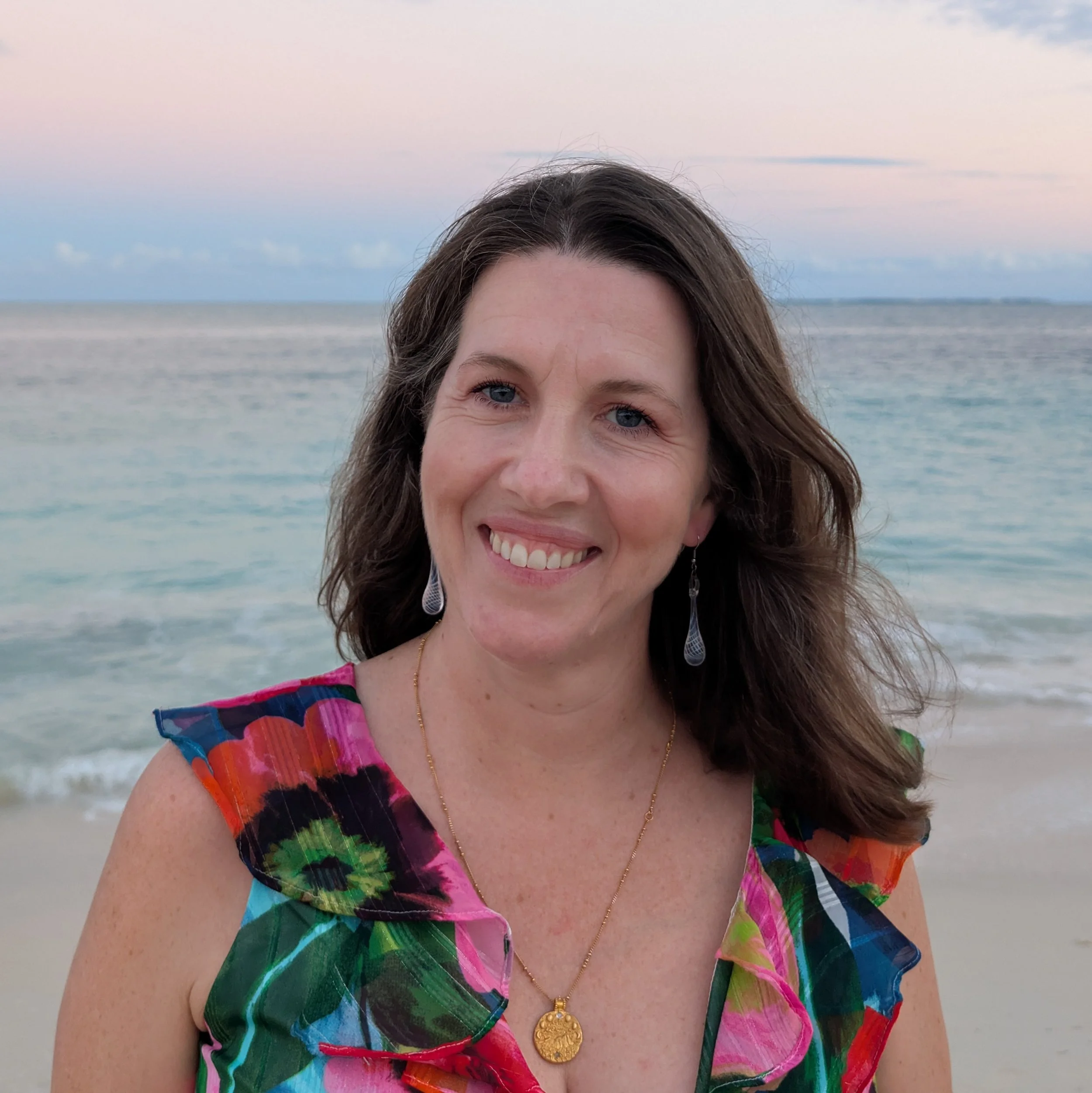
Leaving a faith can change what you believe.
But leaving a high-demand religion can also change how you understand who you are!
In this episode of The Energy Fix, Tansy sits down with Audra Phelps for a deeply honest conversation about faith transition, identity loss, motherhood, grief, emotional healing, and what it means to reclaim yourself after leaving a high-demand religion.
Audra shares her personal journey of questioning her beliefs, navigating anxiety and depression, and eventually leaving the LDS church. Together, she and Tansy explore the emotional complexity of that process — the grief, loneliness, anger, confusion, liberation, and self-discovery that can come with stepping away from a belief system that once shaped your entire life.
This conversation is not about attacking religion.
It is about making space for the lived experience of those who have had to untangle who they are from what they were taught to be.
Audra also shares insight into what it can look like to rediscover your personal identity, understand your emotions without judging them, communicate changes with your children, navigate family dynamics, and explore spirituality in a new way.
This episode is a compassionate reminder that grief does not mean you made the wrong choice.
Sometimes grief is simply part of the process of becoming free.
Listen & Watch
🎙
Listen & Watch 🎙
What We Cover
In this episode, we talk about:
What faith transition can feel like from the inside
Why leaving a religion is not just a change in belief
The identity loss that can come with leaving a high-demand religion
Audra’s experience leaving the LDS church
The emotional weight of grief, anger, loneliness, and liberation
Why grief does not mean you made the wrong choice
How emotions can provide information about beliefs, needs, and identity
Why suppressing emotions can slow the healing process
The importance of processing emotions instead of bypassing them
Rediscovering who you are after years of being shaped by a belief system
Why many women feel like they do not know what they want after leaving a faith
Starting small when reclaiming personal preferences and identity
How the body and subconscious can communicate during transition
Communicating faith changes with children
Redefining what it means to be a good mom
Navigating family dynamics after leaving a religion
Exploring spirituality, curiosity, and new beliefs after faith transition
Key Takeaways
Faith transitions can create profound identity loss
Leaving a religion is not only intellectual; it is emotional, relational, and embodied
Grief, anger, sadness, confusion, and relief can all be part of the healing process
Grief does not mean you made the wrong choice
Emotions are not inherently good or bad; they provide information
You cannot skip the emotional process and expect true healing
Reclaiming identity often begins with small, everyday choices
Freedom can feel unfamiliar after leaving a controlling environment
Your subconscious may speak through your body
Supportive relationships can make the transition feel less isolating
Children do not always need advice; sometimes they need to be heard
There are many valid ways to explore spirituality after leaving a faith
Curiosity can become a powerful part of rebuilding your life
Favorite Quotes
A few moments you’ll want to remember:
“The biggest loss is an identity loss.”
“I am reclaiming myself.”
“You are becoming a fundamentally different person.”
“Grief does not mean you made the wrong choice.”
“Emotions are not inherently good or bad.”
“You can’t jump the stages of the emotional ladder.”
“Freedom feels unfamiliar, so it feels unsafe.”
“There are eight billion right ways to believe.”
Chapters
04:08 – Audra’s Personal Journey and Realization
08:36 – Leaving a High-Control Religion
24:05 – Shedding Old Beliefs
29:08 – Reclaiming Your Identity and Moving Forward
30:47 – Loneliness, Grief & Faith Transition
36:14 – Understanding and Processing Emotions
54:40 – Supporting Children During Faith Transitions
01:08:02 – Exploring New Spiritual Beliefs
01:11:17 – Questions for Rebuilding Self-Identity
Why This Episode Matters
Leaving a faith tradition is not always as simple as changing your mind. For many people, especially those leaving high-demand religions, it can feel like losing an entire identity.
It can affect:
your relationships
your parenting
your marriage or family dynamics
your sense of community
your understanding of goodness
your connection to spirituality
your ability to trust yourself
your answer to the question, “Who am I now?”
And for mothers, that transition can carry another layer. You may be grieving what you believed, may be questioning what to teach your children, may be redefining what it means to be a good mom, may be learning how to listen without needing to have every answer, or may be discovering that freedom can feel unfamiliar before it feels safe.
This episode matters because Audra speaks to the emotional truth of faith transition with honesty and tenderness. She reminds us that grief, anger, confusion, loneliness, and relief can all exist in the same story. And none of those emotions mean you are doing it wrong!
They may simply be part of reclaiming the parts of yourself that were waiting to be heard.
About Audra Phelps
Audra founded Mama Audra to help moms unravel the web of old beliefs after leaving the LDS church to discover their own identity as a woman and mom. With over 15 years of experience in international education and coaching, she discovered her passion in supporting moms grappling with grief, mom guilt, and identity loss after a faith crisis. Audra began her career as a high school biology teacher, was raised in the church, and then moved overseas with her family to work in international schools. When she finally made the life-altering decision to leave the church, she found herself sinking in uncertainty, lonelier than she'd ever been before, and constantly feeling like she was failing her children. Through years of self-discovery and coaching, she has walked the path to uncovering beliefs that resonate, building relationships with her children based on love and trust, and navigating the loneliness that comes from starting all over again. She is now focusing her work on the unique challenges that ex-Mormon moms are navigating. Audra is reaching back to help them feel confident in who they are and blaze their own path , on their own terms.
Links Mentioned In The Show
Website: https://mamaaudra.com (Mention PODCAST to get 50% off your first individual coaching session!)
TT: Mama Audra
You-Tube: @Mama-Audra
Linkedin: https://www.linkedin.com/in/audra-phelps-b422786a/
Fusionary Formulas: Try Turmeric Gold to help with your inflammation! Use code TANSY15 for 15% off your order.
Support Beyond The Episode
If this conversation hit home, and you’re craving deeper support (not just ideas, but real integration):
Join the newsletter →
If this episode resonated, take a moment to ask yourself:
What part of me am I ready to reclaim?
Faith transition can bring grief, but it can also open the door to curiosity, self-trust, and a deeper relationship with who you are becoming.
If you enjoyed this conversation, follow or subscribe to The Energy Fix, leave a review, and share this episode with someone who may need to hear that they are not alone in the process of rebuilding themselves.
Transcript
-
Audra Phelps (00:00.056)
So like there was a judgment. If you feel that, that's bad, right? That's sinful to feel that way. I think when when a lot of women first leave, they start to feel the grief and they start to feel the sadness. And then they go, I shouldn't feel this way. And so they try and dismiss it, they try and push it down and they try and just move on. And
The in the healing process, the the work that I've done and that I now do with other women is let's actually look at that emotion. Let's reframe what we think about emotions, the purpose of emotions. Emotions are not inherently good or bad. Those are labels that someone else has given them, right? So let's start to see emotions as information.
Tansy Rodgers (00:59.992)
Welcome back to the Energy Fix, a podcast dedicated to help you balance your energetic body by diving deep into the sweet world of all things health and spirituality. My name's Tansy, and I'm an intuitive Crystal Reiki energy healer, energetic nutrition and holistic health practitioner, and a crystal jewelry designer. It's time to talk all things energy. Let's dive in.
Welcome back to the Energy Fix Podcast. Thank you so much for being here with us again today. Today, we're going to be talking about faith transition, motherhood, grief, identity, and what happens when the blueprint that you were handed for your life no longer fits anymore.
And I just want to say this right up front. This conversation is not about attacking religion or telling anyone what they should or shouldn't believe. Let's be very clear about that. Faith can be such a beautiful source of meaning and comfort and community and connection for so many people. But for some, when it no longer fits.
Leaving a religious structure, especially one that has shaped your entire identity and is your family and your friendships and your marriage and all the things, it can feel like you're losing the ground underneath you. You can feel like you're losing your identity. I want to hold this conversation with a lot of care today, because for many people, religion is not just a belief system, it is a family.
An identity and a community and a language and a rhythm of life. So when someone leaves, they may not just be changing their mind. They may be rebuilding their entire life. And that is why my guest today is so perfect to have this conversation. Today, my guest is Audre Phelps.
Tansy Rodgers (03:08.054)
She's the founder of Mama Audra, where she helps moms unravel old beliefs after leaving the LDS church and begin discovering who they are as women and mothers. Audra was raised in the church, began her career as a high school biology teacher, spent more than 15 years in international education and coaching, and later found herself navigating her own faith crisis.
She was navigating loneliness and grief and mom guilt and identity loss after she had decided to leave the church. And now she supports ex-Mormon moms who are trying to figure out life, motherhood, values, relationships, and self-trust. We're going to be talking all about this and so much more. You're really in for a treat today.
All right, Audra. Welcome to the show. Let's dive in.
Audra Phelps (04:08.664)
Thank you. Thank you so much for having me.
Tansy Rodgers (04:11.77)
This is gonna be a really special, interesting conversation. I have not had any of this kind of conversation on the show before. And I think that we're at a critical time, a critical point in our human evolution and where our society is sitting, where this question is coming up a lot. A lot.
Audra Phelps (04:30.968)
Mm-hmm.
Tansy Rodgers (04:32.75)
And so I just want to dive right in and get to the heart of this conversation from your own perspective, Audra. When a mom leaves the LDS church or a faith-based church in general, what is she really losing that people on the outside may not actually understand?
Audra Phelps (04:57.548)
She's losing her entire identity because when you grow up in a high control group, a high control religion, like I did, you it's not just a belief in God. It's not just where you go to church on Sunday. It's who you are, who you're going to be, how you're gonna act, how you're gonna raise your kids. And
It's very much a prescribed life in a lot of ways. And so when you are following this life from childhood, the adolescence into adulthood, and now you're a mother and you're starting to bring, you know, raise your kids in this. And then you start to have a bit of a faith crisis, and you realize that this is not something that you believe in anymore, it's
Now who you are as a mom, who you are as a wife, who you are as a person, you know, it it's it's really your entire identity. It's all those I am statements that you had about yourself, right? I am Mormon, which that was the religion that I was raised in. I am a stay-at-home mom. I you know, all of these things. And then so when you walk away, now it's like, I
I was those things because I was told to be those things. And so who am I really? So it's I think the biggest loss is an identity loss.
Tansy Rodgers (06:31.584)
Yeah. So not necessarily not necessarily losing the parts of your personality that you have learned to develop, more losing who you told that you are to be.
Audra Phelps (06:44.93)
Yeah, because you start to act in a way that you're told is, you know, the the way you should act, what a righteous woman, how a righteous woman, a godly woman would act. You raise your kids the way you're told, you know, that you should raise your kids. And so when you when there's when you start to deconstruct, you know, and like for me it was ten years of questioning before I came to the conclusion that I am not Mormon.
When you start to deconstruct and you start unraveling these things and you start to realize some of the things that you were told about who you are aren't aligning with you, they're not resonating with you. It's like then you go, well, then what else what else isn't true? What else about me is actually not me at all that I thought was me? And so it's it's a quite a process to
To analyze every single aspect of your life and your identity and go, okay, which one is really me and which one was given to me? And it's really hard to pick those apart when since childhood you only followed what you were told. So you don't really know where the church's programming and your own identity separate.
Tansy Rodgers (08:12.224)
Yeah. Well, before we go deeper into this, I want to hear your story now because you've you've mentioned a few times about who you identified as, right? And so what did your faith transition look like, Audra? And when did you realize that you can no longer stay inside this structure that you've always known?
Audra Phelps (08:36.353)
Yeah, you know, like I said, it was 10 years of questioning. And so I often I often say that my exodus was like going through the letters of the alphabet. I couldn't start at letter A and go straight to letter Z, right? I had to have every letter of the alphabet in between. And, you know, when I was so I got married very young.
I was only 20 years old when I got married because that was the prescribed life that I was given. That I you know, I was told since I was a small child that my my divine role as a woman is to be a wife and a mother. And so every almost every church lesson was about finding a husband and getting married in the Mormon temple and having children and bringing these children to earth to have earthly bodies and all of, you know. So this was.
This was the plan, the trajectory of my life since I was a child. So I got married young. I was 20 years old when I got married. I had my first child when I was twenty two. And then when I was a young mom, I n I now let's I now have three kids. And when my youngest was about three or four, I was really, really struggling with severe anxiety and depression.
To the point where like I was having panic attacks almost every night and I couldn't figure out why. Because the messaging that I was receiving, that I had received my whole life, was that if I, you know, followed the commandments and all the things that the church wanted me to do, that I would find real happiness and that there's no greater joy than being a mom at home with my kids and
You know, I was checking all the boxes. I was reading my scriptures and going to church on Sunday, attending all the activities, fulfilling my church calling, which was like a volunteer job in the church, doing all the things that I was told was supposed to bring this joy and happiness and make me a good wife and mom. Yet I was really struggling. And in hindsight, I now know that that was.
Audra Phelps (10:54.41)
my body's way of screaming at me, you are in a life that is not yours, that this life does not align with who you are. And I had no control and no choice in my life. Now I didn't recognize it for that in the moment. You know, in the moment I just thought something's wrong with me. There must be something wrong with me. I must not be righteous enough. I must not have enough faith, you know, and so I
I felt like I needed to be fixed. So I went to my primary care physician and, you know, just told him all of my anxiety and depression. And so he prescribed antidepressants. And I took them for a while and they didn't work for me. And, you know, I couldn't. In fact, they made it worse, in all honesty.
And I was like, I don't understand. I don't understand why it's not working. Well, now I know it didn't work because the problem was not that I had a chemical imbalance in my brain and I needed pharmaceutical help. The problem was that I was living in this life that wasn't mine. And so that was kind of the first, the first step in me going down that alphabet of really diving in to.
you know, the life that I was living, what was it that was making me happy and not happy. And I'm so I at that time I knew that something needed to change. I knew that something in my life needed to change, but I couldn't quite figure out what. But I did a couple of different things. The first thing I did was I went back to school because
Even though I was told, no, you sh you need to be a stay at home mom and you know, you following a career is not your divine role that will take you away from your children, I thought, I need something for me because I've lost myself here. I don't even know who I am. I just, you know, I'm constantly giving and raising kids and and all of this. And so so I went back to school number one. And then as I was coming off of the antidepressants,
Audra Phelps (13:17.446)
I had done a lot of research in the benefits of exercise. And so I joined like a running group. I wasn't a runner, but I joined a running group because I thought, okay, well, I'll have accountability, so I'll actually do it. And that will get me, you know, exercising and the endorphins and all of that. That's gonna help with the depression and the anxiety. And those two action steps.
Now really started me down a different path, starting to open my eyes to different social circles and different ideas and different beliefs. And I started to feel this sense of belonging with these other friend groups that felt a lot different than the relationships that I had with people in the church. And they felt a lot better and they felt a lot more free, like I could be open and.
and vulnerable and I wasn't I didn't have the fear of judgment with those groups. And so that was kind of my the beginning of me really going, Okay, there's something else, something else out here than this very narrow worldview that I've had for so long.
Tansy Rodgers (14:35.822)
So I want to hear more about this and how there's so many questions, my goodness. But one of the big questions I have is was your husband supportive of this? Number one. And number two, how did you find the courage to step out like this? Especially if your brain was so tuned into this is who I am supposed to be. This is my role. And this is what.
Everybody else around me has been mirroring to me.
Audra Phelps (15:07.788)
Right, right. Yeah, so to your first question, you know, my husband was was, is, we're still married, so we've been married for twenty five years now. has always been someone who listens to understand, not someone who listens to convince me of something else or who listens to prepare his response, right? He's always been someone that really listens to understand. So every time I would come to him with questions or doubts or, you know.
struggling with the anxiety and depression, he would really just listen. And he had a lot of the same doubts and questions that I had as well. And so we would talk about them a lot. but the conditioning kept us in for a long time because the conditioning was if you're questioning, then that's sinful. If you have a doubt, then
That's actually letting Satan into your heart. And so you need to have more faith. You need to just obey. You know, all of all of these things that just kept repeating all the things we'd heard since we were children just would immediately come to the forefront of our mind when we would start questioning or doubting. And so so
My relationship with my husband has always been very open and open communication. And we went through these doubts together. We ended up leaving at slightly different times, but we did both leave the church. Yeah. And then I'm sorry, I forgot your second question. What was your
Tansy Rodgers (16:44.238)
Yeah, the second question was how did you find the courage is to step out? But now I mean you've just talked about how your husband was kind of that support system too, because he as well was having a few doubts. So I'm sure that helped a lot.
Audra Phelps (16:58.24)
It did help a lot because I had someone who was a safe space to talk to about it, you know. And you know, like I mentioned, I had these different friend groups like when I was going back to school and then my exercise group, but they didn't grow up Mormon. They didn't know very much about the church. So it's not like I could really just openly talk to them about, you know, my my faith crisis I was going through. But my husband
You know, he we had the same jargon, we knew the same conditioning, we knew all the history, like it so it was a very easy it was a much easier conversation because we didn't have to explain ourselves. But I would say, you know, it's not like the how do I say this? The having the courage to do something different, it starts really small.
You know, like for example, when I went back to school, it was like, okay, I need something for me. I need some independence. I need to feel like an individual again. So I made the choice to go back to school, which was a little bit against the grain. But I didn't I wasn't brave enough to choose a career that was really aligned with who I was because I didn't know what that meant, right? I didn't I didn't know how to even dive into
figuring out what I wanted. It was always these outside influences of what's best for everyone else. What does God want you to do? What does the church want you to do? So I didn't really know how to ask myself and how to listen to myself in that way. So I was brave enough to go back to school, but I chose to be a teacher because
That was the most benign job that a Mormon mom could have because it would keep me home with my kids, right? I'd be on have the same schedule. So nobody at church would look at me sideways as a teacher. You know? So it was like I I kind of would make these baby steps into stepping away from the norm and what I was told. and then each baby step would take me a little bit farther and then a little bit further and then a little bit further.
Tansy Rodgers (19:09.004)
Yeah. And and to be fair, I mean, y like you said, you didn't necessarily know what or who you were and what would feel in alignment. You needed to have that time and that space. And the more that you took the baby steps, you were creating more space to learn in a safer I'll use word again, a safer space. Right. Yeah. Right.
Audra Phelps (19:36.364)
Yeah, exactly. Exactly. And, you know, what one thing that that allowed me to do, you know, going into the career of teaching was, you know, then now I'm starting to be exposed to more things and more people, right? And I was a science teacher. I loved science. So that was also a little bit against, you know, like religion, because I especially I was a biology teacher. So it was like, you know, I was diving into all sorts of research that was not necessarily church approved.
But that what that allowed us as a family, because my husband was also a teacher. He was an elementary school teacher. I was a high school biology teacher. And we found out about the world of American private international schools. And we thought, what a great opportunity. You know, we I we can travel with our kids. We'd never be able to to afford to do that as two teachers.
And you know, we can show our kids the world, right? And I I often see that as a way of me like breaking free. Like this was my moment of like, I'm gonna break out and see what the world is really like. And so when we moved overseas, I was already, you know, one foot out the door. There was a lot of
Things that didn't resonate with me. I was starting to recognize beliefs that didn't feel good in my body. I was starting to really question and then pay attention to the questions that I had. And moving overseas gave me two opportunities. One was it gave me now this physical separation from the world that I had been immersed in, from the monoculture.
of Mormonism. I no longer had a well-meaning someone from church knocking on my door if I didn't show up to church on Sunday, right? And like I wasn't caught up in the daily minutiae of it. And that gave my brain time to actually start processing things in the background. Cause I wasn't so busy, so surrounded by
Audra Phelps (21:57.086)
Mormon culture, Mormon beliefs, Mormon teachings all the time. So it gave me physical separation. And then the other thing it gave me is now exposure. And I was working in a school where there were students from more than 40 different countries, all these different beliefs. And I was traveling to these amazing places and having these experiences in like a Hindu.
temple or a Catholic cathedral or a Muslim mosque, and they felt really spiritual and they felt sacred. And I thought, this is not how I how I was told that this would feel. Right? It was like I was told these places would feel dark and heavy and that Mormons ha had the only, the only light, the only one true way and the full happiness. Everyone else only had pieces of happiness.
But then I'm making friends with these different religions, and they're really happy and content and they're really convicted in their beliefs. And I'm like, again, wow, okay, that goes against what I was told to. And so I started to go, okay, well, if those things aren't true, then what else isn't true? And now my brain
had a f had a familiar feeling to know how to identify other things that I knew weren't true. And so I could start to really kind of look for that as I was analyzing different beliefs. And there was a very small church we attended and I would kind of start to pick things apart. How do I feel about this? Does this really feel like a belief or does this feel like I felt when I realized that, you know, that what I was told about
others not being as happy wasn't true. So so you know, that that's where it really broke down for me.
Tansy Rodgers (23:59.456)
Yeah. So when did you officially leave the church, Audra?
Audra Phelps (24:05.186)
I left in November 2015 is when I made the decision I am not Mormon. So that was after we had been living overseas for two years. So I'd been having these experiences of questioning, looking at things objectively, meeting people, traveling. And in November 2015, you know, now I'm at the end of my alphabet.
of leaving. I'm on like letter Y at this point. And the church came out with a statement, a p a new policy that was very anti LGBTQ. And the old Audra, the young Audra who was maybe at letter A, would have originally read that statement and rationalized it away and would have repeated that same conditioning that was given to me of
You know, the Lord works in mysterious ways. You don't have to understand. You just have to obey. You just have to follow. This life is a test. All of those things I would have repeated to myself if that policy would have come out when I was still at letter A of my Exodus. But since I've had all these other experiences and I've really been analyzing and questioning, the moment that the policy came out, I could identify it for what it was right away.
And I had a very strong full body visceral reaction to it that I wanted to throw up right away. And as soon as I read it, I just thought this it was framed as like love and protection of children. And I was like, no, that is not what this is. This is actually hate. And so being able to identif
Identify something that I didn't believe so quickly triggered something within me. And I remember so clearly, I was sitting in my living room in Kazakhstan and I walked upstairs. I went into my bedroom. I shut the door. I was still wearing the Mormon garments, which is the special Mormon underwear that you get when you go through the temple.
Audra Phelps (26:23.426)
Which is very symbolic of like your commitment and who you are. And I took those off. And I looked at myself in the mirror and I just said, I am not Mormon. And I felt like the whole world in that moment just opened up into a million stars. It just felt like, yeah, finally.
Tansy Rodgers (26:48.366)
Yes.
Audra Phelps (26:50.882)
Finally. It was almost like the universe was saying, finally you know what you're not. I've been trying to tell you since you were struggling with anxiety and depression, and now you get it. So that was the moment. That was the final moment for me.
Tansy Rodgers (27:06.346)
Wow, that was literally your Z. That was you reaching Z.
Audra Phelps (27:10.85)
Yeah, that was Z. Yeah. Like Yep.
Tansy Rodgers (27:12.514)
Shedding it all. Ow, how beautifully symbolic. That is incredible. A quick break because I want to share something I make that's meant to support you in real life, not just look cute on your wrist. I create intentional crystal jewelry through BEU crystals. These pieces aren't random.
I design them using crystal energy and I also weave in numerology and geometry and I infuse the pieces with Reiki Healing Energy as part of my process to really help support you on an energetic deep level. They're like little wearable anchors, the kind you can touch when you're overwhelmed, when you're heading into a hard conversation, or when you need a reminder to come back to yourself more solid, more grounded, more authentic.
I'm not here to tell you that jewelry fixes everything, but I am here to tell you that having a steady physical cue can change your day, especially if you're sensitive, easily overstimulated, or your brain likes to sprint way ahead of you. If you want to browse what's available or see what is newly released, head on over to BEUCrystals.com. I'll link it down in the show notes so that you can easily shop and check out what is available.
And as always, if you have any questions or you want to do any custom work, you can easily reach out to me right there. Okay, let's jump back into this episode. So thinking about where you started, or even when you started in the transition of leaving the church, okay, and where you're at now in this season of your life, is there a word or a phrase that you feel like you're really connected?
connecting to now as you start to expand, open up, and move forward into this new identity that you are developing.
Audra Phelps (29:08.622)
I think reclaimed. I'm reclaiming myself. I'm reclaiming my life. And, you know, I mean, that's why I've named my program that reclaimed. It's about reclaiming yourself because someone else has had a you know claimed a stake on your life for so long. It's time to reclaim it. And so that's what I've now been, I now have left the church. I left the church 11 years ago. And
I feel like it's been eleven years of reclaiming myself and uncovering the parts of me that were s that the church still had a claim on, right? And claiming it back.
Tansy Rodgers (29:49.134)
I love that. I love that. Yeah. Which is such a beautiful transition into kind of where I want to go next with this. I mean, you've talked about your journey, and you've talked about that moment that you reclaimed your life in 2015 when you shed those garbs, you hit the alphabet Z, and it was time to rebuild Audra.
When we talk loneliness that often comes after this leaving, what makes the loneliness so intense for now? I'm gonna say ex Mormon moms, but maybe just ex religion or ex organized religion moms in the first place? Like I would love for you to talk about in general, but I also would love for you to talk about you and what you notice with your loneliness as well.
Audra Phelps (30:47.916)
Yeah. The loneliness is really huge and it comes from a lot of different angles. You know, there's there's a loss of family for a lot of people who walk away from a high demand religion, whether Mormonism or another one. You know, there so and even if your family hasn't completely cut you off, the relationship is fundamentally changed.
So there's a loss of what it used to be. And I think for a while it's like you're trying to just repair it and getting it, get it back to what it was. But it will never go back because you are now a fundamentally different person. And so you go through a grief process. And it's different than, you know, grieving the death of a loved one because your loved ones are.
still in your life. They're still alive. Right. And so it's this grief of wanting them to be in your life, but it being painful, or wanting them to be in your life, but feeling rejection. And that's something that it ends up being a lifelong process of these waves of grief hitting at different times when there's different events that come up. And then another aspect of the loneliness is
Now you're so you know what you're not, right? But you don't know what you are, and you don't know what you believe. You only really know what you don't believe. And so you're trying to figure everything out. And for me, my personal experience was, you know, I was living on the other side of the world where nobody even knew the word Mormon. So they had no frame of reference for what I was talking about. And I remember feeling like I couldn't.
Really talk to anybody about it. Not because they weren't good friends and they wouldn't have listened, but because every time I did open up about it, you know, this is what I'm feeling, this is the religion I left, this is the grief I have over family, they would naturally have a lot of questions. You know, well, like what was this religion? What did you believe?
Audra Phelps (33:11.362)
Why did you believe that? And I felt like I had to do a Mormon history lesson at the same time as I was trying to open up to a friend about my feelings. And it got really confusing for me because it almost felt like I was defending the church while at the same time talking about why I left. And it got really exhausting to talk about my vulnerable.
feelings of, you know, loss and grief and guilt and all of that and who am I now? While also having to explain the church. So it felt lonely because then I felt like I'm just not going to talk about it anymore because people don't get it. They just don't get it. So then you feel very alone in those feelings because there's nobody who really gets it.
Tansy Rodgers (34:02.24)
Yeah. And almost like, you know, you did use the word guilt. And I was thinking that when you were talking, but even the word shame came to mind. Like there's this shame of like, you know, when people don't know what the religion is or they're unfamiliar, be it maybe because they're in a different part of the world or whatever, but just unfamiliar. And and so there was, I'm sure, levels of shame too, of like, well, you know, I believe this because it was conditioning.
Right. There wasn't anything wrong with me. This was the conditioning.
Audra Phelps (34:32.79)
Yes. And somet yeah, there was a lot of shame that way. And like I would explain to them the beliefs that I had that I was walking away from. And they were like, they looked at me like, how ridiculous. How could you ever believe that? And it was like so then you felt like you were defending yourself for being in it for 35 years, you know? And so there there was a lot of shame. Shame for believing in it when you did believe in it, when you're talking to friends who have no frame of reference for Mormonism. But then also shame.
When you're talking to family members who are still in and they're like, think of your children's salvation. How could you do this to your kids? You know, and so then there's a lot of that's where a lot of the guilt and shame comes from is the consequences that you are now giving to other people because of your choice. And so there there's just guilt and shame all over from all angles. Yeah.
Tansy Rodgers (35:28.776)
And you get some guilt and you get some guilt and you get some shame, right? Just being thrown out all over the place. Yeah. my goodness. Wow. So yeah. So as you were talking about grieving, I'm thinking you're grieving your family, your friends, who you've known, but then you're also grieving who you were and and all of these things. So when it comes to women grieving after a faith transition.
Audra Phelps (35:36.716)
Yeah.
Tansy Rodgers (35:59.658)
Even when they know that leaving was the right decision, how do you suggest to help them understand that grief does not necessarily mean they made the wrong choice? This is just part of the healing process.
Audra Phelps (36:14.38)
Yeah. I think especially those who grew up in any kind of a high demand religion, feelings like grief and shame and guilt and and anger and resentment, those feelings came with like a value statement. So like there was a judgment. If you feel that, that's bad, right? That's sinful to feel that way. You s and so I think when when a lot of women
First leave, they start to feel the grief and they start to feel the sadness. And then they go, I shouldn't feel this way. And so they try and dismiss it, they try and push it down and they try and just move on. And the in the healing process, the the work that I've done and that I now do with other women is let's actually look at that emotion.
Because and let's let's reframe, let's reframe what we think about emotions, the purpose of emotions. Emotions are not inherently good or bad. Those are labels that someone else has given them. Right? So let's start to see emotions as information. And so what is this grief telling you? Let's face it, let's feel it, let's find out where it resides in our body.
Let's journal on it. Where is this coming from? What is the belief underneath this that is making me feel this grief? And and then, you know, feel it, process it, and it will pass like a wave, right? And then the next time it comes, maybe you can look at it a little bit differently and you can go from maybe grief to anger, which might feel a little bit better.
You know, you're not gonna go straight from grief to joy. That's that's way too far of a leap. And I think that's what many of us think we have to do, right? I'm feeling this grief. I'm gonna do something that makes me happy. And you're trying to jump, you know, jump the stages of like the emotional ladder. You can't you can't do that. So the next time it comes, maybe let's reframe it and and
Audra Phelps (38:30.274)
You know, maybe this feels more like anger and let's sit with it, let's process it, let's journal on it. Where does it coming from? And then the next time it comes, maybe we'll move up to doubt or frustration, you know, and and so it's a process of what can we learn from each emotion as it comes. And look at it as information to really start to learn about yourself and learn about beliefs that you have that aren't yours and what beliefs.
are gonna feel better in your body that you want to keep.
Tansy Rodgers (39:05.578)
Yeah. I mean, when you're going through any kind of metamorphosis, you're in that chrysalis stage, right? And when you're there, you're going to have all of these emotions, grief and sadness and anger as just part of the healthy process. You know, as you were talking, I I was thinking how like things like grief, sadness, anger, emotionality that's not that's not love can really sit maybe pretty heavy.
Audra Phelps (39:30.784)
Hm.
Tansy Rodgers (39:35.084)
Yeah. For a woman that is in this transition because if it's not love, then it's not okay, is what so many are taught. Or just push that stuff down. Don't even look at it. Don't deal with it. Just be in love.
And honestly, that is, I mean, you know, in the spirituality world, we call that spiritual bypassing, right? But like in any way, that is just a spiritual bypassing. And so I love that you're speaking of this. It's so critical to go through these emotions because it is through these emotions that we learn, we identify, we come out of that chrysalis renewed and in a new identity.
Audra Phelps (40:18.422)
Yeah, absolutely. You know, when you're feeling those those feelings and something feels like stuck in your body or it feels constrictive, it feels tight, it feels like you can't get a deep breath. You know, don't just push that down and try and move forward. Go, okay, there's something here that's not aligning with who I am. There's some kind of a belief underneath this emotion that I have that is determining this emotion, but it
It's it's obviously not aligned with who I am. So let's start diving into where this came from. Right. And you know, one of the one of the experiences for me in my healing journey, this is a really simple illustration, but I think many women, whether you have left a high control religion or not, I think this is going to really relate. After I had been out of the church for about eight years, you know, I'd done some healing, but
mostly stuffed it down. Mostly stuffed down the negative emotions. And and I felt kind of like I was just throwing darts in the dark. Like, you know, let's try this and see if it sticks. Let's try this and see if it sticks. But I had a really big wake-up cult about three years ago. It was Thanksgiving. And I was making Thanksgiving dinner for my family. And I still had these old beliefs that I didn't realize were there of
what a good wife and a good mother is. And I felt that I was responsible for everybody's happiness, that in order to be a good wife and a good mother, I needed to predict what everybody wanted and make sure that they all of their needs and wants were provided for, that this was the best meal that they've ever had. I I also had a lot of this like trad wife perfectionism beliefs of like it all has to be made from scratch and it, you know,
All of this stuff. And so pressure I was putting on myself based on old conditioning that I didn't realize was there. But so I'm making apple pie. And I'm you know, that made the crust the night before. And then I'm in the kitchen and I'm cutting up apples and I'm feeling resentment. And I'm starting to feel like, my gosh, why am I making apple pie? I don't even like apple pie. And it's feeling really constrictive in my body.
Audra Phelps (42:41.964)
Right, really tight. And I thought, okay, why am I making apple pie? If I don't like it and I'm feeling resentment here, why am I spending all this time making this apple pie from scratch if I don't even like it? It's like, well, so I started questioning things. I make apple pie because it's my husband's favorite. And so I make it every year. But he's never actually asked me to make apple pie.
I am just doing it because this is what I feel like will make me a good wife, is to just provide their favorites, provide what they want, be responsible for their happiness. Right. So I thought, okay, well, I have walked away from the woman I was, or at least I thought I had. So I'm gonna make my favorite kind of pie. And I stood there in the kitchen and my mind.
was blank. I had no idea what my favorite kind of pie was. And I thought, here I am in my early 40s. I walked away from a religion eight years ago, but I still don't even know what I want. I couldn't even tell you my favorite kind of pie. And that felt really sad to that
So if I now, you know, if I want to make choices based on me and follow my desires and all of that, but I don't even know what kind of pie I like, how could I make bigger decisions? You know, and I think that's a really common experience for a lot of women. What you know, religion or no religion, I think there's a lot of conditioning just in society in general of who you are and, you know, who you're supposed to act and what makes you a
good wife and a good mom that you you then get to the point where you're in your early forties and you're standing in the kitchen and you're like, I don't even know what kind of pie I like. So how am I supposed to make any other decisions on what I like?
Tansy Rodgers (44:53.246)
That's an incredible example. Okay, first off, what is your favorite pie? Have you discovered in the past three years?
Audra Phelps (44:58.414)
I have so my favorite pie is BlackBerry and what I did was every week after that I ordered, didn't make it, but I ordered a different kind of pie until I discovered what my favorite kind was.
Tansy Rodgers (45:14.134)
I love that. And so, and so that is probably the most beautiful example of identity loss and how it can show up years down the road. And I love what you did to figure out part of your, I mean, it's so small. It's like such a small piece of who you are, right? But but it's important. And and one way that you found out was you tried different pies until you figured out what was your favorite.
Audra Phelps (45:42.946)
Yeah. Yeah. I think it has to start small, you know, because if you've spent your whole life serving other people, making sure what other people want that they have what they want, y then you can't make these bigger decisions if you can't even name, you know, what you want for dinner. Like so
It has to start really small with learning how to tune into your body, learning how to pay attention to how things feel in your body. You know, like I mentioned, if it feels constrictive, there's probably a belief there that doesn't align. That's a no in your body. But if you feel the opposite of that, if you feel expansive and light, like you can take a deep breath, then you've found a belief that aligns with who you are. That is.
a yes in your body. But if it's an unfamiliar an unfamiliar pattern in your brain to actually follow that and act on it, then you need to start really small. And it could be with like, you know, apple or apple pie or blackberry pie, figuring out what kind of pie you like, or it can be as simple as when you're driving home from work and you have a choice in routes. Sit for a minute and think which one feels better.
Which one do you know feels good in my body? And then act on that. And then you're gonna prove to your brain that yes, you can act on those good feelings and you can follow the yes in your body. You know, and like another example I often give is you go out to a restaurant with a group of people and you ask any man at the table what he wants to eat, and he'll tell you right away, I'm gonna have the hamburger, I'll have the prime rib or whatever.
And you ask any woman at the table, and often her first response is, I don't know, what are you having? So they're like doing a room check first, you know? But what if you just knew what you wanted? And so start small and like look at the menu. Start to pay attention to the little subtle signs in your body and pick one that feels good. And when someone asks you, say,
Audra Phelps (48:02.924)
I'm gonna have the prime rib or whatever it is you're gonna have, you know? And so when you act on that, it starts to show your brain, yes, this is what we want and we can act on it too, and it's safe to do that.
Tansy Rodgers (48:18.488)
Can I emphasize something that you just talked about that I think is so important to emphasize and to reiterate? Is that you said about feeling the yes in your body. You're not just asking your mind, what would I like? You're asking your mind what would feel, or you're asking your body what would feel good for me to choose. I think it's an important distinction, don't you think?
Audra Phelps (48:46.926)
absolutely. Because I think that's the distinction between your subconscious and your conscious, right? So your conscious mind is all your thoughts and emotions and behaviors, everything that you're aware of. But their conscious mind is based on the stories that you've been telling yourself, you know, maybe the conditioning or your past experiences. But your subconscious.
Has the ability to process so much more information coming in. Your subconscious is processing information from all five of your senses all the time. So your sight, your sound, your taste, your smell, everything, your feeling, it's processing it. It's about two billion pieces of information a second coming in from your subconscious. But your conscious mind can't, it can't be aware of all of that at one time.
So it gets filtered, and only about 150 pieces of information actually hit your conscious mind. But your subconscious is still aware of all of those other things that are happening in all of your senses. And your subconscious will speak to you through your body. So your subconscious is aware of a lot more.
And it's gonna speak to you through these feelings in your body, through your heart racing, or through a calm feeling, or through, you know, a lightness in the chest or whatever it might be. And so that's where you can really start to go, okay, let me find out what a yes is for me based on all of the information coming in, not just the bits that have been filtered to my consciousness.
Tansy Rodgers (50:34.998)
Yeah. But I also bet that there can be a really strange mix of freedom and terror when every decision is suddenly yours.
Audra Phelps (50:45.678)
So it is. It is. It's like, you know, I I still have moments like that where freedom feels unfamiliar. So it feels unsafe. And so I have to do some conscious like breath work or meditations to help to calm down my nervous system to go, no, this I'm safe in this freedom. Right? Because it felt safe and familiar.
To give your choices away to an external authority if that was all you knew. Plus, you know, you kind of give away a little bit of the responsibility of it, right? It's like, I'm just following the path, I'm just doing what they said to do. So it can be scary when suddenly you realize that all of the answers are within you, and you get to make the decision without consulting, you know, 10 friends that you can actually make that decision on your own.
But it can feel unsafe if it's unfamiliar if your nervous system isn't used to it yet.
Tansy Rodgers (51:49.356)
Yeah. And so you talked about conscious breathing and and things that you've done. Is that what you would recommend to other women or moms as they're trying to navigate this? Especially especially if they came from a place where they had this blueprint that they were meant to follow? Where are there other things that you would suggest someone to do if they were in that situation?
Audra Phelps (52:14.828)
Yeah, I mean, there's a lot of things and different different modalities are going to work for different people, right? So there's some nervous system regulation, emotional regulation tools we can do. Like I mentioned, breath work can be really helpful. sometimes just moving energy through your body, like jumping up and down, like feeling the force of something that can really help to regulate your nervous system and move.
the energy of the emotion through your body. meditation and hypnotherapy can be really helpful. Journaling can be very helpful. as you're as you work through some of the thoughts and emotions, you start to realize once you put a you know a name to it, once you put it pen to paper, it's not so abstract and scary anymore. And so it starts to regulate.
I do a lot of EFT, which is like the tapping meditation. So physically touching certain parts of your body as you're talking to yourself about what you're feeling anxiety about. Then your nervous system starts to realize that you can feel these emotions, but still be safe and still be calm. so we go through a lot of different modalities that women try out to find out which one works for them, which ones speak to them, and how they can start to incorporate that.
you know, into their lives when they're feeling emotionally triggered. Because you can't really think through your thoughts and your emotions and make good decisions from a place of fear or panic. You it's it's a lot of emotional regulation, nervous system regulation to get to a place of calm and peace. And then you can start to make decisions and
Identify beliefs from that place.
Tansy Rodgers (54:12.338)
Well, I okay, so I wanna I wanna shift the conversation just a little bit. We talked a lot about guilt and shame and identity and how how that can really transition when a woman is navigating to the other side of whatever situation they're in, right? I can only imagine how it would be when trying to name or discuss or tell this transition to your children.
Audra Phelps (54:40.662)
Mm.
Tansy Rodgers (54:41.422)
To your family, to the kids especially. So how does a mom begin that conversation when she may still be grieving and confused herself while also trying to make space for her children's confusion and sadness or fear or whatever emotion might come up?
Audra Phelps (54:59.682)
The first thing we do is we kind of dive into their belief of what a good mom is. We have to dive into that first because if they feel like a good mom has to have all the answers and a good mom has certainty and a good mom guides her kids on the right path, then they're gonna be fighting with that the whole time. So we start to first figure out what their definition of a good mom is and if it
Tansy Rodgers (55:04.464)
Mm, that's good.
Audra Phelps (55:25.088)
If it really aligns with who we are and when we start kind of shifting that to maybe something that feels better in their body. Perhaps a instead of a belief that a good mom has all the answers, it could shift to a good mom models for her children what it looks like to question. And now they have a blueprint for how to work through life's tough questions. And that makes you a good mom.
So we have to first kind of shift some of their beliefs that they have around what a good mom is, what makes them a good mom, right? Because no mom wants to feel like a failure because that's where the mom guilt comes from. So we have to sh shift that first. Then once we can kind of start to shift some of those beliefs so they feel like it's actually safe for them to open up to their kids and it's actually evidence of them being a good mom, then
they they have the courage to act on that belief. And so one of the big things I talk about is just being open and honest, you know, obviously at age appropriate levels with your kids about what you're feeling. And then asking them w how do they feel about it? And in s I think
Many times some old conditioning is that we ask our kids how we feel and then we're right there to give advice. Right. Is let's let's have several conversations where we don't give any advice at all, where we are just listening and then we are letting the kids, you know, tell us how they're feeling, what their emotions are, and then we just reflect it right back to them like a mirror.
So what you're saying is you feel XYZ because XYZ. And then I mean, imagine if someone had ever done that to you when you were like a teenager, if they just took your words and turned it, you know, reflected it back to you and validated everything you were feeling. It's not about agreeing or disagreeing. It's just about saying, This is what I hear you saying. Am I hearing it correctly? And
Audra Phelps (57:44.204)
That really builds connection. And then it creates this safe zone where you can both express how you're feeling. You can both talk about the grief and the loss and what's happening in your world and the transitions and what this means for the future. And it creates this safe space moving forward. So that's the beginning. That's the beginning of talking to your kids about it, about moving forward in a place where everybody feels safe.
is identifying your beliefs around being a good mom, shifting that a little bit, and then acting on it and creating those safe spaces where everyone is heard and you're not giving advice, which is really hard.
Really hard to do, especially, you know, if your kids are saying something that you really don't agree with. It's like just shut your mouth for a minute, mom, and just let them just be the safe space. Because if you're gonna, if you're gonna rebuttal that now, they're not gonna come to you the next time. Right. So that that's that's kind of the beginning, the beginning of rebuilding your relationship with your kids after.
A faith transition so you can talk about it openly and honestly.
Tansy Rodgers (59:03.352)
Break because inflammation is one of those root issues that can quietly mess with everything, like your energy, your joints, your digestion, your recovery time, your mood, and even mental clarity. And here's the tricky part a lot of people wait until they feel terrible to actually support inflammation. But inflammation is often a slow build. Things like stress and sleep and food choices.
Hormone imbalances, overtraining, under recovering. Well, it all stacks up. That's why one of my consistent staples is turmeric gold by fusionary formulas. It's designed to support a healthy inflammatory response. And I like it because it's practical. There's no complicated routine. It's just a really grounded, steady support that you can actually keep up with. And it is clean products.
If your body has been feeling more achy, stiff, foggy, or reactive than you want it to be, this is a solid option to consider as part of your foundation. And you can use my code, code TANSI15 for 15% off your entire order. Turmeric Gold isn't the only thing they have. They have an array of incredible products that you can explore and try out.
I will link it down in the show notes so that you can easily jump right on over and use that code, CODETANSY15, for 15% off. Alright, let's get back into this episode.
Mm. And that's beautiful. That's beautiful that you are in that situation where you can have that conversation and navigate that in the space or in the way that you both might need. But, you know, and we've we touched on this already to a certain degree. But, you know, as you've already mentioned, it can be really complicated when a
Tansy Rodgers (01:01:05.054)
Spouse. Now yours was on board, so that was good. but extended family member or your close community is still really active in the church. And so, and so I think that a lot of people might struggle with even making those first steps as we've talked about today, because of that piece. How can somebody navigate that part of the conversation when it is always right there in your in your
Periphal, right? Like that information might always be coming out. Yes, you can distance yourself. Yes, you can create that physical, mental, emotional space. And also, that can be really challenging when it is your extended family, right? So I would love to hear some words on that because I think that that probably holds a lot of people back more than at least what I would think.
Audra Phelps (01:01:51.553)
Yeah, yeah.
Audra Phelps (01:02:00.086)
Yeah. I think, you know, and that's something that's ongoing. And there's times you're gonna manage it really well and you're gonna feel so emotionally regulated. And there's gonna be other times where you just feel really triggered and you fall apart. And all of those responses are valid. So I think that's the first thing to realize is that whatever your emotional response regarding a relationship with a family member who is upset because you've left, whatever your response is is okay.
And there's not a right way to do this. Right. And so, you know, if we kind of go back to let's see emotions as information. Like when you start to feel really triggered, like I'll give an example. Several months ago, I'll give you a personal example. Several months ago, I received, I got a text message that was a picture. It was a from a family member, and it was a picture of most of the family all gathering in.
Pismo Beach, California. And it was just the picture. And like, I wasn't invited. Right. And so my first response was like, my gosh. I wasn't invited. They don't want me there. I don't belong. This is because I left the church. They don't, I don't, you know, they don't see me as a part of this family anymore. And so I started to go down this rabbit hole of despair.
Right. And I sat with that for a while. That that was a very valid response to that emotion. And then a couple days later, I was like, okay, I don't like the way this feels. This doesn't feel good to me. But I want to make a decision if I'm going to respond. I want to respond from a place of clarity, not out of like an emotional knee-jerk reaction. Right. And so
I did some reframing where I thought, okay, it could be true that I wasn't invited because I left the church and they don't see me as part of the family anymore. But what else could be true that feels a little bit better in my body? It doesn't necessarily have to be true, but this other option of, you know, me not being wanted there, that might not be true either. It's just the story I'm telling myself. I don't really know the intention between sending the picture.
Audra Phelps (01:04:24.546)
So what else could be true that feels better? Well, it could be true that they sent that picture with the intention to help me feel like I was there, to help to reach out to, you know, as a way of belonging, as a as a way of connection. Now, I see that as maybe not, you know, maybe not the best way to tell me that.
But it could be true that that was their intention, right? And that feels, do I feel happy and joyful about it? No, but I feel a little bit better. Right. And so I think many times when we're dealing with family, it's taking a moment when those things happen to pause and to think, how am I going to respond to this by choice?
rather than just acting out of an emotional trigger. And what can I choose to believe in this situation that could be true that feels better in my body so that I can act on that. And that's something that takes a lot of work and a lot of a lot of practice. And there will be times when you have that emotional reaction and then it's, you know, a whole fight ensues.
But at the very least, if you can be aware of what the triggers are and start and pause and think, how am I going to respond from a place of choice rather than just a re a k knee jerk reaction?
Tansy Rodgers (01:06:03.722)
Yeah, yeah. Mm. And so as we have been kind of navigating through all of it, we've we've talked about the woman, the mom who is in her own faith transition, her own faith crisis, as I think you caught it earlier, right? And now she's moving into a different phase and she's starting to talk to her children and she's getting, she's emotionally, mentally working on.
the community and the family and the people that are still involved. But I can't help but think about, because I know people like this, I know women like this, is how do women really navigate then when they're on that other side? Like how do women navigate the difference between leaving an institution and losing their spirituality or their faith altogether? You know, I mean,
I'm sure I know that there's women out there who still want God and prayer and ritual and meaning and sacred connection, but they need to look at it completely different. So I would love I would love to hear your opinion or your perspective and what you've seen because I will also say, too, like I grew up in a church, not in a setting that was as constrictive as yours, but I know when I decided to move into my own.
my to choose, I should say, to choose my own belief system and where what felt more aligned to me, one of the things that I struggled with the most was knowing I still very much want that spiritual, that God connection. And also I'm really, I'm really angry with some of the things that I've seen, some of the things that I've experienced. And I don't believe or have a good relationship with certain concepts that I learned in the church.
And then that got really confusing. So Audre, I would love to hear your perspective on that.
Audra Phelps (01:08:02.946)
You know, I have come to the conclusion after so I lived overseas for thirteen years. I was, you know, I have friends of all different beliefs and nationalities and cultures. And I've I've come to the conclusion that there's eight billion people on this planet. And so then therefore there are eight billion right ways to believe. There's not one way for everyone. And it can be
very personal and individual. And so the ad advice that I give to women who are walking away from a religion and they're like, okay, but do I still believe in Jesus or am I Buddhist or am I atheist? Or, you know, all now everything's on the table is just be open to asking questions. Be open to asking questions. So
When you are exploring a different belief, you feel like there's something missing, start reading, start talking to people of these different beliefs, start visiting some of these different, you know, different buildings, churches or mosques or temples or whatever. Any anyone that you might feel slightly drawn to, and you don't have to know why you feel drawn to it, but just start exploring.
And start asking questions. Be curious. So shift from judgment to right versus wrong. Shift from that to curiosity. And then be open to to how you feel as you're asking these questions and the answers that you're getting. How does that feel to you? Does that feel like, yeah, that makes sense? Or does that feel like it's kind of itchy in my body? I don't know if I really like that.
Right. So just be super curious, ask a lot of questions, and then be open to how it feels for you because there's not a right way to do this.
Tansy Rodgers (01:10:11.02)
I think that that's the key thing right there. There's not a right way to do this.
Audra Phelps (01:10:14.904)
Yeah. Yeah.
Tansy Rodgers (01:10:17.228)
And so, okay, so let's let's kind of pull all of it together now into a nice little package with a beautiful little bow on the outside, right? Like you talked about these questions, just being curious and asking yourself. And so, and so I will also preface this next question with the fact that I don't think that it matters how long you might be out of the church or the institution. I don't think that it matters.
how new or old the situation is, I think that this is a really important question to start asking yourself regardless of where you're at. And so my question to you, Audrey, are there a few maybe simple questions that moms can ask themselves when they are trying to rebuild identity from the inside out to really help them just to expand and explore this new place and also to move forward.
Audra Phelps (01:11:17.208)
Yeah, you know, when you're starting to feel some kind of an emotional trigger or something, I always say start dive like start questioning that. So like if you if you're feeling resentment or frustration or anger towards something, one of the biggest things you can do is what is my what is the belief that's giving me this feeling? So ask yourself, like really.
You have to get down to the belief level. What is the belief that is giving me this feeling? And when did I decide that? Because if you can answer the question when you decided that, then you're going to know whether that came from you or that came from somebody else. Right. I decided that when I was a child, and my uncle Bob told me that.
If I ate a cookie, I was fat, or you know, whatever, whatever there's someone has memories like that. That then now it's like they're every time they eat a cookie, they think that they're a fat, terrible person. You know, I mean, that's a simple example. But when you're feeling some kind of an emotional trigger, what is the belief that's making me feel this way? And when did I decide that? And then once you can kind of identify it, then you've already known that this is a belief that's not yours.
The next thing is to is to s start poking holes in it so that it's not your brain thinks it's an absolute truth. So it thinks it's true 100% of the time. So ask yourself, is that always true? And is there ever a time that it's not true? So you're looking for evidence that that belief is actually not true. And that's huge. That's when the rewiring starts to happen and the conditioning starts to unravel.
Tansy Rodgers (01:13:07.502)
I love that. I love that. Audrey this has been such an awesome conversation. I feel like you really just opened and expanded a really tough conversation that a lot of people struggle with having with themselves or even talking about out loud with other people. So this has been amazing. Now, before we get into any logistics of where people can find you, let's just do a few rapid fire questions to
Dive into what Audra would say, all right?
Audra Phelps (01:13:40.088)
Sounds good. Are you ready? I'm ready. All right.
Tansy Rodgers (01:13:43.072)
Okay, so only three. So, first question: What is one old belief that you are grateful you questioned?
Audra Phelps (01:13:54.367)
I used to have a belief that life was meant to be hard.
Tansy Rodgers (01:13:58.112)
s as so many people have that.
Audra Phelps (01:14:01.666)
Life was meant to be hard and a sacrifice and a struggle. And I don't believe that anymore. I think life can be full of joy. I c so I'm glad I questioned that one.
Tansy Rodgers (01:14:12.75)
So good. All right. Question number two. What is one small thing that helped you feel like yourself again after leaving the church?
Audra Phelps (01:14:25.01)
every morning I spend time making a gratitude list. You know, and it's not like the superficial, like, I'm gonna write three things and move on with my day, but like I actually feel it. I actually sit and I think about the things and then I feel the gratitude for it. And that has set my day up for now. My brain is looking for more things to be grateful for.
Tansy Rodgers (01:14:51.938)
Yeah. Ooh, love that. All right. And then finally, what is one sentence an ex-Mormon mom needs to hear when she feels like she is failing her kids?
Audra Phelps (01:15:04.504)
Give yourself grace. Give yourself the grace that you would give to a friend. Yeah, that that would be the one sentence I would say. If you're gonna what if the if you were a friend, your friend in this situation and you know you would give them grace, give yourself that same grace.
Tansy Rodgers (01:15:23.788)
Yeah. Audrey, where can listeners learn more about your work? Where can they get into your circle and your world?
Audra Phelps (01:15:33.602)
Yeah, so I have a website. It's mamaudra.com. So M-A-M-A, mamaaudra.com. And on there you can figure out how to work with me. I do some free virtual meetups. I also do one-on-one coaching. And then for moms who are ready for a real intensive, I have my reclaimed program, which is an eight-week intensive group and individual coaching program with a curriculum where we go through a lot of these things we talked about today in depth.
And if you're interested in that, there's a free master class on my website called The Five Shifts Every Former Mormon Mom Needs to Make. So you can start there. And then I'm on all the socials as Mama Audra too.
Tansy Rodgers (01:16:16.382)
Awesome, awesome. As we wrap up today, and by the way, everybody knows this, but I will say it just in case you don't remember. All of these links are down in the show notes. Make sure to jump on down there and grab a hold of them to get into Audrey's world. Do you have any last words that you would like to lay on the hearts of the listeners for today?
Audra Phelps (01:16:38.976)
Just say you're not alone. Even in those moments when you feel like you're alone and you feel like your feelings are shameful and you feel like you're the only one that has ever felt them, I can guarantee you there's other there's those of us out there who know exactly how you feel. And so reach out because there's a whole community of people that are willing to just embrace you.
Tansy Rodgers (01:17:02.338)
Yeah. Thank you so much, Audra, for being here and for sharing your heart and your passion. I am so grateful that you're spreading this word and just creating such a change to the people around us. So thank you.
Audra Phelps (01:17:17.698)
Thank you. Thanks for having me.
Tansy Rodgers (01:17:21.682)
Leaving a faith community is not just about changing what you believe. It can mean grieving an identity, a social world, a parenting blueprint, a sense of certainty, and especially a version of yourself that you thought that you were to become. And for the moms listening who are in that in-between place, you are in exactly the right place where you know you cannot go back.
But you know, but you do not, you do not yet know how or what forward actually looks like. I hope this conversation reminds you that you are not failing. You are merely questioning and learning a new way. And until next time, keep spreading that beautiful energy you were born to share.
