

Ep. #195: When Your Labs Look Normal But You’re Still Sick with Dr. Pamela Cipriano
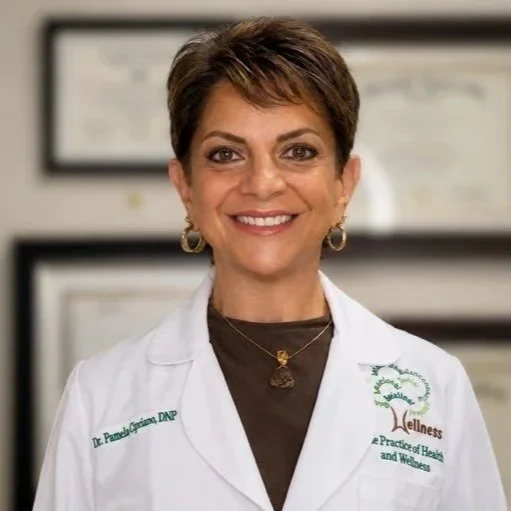
Your lab results come back “normal.”
But you are exhausted, struggling with symptoms, and know something is not right.
So what happens when the numbers do not match the way you actually feel?
In Part 1 of The Energy Beneath It All, Tansy sits down with Dr. Pamela Cipriano for an in-depth conversation about complex chronic illness, functional medicine, lab testing, Lyme and other tick-borne diseases, mold exposure, gut health, nutrition, and why “normal” test results do not always tell the whole story.
Dr. Cipriano explains how conventional screening can miss important patterns, why a thorough patient history matters, and how functional medicine testing can sometimes uncover clues that standard testing does not capture.
Together, they explore everything from B12 deficiency and nutrient absorption to autoimmune symptoms, environmental exposures, mold and mycotoxins, and the complicated world of tick-borne illness.
Dr. Cipriano also discusses why Lyme disease and other infections can present in unexpected ways, how symptoms may overlap with other conditions, and why patients with complex symptoms often need providers who are willing to look beyond a single test result or diagnosis.
The conversation also moves into diet, lifestyle, hydration, environmental factors, pets and tick exposure, patient advocacy, and the importance of individualized care.
This episode opens the door to the larger conversation behind The Energy Beneath It All: what is happening underneath persistent symptoms, low energy, inflammation, and chronic health patterns when the obvious answers do not explain the whole picture?
Listen & Watch
🎙
Listen & Watch 🎙
What We Cover
In this episode, we talk about:
Why lab results may appear normal even when symptoms persist
The difference between conventional and functional lab ranges
Limitations of standard screening tests
Why patient history matters in complex chronic illness
B12 deficiency and nutrient absorption
Gut health and its role in whole-body health
Why diet and lifestyle still matter in chronic illness
Personalized and concierge approaches to patient care
Functional medicine testing and what it can reveal
Why tick-borne illnesses can be difficult to identify
Lyme disease and why it is often called “the great imitator”
How one tick may carry multiple infections
Why tick-borne symptoms do not always look typical
Neurological symptoms and possible infectious contributors
Mold exposure and mycotoxins
Why the living environment matters during mold-related illness
Pets, ticks, parasites, and environmental exposure
How to prioritize investigations when symptoms feel complex
What to look for in a healthcare provider
Why patient advocacy matters
Hydration, nutrition, and lifestyle support for resilience
Key Takeaways
Normal lab results do not always mean optimal health
Persistent symptoms deserve attention even when routine testing looks normal
Functional medicine can offer a broader view of complex health patterns
A detailed health history can provide important diagnostic clues
Gut health and nutrient absorption can influence many areas of health
Nutrition is an important part of both prevention and recovery
Tick-borne illnesses can present with symptoms that resemble other conditions
A single tick can potentially carry multiple pathogens
Mold and mycotoxins can be important environmental factors in complex illness
Addressing environmental exposure may be part of recovery
Individualized care is especially important when symptoms are complex
Lifestyle changes remain important even when medical treatment is necessary
Finding a provider who listens, stays curious, and understands complex cases can make a meaningful difference
Patient advocacy matters when your symptoms and test results do not seem to align
Favorite Quotes
A few moments you’ll want to remember:
“Normal does not always mean optimal.”
“Normal lab results can mask underlying health issues.”
“Patient history is crucial in diagnosing chronic illnesses.”
“Diet plays a significant role in overall health.”
“One tick can carry up to 18 diseases.”
“Lyme disease is the great imitator.”
“Symptoms of tick-borne diseases can mimic other conditions.”
“Patient advocacy is essential for receiving proper care.”
“Mycotoxin is the toxic form in your body.”
“Diet is the biggest factor for resilient patients.”
Chapters
02:09 – Why Labs Can Look Normal Despite Symptoms
04:22 – The Limitations of Standard Testing
07:14 – B12 Deficiency, COVID & Gut Health
12:13 – Personalized and Concierge Medicine
17:26 – Diet, Lifestyle & Chronic Health
21:53 – Health History and Environmental Factors
24:25 – Functional vs. Conventional Lab Ranges
28:21 – Diet, Hormones & Aging
37:43 – Understanding Tick-Borne Illness
45:48 – When Illness Mimics Other Conditions
55:47 – Neurological Symptoms, Seizures & Infection
01:05:31 – Mold, Mycotoxins & Environmental Illness
01:09:11 – Prioritizing Testing in Complex Cases
01:10:31 – Addressing Mold and Environmental Toxins
01:12:41 – Pets, Ticks & Environmental Exposure
01:16:36 – Where to Start When You Feel Dismissed
01:19:22 – Symptoms, Lab Markers & Resilience
Why This Episode Matters
Because one of the most frustrating places to be in your health journey is knowing something feels wrong while being told that everything looks normal.
You may be experiencing:
persistent fatigue
neurological symptoms
digestive issues
pain or inflammation
hormonal changes
autoimmune-type symptoms
brain fog or cognitive changes
nutrient deficiencies
unexplained symptoms that do not seem to fit neatly into one diagnosis
And when basic testing does not reveal an obvious answer, it can be easy to feel dismissed, confused, or like you are imagining what you are experiencing. But normal does not always mean optimal.
This episode matters because Dr. Cipriano encourages a broader view of health — one that includes the story behind the numbers. Complex health problems often require curiosity rather than assumptions. Sometimes the next step is not simply repeating the same tests.
It is asking a better question!
About Dr. Pamela Cipriano
Dr. Pamela M. Cipriano, DNP, APRN, ACNP-BC is the founder and president of The Practice of Health and Wellness in Thomaston, Connecticut, and the first nurse practitioner to open a fully independent solo medical practice in the state. An award-winning clinician, she specializes in functional medicine, chronic complex illness, tick-borne diseases, autoimmune conditions, and neurological disorders. Dr. Cipriano is an active member of the International Lyme and Associated Diseases Society (ILADS), has trained under Dr. Richard Horowitz, and is the author of published research on Lyme disease and autoimmune epilepsy. Recognized with the Health 2.0 Excellence in Healthcare Award, Natural Nutmeg's Top 10 Integrative Nurse Practitioner Award, and Top Doc honors, she is passionate about helping patients uncover and treat the root causes of chronic illness while advancing education through research, speaking engagements, and podcasts.
Links Mentioned In The Show
YouTube: @dr.pamelacipriano1329
LinkedIn: https://www.linkedin.com/in/dr-pamela-m-cipriano-dnp-aprn-673a2224/
Facebook: https://www.facebook.com/Dr.Pamela.Cipriano/
Instagram: instagram.com/practicehealthwellness
Get your Fullscript account for 20% off high-quality supplements!
Podcast review promo...Get 15% off a distance energy healing session or a piece of jewelry with a positive review of the show. Email photo of review (aftersubmitted on podcast platform) to info@tansyrodgers.com
About The Series
The Energy Beneath It All is a 4-part series exploring the deeper layers of energy production, cellular health, mitochondria, chronic symptoms, and the energetic body.
Across the series, Tansy looks at what may be happening beneath fatigue, inflammation, stress, and low energy — bringing together physical health, cellular function, nervous system awareness, and energetic healing.
This first episode begins with one of the most important questions:
What if your symptoms are telling you something your basic labs have not yet revealed?
Support Beyond The Episode
If this conversation hit home, and you’re craving deeper support (not just ideas, but real integration):
Join the newsletter →
If you have ever had a provider tell you that your labs look normal while you are sitting there thinking, “But I still don’t feel well,” this conversation is an important reminder:
Your symptoms are information too. Pay attention to patterns. Look at your nutrition, environment, gut health, exposures, and lifestyle. And find healthcare providers who are willing to stay curious when the first answer does not explain the whole picture.
If you enjoyed this conversation, follow or subscribe to The Energy Fix, leave a review, and share this episode with someone who has been searching for answers to symptoms that never seem to fit neatly inside the box.
And be sure to continue with the rest of The Energy Beneath It All, as we go deeper into cellular health, mitochondria, energy production, and the energetic body.
Transcript
-
Dr. Pamela Cipriano (00:00.078)
There's a whole bunch of reasons why people end up in a physical stance as they get older because of what happened when they were younger. And a lot of these things don't come out right away. It's very rare that you get an infection from a spider or a tick that is so profound that you know that you're really sick right now. A lot of times it's so insidious that you don't really have the symptoms for 10, 15, 20 years. I get a lot of patients with chronic symptoms related to tick-borne diseases.
I get a lot of patients with chronic inflammation related to food that they are eating, you know, and a lot of times when you correct the root cause of what is causing their symptoms, you fix the problem and everything else just falls into place. I have people who are in their twenties and thirties that come to me that are absolutely exhausted. I had to do a deep dive into why so many 30 something year olds had a very, very low testosterone. Men had very, very low testosterone levels. And I found it was because of
Tansy Rodgers (01:10.636)
Welcome back to the Energy Fix, a podcast dedicated to help you balance your energetic body by diving deep into the sweet world of all things health and spirituality. My name's Tansy, and I'm an intuitive Crystal Reiki energy healer, energetic nutrition and holistic health practitioner, and a crystal jewelry designer. It's time to talk all things energy. Let's dive in.
Before we jump into today's conversation, make sure that you are following the show so that these conversations keep showing up for you week after week after week. And if at any point someone pops into your mind while you're listening to this, hey, I ask for you to send it on over to them because sometimes the simplest share is exactly the nudge that someone else needs. Today we're talking about complex chronic illness, functional medicine testing.
Tick-borne disease, things like mold and mycotoxins and parasites, but we're especially going to be diving into why your labs look normal when your body just feels like there is something off and you're night not quite sure what exactly is going on. So many people know what it feels like to be told, hey, everything looks good. Everything looks normal, while at the same time, they're feeling exhausted, inflamed.
Foggy, anxious, maybe in pain, maybe there's other symptoms happening, and you're not quite sure how your labs could possibly look normal. Sometimes the question is not, are you technically inside the lab range? Rather, it's the deeper question: Is your body functioning?
The way that it should. My guest today is Dr. Pamela Cipriano, founder and president of the Practice of Health and Wellness in Thomiston, Connecticut, and the first nurse practitioner to open a fully independent solo medical practice in the state. She is an active member of the International Lyme and Associated Disease Society, has trained under Dr. Richard Hereowitz, and is the author of published research on Lyme disease and autoimmune disease.
Tansy Rodgers (03:31.824)
Immune epilepsy. Today, we're going to really be talking about why normal labs do not always tell the whole story and how functional medicine testing can help to uncover deeper patterns, along with a whole slew of other interesting topics. All right, welcome to the show. Let's dive in.
Dr. Pamela Cipriano (03:55.096)
Thank you so much for having me. I'm really excited to be on the show today.
Tansy Rodgers (03:58.986)
I want to really just start today with the question that so many people I think are quietly wondering and curious about, especially when they go to their doctors and they don't quite get the answers that they expect. And that is, why can someone's labs look normal, but their body still feels like there is something deeply wrong?
Dr. Pamela Cipriano (04:22.766)
I think the main reason is because in the time we have right now, where we're living right now, people have a have 15 minutes with their provider. The provider is giving you basic labs. So a complete blood count, maybe a comprehensive metabolic panel, your cholesterol levels. If they do a thyroid level, it's never really the entire thyroid level. They'll usually just do a TSH with a reflex to the free T4.
Don't really check vitamin D levels. Like there's things that they don't really check, but it's more of a screening tool. It's not really diagnostic. And so you can still have iron deficiency anemia, you can still have B12 anemia, and you can have a perfectly normal complete blood count. you can have liver disease and still have normal liver enzymes. You know, you might be dehydrated, but your creatinin your B UN for your kidney function looks pretty normal. so there's a lot of things that I I feel like we're not.
Diving into
Medicine that is specific to the person's ailments. So when you see a doctor who is concier, you're usually gonna get much more time with them and they're gonna be able to listen to really listen to your story and try and figure out what or exactly are you going through and what test should I be ordering. Because when I have 15 minutes with a patient, I have time to just review the absolute basics.
And if they're still feeling tired, I'm gonna tell them, you know, increase the amount of water that they're drinking, making sure that they're not eating a lot of processed foods, things like that. That's pretty much what the doctor has time for. But when you're with somebody who does concierge medicine, we know that it's just a screening tool, the CBC, the CMP. Then we dive in deeper. So for me, in my practice, what I found is there's an enormous amount of people right now with pernicious anemia. Pernicious anemia is an anemia that you can eat meat, you can take B12 supplements.
Dr. Pamela Cipriano (06:17.164)
But you are not absorbing the B12. And I seen I saw this happen after COVID. I did a little bit of research on it to see if others had seen it. I actually I want to do a research study on it because there's not a lot of research on it. But from my understanding is that the COVID virus, not necessarily the shot, but the COVID virus itself actually caused the receptors in the GI tract to become malformed. So that when you are eating meat or you are swallowing a B12 supplement.
The molecule from the B12 has nothing to attach to. And so people who would normally have great B12 levels, you know, close to 2000, they're in the 300 zone. And some people become very symptomatic with that. You know, they'll have neuropathy, they'll have like tingling in their extremities and their face sometimes, almost stroke-like symptoms, but it's because they're B12 deficient. so that's a huge one I'm saying right now. And even if I have somebody with a normal complete blood count.
'Cause generally what you'd see is an elevation in the C V and the C H C. But that's not it's not a rule. That's usually what you would see with a B twelve deficiency. It's called macrocytic anemia. But I'm just seeing so many people with B twelve deficiency with completely normal complete blood count. So that's just one area that I'm seeing that that would be why you're feeling tired, why you're having these, you know,
vague symptoms of tingling, numbness, you know, not you can't really explain it. Sometimes ridiculopathy where you're having like the pain down your legs almost feels like s sciatica, but it's just because your V twelve level is low.
Tansy Rodgers (07:51.432)
Mm, that's so fascinating. And so with since since COVID and what you just talked about with how the body is not the gut is not absorbing the B twelve, I'm curious if that would also be the same for things like zinc or B twelve, which are those precursors for good gut health and good gut microbiome. Have you been seeing that too?
Dr. Pamela Cipriano (08:15.352)
Zinc is more related to how much copper is in your body. Mm-hmm. So you wanna make sure that if you're taking zinc, you're also taking copper because if you continue to take zinc without copper, you end up with an imbalance in your body. And then you have other symptoms because of too much zinc in your body. But the B twelve, it's a water soluble vitamin, so it's it's gonna be more effective than something like zinc or copper would be.
Tansy Rodgers (08:36.595)
Right, right. But I g I guess my my question here is, do you see that because the body is not absorbing some of these minerals such as or vitamins such as B12, that that could be causing some of these gut health issues that people I've seen at least I feel like have been on the rise. There's been so I mean, there's so much that goes into gut health, right? Toxins and and the foods we're eating, there's so much. But like if we're not
absorbing the precursor elements that need to keep help to keep us strong and keep the digestion flowing the way it's supposed to, that seems to be a real problem.
Dr. Pamela Cipriano (09:13.966)
Exactly. And so B twelve, it's not part of the microbiome, so it's not necessarily part of the gut, but that happens to be where the receptors are. so just so I don't forget to say this, the the best way to take B twelve nowadays, especially if you've had COVID, is either getting a B twelve shot, which can get pricey because sometimes insurance doesn't cover it. What I recommend to people is if you have a full script account, if you have a provider who has a full script account.
You can get higher end vitamins, but the B twelve I recommend is liquid. I tell people to start with five thousand micrograms and take it every single day. You're gonna take a milliliter, so it's a dropper full, place it onto your tongue and hold it there for 30 seconds so it gets absorbed better, and then swallow it. And that's actually getting patients' B twelve levels up where they're supposed to be. It's gonna be different than taking the sublingual tablet, because the tablet doesn't dissolve as well and the molecules are gonna be larger. Sometimes they're
They're too large, the sublingual areas of the cells for them to be absorbed. So the liquid works just as well as the shot. It's just you have to take it more frequently.
Tansy Rodgers (10:18.678)
Everywhere you turn, there is some kind of supplement or program or concept that is focused around getting you better health and more vitality, more energy. But the problem is that not everything that is out there is really high quality. That's why it is so important to me that when I do recommend supplements or when I buy supplements myself.
That they are of the highest quality. It's a lot of junk out there. And even when they do say that it is high quality and a really excellent supplement, how do you know? You really need to trust the manufacturer and also have a little bit of background knowing what to look for. But it can get really confusing. My online dispensary is filled with.
High quality supplementation that is coming from very reputable companies and ones that I personally trust and I use myself. The best part is that if you sign up, not only can you get access to that, but you also have access to my own protocols that I put out, and you get 20% off your entire order. Head to the show notes and
And sign up for your own full script account. That way you can start to gain all the benefits and get started on some really high quality supplements. Interesting. Okay. All right. So I'm very curious, what really brought you into functional medicine and chronic complex illness care? Why have you become so passionate about this work?
Dr. Pamela Cipriano (12:13.998)
So I've always been I've always been into health. I had my own experience was in second grade. I had strep throat for an entire year. So I I was on antibiotics for an entire year on penicillin orally and in penicillin injections. And so, you know, how many years now? Gosh, fifty seven years ago, fifty-six years ago.
They didn't know anything about the microbiome. They didn't know anything about the good, you know, the good bacteria, how to keep it healthy or anything else like that. And so I had years of illness from the time I was in second grade until I was probably almost in my twenties when I started learning more and more about health and wellness. Got myself in probiotics and things like that. But that wasn't available when I was younger. So it was a lot of it is what I've learned just through experience myself. You know, as I got older, I became a registered nurse.
I worked in the intensive care unit and a lot of education went into that, just trying to teach people how not to end up back in the hospital. but I think it was mostly when I became a nurse practitioner and I was, you know, I was working as a medical hospitalist and I was working in the intensive care unit that I realized if these people had a really good primary care doctor who really understood medicine, they really wouldn't end up in the hospital so frequently.
And a lot of it is the time that you need to dedicate to each individual person for them to really understand how to get and how to stay healthy. Because if you're just getting a quick diet and you're not seeing that doctor again for six months, that's not really going to help you very much. Where again with functional medicine, like in my practice, it's unlimited visits. You can come every single day if you wanted to. Not that anybody wants to come to a doctor's office every single day. Maybe some. You can.
You know, and you have direct access. So, you know, I they have my cell phone number. They're able to reach me over, you know, the office or the computer or email, like whatever it is if they still have questions. And my staff is so educated so that they could answer a lot of the questions if I'm not available, if I'm in with a patient or something like that. But it, you know, unfortunately, people have medical insurance and they feel like, well, if I have medical insurance, I want to use my insurance, but you do get what you pay for. You know, I I I had to stop taking insurance. I had three thousand patients.
Dr. Pamela Cipriano (14:30.028)
while I was taking insurance and I was getting targeted by the insurance companies because I in the letters I received back to back, I was taking too many people off their medications and I wasn't prescribing enough meds. That was a line that really irked me, I'll be honest with you. That's when I read between the lines that I was taking money out of their pocket. And the thing is is that I was giving patients a diet to follow and I was encouraging them to
you know, get busy and get exercising and everything. If you come into my office, you'll see me rock climbing, scuba diving, riding my motorcycle, jumping out of a out of an airplane. Like I try and get people motivated to stay healthy and stay alive, like really experience life, you know, because I just think that's so important. And I do walk the walk and I talk the talk. And so it's just, I feel like you really need to invest in yourself.
Because that was the reason I had to stop taking insurance was because I was trying to get people healthy. I was trying to get people off their medications. I was trying to educate them how to get their life back without having to live on medicines. You know? I I just had a patient that I took my gosh, I think I took her off of thirteen different medications that she really didn't need. So you, you know, you get it to a doctor, they prescribe you a medication, you're in that medicine for the rest of your life until there's a new doctor that comes along and says, Why are you even
Tansy Rodgers (15:52.15)
Yeah. I used to work in physical therapy full time. And that was one of the that was one of the most frustrating things was, you know, people could not necessarily get the level of care that they needed because of insurance restrictions, insurance coverage, insurance denials of care that was so needed, you know, and and I think a and not to mention also, you know, the the the
Doctor's office that we were connected to, watching these people come in with all of these medications and all of these prescriptions, but they weren't doing the basics like eating healthy and getting outside to move their body. so yeah, very frustrating. And so I I'm curious, I'm curious what you've seen shift.
In the level of care, since you have really decided to stop taking insurance and go that route of being more of this concierge practice where you are allowing the patients to truly get what they need.
Dr. Pamela Cipriano (16:59.276)
My practice has exceptionally healthy patients, I have to say. You know, they they my staff will talk about what I eat, how I eat, how I exercise, like everything that I do. You know, I have staff that, you know, wasn't necessarily the healthiest when they first started here and they've all gotten so much healthier because that all they do is hear me talk. You know, they're either hearing me talk on the phone or they're hearing me talk at a podcast or with my patients or something like that.
And it really diet is going to be the most important thing that you can do for yourself. No matter how much you exercise, diet is going to be the first thing you absolutely have to change. I mean, my diet is exceptionally clean. It's it's it's it's exceptionally boring, I'll be honest with you. But it's exceptionally clean. Mostly because I don't like to feel less than optimal.
I I love my energy. I love being able to wake up in the morning. The first thing I do is go downstairs and work out for a good hour or so, you know, come upstairs, take a shower, go to work. If I don't do that, my whole day is off. It literally is off because I feel like, you know, everybody talks about meditation. Exercising for me is my meditation. I'm not the person that can sit there and think of nothing. My brain just doesn't work that way.
but when I'm exercising, I'm literally thinking of nothing but just trying to get through the exercising. And so that's really my meditation. And that's how I start off my day every single day. I might miss like maybe Sundays if I wake up a little bit later because I try and spend as much time with my husband as I can because we never see each other, even though we live in the same house. our work schedules are just absolutely crazy. But diet is gonna be the most important thing. You know, really if you're gonna eat meat, make sure it's organic, staying away from anything processed or preserved.
Try and get back to nature, you know, try and grow your own vegetables. You know, my my son, he just started getting eggs from the chickens he's had now for several months. They like little little teeny chickies, so nice big hens now. And I just brought home some chickens from their house. I was there over the weekend. They live on the other side of Connecticut. And they're he's he's doing everything that I taught him. He really is. He has a brand new baby. The baby's only eleven weeks old and you know, they're doing everything right.
Dr. Pamela Cipriano (19:15.352)
They're they're growing their own garden, they have their own chickens. They're trying to do everything to be able to provide the best possible source of of food for their family. And that is the most important thing that you can do because when you go to the grocery store, you know, you're hoping that the organic is really organic. You know, try not to go down the aisles that are, you know, outside of the perimeter of the grocery store, because that's where you get yourself into trouble. You know, there is just junk.
aisle after aisle after aisle and it is purposely there and positioned in in a marketing way to make you want to buy it, especially if you have children with you. You should never bring children to the grocery store. They watch all all the advertisements and they make it look like so much fun to eat this disgusting food that's gonna cause diabetes if they get older.
Tansy Rodgers (20:10.318)
I literally just had this conversation yesterday of how hard. This is ironically after I left the grocery store, of how hard it is, how hard it's been made. And this is coming from somebody who is in this world, who's been steeped in this world for years and years and years, doing this work and eating healthy. But it is still hard to find the things that will.
the i in the in the grocery stores and so forth to find the things and weed out the junk. Mm-hmm. My goodness.
Dr. Pamela Cipriano (20:42.222)
True. Yeah. Something as simple as, you know, high fructose corn syrup is in everything. Everything. It's in everything. I mean, it's like purposely put in there to keep you sick. I can't even understand why else it would possibly be added to stuffing. Why would you put high fructose corn syrup in stuffing? Like some of the things that are done, I honestly have yeah, I can't understand at all.
Tansy Rodgers (21:06.434)
Yeah. Yeah. well, okay. So you you in your practice have very healthy clients that come in, which is amazing because you have the time to really spend with them and to to guide them in a personalized way rather than the rushed way that we see so often at doctor's offices, at normal, quote unquote normal doctor's offices. So I'm curious when somebody comes in.
And they they are being told that everything looks normal, either in their panels or in their screenings or whatever kind of testing they're getting done. What are you truly listening for in their story that may not actually show up on a standard lab panel?
Dr. Pamela Cipriano (21:53.122)
I always go back to their history. So the history of the patient is probably the most important part of the entire physical examination. And a lot of times I start from the time I even go back if I can't figure out what happened in childhood, sometimes I'll go back to to when they were in utero. So what was a mom's habits like? Was she a smoker? Did she eat healthy? Was she underweight when she got pregnant?
You know, and sh they may not know all of these answers, but a lot of times remarkably that they really do, you know. And then their childhood, what kind of a household did they grow up in? Was it constant bickering? You know, was it an abusive household? Was it a loving household? You know, did they have a big yard that they can play in? Were they exposed to elements? Were there ticks that they had that bit them? Do they might have Lyme disease?
You know, did they live in an area where they were out in the woods a lot with where there's some spider bites, you know? So there's a there's a whole bunch of reasons why people end up in a physical stance as they get older because of what happened when they were younger. And a lot of these things don't come out right away. It's very rare that you get an i an infection like from a spider or a tick that is so profound that you know that you're really sick right now. A lot of times it's so insidious that you don't really have the symptoms for 10, 15, 20 years.
And that I do get a lot of. I get a lot of patients with chronic symptoms related to tick-borne diseases. I get a lot of patients with chronic inflammation related to food that they are eating, or I mean, there's a host of reasons why they have chronic inflammation. A lot of people have autoimmune diseases, but it's because of the lifestyle that they've lived, it's because of the foods that they ate, it's because of the relationships that they've had.
You know, and a lot of times when you correct the root cause of what is causing their symptoms, you fix the problem and everything else just falls into place, including, you know, the extended labs. So, like I was saying, we have the screening labs, but then we get we go even deeper. And that's where functional medicine comes in. So I'll do it depending on the person what they're what they're describing as their complaints, I'll check their microbiome. We'll do a a gut analysis, or we'll check them for mold and mycotoxins.
Dr. Pamela Cipriano (24:00.886)
huge, especially in New England. you know, there's always a reason why you're having the symptoms that you're having. And if you have a doctor who's saying your labs look fine, I can't you look fine to me. Find a different doctor. So don't even waste your time because they clearly don't know what else to do at that point. They know that the screening labs were perfect. They have no no e explanation of why you're feeling the way you do. You need to move on.
Tansy Rodgers (24:25.762)
Yeah. Well, and I know too. Now, in my in my practice, I don't read labs. That is not that's not part of what I do. I have somebody that I send people out to that I trust. but I know that if we're talking about functional interpretation of lab work, there's a difference between that and conventional lab ranges. So can you speak on what that difference is of
Conventional lab ranges versus functional interpretation. And what does the functional medicine lens look for that might otherwise get missed and overlooked?
Dr. Pamela Cipriano (25:04.312)
So there's a lot of times when you'll go to your primary care doctor and he will do the screening, CBC and CMP and tell you that everything looks fine. And you can have a lot of reds in that lab. But the reds to that doctor are not profound enough to dig deeper for further labs. So, you know, your hemoglobin might be just a little bit low, or your white blood count might be just a little bit low. And if you consistently have these same results, they're gonna tell you.
That this is just part of your makeup. This is just, this is normal for you. That is an untruth. There is nothing normal about having a below normal white blood count. There is always a reason. There's always a root cause that is driving that white blood count to be lower than it should be. We were born with the ability for our bone marrow and our spleen to be able to create enough cells so that they're always within normal limits.
Provided we're giving our body the right ingredients that it needs to continue to function properly. So usually when I see a white blood count that is below normal, so far it's always been because of a tick-borne disease. It just drives your immune system down. there's a test called an HNK1 that Lab Corp offers. It's for human natural killer cells.
And if that number is below normal, it's most likely that's what's driving your white blood count to be below normal as well, because that's part of your immune system. And that's telling me that you have a disease process that is really affecting your immune system.
Tansy Rodgers (26:35.532)
Yeah. Well, what are some of the signs? So you talked about if your white blood cell count is low, it's most likely connected to a tickborne illness, correct?
Dr. Pamela Cipriano (26:47.03)
It can be. It definitely can be. There's other reasons why your white blood count might be below normal, but either way, it's affecting your immune system. You should never take the answer that this is normal for you, because there's nothing normal about that. You know, there are there's supplements that you can take to try and improve your immune system. Dietary changes is gonna be the number one and the most important. So whenever you have an irregular screening blood work and you're still not feeling well, you know.
Tansy Rodgers (26:53.56)
Sure.
Dr. Pamela Cipriano (27:13.654)
I know that a lot of doctors don't like Google, but Google does have some really good information, especially when you're just trying to find ways to make yourself healthier. If you're trying to find what's causing your symptoms, I wouldn't use it because it can have you dead and buried tomorrow. That's when people really get scared. You never know what it's gonna tell you. But if you're looking for just overall health, you know, benefits, it's definitely worth looking at.
Tansy Rodgers (27:39.574)
Yeah. What what are some of the other signs that the body's dealing with some of these deeper burdens that you've been speaking about rather than just simply a normal aging or stress process?
Dr. Pamela Cipriano (27:52.91)
So it really depends on the person. You know, I have people who are in their twenties and thirties that come to me that are absolutely exhausted. You know, I I had to do a deep dive into why so many thirty something year olds had a very, very low testosterone, men had very, very low testosterone levels. And I found it was because of again their diet. You know, they were eating foods that were high in glyphosate, so the active ingredient in Roundup, which is a hormone disruptor.
So that's what's driving this testosterone down. And I did I really did this research because I had 80 year olds who had better testosterone levels than my 30 year olds, which made no sense whatsoever. Because as you age, the gonads are going to age as well. And so they're not gonna be able to create the amount of testosterone that they created when you were in your thirties. And you don't want to start somebody in their thirties on testosterone because then it's gonna decrease their sperm count and make it more difficult to get pregnant if they're in the childbearing, you know, time of their life. So
it goes back to diet again. You know, making sure that I I don't eat any bread that is from this country. I order bread from Italy. and I make my own bread. I try and do it every Sunday. I'll I ran out of flour, so it's been a few weeks. I just did the the the the shipment just came in today. I saw it as I walked in the door. I was so excited I get to make bread this weekend. but that's the only bread that I eat and it's the only bread that doesn't give me the joint pain and the brain fog and the bloating and everything else. But our country
Is not a country that is made for health at all. I mean, we're actually known as a junk food country from other countries because we are known for our junk food. You know, other countries have never even tasted some of the junk food that we have in this country. And it's sad when they actually taste it because it's exceptionally addicting because of the ingredients that are in it. It's very, very addicting. So you really have to be careful of, you know, what you put in your mouth because that is what's going to dictate your health.
Tansy Rodgers (29:49.568)
Yeah. Well, and and like I said earlier, I feel like it doesn't get made easy. It you know, so many people have great intentions. There's podcasts like this that are out there. We're talking about it, but there's so much that just stands in in our way as an obstacle. We really like you ordering flour and bread outside of the country, need to take bigger steps to really shift and change our diets.
Dr. Pamela Cipriano (30:18.06)
It's so it's so true. It it really, whatever you put in your mouth is really going to dictate how well you are. When I was fifteen years old, my dad became diabetic. Now his whole family was diabetic. His his sisters were diabetic and his mother was diabetic. The only one that wasn't was his father. So and interestingly, his father was the only one that had no weight problems. So a lot of it was that they were eating too much. There was a lot of pasta, we're Italian, a lot of pasta, a lot of homemade bread, a lot of wine, you know, and I remember at fifteen years old.
'cause every 15 year old knows everything, saying to my father, If you change your diet, you can probably reverse your diabetes. And he said he thought that was so cute for me to say to him. And he said that he talked to his doctor, but the doctor said that it was a metabolic problem and that there was like diet would not change it. Well, we know that's not true. So when I did my doctorate degree for my dissertation, I had it was accidental actually what happened.
I had taken over a practice from a physician who was in practice for 40 years and he retired. And his his partner was running the practice alone and was looking for somebody to take over the other side. So I took over the other side. This is when this is after I was a hospital. So I had a lot of experience as as an ICU nurse and as a nurse practitioner at this point when I took over the practice. And honestly, 70% of the patient population was pre-diabetic.
And about 10% was diabetic, and they they didn't know it because the doctors didn't know about the hemoglobin A1C. They didn't know what to do with the number. They didn't know what to do with the number if it was below 6.5. So 6.5 starts diabetes. But if it was below that, and I watched the doctor, the the remaining partner, look at the labs, because he had been on vacation. I took care of his patients.
I saw the f the fasting blood sugar was elevated. I ordered a hemoglobin A1C and the hemoglobin A1C came back at it 5.7, which is pre-diabetes. And I watched him take it and just throw it away. And I said, Why did you throw that away? And he goes, I don't know what to do with that number. It's not diabetic. And I said, It's prediabetic. And he goes, Well, I start talking to the patient when they're diabetic. And I said, Well, that's a little late. Why not try and prevent the diabetes instead of treat the diabetes?
Dr. Pamela Cipriano (32:36.514)
But that's not how they're trained. See, nurses are trained to prevent the disease process. We're trained to go out to the houses to try and figure out what is going on in your life that is causing you to be so sick. Physicians are trained to diagnose, and once they have that diagnosis, then treat it. I prefer to prevent it.
Tansy Rodgers (32:56.386)
Yeah. And i I had thought about this earlier when you were talking about the difference in the kind of care that your practice gives in regards to your patients versus some of the conventional doctors and medicines that we are also very used to. and I thought about that too. You know, the reality is that there's different skill sets. And unfortunately, the majority of medical training does not have nutrition. What I think that I've heard is like one semester.
Or like a few classic.
Dr. Pamela Cipriano (33:27.246)
One class. One class. Yeah.
Tansy Rodgers (33:31.702)
I mean, it's so minimal. It's so minimal. And so we can be frustrated and we can be upset, but in this, in the grand scheme of it, they're not getting the training that they need, which is why people like you are so important to have in this work because you are passionate about it. You're skilled in it, and it's what you're bringing to make the difference.
Dr. Pamela Cipriano (33:54.168)
And it you know, it makes a big difference too when you find a provider who does understand this. Cause when I was working in that office and I'm trying to figure out how do I explain to these people if they don't change their diet, they're gonna become diabetic. I you know, I started just giving them a low glycemic in like lists of foods that had low that were low in glycemic index. And that has that was
10, 11, 12, 13 years ago now. 10 years ago, I I got my doctorate degree. And my doctorate degree, the dissertation was on preventing the progression from pre-diabetes to diabetes. And it was based on the patients that I had that I, you know, it turned into a game. So they're all trying to follow this low glycemic index diet. They're trying to get rid of the junk food. Every three months they come in for their A1C. And for them, if it went up, they lost. If it went down, or if it stayed the same, they won.
And so every three months they would be so excited to see what their A1C was. And they would try so hard to change their diet and keep like their diet really healthy that I started like expanding this diet to really include like the healthy, healthy snacks and healthy oils and like not only the glycemic index, but now it turned into foods that decrease inflammation. And so my doctorate degree was a retrospective analysis on what I had already done and it was statistically significant. It's just dietary changes actually prevented
Diabetes and it actually reversed the pre-diabetes. Outside the research study, I gave the same diet to anybody who was diabetic. And I'll never forget this one person, he was a truck driver. His A1C was 14, which is exceptionally diabetic. And I said to him, I'm you're gonna have to start insulin. Because I had him on every medication for diabetes at that point. And it would kept climbing and climbing and climbing. And I said, He's not changing his diet, he's not really exercising, he's in a truck.
how many how many hours a day and then eating just junk food the whole day. And he said, if you put me on insulin, I'm gonna lose my job. He said they're gonna be they'll find a way to get rid of me. And so I gave him six months. And in six months, he lost almost fifty well, I think almost seventy-five pounds when I think about it. His A1C went from 14 down to five point four just from changing his diet.
Dr. Pamela Cipriano (36:08.632)
He's got rid of junk food. That's all he did. And it just reversed so fast. You know, now they're saying that you can reverse diabetes, but it's only after a medication comes to market and there's money to be made. That's the only reason why they're saying now you don't need, you know, diabetic medications. Ozempic is a medication for diabetes to reverse your diabetes. Wagovi is the exact same medication and it's for weight loss. The the active ingredient is semaglutide.
There's no other ingredient in Ozempic that there's not in Mogovi. Exact same molecule, exact same medication, but they just market it that one is for diabetes and one is for weight loss. Well, when you lose the weight, you're not diabetic any longer because you're changing your diet.
Wow. Mm-hmm.
So I was right at fifteen, by the way.
Tansy Rodgers (37:02.666)
Yes, you were. Yes, you were. my goodness. Well, I want to talk a little bit about tick borne illness because I've seen, especially with the area that I live in, tick illness is on the rise. I mean, there's so many people who are dealing and trying to manage symptoms, and then what happens if they get fit by a tick and so forth. And so I want to talk a little bit about that. Now you treat tick borne illnesses.
What do you wish that more people really understood about Lyme disease and other infections related to tick-borne illnesses that may not present in a very textbook kind of way?
Dr. Pamela Cipriano (37:43.704)
So everybody looks for the bullseye rash. Only about 30 to 50% of people actually get the bullseye rash. And the only bacteria that causes the bullseye rash is Lyme disease. But one tick can carry up to 18 different diseases. So Lyme is only one disease that you might get from a tick bite. There are 17 other diseases that you can still get from a tick bite.
Tansy Rodgers (37:46.307)
Yeah.
Tansy Rodgers (37:50.743)
Interesting.
Dr. Pamela Cipriano (38:09.006)
So when somebody calls this office that they got bit by a tick, they automatically go on one month's worth of doxycycline or minocycline, one of the tetracyclines to try and kill off the vast majority of tick-borne diseases. What doxycycline won't cover is babisiosis and Bartonella. Babisiosis is a parasite, and Bartonella is a bacteria but acts like a parasite. So Bartonella actually requires three antibiotics to be able to get successfully killed off, and it's
A very stealth bacteria, so it can take a prolonged period of time to get rid of it. Umbisiosis is a cousin to malaria, so it lives in the red blood cells. So we need to it takes a lot longer to get rid of babisiosis than it does to get rid of malaria.
Tansy Rodgers (38:53.49)
Is there a time frame from the tick bite to the protocol that needs to be taken into consideration? Or can somebody have gotten a tick bite and years down the road, they can still go through the protocol and have some of the same effects?
Dr. Pamela Cipriano (39:09.88)
So generally what the patients I generally get are the ones that come into my office that are a hot mess. They have so many vague symptoms, you know, and it just seems like as humans, I feel like we ignore a lot of symptoms. You know, we feel like our body is just going to, you know, eventually get better. And I'm I'm I am guilty of this as well. I don't
Ever run to the doctor immediately. I always give it some time before I say, okay, something's really wrong, you know. And I think that's human nature. But by the time you get to a point where you're like, this is not improving, this is not getting better, and you come to see me and now we do some testing, usually what I'll see is a person has a number of tick-borne diseases. Because, like I said, one tick can carry so many diseases, but heaven knows how many times they got bit by ticks and they didn't even realize it.
Th some of them are the same color as your skin. You're really not gonna see them. You know, especially the the nymphs and the larvae, they are so tiny, you just really wouldn't see them. But those are the ones that you did did get bitten by one of those, you will be exceptionally sick very quickly. Because the smaller the tick, the more disease that they actually give you. And the the the stronger the immune responses.
And a lot of times you, you know, the summer flu, the summer flu does not exist. There's no such thing as a c summer flu. The summer flu is gonna be a tick-borne disease that you got and you didn't realize it. So sometimes when I'm going through the history of people and I find out, yeah, they lived in the woods, you know, they they, you know, everything was surrounded by trees. They played out in the in the leaves, jumping in leaves, you know, all childhood and everything. And now they're in their, you know, sometimes 30s, 40s, or 50s, and they have a host of problems.
And most of the time it's from a tick borne disease. I've even had people who've tested positive for autoimmune diseases like lupus and things like that. It's not lupus. It's the immune system reacting to the inflammation in the body because of the tick borne disease. So you get rid of the root cause, which is the infection from the tick borne disease and the lupus goes away.
Tansy Rodgers (41:15.5)
Hmm. And so what are some of these vague symptoms that people may just dismiss because they think that it's normal living or that it's something else?
Dr. Pamela Cipriano (41:24.776)
It's a lot of times like you said earlier too, it's getting older, you know. So sometimes it's the brain fog, the the word recall, you know, especially if you're perimenopause or menopause, you're gonna blame it on that. you know, the fatigue, who doesn't get tired? But it's the fatigue that becomes profound, like you really have a difficult time getting out of bed. Or the joint pain. Yeah, could it be arthritis? It definitely could be arthritis, but could also be Lyme arthritis, it could be inflammation from a tick-borne disease. There's so there's so many things that it it could be A, B, or C.
But without proper testing, you're not gonna know. And so if you go to a doctor who doesn't understand tick-borne diseases and they test you locally, you're gonna get false negative results a hundred percent of the time. And if you get a positive, I just did I j so there is a conference that I'm going to be a part of October, I think it's 8th, 9th, and 10th. we had to pre-record our presentation.
And it's all about tick-borne diseases. And it's it's really all about root cause medicine, you know, going into the history of the person and finding out w, you know, how did they live and what are their symptoms right now. But some of these symptoms are can be really significant. I had a patient who well, I've had several like this now, but the one that I'm gonna talk about was when bef well before I knew anything about Lyme disease.
He was in his 80s. It was when I was working for the other doctor I was talking about. And he had been my patient probably about two years at this point. And he thought I was what behind the ears, I'll be honest with you. When I when I first started with the practice and I told him he was diabetic, he looked at me like I didn't know what I was talking about, that he had the same doctor for 40 years. And if he was diabetic, he would have told him. I'm not gonna argue with the guy. The guy is in his 80s and has a lot of faith in this other doctor, but he was diabetic.
And so now he comes to me about three weeks later and he has a diabetic foot ulcer. He doesn't know why he has this ulcer on his foot. And I said, because you're diabetic. I'm sorry the other doctor didn't tell you this. I'm sorry he didn't test you, but you're diabetic. So he has to go on the diabetic medication. So the same doctor now thinks I'm wonderful and I'm brilliant. He comes to me and he is, he is really confused. So he comes in with his family. The family is
Dr. Pamela Cipriano (43:44.376)
Preparing to get him into a nursing home. Well, he's been my patient for two years now. I didn't see any sign of dementia. I didn't see any sign that this man was going to need a nursing home in the next few months. Nothing like that at all. So I'm thinking something happened to cause his memory to really go south. And so I did all the normal blood tests I would do, you know, the screening tests, I did the B12, I did the iron, I did anything that would cause.
a decrease in your mentation. And I tested him for tick-borne diseases. Now I only use local testing because I didn't know anything about hygenics or mosaic or any of the other specialty labs at all. And he ended up in the hospital because he was so confused. He was wandering the streets and the police picked him up and brought him to the emergency department. And I was working in the ER part time at the same time as working for the doctor. And so the nurses knew me well. They called me on my cell phone and said
What do you want us to do with your patient? And as I'm on the phone with them, his report came back and it was positive. He had every band, IgG and IgM were positive. And I said, he has Lyme disease. And they I said I had them give him IV doxycycline to try and get it into his system a lot quicker. And after the first dose, he already started to show some improvement with his mentation. So he was on doxycycline for a few months before he was really back to normal. And this is a man that did not garden any longer, you know.
He didn't really hang out outside at all for any reason. His big thing was to go from his house to the mailbox, which was a short sidewalk, and then back in the house. But ticks weigh nothing. So a good wind can just blow them right onto you and you'd never even know it. It's not like you have to be rolling around in the grass or, you know, an avid fisherman or or or hunter or anything else like that. You could just be minding your own business walking on the sidewalk and end up with a tick on you.
Tansy Rodgers (45:38.73)
Yeah. Is this what you would call the mimicking? like when when infections or toxins seem to mimic some of these other conditions?
Dr. Pamela Cipriano (45:48.128)
Especially Lyme disease. So Lyme disease and syphilis, so they're cousins as well. So they're both called the great imitators because they will give you symptoms of other diseases that don't exist. So did this patient have dementia? No. He didn't have Alzheimer's disease, he didn't have dementia. He had a tick-borne disease that was causing inflammation in his brain. That what that's what was driving the the forgetfulness, his decreased in mentation and all. But you have people who have
you know, migrating pain, they're misdiagnosed as rheumatoid arthritis. You have people who are, you know, their muscles and their nerves are no longer working in in synergy together and they're diagnosed with MS because they get a spinal tap and they have oligoclonal bands. Well you can have oligoclonal bands with MS, but you can also have it with Lyme disease. And you can also have it with a number of other disorders. But people only think of oligoclonal bands as MS. So, you know, can you have MS in Lyme?
Absolutely. Can you have rheumatoid arthritis in Lyme? Absolutely. But if you talk to these specialists, they only go with the MS. Nope, no Lyme. It's only MS. Well, they could have both. They could definitely have both. And so a lot of it is you you have to want to learn to actually get educated. So if I have a doctor who I'm talking to and explaining to them all about IGenics or Galaxy Labs or something like that, and they're really into education and learning.
I love those doctors. my God, because it makes my life so much easier. I don't have to like banter back and forth with them. They they just agree that it's logical that you can have this disease process that is mimicking these other diseases. And then by the time I get rid of this disease, those other diseases go away. I had a patient who was going into heart block and getting echocardiograms and her ejection fraction was down in the teens. It should be in the sixties.
And she was only in her forties and she's going to cardiologist after cardiologist and they can't figure out what is going on with her. They have her on all these medications to help her heart to pump more more much more strongly. And nothing was working until I realized she had Lyme disease. I sent her blood work off to Igenics and she was positive for Lyme. I sent her on the antibiotics.
Dr. Pamela Cipriano (48:07.5)
And within three months, her ejection fraction went from 17 up to 35, and then from 35 up to 50, and then from 50 up to 60. And I'm telling the cardiologists, this was because of Lyme carditis. You know, the Lyme disease actually affected the the heart muscle. So I feel like I've seen so much at this point, and I get I get so frustrated when I'm talking to doctors that just they've they've either never seen it or they're just completely closed to suggestion.
Tansy Rodgers (48:34.656)
Yeah. Which goes right in line with the research paper that you did. You published research on autoimmune epilepsy temporar temporally associated with Lyme disease. And so I'm really curious, what did that research explore for you? You know, what did you learn? But also what do you hope that these clinicians are going to take away from it if they are open to studying and to reading that?
Dr. Pamela Cipriano (49:03.17)
What you just said is a mouthful. Because for me to understand and know everything that I know, it it was not taught in nursing school or in school as a nurse practitioner. It wasn't taught in functional medicine. I mean, I had to go out and really do the research myself. I had to really try and figure out what was going on with a lot of my patients. And I am certainly not the only doctor that does this. There's a lot of really good doctors out there that will find seminars or lectures because they have a patient they just can't figure out. But that's the kind of doctor that you really want, somebody who really has your back.
but as far as that research study goes, I had two patients. I have multiple patients now since that research study came out. Now that people are, you know, coming to me for their for the same reason. But at the time I had never had a patient with seizures related to Lyme disease. And as luck would have it, two two younger people came to me within a week of each other. So one was 14 years old, a girl, and one was 25 years old, a young man. And his
was panic attacks, severe panic attacks, for no really good reason. It wasn't like he was under a lot of stress or anything like that to to have these panic attacks. He had been under the care of his primary care doctor and he was under the care of psychiatrists. So he was on benzodiazepines, they had him on SSRIs. They tried injecting and I can't remember the name of the procedure, but finding a nerve to inject into to try and decrease the panic attacks. And that didn't work either.
And so his mom brings him to my office, and I have had so many patients that have a tick-borne disease and anxiety and panic attacks is part of it. And so I tested him for for tick-borne diseases, and he only tested positive for Lyme disease. I started him on antibiotics, and in two weeks he went and he had his first ever seizure. It was a grandma seizure, and it he wanted Status epilepticus, so the seizure would not stop.
So obviously the parents call 911, EMS gets there, they're giving him added van IV, and it's not stopping the seizures. Like nothing is stopping these seizures. And you're you die from that. That is fatal. So they get him to the hospital. He's now he's intubated, sedated. They him on life support. They transfer him out to level one trauma center. He's in the intensive care unit there for four days. You know, they did EEGs, which were all negative for seizures. They did lumbar punctures, they couldn't find a cause for the seizures.
Dr. Pamela Cipriano (51:27.458)
The parents are trying to tell them that he just tested positive for Lyme disease and we started on antibiotics, but because they tested him through Quest and it came back negative, they're saying he doesn't have Lyme disease. Local testing is not going to show that you have Lyme disease. It was never designed that way. Local testing was designed for epidemiological purposes, never for diagnostic purposes. It's not, it's not dis it's not created for that because the necessary bands are missing.
So that's why I use IGenX Labs because they have the correct bands to see, you know, not only did you get bit by a tick, but actually shows you the saliva from the tick. So you know it's positive, you know. So that's so they he ended up getting discharged on two different anti epileptic medications and was doing great, no more seizures, anything else. And then I trained under Dr. Richard Horowitz and he had done the double dapt zone
research. So he had a patient who accidentally doubled up on the dapsone and it can cause folic acid anemia. So we had him come into the office immediately to make sure he was okay. He was perfect. All his Lyme symptoms went away. So Dr. Horror would sit a research study to see if 200 milligrams of dapsone can actually get rid of Lyme disease. And the research was positive that it really can. So now I figured let me try and get him on dapsone, which is it's very it's a very long process. So you start 25 milligrams every other day.
You go to 25 milligrams every day and you go up to 50, 75. And it's a prolonged period of time. So it's usually every two weeks you can increase it, but sometimes it takes a month, sometimes it takes six weeks. Because if you increase too quickly, your symptoms can be really severe because it's really killing off persistor cells. And those are the cells that no other antibiotic can kill off. So you can get very sick very easily. So he's on the 25 milligrams every other day for two weeks, and two weeks later, he goes back into seizures.
Three more seizures. So this to me is not a coincidence. You know, the first one, maybe it's a coincidence. This is not a coincidence. This bacteria is causing an inflammatory response in his brain, which is causing these seizures. Because it only happens when we either add an antibiotic or change the antibiotic. Other than that, he wasn't having any seizures. And so now I'm on the phone with his neurologist and I'm explaining the whole situation, and it was like talking to a wall.
Dr. Pamela Cipriano (53:54.178)
He just gave him two more anti-seizure medications. So now he's on four anti-seizure medications. Comes in the office, he gets NAD to try and help his brain to heal. Three more seizures. So it was always when we were trying to do something to treat the Lyme disease that he would have and it was never a seizure. It was three more seizures. And I want to explain. These were not
Minimal seizures. I mean, he fractured his shoulder, he fractured his vertebrae from these sh these seizures. And so now I talked to the mom about getting a di a neurologist who specialized in seizures, because I'm thinking maybe this would help. Nope. Nope. They did not want to even consider that this was from an autoimmune process, that the bacteria from the tick-borne diseases was causing inflammation in the brain.
And driving the seizures. They wouldn't even consider it. So I ended up having to take matters in my own hands because I didn't I didn't even know what else to do. Because you can only have so many seizures before you end up with brain damage. And so I'm researching and researching and researching. And I finally found a research study on the Mayo Clinic site, and it was talking about other diseases, other viruses and things like that that can cause exactly what he's going through. So I followed protocol. I got him on cyumedrol, very high potency glucocorticoid.
And gave him one gram daily for five days. And then we started IVIG. He has been seizure free now for nine months. He has not had another seizure since. So that's him. The 14-year-old came to me. She was having, she had gone to Aruba with her family. I think she was nine years old, if I'm not mistaken. And she had gotten bitten, the whole family had gotten bitten by ticks and sand fleas.
And
Dr. Pamela Cipriano (55:50.67)
I'm gonna go outside the research a little bit with this as well. Not only did she end up with symptoms, but so did the mother and the father. The only one that didn't was the brother, who was at that age where he was more nightlife. So he slept all day and then and then went out to the bars all night. So he didn't really hang out at the beach. So he was the only one that when I tested him, he didn't have any tick-borne diseases. But the other the the rest of the family did. Not as severe as the 14-year-old. So she starts having myoclonic seizures about
Six months after they got back from Aruba. And myoclinic seizures, it's more like jerk, like a jerking motion. Quick, quick, quick. Not think of a grandma seizure where, you know, every single thing in the whole body is you know, flailing and you're, you know, sometimes it's foam from the nothing like that. This is almost like a zinger, you know, a quick zinger of, you know, upper and lower extremities just shooting out and coming right back in again. And then that was it. But it would be exhausting because your muscles are engaged for that.
quick second at a very high velocity. So she was having those and sh she actually fell down a couple of times because of them because she was walking while that happened. So her mom takes me to takes her to me to see why is this happening to her because the pediatrician can't figure it out. So I she tells me the whole story, in fact that whole history, you know, they're in Aruba, blah, blah, blah, blah, blah. So I tested her for tick-borne diseases as well, and she came back positive for Lyme disease.
These two were almost like bookends. It was amazing that they didn't know each other and they didn't live near each other because they were almost identical to what I had. And and I, like I said, I had at that point had never had a patient with seizures before. And I pre was presented with two of them within a week of each other. So right before she came to see me, they were in Florida and she had her first what looked like a grandma's seizure. Except she talked through the whole thing. She answered all the questions.
She was able to communicate, which that's not a grandma's seizure. A grandma's seizure is so severe that it literally scrambles the neurons in your brain. So you have a post ictal effect, meaning that you have a reset time. You're usually
Dr. Pamela Cipriano (58:03.298)
Unable to be aroused for a good anywhere between 10 and 30 minutes, sometimes longer. And then when you do finally wake up, you're still kind of confused because everything's still trying to get reset in your brain. She didn't experience any of that. She talked through the entire thing. She was able to converse with EMS. So they did not think it was a seizure. So they brought her to the emergency department. She was diagnosed with dehydration. They told her to follow up with a pediatrician who sent her to Connecticut Children's Medical Center.
Who diagnosed her with epilepsy. Now, in their defense, when they did the EEG, unlike the 25-year-old, she did show signs of epilepsy. So they wanted her to go on the anti-seizure medications. And the mom was like, No, because I don't know why this is happening. Like, why did my daughter all of a sudden have a you're telling me it's a seizure, but she talked through the whole thing. Everything I've read, that's not a seizure. So she sends, she takes her to see me and I she gets tested and
She was also positive for Lyme disease and she was positive for mold. And so every time we tried to get rid of the mold, she would have more of these myoconic seizures. Like they would be in intensity. Every time we tried to get rid of the Lyme disease, her myoclonic seizures would increase. So, you know, it's it's going along the same path where every time I try and add a treatment, her myoclonic seizures would increase.
Tansy Rodgers (59:31.629)
Wow.
Dr. Pamela Cipriano (59:32.728)
So now I'm talking to her neurologist, who was honestly worse than the other two doctors that I had to talk to. She dug her heels in the sand so severely, like she was not going to be wrong. That was it. She just wasn't going to be wrong. I sent her for an MRI of her brain, and the brain showed inflammation, white matter, and the the differentials included from the radiologist were infection and possible Lyme disease. And she was like, he doesn't know what he's talking about.
A radiologist who went to school just to read images, doesn't know what he's talking about. She was an exceptionally difficult person to work with. So sh the I said to the mom, you have to get a different neurologist. Like you're not gonna get anywhere with this woman unless your daughter goes on antiepileptics, she's she's not gonna be any help at all. So she found a different neurologist who was really willing to work with me, didn't know anything about Lyme disease, but was willing to learn. Like I said, love those doctors. So I was able to give her all the information. And
Got her same exact thing, five days of IB cyumed, one gram at a time, followed by IBIG. And for six months, she was seizure free until they changed insurance companies. When they changed insurance companies, the insurance refused the brand of IBIG she was getting. So she got a different brand, which caused her seizure to start up all over again. So for six months, she was seizure free. This the seventh month she got.
The a different IV IG. We we stopped the IVIG because it's not working until we can get the approval from the insurance company. So it took me two months to get this approval. So now she missed another month of IVIG, which caused all this inflammation to start back up again. So now we get her back on the original IV IG. I dosed it two grams per kilogram for the first dose, and then subsequent doses was one gram per kilogram.
It didn't work. So I upped it to two grams per kilogram for every single dose. So given every month in divided doses over two consecutive days, and she's still having the seizures. And so I said to the mom that only next thing we can do is plasmaphoresis. Plasmaphoresis is a it's a treatment where
Dr. Pamela Cipriano (01:01:56.376)
They're able to use the plasma to remove anything negative out of the blood that is causing these seizures. Except it's an inpatient procedure. And I needed a neurologist to be able to order it. So the mom was completely against ECMC because the neurologist she knew she was not going to agree with this. So I called every local hospital in Connecticut, pretty much.
And because she was under age, she was under 18 years of age, they wouldn't see her. The only hospital that would see her was CCMC. So the another neurologist from CCMC called me. And she said that she did not believe this was from Lyme disease. She did not believe this was autoimmune epilepsy. She thinks that the mother does not want to to come to terms that her daughter has epilepsy.
And that she would not agree to the plasma freezes. This is after she got all the records and could re could review everything. I said, She has been seizure-free for six months on IVIG. She goes, That's a coincidence. That's just a coincidence. Thank you. That's exactly how I felt. That's exactly how I felt. So I called the mom and I said, Let's do this. I said, for the next three months, let's just do the double dose of IVIG and let's see how she does. Now, to backtrack for a second.
She already missed half of her freshman year, all of her sophomore year, and she's just going to start her junior year. And the mom was like, that is not an option. She took it upon herself to find hospitals that did not accept insurance and offered plasmapuresis. There was one in New York and there was one in Tennessee. The one in Tennessee was run by a physician who trained at Johns Hopkins University and was well trained on tick-borne diseases and autoimmune encephalopathies.
And so she went with that hospital. They paid $30,000 or $40,000 for four treatments of plasmaphoresis that they'll never get reimbursed for. And it was an every other day procedure. When she came back, she had a grandma seizure, which was expected. She started her IBIG again. And right now she has been seizure free again. So it has been wow, what a learning experience for me.
Dr. Pamela Cipriano (01:04:16.672)
And so now I have an office full of patients with seizures related to tick borne diseases that have been misdiagnosed with epilepsy.
Tansy Rodgers (01:04:25.93)
my gosh. I hope so. I hope her mom went back to that other neurologist and said, hey, look.
Dr. Pamela Cipriano (01:04:34.316)
I think it worked. I think if she ever came in contact with the other neurologists, it would be ugly. It would be so ugly. Yeah. The mom, honestly, and and and and and both moms of these patients are amazing mothers. I mean, I mean, I can't even say enough about how they fought for their children. I I can't even tell you how their whole life changed just trying to save their kids. And it doesn't matter, it's basically it doesn't matter how old your child is.
They could be in their teens and their twenties and their forties and fifties. That's still your child. You'll do anything possible to save your child. You know, and they really, really did.
Tansy Rodgers (01:05:15.564)
Yeah, those stories are incredible. There's something you had said really stood out to me and I would love to expand into that because again, this has been a big conversation. You talked about mold. And so you said that mold was part of the equation in the
little girl, correct? I think you said it was a little girl. Yeah. and so if we're talking about mold and mycotoxins, because a lot of people don't realize that there is something other than, you know, the quote unquote regular mold that gets talked about. That's a big issue. So if we're talking mold and mycotoxins as being another huge piece in this complex illness conversation, what do you see clinically when mold exposure becomes part of the picture?
Dr. Pamela Cipriano (01:06:01.038)
So for the 14 year old, every time I gave her charcoal to try and bind to the mold, she would have another seizure. Yeah. So what was happening was the when the mold was getting pulled off the receptor, it was causing inflammation and sh her brain was already so sensitive that anything was gonna increase her seizure activity. So we had to switch it to zeolite.
Tansy Rodgers (01:06:09.941)
Interesting.
Dr. Pamela Cipriano (01:06:26.478)
And I've had to that with a couple of patients actually, because I found that charcoal is really a heavy-duty hitter, whereas zeolite will also help to remove the mold much slower, much slower way, but we'll still be able to get the receptor the the mold off the receptor. So mold is when somebody goes into a moldy environment like me and like it either gets an asthma attack or starts sneezing and ends up with a sinus infection. That's a typical mold allergy. Mycotoxin is the toxic form.
in your body when you're exposed to mold. And that toxic form can be exceptionally serious because you can get very, very sick from these mycotoxins. And it'll cause pretty much the same type of symptoms that you would see in a lot of autoimmune diseases, you know, the brain fog, the fatigue, the joint pain, sometimes diarrhea and constipation, chronic nausea, sometimes vomiting, constant headaches, you know.
It's not a little problem. It's a huge problem. And you have to move out of the moldy environment in order to get treated properly. I had a patient I was treating and she insisted she was she moved out of the moldy environment. She got herself another apartment. They they went in, they checked the whole apartment over. Her parents did, she did, they did the petri dishes. There was no mold anywhere.
Every time I gave her binders to get rid of the mold, she got so much worse. And I said, You're still in a moldy environment. And she insisted she wasn't. It was her clothes and her furniture from the previous apartment that she brought forward that was still infected with this mold. You couldn't smell it. You like they had no idea. They had to throw away all her clothes and all her furniture. And then she's still getting sick.
So I said to her, I hate to tell you, I there's still something in that apartment that is gonna be moldy because this is what's causing you to still get sick. They did the Petri Tish dish test, but this time they did it in the hallway that leads into her apartment, and that's where it was coming from. So if it's in the ductwork, it's gonna be everywhere in the building. If you have ductwork, it's gonna be everywhere in the building. So she ended up having to move back in with her parents, who just had their house remediated from mold, and she has been
Dr. Pamela Cipriano (01:08:46.413)
Free from old ever since.
Tansy Rodgers (01:08:48.052)
Wow. And so I feel like this gets so complicated and so overwhelming for people because there's lime, mold, parasites, metals, toxins, infections, and they're all coming at us. There's all this possibility for this commingling. How do you prioritize what to really investigate first and to what to treat first?
Dr. Pamela Cipriano (01:09:11.128)
I invest so I diagnose for every I diagnose based on history. but anybody who has a tick-borne disease, I always check for mold because if I don't get rid of the mold, I can't open up the detox pathways and I can't treat the tick-borne diseases. So that's how I do it. Heavy metals is an entirely different story. There's there has to be a reason why you would be infected with heavy metals. So it's either going to be coming from your drinking water, your occupation if you work with metals.
Or if you've had like a number of MRIs with contrast, that would be another reason why your heavy metal level would be elevated.
Tansy Rodgers (01:09:50.272)
Yeah. Wow.
Dr. Pamela Cipriano (01:09:51.414)
And and again, it's the same kind of symptoms. It's the brain fog, the headaches, the joint pain, fatigue. They all kind of had the same type of symptoms. It's just trying to figure out which one is actually driving everything.
Tansy Rodgers (01:10:02.862)
I want to jump into a quick break to talk about something that you don't think about until you actually have to. And that's mold, musty smells, water damage, or that weird feeling in a space that just won't go away. Maybe you've dealt with a leaky basement, a damp crawl space, a bathroom that keeps getting funky, or you had mold remediation done and you're like, wait, why does it still feel off in here?
Like the air is just heavier than it should be, even after you've cleaned and cleaned and cleaned. That's why I like Super Stratum Labs. They offer a science-backed whole home detox system that's made for after mold issues. Because what a lot of people don't realize is that even when the visible mold is gone, there can still be mycotoxins left behind. And that's the sneaky part.
You often can't see them and you can't always smell them, but you can feel that something isn't quite right, and your body, your nervous system may be reacting. What I love is that their approach isn't complicated and it's not about scrubbing harder. It's more like a reset for the space. You're basically wiping down what's been lingering on surfaces, freshening the air in a way regular cleaning can't really reach.
And then putting a protective layer in place so that you're not right back in the same cycle. And here's the biggest thing: it's designed to go after those hidden mycotoxins, which is something most regular cleaning products don't really address. If you've dealt with mold, live in a high humidity area, or just want your home to feel genuinely clean and protected, check out the link in the show notes for Super Stratum Labs.
Click on the link and head on over to their website to check out all of the options that they have. Alright, let's get back into this episode.
Dr. Pamela Cipriano (01:12:06.84)
Yeah.
Tansy Rodgers (01:12:08.052)
Stepriano, here's a really great question. I'm a huge animal lover. I have primarily cats right now, but I have cats inside. I also have cats that come in and out. And I know, I know those little outdoor sweethearts have had ticks on them because I pulled them off. And so what happens now if we have animals coming in and out, if we are exposed to that? Like
What do we do in that kind of situation?
Dr. Pamela Cipriano (01:12:41.624)
So I'm glad you asked that question because there's a couple of different things that occur when you have an animal that is indoor outdoor. We have we had at one point four indoor outdoor cats and seven dogs. And everybody, of course, wanted to sleep on bed with in the bed with us. Of course. So when animals sleep in bed with you, you are at a higher risk of parasites.
Because even if they test negative for parasites, think about everything that they're exposed to and the absolute disgusting water that they drink when there's a puddle or anything that might not be moving and they'll gobble it down. So the risk of you getting parasites from your dog is pretty high or cat is pretty high, especially if they sleep in bed with you. but tick exposure is huge. And so for the ticks, we use the cerresto collar. You have to get it from Chewy. I don't even get it from our vet. Our vet.
sold to a corporation and I just didn't have enough faith and trust in the corporation that they would buy the Cirresto collar from the proper areas. And so there are knockoffs that can actually kill dogs. There was a there was a Sirresto collar that was being sold on Amazon and at Tractor Supply and I think at Walmart, if I'm not mistaken, and it it wasn't from Chewy. It wasn't from the manufacturer. I think it was Bear that was making it at the time.
It killed 1500 dogs. It was a knockoff from China. So somebody who was working for me at the time bought the Saresto collars and showed me the ki the the can. And it was something about the O that wasn't what I remembered it to be. And I said that does not look like the original Cirresto. And when she called the company, she couldn't even understand them because it was all Chinese. And so she sent it everything. She sent everything back to Amazon. And so you have to only get it from Chewy.
Because at that time my husband wanted me to take all those collars off of our dogs. And I said, it has to be a knockoff. I said, we've had at that point, we probably had nine dogs with the Sorresto collar on. I mean, now we've had at least 15 dogs and not even a rash, like nothing at all. We also have the Sorresto collar for the cats though. And so and it and it they will break away if they get entangled or anything like that. They will break away. But our cat would come in with ticks like right in the eye. It came in and it with a tick in its teeth one time.
Dr. Pamela Cipriano (01:14:57.954)
Right in the gum line. and my husband is really good about like really checking the dogs and the cat before we go to bed just to make sure that there's they don't see anything. Plus we're petting them constantly. Even if we don't want to, we have to. They won't leave us alone. And any little tiny n nodule I feel, I don't want to remove them myself because I'm a baby. So I'll say, Lenny, I think this one has a tick. And so he'll get it off and he'll squish it until it crunches, and then we're good.
So yeah, so we're very much in tune with the parasites and the ticks. My husband has gotten two tick bites this year, I think. So he ended up on the couch like every Sunday, like sleeping the entire day. This is a man who can't nap. Like he can't even nap. He can't sit still to save his life. And every Sunday, the only day we have together, he would be passed out on the couch the entire day. And it like the whole week he'd be exhausted and
You know, every his muscles hurt and he was tired and I'm like, this has to be Lyme disease. And, you know, I thought it was Lyme and babisiosis just because the fatigue was so profound. And he just refused to believe it was Lyme disease, even though I do this for a living. He said I never saw a tick, and I said most people don't. So that was his birthday present that year. I paid thirteen hundred dollars for him to get hygienic testing done and he was positive for Lyme and Bobisiosis. And so he got treated.
And remarkably he stopped sleeping on the couch every Sunday and he got his energy back and he got his muscles back and yeah.
Tansy Rodgers (01:16:30.124)
Wow. Wow. Yeah. And so okay, so first off, happy birthday to him and that gift. Yeah, yeah, right. but also too, this kind of leads me into just a really great way to wrap up this conversation. And that is if somebody is concerned that they are dealing with any of these illnesses or these issues, if someone doesn't know where to start, if they're feeling dismissed or
Dr. Pamela Cipriano (01:16:36.084)
A few years ago.
Tansy Rodgers (01:16:59.688)
Or they don't really trust going to their doctor because the doctor has been dismissing them. Where do you where do you advise that they start? What can they start like? What's one small grounded step that maybe they could take in order to help them move forward and start getting some answers?
Dr. Pamela Cipriano (01:17:18.444)
I would try and find a a naturopath or I would try and find a medical doctor who specializes in functional medicine. Because when you go back to school for functional medicine, you're learning more what naturopathy is, more about keeping the body healthy, ways to correct things that are abnormal. But is in this co in in the state that I live in, naturopaths cannot prescribe medications.
in other states, I believe that they can prescribe certain medications. So it kind of depends on what state you live in. But I would definitely start with either a naturopath or or somebody who specializes in functional medicine. If you cause they'll be able to actually test properly. Like they take a really great intake. They try and figure out what is the driving cause of your specific symptoms. And then they'll correct it. Usually it's nutritional. It's almost always nutritional. But when it comes, like you know you got a tick bite or you, you know, you're, you're, you got
tested locally and you had a couple of bands positive, but it wasn't enough to be called Lyme disease, definitely go on the ILADS. It's I-L-A-D-S dot org site and try and find a doctor that's local to you. or you can always come to my practice. I see people throughout the country and I see people internationally as well. But it's it's really about trying to get to the right provider who's going to be able to help you the best. You don't want to go to your own primary care
Just because they accept insurance, what are you going to get from that if they don't know anything about functional medicine and they don't know how to treat tick borne diseases? It's a wasted fifteen minutes for you.
Tansy Rodgers (01:18:52.918)
Yeah. Yeah. And so, okay. So before we get into where people can actually find you, because I want, I want them to have these resources. I want them to know how to get into your world to learn more, but also to connect with you and to potentially get some answers, right? Let's do just a few rapid fire questions before we go into all of those specifics. All right. Are you ready for some rapid fire? All right. All right. Well, here we go. These are super
Well, I think that they're easy personally, but I'm not the one answering them either. So all right. Rapid fire number one. What is one symptom patients often minimize that you wish that they would mention to you or to their doctor sooner?
Dr. Pamela Cipriano (01:19:39.502)
that's a good one. I think fatigue is a probably the biggest complaint that people will have, but they feel like they should be tired. You know, either it's their age, their hormone level, the amount of work that they have, how many children they have. I mean, yeah, those are good reasons to feel tired. But I mean, I'm 63 years old. I could tell you I am rarely tired. For me to get tired, I'm on the verge of getting sick.
I have more energy than I really need. And I'm very grateful for that. But it's because of the food that I eat and the amount of exercise that I do.
Tansy Rodgers (01:20:13.154)
Yeah, yeah. That's a good one. Yeah.
Dr. Pamela Cipriano (01:20:15.256)
But yeah, fatigue is a big one.
Tansy Rodgers (01:20:17.516)
Okay. All right, number two. What is one lab marker or pattern that you think deserves more attention than it actually gets?
Dr. Pamela Cipriano (01:20:28.724)
If I had to pick one, I could tell you several, but if I had to pick one, it would be your B UN and your creatinine. We do not drink enough water. This is my water bottle right here. I do this is 65 ounces. I drink this every single day. If I'm exertional, like I'm really sweating, I'm gonna drink more. I drink one cup of coffee in the morning. I never drink more than that. But if I did drink more caffeine, I'd want to drink more water than that.
If you're not well hydrated and well hydration means you're drinking one half of your body weight and ounces of water. I'm gonna say that one more time. You should be drinking one half of your body weight and ounces of water. So if you weigh 200 pounds, you should be drinking one hundred ounces of water every single day. If you don't want to drink that much water, lose weight. It's the only way.
That is gonna keep your body so well hydrated. It's gonna get rid of brain fog. It's gonna get rid of fatigue. It's gonna get everything moving better. Your kidneys function more than people realize. I mean, seriously, everybody worries about the heart. You should really worry about the kidneys because the kidneys are all about your electrolyte balance, your blood pressure balance. I mean, your kidneys function so much of your body. It's incredible.
And it they are sponges. They're just sponges that that filter out the bad that goes into your bladder, you urinate it into the toilet, and they get the the rest of it is goes back into your bloodstream. So anything good goes black get back into your bloodstream. But if you're not drinking enough water, you're not keeping these sponges hydrated enough, they start to dry out. And that's when your B U N will climb and your creatininin will climb.
Your B U N is your blood urineitrogen. That's all the toxins that are in your blood that didn't go out into your urine because you didn't drink enough water. And your creatinine is the amount of muscle tissue that got stuck in your kidneys because you weren't drinking enough water. So that's a byproduct of muscle tissue. Muscle is the largest cell in the body. And if you're not drinking, we're always shedding muscle. We're always shedding muscle. If you're not drinking enough water, those muscle cells cannot go through that filter.
Dr. Pamela Cipriano (01:22:36.428)
And you'll end up with kidney failure.
Tansy Rodgers (01:22:38.54)
Wow, that's fascinating. Wow. Okay. All right. Question number three, last one. What is one thing that your most resilient patients tend to have in common?
Dr. Pamela Cipriano (01:22:51.224)
Diet. They have such a healthy diet. They and they don't take medications and they try and do everything naturally. And they're always their biggest concern is their body. Like what they their body is their temple. They want to make sure that this body is going to do them good for however many years they have on this earth.
And it's because of their lifestyle. It's because of how they eat, how much water they're drinking, the supplements they're taking, and most importantly, the medications they're not taking. Medications are way over-prescribed in this country. I don't think doctors know how to treat without prescribing a medicine. I don't think they're taught how to treat without prescribing a medication. And that's really sad because this one medication is going to give you A, B, C side effects.
So now you need this medication to counteract those side effects. And then it goes on and on and on and on. I had a patient that was, God, the one that I told you about that she, I think I took her up like 13 different medications or more. She was a hot mess when she came to see me. She was still on all the medications that she was on when she was 80 pounds heavier. So 80 pounds ago, she was diabetic, hypertension, she had one bout of AFib five years earlier. She
didn't have any of these issues anymore. But they never took her off of her diabetic meds, they never took her off her hypertensive meds, they never took her off of anything, these things. She ended up developing severe candida in her mouth from heaven knows what, probably from the initially from the diabetes. And she had a doctor who was prescribing her dexamethasone oral rinses bec to try and get rid of the sores. But dexamethasone is a glucocorticoid which increases candida.
it increases your sugar levels. Like some of the things I see, I honestly I'm like, my God, I cannot believe this just happened to this poor woman. So we had to get her off of pretty much everything. The cardiologist, even though she had one bout one time when she had a severe panic attack, she had one bout of AFib that lasted for a couple of hours and it never happened again. She has her Apple Watch that she watches her heart rate all the time. It's never an AFib. All of the EKGs I've done, the halter monitors I've done two weeks at a time.
Dr. Pamela Cipriano (01:25:13.676)
No AFib. I told her if the Apple Watch doesn't work, get the it's called cart cardia. You put your thumbs on it and it or two fingers, I think it is, and it'll tell you if you're an AFib or not. Never an AFib. Her cardiologist would not take her off the blood thinner. And that was preventing her from going on the medication for this candida that was throughout her entire system. It was actually in her microbiome when we did the gut analysis. And so I finally said to her.
You know, it's called a Chad score. So the Chad score gives you a score of your risk of going into AFib again. She was a two. She was a two because she was over sixty-five years old. She was sixty eight and she was female. That's her two. So I said to the cardiologist, So pretty much every woman who's over sixty-five should be on on a blood thinner, is what you're telling me. And he he's he like he didn't have anything to say. So I said to her,
It's your body. You have to do what you feel comfortable with. I said, I personally would take myself off of the blood thinner and I would monitor my heart rate all the time. I said, the problem isn't going in a fib. The problem is coming out of a fib. That's when you'll throw a clot, not when you're in a fib. But if you're going in and out, I would definitely keep you on the blood thinner. But I don't believe in medications when you no longer need them. And I think that's the big problem is they start a med and they'd never stop it.
Tansy Rodgers (01:26:34.924)
Yeah. Wow. What an incredible conversation. my goodness. There is just so there's so much and it's so fascinating. It's so sad in all the honesty. But it's fascinating. And these are the kind of conversations we need to have so that we know better and we know what to look for and we know who to reach for and what kind of information maybe we're not being told. So with that being said.
Dr. Cipriano, tell us where can people find you? What do you have going on in your work? And how can people get into your world?
Dr. Pamela Cipriano (01:27:13.838)
So the best place to go is on my website. You'll see everything that we do. You'll see all my podcasts. You see all my links to Facebook and Instagram. It's it's all spelled out, the practice of health and wellness dot com.
Tansy Rodgers (01:27:29.292)
And as always, all of those links will be in the show notes for easy access for you to jump on down and get your hands onto them. Do you have any last words that you would like to lay on the hearts of the listeners for today before we sign off?
Dr. Pamela Cipriano (01:27:43.436)
Yes. Before you put anything in your mouth, think about how it's going to make you feel. Is it going to give you energy? Is it going to make you tired? Is it going to make you feel good right now? And then drop you on the couch later? Like really think about every time I'm going to taste something, it really is. How is this going to make me feel later? You know, when when we go anywhere, my husband loves sweets.
And he gets his little plate of of desserts and everything. And I will take a sliver off of something. And that's all I want because I know if I eat the whole thing, I'm gonna want more. It's just how it is. Sugar is exceptionally addicting. And he'll look at me and say, that's all you're gonna have. And I I wanna feel better. I wanna feel good later. I don't wanna be in that sugar dump where you're just exhausted because your body's not used to eating all of this sugar. Whatever you put in your mouth, just think about how is it gonna make you feel? Because it's usually gonna tell you if you should eat it or not.
Tansy Rodgers (01:28:38.552)
Thank you so much for being here today and sharing this wisdom, sharing your heart and your passion. This was so incredibly enlightening. I appreciate.
Dr. Pamela Cipriano (01:28:48.098)
Yeah. Thank you so much. I'm so happy I was on the show. Thank you. It's so nice to meet you too.
Tansy Rodgers (01:28:55.544)
So many people are walking around with symptoms that they can feel in their actual body, but because the basic labs look normal, they start wondering if maybe they're exaggerating or imagining it, or it's just supposed to be like this as we start to get older. But normal does not always mean optimal. And complex symptoms deserve curiosity, not dismissal. The body is not a collection of disconnected.
Heart. You know that we talk about that all the time here. The immune system, the nervous system, the gut, your energetic body, all of it is lived together and it all communicates together. If you have been told that everything looks fine, but you know that you are not fine, I hope this conversation helps you feel a little bit less alone and a little bit more empowered to keep looking for answers.
And to keep moving forward. And until next time, keep spreading that beautiful energy you were born to share.
