

Ep. #164: Understanding Your Strengths and Individual Uniqueness with Laura Patac
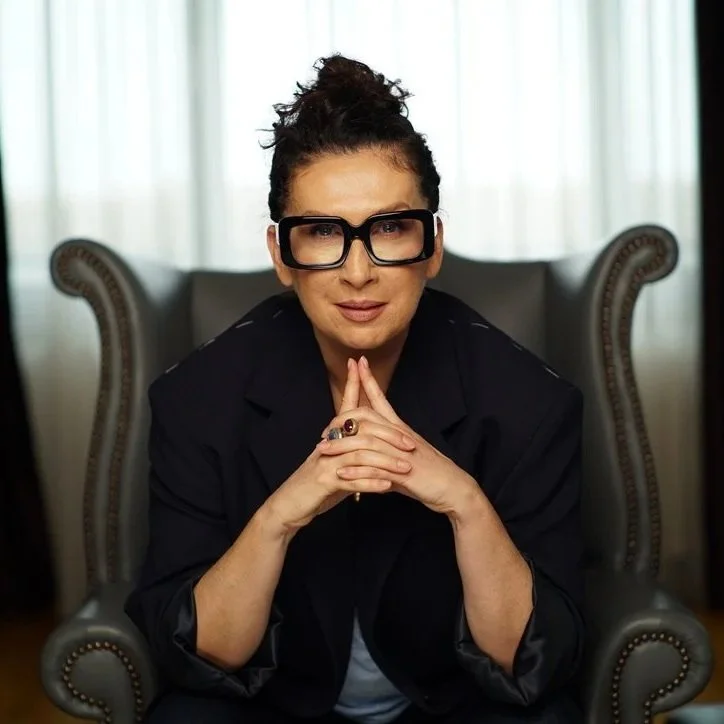
Most of us spend years trying to fit into roles that don’t quite match who we really are.
But the moment you begin understanding your strengths, values, and personal story, everything starts to shift.
In this episode of The Energy Fix, Tansy sits down with Laura Patac to explore the powerful concept of individual uniqueness—and why understanding it can transform both your personal life and professional path.
Laura shares her journey from corporate leadership to entrepreneurship, including the identity crisis that pushed her to reevaluate who she was and what truly mattered. Through that experience, she developed a framework for understanding individuality built on four key elements: your origin story, your strengths, your values, and the future story you're creating.
The conversation explores how perfectionism, fear, and uncertainty can keep people from embracing their individuality—and how small, consistent steps toward self-awareness can lead to meaningful growth.
If you've ever wondered what you're truly good at, or felt caught between who you were and who you're becoming, this episode offers thoughtful guidance.
Listen to her first episode on The Energy Fix Podcast — Episode #141.
Listen & Watch
🎙
Listen & Watch 🎙
What We Cover
In this episode, we talk about:
What individual uniqueness really means
Laura’s journey through an identity crisis
The four elements of individuality: origin story, strengths, values, and future story
Why understanding your strengths helps guide decisions
How values influence behavior and direction
The barriers that keep people from self-discovery
Perfectionism and its impact on growth
How strengths can become blind spots when overused
Strengths-based leadership and workplace well-being
Why small steps are often more powerful than dramatic change
Key Takeaways
Discovering your uniqueness is a responsibility, not a luxury
Identity crises often open the door to personal growth
Strengths provide powerful guidance for decision-making
Values shape the choices you make and the paths you pursue
Strengths can become blind spots when overused or ignored
Perfectionism often prevents people from beginning new paths
Small, consistent steps can lead to meaningful change
Personal stories can remind us of our resilience
Self-awareness is essential for long-term growth
Favorite Quotes & Sound Bites
A few moments you’ll want to remember:
“Understanding your strengths is crucial.”
“Your values shape your behaviors.”
“Perfectionism can prevent you from starting.”
“Life is made of small simple steps.”
“Strengths can create blind spots.”
“Reinventing yourself is a continuous journey.”
Chapters
03:01 Exploring Individual Uniqueness
25:07 Understanding Strengths and Values
54:13 Leadership, Energy, and Burnout
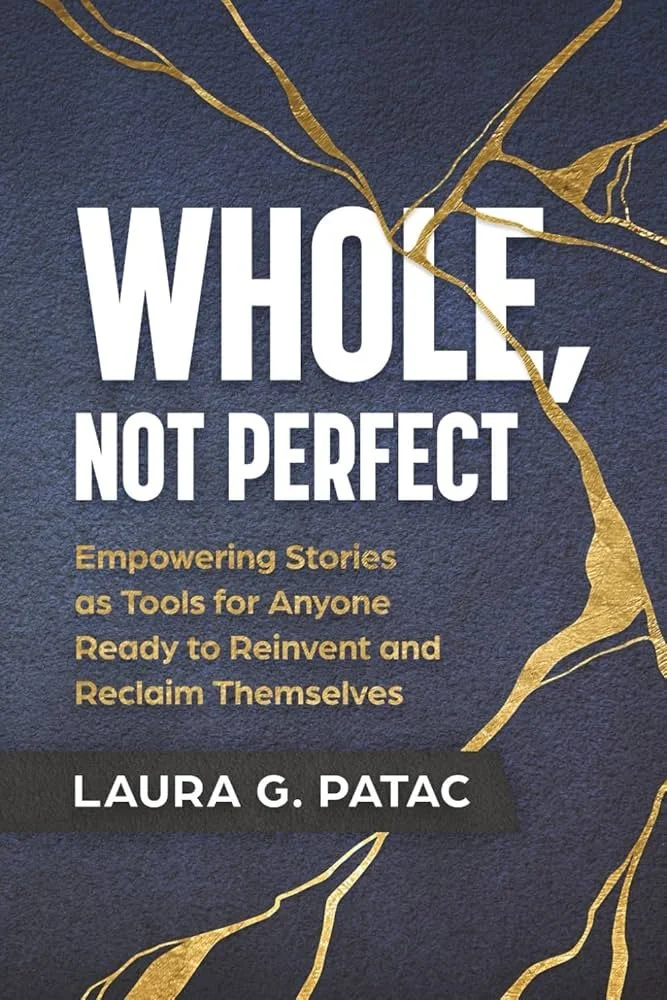
01:07:38 The Book: Whole Not Perfect
Why This Episode Matters
Because many people quietly wrestle with the question:
“Who am I really supposed to be?”
It can show up as:
feeling successful on paper but disconnected inside
questioning your direction during a career or life transition
feeling pulled toward something new but unsure where to begin
struggling with perfectionism that keeps you from starting
sensing that you’ve outgrown an old identity
And the confusing part?
These moments are often labeled as “crises,” when they’re actually invitations.
This conversation reframes identity shifts as part of personal evolution. Laura reminds us that understanding your strengths, values, and personal story isn’t indulgent—it’s foundational for living with clarity, resilience, and purpose.
You don’t have to reinvent your life overnight.
Sometimes the most meaningful change begins with one small step toward understanding yourself.
About Laura Patac
Laura G. Patac is an entrepreneur and former corporate executive with over two decades of experience in global leadership. Having lived and worked in seven countries across five continents, she brings a wealth of knowledge from culturally diverse environments and has spearheaded significant transformations in sales, operations, and product sectors worldwide. Her superpower lies in her creative storytelling and her ability to forge genuine connections through vulnerability and authenticity.
Links Mentioned In The Show
Get the book! "Whole, Not Perfect" ($.99 from 3/26-3/30!)
Laura's LinkedIn: @laura-g-patac
beU Crystals: beucrystals.com
Fusionary Formulas (Turmeric Gold): Use TANSY15 for 15% off!
Podcast review promo...Get 15% off a distance energy healing session or a piece of jewelry with a positive review of the show. Email photo of review (after submitted on podcast platform) to info@tansyrodgers.com
Support Beyond The Episode
If this conversation hit home, and you’re craving deeper support (not just ideas, but real integration):
Join the newsletter →
If this conversation resonated with you, follow or subscribe to The Energy Fix so you don’t miss future conversations exploring personal growth, emotional well-being, and the deeper work of understanding yourself.
And if there’s a topic you’d love to hear explored on the podcast, feel free to send it my way.
Transcript
-
Tansy Rodgers (00:13.73)
Welcome back to the Energy Fix, a podcast dedicated to help you balance your energetic body by diving deep into the sweet world of all things health and spirituality. My name's Tansy and I'm an intuitive crystal Reiki energy healer, energetic nutrition and holistic health practitioner, and a crystal jewelry designer. It's time to talk all things energy. Let's dive in. Welcome back to the Energy Fix.
Today's conversation is going to be a beautiful return visit from someone that you may recognize or maybe not if you have not seen her on the show before. Her name is Laura Patac She first joined me back in episode 141. So if you have not seen that episode, make sure to head on back there. Don't stop this one. Just make sure you head on back there.
and go and listen to that too because she has beautiful insights that are going to this conversation. Now, if you remember that episode, you already know that Laura has this beautiful, rare way of blending storytelling with strength work in a way that really feels grounded and practical and surprisingly emotional, but all in the best of ways. Today,
We're gonna be taking it even deeper into something that we all need right now. And that is individual uniqueness. Not to be just be yourself, kind of as this cliche saying, right? That's not what we're talking about. We're talking about the real kind of uniqueness where you stop trying to succeed by copying somebody else's pace, copying somebody else's wiring or the ways or the versions
of how they found to be productive in their lives, quote unquote. You start building this life that fits how you're actually designed. That's where we're going to be focusing and where we're really diving into this conversation. Laura is a storyteller, a leadership speaker, and a Gallup certified Clifton Strengths Coach with 25 years of leadership experience across five different continents.
Tansy Rodgers (02:34.176)
She's the author of Stories with Purpose, which by the way, if you haven't read that yet, make sure to head down to the show notes and click that link because I'll have it linked down there. She's the author of Stories with Purpose, has another book coming out that we're going to be talking about right now called Whole Not Perfect. And she's here to really talk about why uncovering your uniqueness is a responsibility, not a luxury.
She's gonna talk about what her formula actually looks like and how to use it to focus on what you can do without shaming yourself for what you can't because we don't got time for that, right? Like it is time to move forward and embrace who you are meant to be. All right, Laura, let's dive into this conversation. Welcome back to the show.
Laura Patac (03:27.618)
Tansy, it's such a pleasure to be here. I'm reading the BU Complete, and I think the two of us, are a BU completeness here. I'm super happy to be back to speak in front of your viewers and listeners. And let's dive in.
Tansy Rodgers (03:47.298)
Yeah, yeah. And I love that too, because you know, the work that I do, B-E-U, complete, that really stands for body, energy, unity. And that's what this is all about. It is about embracing that completeness and that uniqueness of who you are in the most beautiful way that is just the blueprint for your soul. And so, Laura, as we dive into this, I really want to just know
I wanna know, wanna recap your journey. For those who don't know you, let's talk a little bit about that. Talk about your turning point. What happened in that corporate exit season and how did it change the way that you think about leadership and identity and who you're really allowed to be?
Laura Patac (04:36.736)
Wow, so yes, let's dive in. I think in the first episode, we talked a bit the importance of storytelling and why storytelling is so important and that out of all stories we tell in life, two stories are very important. Our origin story, which is part of our uniqueness and also the stories we tell to ourselves here.
And I was talking a bit my upbringing and that I'm Romanian and indeed left my country many years back. And nowadays I live in Dubai, the United Arab Emirates, and I am trying to build a life which actually resonates with who I am. This is what is happening now.
You asked a question like 25 years of corporate experience. And I'm just gonna pick up on the story from that point on. Almost three years ago.
I did an exit from a very high leadership position in corporate America. Whoever is going to go to my LinkedIn profile, they will understand exactly which company. And when I did that exit, I literally had an identity crisis.
Because with all the acceleration about stepping into a new chapter, with all that enthusiasm, actually I had to pause and to ask myself two questions. And the first question was like, what am I good at? Because when the...
Laura Patac (06:34.744)
business title goes away and the paycheck goes away. And you look to your LinkedIn profile and you realize that over 75 of your connections are just connections related to the jobs you had before. So your circle is like, you know, very limited. You are saying, so what I'm exactly good at. And the second question, it was very, very pragmatical one because one of my
strengths, it's the strategic problem solver. So I am strategic and restorative. It was like, so where I'm gonna be taking these last 25 years farther and how I'm gonna be doing that. It's a bit of two questions in one, but it's like, where I'm going and how I'm gonna be taking that, right? So in all honesty,
I enjoyed a bit of like a one month of getting to pause a bit, but, and you know, seeing family, seeing friends, but after that, these two questions, they were like really ruminating inside because I really wanted to make a step to a direction. And I felt that I was at that kind of like crossroad.
where I had like two options. The first option was to go back to corporate, something which was like very familiar, right? And I was looking to myself in the mirror and I was asking myself, are you really sure that you wanna go back? And the answer was like, no, I'm not sure. I think it was like for almost 10 days, I was just looking at, do you wanna go back to corporate?
be truthful to your own. I was like, no, I'm not sure. I was not sure. So therefore, I had this kind of like, aha moment, this kind of realization. Because when you are at this kind of crossroad, the most important thing is that what on what you bet your future on. And
Laura Patac (08:55.224)
To me, I was looking in the same mirror and I said, I think it's me. Because there is no savior, there is nobody knocking at my door saying that, you are good at this and you have to do something. So the realization which I had was that each and every of us, we have a uniqueness which we need to...
Understand, assess and understand.
and I took some time to really
to really understand the formula. What is this formula of individual uniqueness? And I came up with four elements of individual uniqueness, which actually, right now, I totally believe that could help each and every individual understanding and assessing that uniqueness.
to make any kind of decision and to drive to any kind of direction in life they want.
Laura Patac (10:09.196)
So one.
Laura Patac (10:13.002)
I was back to the origin story, right? The origin story, that story, like those last 25 years. Those 25 years, they had not only five aha big moments, they had like, you know, many aha moments. But did I remember everything? No, but I remember automatically the top three five, which actually helped me to move to a certain direction.
Either it was a step back in the career in order to accelerate another step upwards. Either it was the decision, the uncomfortable decision to move abroad into a country where the language, I didn't know the language. Either it was the decision to step into a role when I didn't.
know that I'm ready to step in. I was like, my God, I'm not ready for that, but I stepped in anyway. So those kind of like, you know, decisions which I took with courage, though I had a hundred fears inside me and my emotions, they were very overwhelming, but I acted in spite of the fear. But it's not just that I remember those.
I also, tried to put on paper and to understand what I learned out of it. And is that learning going to help me on the direction I'm choosing? Because most of the people that are saying, I know my history, I know everything, I know my top-aha moments, but it's like in learning, right? You have an information.
But if you don't take that information farther and you apply it again, and you don't share what you experienced with others in order to somehow embody that learning, it's just going to be a memory on paper. So the first element of individual uniqueness is really understanding
Laura Patac (12:29.184)
What are those kind of like three, five big aha moments in life? Could be personal, could be professional. What we learned out of it and did we took that farther into our life? And is it going to help us in the future? That's the first element. After that, know, you know, when you, when you step out from corporate, where you had like teams around you.
you always you are able to delegate, you are able to do things, you know, when all those resources vanish. The question is,
What are your strengths, your abilities, your skills, and what you could do with those? So I remember from my corporate days that in the last, I would say, last 10 years, we were like assessed Clifton strengths. And to tell you the truth, I had an assessment somewhere.
in a folder on my computer. But I remember that it was a time when, even when we were like creating teams to implement projects, we were matching the kind of strengths, the individual talents people had in order to be more productive into that particular initiative. And I went back to my folders and I said, what are my strengths? And I realized that actually,
I was having all the natural talents I needed in order to take any action and even building a business. Because my top 10 talents, which comes very natural to me, are I'm a learner, I'm an arranger, meaning that I can prioritize multiple, I can juggle with priorities very easily.
Laura Patac (14:36.43)
I'm a strategic, I'm a restorative, meaning problem solver, and I take, and I'm responsible. I take accountability for everything I do. So when you understand your top talents, you also understand what are those things which you can create and what outcome you can produce. Maybe if I'm not that analytical, maybe I'm not gonna...
be jumping straight forward to get frustrated doing analytical stuff, maybe I'm going to ask someone to help me, one of my friends. I'm not good maybe with videography or production and all this kind of very detailed kind of thing. Therefore, I might have someone. But as long as I'm good in creating strategies and being responsible and accountable and problem solver, I think consulting.
could be a very good thing to do, right? So understanding those talents which comes very natural to you, this is the second piece of the puzzle. And I want just to double down and to have everyone understanding what are those strengths. According to Gallup research,
Each and every of us, we could tap into 34 talents.
more than 50 years of research on human behaviors and design, it shows that these 34 talents, they are accessed individually in a very unique way. So the top 10 talents, which are your strength DNA, those are the kind of talents which actually are your strength because you can access naturally with very limited...
Laura Patac (16:37.134)
with zero to no effort. The rest 11 to 21, you need to put a bit of effort to access them. And from 22 to 34, you need to put a bit of more effort to access them, right? And I give you the example of empathy. Empathy, in my case, is on 17. Of course I have it.
But when I access it, I need to put some effort to do it. And maybe that's why I'm doing it very selectively. I'm doing it with my clients. I'm doing it in certain situations. I cannot do it every time with everybody because it drains my energy. So the way how people should look and, know, Gallup assessment to you, everyone could do it is going to really show you
you know, your top 10 or top five. But the most important thing is how you use them. Because having them, doesn't mean that you use them. And therefore, some of the talents, they might be not used at all. Some of them, they might be overused, underused. And these are the situations when we are creating maybe conflicts, maybe we enter in very difficult situations.
Maybe the communication is not there. And it's very important to understand what are those because if you want to build something, right, and you need to be good in execution, good in strategy, influencing people, creating relationships, these talents are mapped on these four areas and you understand where actually you are super good at and where you need some help.
So this is all about strengths, the second element. Well, the third element I realized are your unique values. And I was listening to a lot of definitions about values, but values in essence, it's about what kind of behaviors matter to you.
Laura Patac (19:02.766)
Right? Is it friendship? Is it loyalty? Is it family? Is it generosity? Is it gratefulness? Is it, you know, and there are so many, there are so many books and also there is so much research around and whomever wants to understand what's the range of values, I've seen, you know, values like ranging to over 50, you know, and there are tests which you can do to understand your values. Fantastic.
But what is very important is what are those kind of like, you know, one, two values which are non-negotiable for you.
And for me, non-negotiable, it's freedom and creativity. So to me, when you understand your top five values and your non-negotiable, that's the third element.
And the fourth element is what I'm calling your future story. Because if you and I, want to fly to, we want to have a holiday in Paris, and that's aspiration, right? Let's call it like this. We want to have a holiday in Paris. The way how we get there is going to be very different, right? So to me,
The future journey, the individual future journey, even two individuals, they might have the same objective, the same destination. The journey to get there is very different. So when I realized all this, actually I took from the shelf, I revalidated my values, I looked to my strengths and I made this very bold decision that my next journey is not going to be go back to corporate.
Laura Patac (20:52.184)
but it's going to be in entrepreneurship, where actually I'm going to be helping people to navigate an identity crisis, understanding their values, their strengths, how to build a journey to a destination, and that's called strategy, and also understanding how, through all these four elements, they can enhance their image, their influence, and how they can create impact.
So that was the big moment which inspired also the book, The Whole Not Perfect, because the book talks about these four elements in this kind of very interesting way of poetry and storytelling and reflective questions, but it's actually helping individuals to answer some reflective questions and maybe try to redefine their
four elements try to discover if they didn't discover yet that their four elements, but more than that, if they are aware about them, how they are using it as we speak. So yeah, so that was the big change. An identity crisis, think people they have identity crisis not only when they are stepping out of corporate and moving to something else. I think identity crisis is also when you are like,
And crisis might be a very, maybe like hard word, but I think it's a shift. It's an identity shift. Let's not call it crisis. Let's call it shift. There is an identity shift even when you are moving into another country. There is an identity shift when you really want to start something new in life, right? There is an identity shift when you...
are promoted in corporate, right? Because you assume more responsibilities, you have to shift your identity maybe to lead better, to communicate better, right? So I think identity, this kind of identity shift is happening not only in this kind of like big change situation when you exit a role and you move into, I would say uncharted waters, as the...
Laura Patac (23:17.994)
as an entrepreneur and entrepreneurship is, but it takes, I think that this formula, it helps individual to navigate the path with clarity and to understand what is that they have as foundation in order to face any kind of new challenges.
Tansy Rodgers (23:39.694)
break because I want to share something I make that's meant to support you in real life, not just look cute on your wrist. I create intentional crystal jewelry through BEU crystals. These pieces aren't random. I designed them using crystal energy and I also weave in numerology and geometry and I infuse the pieces with Reiki healing energy as part of my process to really help support you on an energetic, deep level.
They're like little wearable anchors. The kind you can touch when you're overwhelmed, when you're heading into a hard conversation, or when you need a reminder to come back to yourself. More solid, more grounded, more authentic. I'm not here to tell you that jewelry fixes everything, but I am here to tell you that having a steady physical cue can change your day, especially if you're sensitive.
easily overstimulated or your brain likes to sprint way ahead of you. If you want to browse what's available or see what is newly released, head on over to beucrystals.com. I'll link it down in the show notes so that you can easily shop and check out what is available. And as always, if you have any questions or you want to do any custom work, you can easily reach out to me right there. Okay, let's jump back into this episode.
Tansy Rodgers (25:07.65)
Yeah. And you you talk about this individual uniqueness, this learning of your strengths, this learning of your values, this learning and understanding you and what drives you. And I've read that you've, you know, have mentioned this individual uniqueness is everybody's responsibility to really dive into. I would love for you to talk about why it... So if people understand that it's...
Like everything you just said, yeah, that makes sense. yeah, that's important. I see that. I can appreciate that. But yet, why do you think so many people avoid the work even when they're feeling miserable in whatever circumstance it is that they're currently in? Why do you feel that that is such a struggle to actually move forward into that individual uniqueness?
Laura Patac (26:05.198)
I think people when they are at the crossroads there are a couple of things happening. One, they don't know where to start.
I see this very often also in the practice and the coaching. There is this kind of like, don't know where to start, so where should I look? This formula actually helps you get that clarity. Because when you understand your
past stories, you understand your strengths, say, so if I am good in A, B, D, it means that I can do X, Y, Z. So to me, the moment of this kind of moment that I don't know where to start, it's a bit of also imposter syndrome.
Am I good enough to start something new? know, that kind of like, I want to start a business or I want to get a new job or I want to, but am I good enough?
Tansy Rodgers (27:23.224)
Trust can be tough. that trust that something's gonna work or that you can make it work. That can be really challenging. Exactly. Yeah.
Laura Patac (27:33.422)
Exactly. And that is the moment where actually the learnings and the strengths, they can help you bring that confidence because your past stories, when you overcome some very tough challenges, they show you that you can. And the strengths, they show you why you were able to do it. Right. So
To me, these two reminders are extremely powerful in the moment when you doubt yourself. You have like, I'm not sure if I can do this, you This formula, it's also very important for people when they are in like this kind of like, it's not the right moment right now. You know, you have to make a decision and you postpone that decision. Say, nah, I don't want to really do it now.
But if you look and if you have this kind of like, you know, very good self-awareness about that you went through that kind of decision before and you made that decision, your strengths, your strengths say, even if I'm gonna be doing this decision and something goes wrong, I still can bet on my strengths or I still can have that support around me.
or I still can access that, right? Sometimes people, in the book, I'm mentioning this very frequently, sometimes people postpone decision because they really think about the end outcome. And you know that saying that, start thinking big and start planning with the big outcome in mind.
That's correct. You want to go to Paris, but to go to Paris, let's take this example, like big, big outcome to go to Paris and the two of us hanging out on Champs-Élysées, having a coffee. First of all, we need to do a bit of the research to understand that. Are we going to go on a full season when we are going to pay the high price or we are going to go, you know, we need to align.
Laura Patac (30:02.146)
So at least you start with something very small, something to give you that kind of momentum, which you say, we are not going in the summer. We go like in September because the prices are good and it's not going to be that busy. And we might even go on sale on some things. So the fact that you start doing something or people saying that, I want to change my job. You want to change your job.
And you say, I really want to get this kind of like, you know, job with another company. But the first thing is do your CV. So this kind of small, simple steps sometimes create that momentum, which gives you the satisfaction that something is accomplished in the larger scheme of things to go of going somewhere, right? So and when people are saying like, I it's not the right momentum, oh, it's too far.
It's like, you know, it's, I'm not doing, they have the impression that they really need to accomplish that immediately. It's because this kind of like little, little small steps, little momentum has not been created yet.
So to me, knowing the four elements and reminding yourself when you are a crossroad of decision, being unclear, being uncertain, being confused, being afraid, knowing that you went through similar situations, your strengths, your values, and understanding that your outcome is going to be achieved creating momentum to small, simple steps.
think that helps everyone to get to write a future story which is going to be built not only through moments of happiness because, you know, life is a roller coaster. But we really need to be capable to understand even from our...
Laura Patac (32:13.792)
our like, I would say, flops. Let's use it, let's use a word like this to understand from our failures because failure, flop, it's there. To understand a bit from our failures, from moments when things are not very happy, to be able to assess our emotions.
and to really raise up based on what we have on our portfolio, which are our strengths, our values, our purpose, and all the learnings which brought us where we are right now.
Tansy Rodgers (32:50.638)
Well, I would love, though, to also add in here the whole concept of conditioning. mean, as you were talking, I kept thinking, what about when you have those wounds or that conditioning around perfectionism or people pleasing or there's cultural imposter syndrome or cultural expectations that things are to be a certain way? And you've fallen into that. First, I would love to know, like, is there a common one that you see?
But then also let's talk about how when we hold tight to those, what that can actually do over time, how it can cost us over time.
Laura Patac (33:29.41)
Yeah. All what I can talk from my own experience is perfectionism. Because the reason why people, don't start things or they don't move things, it's also because they wait for the perfect moment. They expect to have the perfect setup, the perfect scenario. And I think
there is a reframing and it's practice. The way how I started to be comfortable with not being perfect, I started with small things and I created that kind of comfort. for example,
I always wanted to, you my house is always very tidy and very clean, And it's that kind of like, you know, perfectionism, know, like everything should be in the right place. I started accepting that things, could be messy, not super messy, but messy. And I was creating that kind of feeling of feeling being comfortable. After that, you know, when
I started, so that was the first thing because I was like, it's like even things that were not perfect around me. I started with the physical things. After that, I said, well, I was planning to visit some of my family in the north side of the country. And I didn't have the best accommodation, but it was comfortable. I was like, you know.
Maybe I didn't choose the best route, I choose another one, but it was okay. So start doing things which are like 70, 80 % as you want them to be, right? And do this kind of like little choices which starts make you comfortable with not being perfect. And nowadays, when I'm looking to business,
Laura Patac (35:42.294)
And when I make a decision, in the past, I was thinking that I need to have the whole information. And because my learner is my first talent, imagine that I was really going rabbit hole in learning. And the information was never enough. That was the toughest thing for me to start making decisions in business.
based on, I would say, less than 70 % of information. And I have this kind of rule when I'm saying I stop, I stop myself in like at three. So I collect the information, I look, do I need more information? Yes, I'm going for more. But I don't go more than three times doing a research and going down the rabbit hole.
So I put boundaries in the way how I collect or I process enough information for me to be comfortable to make the decision. Did I make maybe a decision which didn't have the result which I expected? Yes. But it was maybe one out of 10, which to me, it's a very good success rate.
Laura Patac (37:10.328)
So I think people, I'm always fascinated about.
Laura Patac (37:21.3)
We know each and every of us deep down what are the things which might prevent us to do things. Perfectionism, procrastination, because maybe the things which we are doing, they don't come naturally to us and we don't really like doing those stuff. And we should be very clear saying, you know what, I don't really like, I don't really feel that I like doing this kind of stuff. And talking about it,
Maybe at one moment someone else is going to come and say, you don't like doing it, do something else, do something which creates energy, not depletes you from energy. That's why people sometimes, they are in jobs and they don't like what they are doing. But the reason is because what they are doing is not where their strengths or talents are. And that's why their energy is being depleted, is not like recharging.
That's why so important to understand your strengths, because you know what creates energy for you. Because in life when you give, give, give energy in things which you don't like doing and you are not passionate about, really you are just depleting yourself from good energy. So to me, what I was trying to say, I'm bringing the story back, is that when you know exactly what are your, I would say, points where you need to do a bit of work.
The simple thing is to start with one thing which you could change very little, but you and you start doing that consistently. You don't need to boil the ocean. You start with a simple, simple stuff, you know. And the best example is like procrastination. It's like one client not giving names, moving from one country to another.
He stopped going to gym in his previous environment being home and he moved to Dubai. He was going to gym five times a week. I was like, fantastic. Coming here after three, four months, he was not able to go to gym at least once. And he was actually frustrated about the fact that he doesn't go to gym five times.
Laura Patac (39:48.884)
And I was like looking at him and I said, but what if you start going to gym once a week and you do that for a couple of weeks and after that you increase to two times a week, right? This kind of like taking small simple steps, it's so effective in building behaviors or habits, you know, starting with not the big leap, you start with a small step and that means something. So to me,
Perfectionist can be cured as long as you want to step a bit courageously and to accept that things even 70 % accurate. It's much better than to take a decision instead of no decision. Because this is another thing, know, we start, so a decision is better than no decision. It could be like, you know, it could go well, it could go...
maybe not that well, but at least to learn something out of it. And it's just a matter of doing it. I don't know how to say it more. Maybe you don't take a risky decision. You take a decision which the risks are calculated, but something small and simple, you get validation that it's okay. You create that safety that it's okay.
you know, that it's working and you take the second one and after that the third one and that is the way how habits are being created or behaviors are being changed.
Tansy Rodgers (41:29.134)
You brought up multiple things here and you've talked about different habits, changes that you can create. I would love to just do a recap so that the listener can really just grasp their head around what exactly is your formula. Let's recap. Let's talk about what the formula is, the key ingredients, what order it needs to go in. How can people really work with this formula?
Laura Patac (42:00.238)
So the formula of individual uniqueness are the learnings, those kind of experiences that they showed you that you went through tough, difficult situations before and you succeeded. That is the very good example that you've been able to do that before. The strengths are the ones telling you what are your natural talents, what you are good at.
and how you use them and how you can use them towards your destination. The values is what matters to you.
And what matters to you is not that it matters to you in seeing that in other people behavior, you also, need to walk the talk. So the fact that you've been in challenges before and you overcome and you know, that might show resilience, that also can give you confidence that you can make another decision, that you can do an uncomfortable step. Your strengths are the one helping you how you're going to be doing that. And your values,
are going to give you the indication of what matters more for you in doing that. And the destination, actually the destination is your decision, where do you wanna go? And when you have that destination, the way how you create your future story, you create your future story based on your previous three elements. And the learnings, the strengths and the values
will always gonna be the foundation for everything you want to overcome in life with the amendment that life it's not made of big leaps, life it's made of a journey of small simple steps.
Tansy Rodgers (43:57.582)
And so if somebody really wanted to start taking a few steps forward into this formula, where would you recommend that they start with?
Laura Patac (44:07.768)
would say they start with their origin story and their strengths. Very practical. There are a couple of frameworks in the book called Not Perfect. The real story framework which helps you actually frame the realizations in a way that you understand the effect and also the learning.
and how you took that learning into your nowadays, into your current experience. And strengths, everyone could take the Gallup Strengths Assessment and to really understand their top 10 strengths, which are their natural talents. But I think what is where they're gonna need some guidance. They're gonna need guidance in order to understand how those strengths are being used.
in relationship with their past stories and past challenges. And to discover if they are using, not using, abusing, or underusing, you know, because if you understand that you have them, it doesn't mean that you are using them. You know what I mean? So some of them, they might discover that they have like, you know, dormant abilities.
And maybe that's the reason why some of their passions and some of the enthusiasm and energy is still dormant, you know.
Tansy Rodgers (45:42.766)
Yeah, yeah. And, you know, I was also thinking as you were talking, I was also thinking there has to be some kind of like shadow side of strengths, though, that maybe that maybe you would wish people understood more, because I know, for example, one of my strengths is organization. I can organize. very strong at it. However.
when it starts to become too much, when I go into overdrive, it starts to create a problem because I'm like, all right, it has to be this way and it has to look this way. And I get very rigid in that organization. so I would love to maybe talk about your thoughts on when somebody has a strength, they know their strengths, they're trying to implement them, but then they start to go into,
overdrive and it becomes this place of maybe creating more problems. Do you see that?
Laura Patac (46:48.416)
Yes, Each and every strength, individual strength, depending on the way how you use it, they can create blind spots. I gave you bit of the example of the learner that the learner when it's over abused, like over used, not abused, over used.
can put you in going to the rabbit hole. And that means that instead of making a decision, you are delaying a decision. The other one is that strategic, another strength. When you are having multiple scenarios, because strategic, the definition of strategic as strength is that
is not just that you know how to move things from point A to point B. You also have the ability to evaluate risks and to have plan A, B, C, D, If your strategic is overused, actually you keep iterating those plans and those risks and you don't move to action.
If you underuse it, actually you might create the opportunity of risks because you are not very well in anticipating risks. It's a lot of calibration happening with strengths because
You can create a very good outcome, but you can also create situations where things are being delayed. You are less proactive, you are more reactive. So there are those kinds of blind spots which, strength by strength, they have at least two or three potential blind spots.
Laura Patac (49:07.116)
because of the over use or under use. So to me, understanding your strengths is not that you have a list with your top 10, but the regulation comes in the moment when you understand how you use them in the past. And also taking some current challenges or maybe understanding some current situations at work or in life.
depending on the circumstances and depending on the evolution of that situation, you could have an understanding if there is a chance of overuse, underuse, and if that creates some blind spots.
Tansy Rodgers (49:56.418)
Hmm. Yeah, that's really interesting. I like how you said that what is really important to know or to discover is how you used your strengths in the past because that can make a difference in how you start to use them to move forward rather than going into overdrive.
Laura Patac (50:17.954)
Yeah, because this is when you bounce them to your past stories, past challenges, those five aha moments, actually the calibration starts happening. I give you another example. Responsibility. Responsibility, it's a very important strength. means that you own, are accountable for things which you take upon your shoulders.
But someone who is overusing responsibility, they might take responsibilities which might not be them to take. They assume that they need to take that responsibility and that creates overload and that creates stress and that drains the energy. So to me, also not taking responsibility,
That's the other side of the coin because you assume that something, that kind of action or that kind of like role doesn't belong to you and you are very passive when therefore you can create a gap in the process or you can create a gap within the team or even in the family because you don't assume some responsibilities. So to me, calibration, it's not just knowing your strengths.
It's the process of calibration and how through the calibration you... It's not that you maximize, but you get to a place where you get energy from the way how you use your strengths. You don't overabuse it. And also you understand what are the blind spots which those strengths might create.
if overused or underused because that understanding is also very important.
Tansy Rodgers (52:18.35)
break.
Because inflammation is one of those root issues that can quietly mess with everything, like your energy, your joints, your digestion, your recovery time, your mood, and even mental clarity. And here's the tricky part. A lot of people wait until they feel terrible to actually support inflammation. But inflammation is often a slow build. Things like stress and sleep and food choices, hormone imbalances, overtraining,
under recovering. Well, it all stacks up. That's why one of my consistent staples is Turmeric Gold by Fusionary Formulas. It's designed to support a healthy inflammatory response and I like it because it's practical. There's no complicated routine. It's just a really grounded steady support that you can actually keep up with and it is clean products. If your body has been feeling more achy,
stiff, foggy, or reactive than you want it to be, this is a solid option to consider as part of your foundation. And you can use my code, code TANZY15 for 15 % off your entire order. Tumor Gold isn't the only thing they have. They have an array of incredible products that you can explore and try out.
I will link it down in the show notes so that you can easily jump right on over and use that code, code TANZ15 for 15 % off. All right, let's get back into this episode. Well, let's take this even a step further then. Let's talk about leadership and energy because everything you just talked about right there has me kind of thinking about the whole concept of burnout, especially when it comes to leadership and moving into that.
Tansy Rodgers (54:13.582)
How does honoring your uniqueness, your strengths help to actually reduce burnout, number one, but also what changes in decision-making and boundary setting and capacity and all of those things when someone finally stops forcing themselves into the wrong mold that they're not meant to live in?
Laura Patac (54:37.014)
Well, your question is spot on. Organizations using strengths-driven leadership, they are three times more productive because people, use their talents where actually they are good at.
You cannot have someone who doesn't have strategic, maybe one of the top talents to have him driving a big strategic initiative. But maybe that person might be very good in command, maybe attracting talents. It could be very good in analytical, maybe having a good sense of intuition, of skills, being a visionary, being futuristic.
So I think when you understand the strengths, what comes naturally to people working in an organization, they will gonna be having tasks or roles where they're gonna be at their best because of their talents. And that is going to give them energy. And that is going to increase their engagement. And also it's very important for the wellbeing.
Organizations who are using strengths-driven leadership is not that they are three times more productive, but the well-being of the organization is increasing six times. Because you go to your workplace knowing that you're going to do something you are good at and also you like it. What could be much better than this?
Laura Patac (56:33.134)
And that is also going to, because when you are engaged with your role, you are good at your role, you like what you are doing, you decrease the opportunity of burnout, you decrease the opportunity of stress. There are some voices saying that, you know, having the strength assessment as part of the recruitment process might not be a good thing.
In my view, I think it could be a very good thing because you get the job description with the strengths of individual, with the values of individual, with their past experience. And you have, I think, a much better view if that person is not just good at their job, but they're going to embrace the role. They're going to be motivated about what they are doing. And to me, I would say
it's going to be maybe difficult for organizations to have it as part of the recruitment process. But even after the person become an employee, think understanding the strengths and where that person is naturally good at, that gives that organization the edge of having someone being fully motivated, engaged and productive.
Tansy Rodgers (58:02.39)
Yeah, yeah. And so that's really interesting. That's really interesting because as you were talking, I was thinking to myself how some of my favorite jobs, the ones that I was doing just to create money while I was in school or like whatever was happening at that point in my life was when I did when I was a waitress and I worked in restaurants.
And it kind of makes me laugh because like in the past I was like, why was this always my favorite? And you know, why did I find so much joy in some of those jobs? And I'm really curious which strengths that was bringing up for me. Was it the socialization? I don't know. Was it the organization? don't, was it helping people? Probably.
Laura Patac (58:52.192)
I think it's, you know, cannot, I cannot, usually I'm going like this after listening to some stories, but in our conversations, I'm sharing more of my stories. But at one moment when you're gonna share your stories, I think it's enjoying that, kinds of roles and that those experiences, it has to do with relationship building because
There is a bit of the relationship building when you actually you are with clients, right? You are with customers. And I think it's also about influencing others, influencing others to have like a certain meal or doing things differently. And I think it's a lot of communication there.
and also understanding other people needs and intuitive about, you know, people mood. I think there is a lot on relationship and influencing because remember the 34 talents that are mapped on these big four areas. It's execution, strategy building, influencing others and relationship building. And I think maybe some of your strengths, they might be on those areas.
But it will be fun for you to just do your strengths and we can have a conversation offline. And we could have a bit of fun also.
Tansy Rodgers (01:00:22.542)
Well, you know what though, you've hit some really valuable points because I think you're absolutely right, especially when it comes to the relationship building, because I know even when it was regular customers that were coming in, I would find it and they would end up sitting where I was going to be serving them. I used to love that, you know, being able to see the same people that would come in every week or every, you know, a couple of times a week and just having those conversations with them. And so, yeah, it's just really interesting because so many times like, why?
Why was I so, why did I find so much joy in some of those jobs? And yeah, as you were talking, I'm like, oh, it's probably because it was hitting some key strengths of mine.
Laura Patac (01:01:03.478)
Yeah, and even our conversation and our relationship, Tansy, if you are thinking about it, the things which you do right now with so much joy, your podcast, getting to have a community of listeners and viewers, that's also relationship building. And I think the majority of your strengths might be in those kind of areas.
But as I said, I need to know more of your stories and also for you to take the Gallup Strength Assessment and to really match those stories and to understand how you are using it, right?
Tansy Rodgers (01:01:44.268)
Yeah, yeah. Well, I want to take that and just turn it right back and focus and laser back in on you. You you've talked about your story and you talked about some of this. What is a moment when you really had to step in and you had to practice your own work, where you kept feeling the pull, the perfectionism coming back in, you know, all of those things that were tugging at you to go off of your track, but you really
You really just took it by the reins and you stepped in and you chose to align with your strengths instead. Like I would love to hear about some of those times where you felt very challenged in doing this work.
Laura Patac (01:02:28.418)
Well, I think that I learned through my last two big aha stories, aha moments in life. So one was when I published my first book. That was a very uncomfortable situation by any perfectionist frameworks, right?
Laura Patac (01:03:00.494)
I frame the way how I frame that experience. First of all, I had a deadline. was like saying, okay, I'm taking this direction. I really want to start publishing my poetry, my stories. I want people to really take some learnings, use some frameworks, understand the importance of your story, that and this.
The first thing I had a deadline and the way how I usually work, if there are some big things which I want to accomplish, I always have a deadline. And from that deadline, I understand how I can, what are the steps, what are the milestones. In my experience, even from corporate, any line in a PowerPoint or any action without a deadline,
most probably is not going to happen. And the journey to that timing, I went through having my first publisher and I was comfortable with the editing, proofreading and everything. And after that, I was not happy with the distribution and I went to having a second publisher.
And actually when I went out with the first book, I'll tell you, I was like maybe 80 % ready and happy with the outcome. Not the best cover. The first book doesn't have the best cover. The content, I was very happy with the content, with the message. Did I have the...
the advertising, the whole strategy, post-publishing, ready, I didn't. But I learned how to do it in the moment. Remember, I'm an arranger, I can juggle with things. And the fact that that first book gave me so much as learning and understanding how things are happening because in publishing, and if you want to become a published author,
Laura Patac (01:05:25.388)
the most critical things are not, you know, it's not the copyright and the editing. Yes, cover is important, but the most important things are the things happening after your book is being published. And I learned hard that one. Did I came from the idea that I'm gonna make money out of my first book? I'll tell you that I had to.
to really balance and recalibrate my expectations because after publishing and understanding what other things needs to happen, I said, well, as long as I do a break even for the investment, I'm good enough. But that lesson in itself actually helped me getting my second book, not to let's say perfect, because I'm still learning. You learn your whole life.
but got it into a place which enables me not to make money, but to target and to have more readers getting access to it. Because when you publish a book, nobody, think, unless you have like, you know, a lot of funding behind, nobody's going to become like, you know, if you don't have the funding and the very clear strategy, et al.
maybe will not become a millionaire. You need to balance your expectations. And my expectations is that the book is going to address at least like 1 million people, my second one. This is what actually my target is for the next couple of years. And to me, if I resonate with that objective, that's good enough for me because all my actions are going towards that direction. And the book is going to be that kind of
manifesto of talking about individual uniqueness and is going to resonate with the readers who are going to embrace their uniqueness and the fact that they can reinvent themselves any point in life based on their uniqueness.
Tansy Rodgers (01:07:38.53)
Yeah. Yeah. Well, let's talk about that book. So whole not perfect. Again, I'll have that link down in the show notes as well with Laura's first book that she had out. But let's talk about that. What can readers really expect to gain or expect to get from the book and how can it help them on their journey?
Laura Patac (01:08:05.132)
Well, How Not Perfect, it helps readers to get closer to four elements of uniqueness. There are some frameworks which they can use. There are stories and very sensible and very inspiring poetry, which sometimes
any form of art can trigger some emotions and those emotions can lead you to a self-discovery road, which maybe you didn't anticipate it. So the book is helping you to get closer into understanding why the four elements are important and also trying to navigate and to get closer to name them. Of course, to name your strength, really need to use the
the Gallup-Clifton Strength Assessment, but it also helps you understand why they're important. That is in essence the book. The book is also talking about reinventing yourself because if someone was asking me the other day, Laura, how many times you reinvented yourself in this life? I said seven or eight times.
Knowing or not knowing, now I know. I think that every time when I reinvented my life, I moved to a new place, I changed a job, I changed direction. Something happened in my personal life that made me shift who I was and my identity. I realized that the things which I was using, I was using my strengths, my values and knowing that
I went through difficult situations before and I went on the other side. So that resilience, the courage. And your past stories remind you some of the things which you sometimes forget very easily, that you are courageous, that you are resilient, that you are good enough, that you can go through certain situations, that you are grateful, that...
Laura Patac (01:10:25.226)
you appreciate life, that you appreciate what other people give you, that you appreciate your energy and everything, because those are the past stories telling us. And the book is helping everyone to look to all these elements in a moment when you might want to shift to a different direction. You might want to reinvent yourself. You want to change something.
And you need this foundation to help you do that.
Tansy Rodgers (01:11:00.426)
Mm. I love it. I love it. Well, Laura, before we talk about where people can get their hands onto the book and get into your world, let's just do a few rapid fire questions to get to know you a little bit deeper, really connecting you into some of these concepts that we talked about today, but just getting a little more personal. So are you ready, Laura? All right, let's do it. Three questions. All right. First question. What is a
Laura Patac (01:11:22.838)
Yes, let's do that.
Tansy Rodgers (01:11:29.794)
work that you used to hide that you now realize is part of your magic.
Laura Patac (01:11:38.648)
Very good one! Okay... I think I like being sarcastic sometimes, you know? That kind of sarcastic fun. And I'm not doing that to all fun.
I was doing that very often like in the past, but nowadays I'm not sure. I just park it on the side, but I really like being a bit sarcastic, but good sarcastic, not critical sarcastic. And yeah, and making fun of the situations, you know, in a bit of sarcastic way, but yeah, I like that.
Tansy Rodgers (01:12:24.142)
I love that and I can so appreciate that. All right, number two. What's a sentence that you wish leaders would stop saying out loud?
Laura Patac (01:12:37.346)
Wow, a sentence leaders should stop saying out loud. Well, would say, this is a teamwork. They need to believe in the teamwork. know, when leader are saying all the time, they are coming after all this, like, this is because of a teamwork. Yes.
But I think this is too overused already. And if they don't speak from the heart, they should stop just saying that this is the... Because everything becomes a label. It's teamwork. Everything is teamwork. But on the other hand, it's also good to recognize individual values because some people, might be behind some of the...
genius ideas or genius solutions and to give credit to those which are actually driving from the front and give them that kind of spotlight because that's important too as much as it's about teamwork.
Tansy Rodgers (01:13:52.418)
Yeah, that's a good one. Good one. All right, and the last question. What is one tiny thing that really helps you come back to yourself when you're feeling pulled into a place of comparison or feeling pulled into being pulled off of your track?
Laura Patac (01:14:10.978)
Well,
One of my strengths, it's called the intellectual. And that means that I do really like my white space. A space where, and even I can get into this white space even in the middle of a crowd. Being able to...
pause and to think and to internalize a couple of things. think that's something which gives me also energy back. And I really like creating the white space. And I think each and every of us, we should really have that space where even for 15 minutes, 30 minutes on a daily basis, we create that space when we can reflect, breathe.
think deep, analyze our emotions. I think analyzing the individual emotions, the fact that you are happy, you are upset, you are tired. We were just discussing at the beginning of the conversation, we felt a bit like tired. It's okay to acknowledge, and I like acknowledging how I feel, but I also, I'd like to understand why. Because understanding why,
It also gives you maybe a bit of solution, how you can go back to your energy, to your happiness, to a bit of like, you know, lighter face. So yeah, so I like a white space, which I can take and I do it like very intentionally every day.
Tansy Rodgers (01:16:06.928)
All right. Well, Laura, let's talk about where people can find you. Where are you hanging out? Where can they find your book? And is there anything exciting that you have going on in your work right now?
Laura Patac (01:16:20.684)
Well, LinkedIn is my space of communicating and engaging with people. love connecting with people. I do post frequently, giving a lot of value. I talk a lot about strengths and identity and everything. People, can take some tips or some micro practices out of my LinkedIn posting.
My books are available on Amazon. And something which excites me these days is that, remember from our first podcast, I was saying that my love language is poetry and poetry is the way how I express emotions. I encrypt experiences into metaphor and things like this. I'm super excited because
I decided at the beginning of the year, and this is not just a resolution, I'm taking the resolution into action, is that I would like to publish a poetry book. And this is something which excites me. I'm writing on a weekly basis, so I don't know, you know, when you put that kind of like, I really want to get to a poetry book because that's the way how I...
engage with myself and after that with others. So when I was thinking about that, my creativity got like, you know, crazy. So I write constantly, consistently, and somewhere towards the year end, I think that that book is going to go out.
Tansy Rodgers (01:18:06.97)
Awesome. Awesome. Well, as always, those links will be down in the show notes. So make sure you get into Laura's world and get your hands onto her books. The first book, Stories with Purpose, is actually free to download. So if you want to start anywhere, that is the best place to start. But all those links will be down there. Laura, do you have any last words that you would like to lay on the hearts of the listeners for today?
Laura Patac (01:18:37.87)
I would say like this, after listening to our conversation, to stories and thinking about individual uniqueness, I'm going to be asking your listeners and viewers one question. What is one small, simple step which you could do tomorrow to get closer?
and to understand more about your individual uniqueness.
Tansy Rodgers (01:19:11.598)
Hmm.
Thank you so much. Thank you for being here. Thank you for doing the work that you're doing and sharing and spreading the inspiration and your heart passion. Thank you so much, Laura.
Laura Patac (01:19:28.578)
Thank you.
Tansy Rodgers (01:19:32.75)
conversations don't just give you ideas, they give you language for what you've been feeling. Because finding yourself isn't some dramatic one-time reinvention. It's often quieter than that and it's often much more nuanced.
It's noticing what you've lived through, what you're naturally good at, what you value and where you're being pulled to next. And then and then letting go and letting those things actually count. What I loved about Laura's framework is that it doesn't ask you to become someone new. It asks you to remember what's already true about you and to stop treating your uniqueness like something that you're not allowed to express.
So here are two questions I want you to take with you today just to reflect on. First, what strength do you lean on the most and what happens when you overuse it or you hide behind it? And then secondly, if you took one small simple step towards your future story this week, what would that step be? How would you embrace it?
How would it impact you differently? If you want to learn more about Laura's work or explore strengths, driven tools and leadership, you'll find everything that you need linked down in the show notes. Thanks for being here and for doing the kind of self discovery that actually changes your life. Not in one big leap, but in small, consistent steps.
And until next time, keep spreading that beautiful energy you were born to share.
