

Ep. #193: Moving Through Grief & Finding Peace After Loss with Steve Ferrara
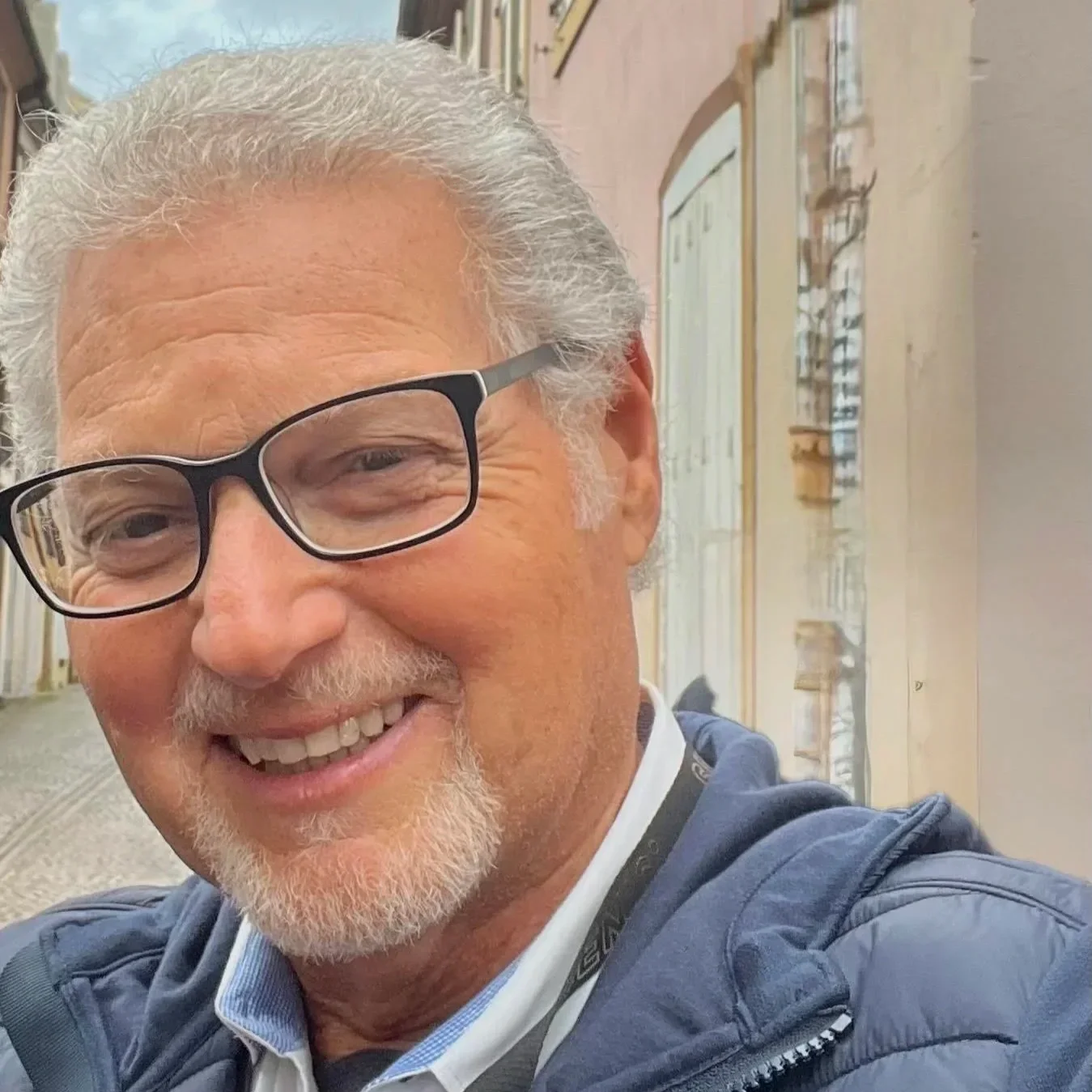
Grief is not something we skip over.
It is something we move through — slowly, honestly, and with enough compassion to let love still be part of the story.
In this episode of The Energy Fix, Tansy sits down with Steve Ferrara for a profound and heartfelt conversation about grief, death, healing, spirituality, and the inner journey that unfolds after deep loss.
Steve shares his personal experience of losing both his son and his wife, and how those losses shaped the way he understands grief, love, life, death, and healing. Rather than framing grief as something to “get over,” Steve invites us to see it as a necessary emotional process that can open us to deeper awareness, inner peace, and connection.
Together, Tansy and Steve explore how grief can arrive through many forms of loss, why emotions need space to move, and how our perspective on death influences the way we live. They talk about love beyond physical presence, the illusion of control, the importance of responding to life with openness, and why healing does not mean forgetting.
This conversation also looks at how to support someone who is grieving, why genuine presence matters more than perfect words, and how loss can become a pathway into a more mature, compassionate relationship with life.
This episode is a reminder that grief and love often travel together.
And while loss changes the shape of life, it does not erase the love that continues.
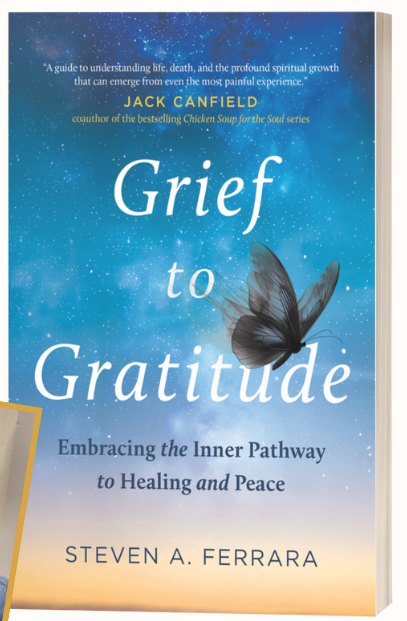
Purchase his new book!
Listen & Watch
🎙
Listen & Watch 🎙
What We Cover
In this episode, we talk about:
Steve’s journey through the loss of his son and wife
Why grief is a necessary part of the human experience
How loss can take many forms beyond physical death
The emotional process of grief and healing
Why emotions need to be allowed to flow
How grief can become a pathway to growth and self-discovery
The way our perspective on death shapes how we live
Love beyond physical presence
Why life does not always unfold according to our control
The difference between reacting to life and responding with awareness
How grief can help us understand we are more than our emotions
Why healing does not mean forgetting
How to support someone who is grieving
Why simple presence, a hug, or practical action can mean so much
Celebrating life while honoring the reality of death
Key Takeaways
Grief is a necessary process that everyone experiences
Loss can come in many forms, not only death
Grief can hold opportunities for learning, growth, and deeper connection
Emotions are temporary and need space to move through
You are not your emotions
Love continues beyond physical presence
Healing does not mean forgetting
Life unfolds in ways we cannot always control
We can choose how we respond to painful circumstances
Understanding death can help us live with more peace
Grief can deepen compassion, maturity, and self-awareness
Supporting someone in grief requires presence, not perfect words
Simple acts of care can be deeply meaningful
Celebrating the lives of those who have passed can support healing
Favorite Quotes
A few moments you’ll want to remember:
“We need to move through grief.”
“Love is about giving, not getting.”
“Life unfolds the way it unfolds.”
“You are not your emotions.”
“Life is an inside-out life.”
“Death just becomes a part of life.”
“Life is not here to torture us.”
“Just a hug can mean so much.”
“Loss doesn’t exist; it’s an illusion.”
“Healing does not mean forgetting.”
Chapters
02:53 – Understanding Death and Grief
05:46 – The Inner Pathway to Healing
08:48 – Shifting Perspectives on Loss
12:03 – Life’s Unfolding Journey
14:54 – Embracing Emotions
18:06 – Fear and the Unknown
21:09 – The Outside-In Society
29:59 – Death, Life & What Really Matters
34:34 – Understanding Grief Through Personal Loss
40:46 – Supporting Others in Grief
52:01 – Lessons Learned from Grief
57:07 – Why Sharing Grief Stories Matters
Why This Episode Matters
Because grief is one of the most human experiences we will ever move through. And yet, so many people feel alone inside it!
Grief can show up as:
sadness that comes in waves
anger, confusion, or numbness
fear of what life looks like now
guilt around moving forward
feeling disconnected from who you were before the loss
not knowing how to talk about death
not knowing how to support someone else who is grieving
And the hard part is that our culture often wants grief to be neat, quiet, or quickly resolved. But grief does not work that way.
This episode matters because Steve speaks from lived experience, not theory. He reminds us that grief is not a sign that something has gone wrong.
This conversation invites us to soften our relationship with death, allow emotions to move through us, and understand that healing does not mean forgetting.
It means learning how to carry love in a new way!
About Steven A. Ferrara
Steve Ferrara shares his personal journey through profound grief, loss, healing, and spiritual understanding after experiencing the deaths of both his son and his wife.
Through his story, Steve offers a compassionate perspective on death, emotional healing, love, consciousness, and the inner work that can unfold after loss. His message encourages others to allow emotions to move, honor the love that remains, and find a more peaceful relationship with life, death, and the healing journey.
His work and reflections invite people to meet grief with honesty, openness, and compassion while remembering that healing does not mean forgetting the people we love.
Links Mentioned In The Show
Website: https://www.stevenferrara.com/
Get the book, "Grief To Gratitude": www.stevenferrara.com/#bookinfo
Podcast review promo...Get 15% off a distance energy healing session or a piece of jewelry with a positive review of the show. Email photo of review (aftersubmitted on podcast platform) to info@tansyrodgers.com
Support Beyond The Episode
If this conversation hit home, and you’re craving deeper support (not just ideas, but real integration):
Join the newsletter →
If this episode resonated, take a moment to ask yourself:
What part of my grief is asking to be felt, honored, or carried differently?
You do not have to rush healing!
If you enjoyed this conversation, follow or subscribe to The Energy Fix, leave a review, and share this episode with someone who may need a more compassionate way to think about grief, death, healing, and love after loss.
Transcript
-
Steve Ferrara (00:00.214)
You know, grief taught me so much, but if I had to narrow it down you know, to to one thing, I would say grief taught me beyond the shadow of a doubt that there's an inner world that I needed to connect with. And at that point in my life I thought I was connecting to some extent, but a lot of it was at an intellectual level. When grief occurred, I mean that was where the rubber
met the road and out of absolute necessity, it wasn't that I even wanted it. I was thrown into having to understand there's a better way to deal with this. And it's not from the outside. I've got to find it and discover these things from within. And not only on my own.
Tansy Rodgers (00:59.448)
Welcome back to the Energy Fix, a podcast dedicated to help you balance your energetic body by diving deep into the sweet world of all things health and spirituality. My name's Tansy, and I'm an intuitive Crystal Reiki energy healer, energetic nutrition and holistic health practitioner, and a crystal jewelry designer. It's time to talk all things energy. Let's dive in.
Welcome back to the Energy Fix Podcast. Thank you so much for being back here with us yet again for another week of incredible conversation. Today, we're going to be talking about death, grief, healing, and the inner pathway to peace. And I want to say right here in the very beginning, this is going to be a tender conversation. We're not here to rush grief or explain any kind of pain away or
Really, to tell anybody how they should feel after they may lose someone. We are going to just be sitting with the conversation and staying very open to it. We're going to explore something that many of us are never actually taught how to sit with, and that is death. Our society, it often does not know what to do with death. We tend to avoid it, fear it.
Soften the language around it, or even try to move people through a place of grief so much faster than their hearts are actually ready to move. But I ask you this: what if there was another way to approach it? What if we could look at death with curiosity instead of only fear? What if we could begin to wonder what death looks like from the other side, not just ours?
My guest today is Steve Ferrara. After the loss of his 23-year-old son and then his wife, Steve was brought into a profound journey of grief, introspection, journaling, spiritual inquiry, and healing.
Tansy Rodgers (03:12.832)
And with decades of spiritual training and consciousness research that began when he was a teenager, Steve began to really uncover what he describes as a clear inner pathway to healing and peace. A pathway that he now shares through his work and his book, Grief to Gratitude: Finding the Inner Pathway to Healing and Peace. Today, we're going to be talking.
all about it and I am so glad that you're here on this journey with us. Welcome to the show, Steve. Thank you so much for being here. Let's dive in.
Steve Ferrara (03:50.626)
Sounds good, Tansy. Thank you. Good to be here.
Tansy Rodgers (03:54.318)
Steve, I love talking about this conversation because, like I've already said in the intro, I feel like this is a touchy conversation for so many people, but yet a conversation that can bring depths of healing to our soul that I don't think people truly realize until they go through these bouts of grief.
And the death process of somebody that they were close to. Do you feel like that's true?
Steve Ferrara (04:26.028)
Yeah, absolutely. there is no question that grief is real. you know, grief is something that everyone goes through, certainly in their own way, but there is absolutely a grieving process. not only when we lose someone that we love, that's that's an absolute but also, you know, we grieve when we lose relationships, when we lose
you know a a job when we lose other things challenges in life grieving is is just a part of it but specific to losing someone it's something that we need to move through it's not a destination it's actually if anything it's an opening of a door ultimately in order to move through you know grief contains within it what I've found is the potential
To truly help us continue to move forward and and and it's built into it, got some real learning opportunities if we look at it that way. Or grief can be something that we decide that we're just gonna stay with. And everyone, as I say, moves through it in their own way. I think generally, though, our society needs a better way of looking at death. The Western world, specifically the United States, we look at grief in a very
self-centric way. And, you know, from our side of it, those of us left behind, it's sad. There's no way around that. When my son died at 23 years old, and he was literally the closest person to me in my life, I felt that way from the day he was born. We had a certain bond. We could end each other's sentences. We had the same crazy sense of humor. He was in business with me. We played golf. We just were together all the time.
So when Christopher died in a car accident one evening, my world was completely shattered. Thank God I have two daughters and and a wife. my wife did not pass away until a number of years later. So thank God for that, because she was the cornerstone that between the two of us we carried each other very necessarily to to get through the one of the, you know, the absolute toughest experience that you can have in life and losing a child. But, you know.
Steve Ferrara (06:43.572)
We we helped each other understand that we're going through something. We need to continue to move forward. There's so many more reasons why we need to find a way to move forward. And while grieving was such an emotional and and even a physical drain, we were finding ways to express it, finding ways to
help each other move through it, whether it was through speaking with each other, speaking to a few friends and family that we had that understand journaling was a huge thing for me. In fact I journaled daily from the morning my son died, the next morning, and for the next twenty years. And that's really where the book emerged from. I'm sharing many of my life lessons that I
documented unknowingly in my journaling. I I never knew what was, you know, in my journals. I just kind of wrote with a stream of consciousness. But six years ago after I sold my business, I had some time on my hands. I said, geez, I should read through these journals. There was a whole bookshelf of them. And I started with the first one. And it was just raw emotion. And it took me right back. And but as I continued to read, I was realizing that there were some real turning points in my life, things that I was learning that were helping me see
both death and life in a very different way. And it's what enabled me to be at the point I was at it, you know, where I was living my life in a very healthy, joyful way. But you know, the the journals are w really kind of documented it all. And again, that's that's kind of what I share. But so it'll take you on a complete journey from grief all the way through finding gratitude. Not that my son Christopher or that my wife Allie died. I mean I
would do anything to still have them here, but it was gratitude for the experience that life was teaching me. I've become a completely different, more understanding, more awakened person, I guess you could say, due to those experiences. It made me look truly much deeper into my life than I had ever done before.
Steve Ferrara (08:48.792)
previous to that and and I'd studied and been a spiritual student most of my life. I was fortunate my dad was a spiritual seeker. And so since I was like 10 years old, I was surrounded by books and people and organizations that were genuinely very much looking to understand life in a deeper way. But when things like this happen in your life, it makes you question everything and really dig a little bit deeper to try to find what I, you know, explain as being the inner pathway to healing and peace.
Tansy Rodgers (09:17.26)
Yeah. Well, you said something really important in the very beginning that I want to connect as you said most people think about death in regards to losing somebody, but it could be a job or a relationship. And so really that's just the concept of everything in life. There will be a death around, a transition, a change in in the season of the life that you're in. And so
Thinking about that and thinking about also the literal death of losing people that we loved, when you say that our society does not know how to deal with death, what do you actually mean by that? Why do you think it is so hard for people to look that in the face? No matter if it's the physical death of somebody or the death of a job or a relationship or whatever.
Steve Ferrara (10:10.21)
Yeah. Yeah, I think, you know, what my experience has been, and I'll give you an example, but we look at everything from our own side of things. We as human beings are very self centric. Everything is how it relates to me, how I feel. And and then we project that out. And that's why death is so misunderstood, because for those of us left behind, it's as I say, it's it's sad. It's
y you miss that person. It hurts. You know, but there is another way to look at this in a much more expanded way. And I was writing in my journal, and this is probably six or eight months, maybe even a year after my son died, and I was just doing my daily journaling and it just occurred to me like a light bulb went on that, you know, my son and I are so close. I would say I probably
loved him as close to unconditionally as you could love someone. And I supported him in anything that he thought was the right thing for him to do. There was just a a love that continues with us. And I thought to myself, this is Christopher's journey. He was 23 years old. And when he died, his physical form, his human experience obviously ended. But
I firmly believe that this cannot be at all. This human experience of 80 years, 100 years, or 23 years in my son's case cannot be at all. There's got to be more to it. And I don't pretend to ever say I know what it is, but I know there's an ongoing journey. And so I decided that I'm gonna look at this from my son's side of this experience. This is Christopher's journey. He's got an ongoing journey. I loved and supported him for his 23 years here. And now that he's not here, why would I not?
continue to love and support and and see it as his ongoing journey. And what that shifted within me was rather than it just being focused on myself, I began to see that, you know, I don't have to think about what could have been. He I could have been a grandparent to his children. He he would have been my partner in business. All of the could have's and the would've and the should have's, instead of thinking of it that way, I was able to begin to think in terms of, you know, what
Steve Ferrara (12:32.32)
can be. If we're gonna have an ongoing and a growing love-based relationship, then what can be in that relationship? And what was beginning to occur is I was looking at my son in a bit of a or in a in a very large different way. Instead of just being my son, I was looking at him as my spiritual partner in this life. And that the two of us are walking down this path together and I could help him and he can help me.
I was learning that, you know, life is something that's ongoing. I was learning that love is something that I feel when I share it. It's not about getting anything. You know, if you love somebody, you're sharing your love with them. It's not about I need my wife or husband to love me, or I need my children to love me, or it's not about getting. Love is all about giving. And as we share our love, that's how we feel our love. So
Why would that change? Just because Christopher's not here in physical form. You know, I used to think about well Chris went off to school to college for a couple of months at a time, I wouldn't see him. Did that make me love him any less? Of course not. You know, I could maybe the difference was I could pick up the phone and call him, but and that doesn't happen now. I wish that maybe someday we'll have that technology. But you know other than that, he wasn't physically here. But
I can still love him the same. I can still experience that same level of love and the bond that we always have. and I can continue to know that I've got this growing relationship with him. And through journaling primarily, as well as feeling his presence, when I meditated, I've meditated since I'm seven year seventeen years old. I took transcendental meditation back in the 60s when I first came to America. So I was one of the early ones. And it's just been a part of my life for all those years.
I know that there's this peaceful place that I can always find within myself and and that's where I would feel Christopher's presence, or I would take long walks on the beach or any place where I could find quietude. And that's where Christopher and I could feel each other. And certainly through my journaling. And and so that's where the relationship continued. I couldn't have a cup of coffee with him necessarily over a table anymore. I couldn't hug him. And that sucks, pray you know, but but
Steve Ferrara (14:54.732)
could have other ways of loving him and enjoying him. It's almost like learning a different language and a different way to communicate. It was communication through feeling as opposed to verbal communication. And you know so so that was my experience. And but looking at it from his side was an initial big shift for me to be able to take the attention off of me.
And put it on him, which is what I always did when he was alive. Well, why wouldn't I do it when he's not here if he does have an ongoing journey? And and so that that was what really made a big mind shift for me.
Tansy Rodgers (15:36.014)
I agree with you and I believe that our relationships are also part of our spiritual partnerships. And so Christopher, as your spiritual partner, taught you what it really meant to mean how to love somebody. But I would also love to know how has Christopher, as your spiritual partner, also taught you.
What it means, an understanding of life, maybe faith or consciousness. Like, what else did he teach you on this journey?
Steve Ferrara (16:13.314)
Yeah. Well, that's a great point. And I've pondered many times, you know, wondering why that I'll and I'll never understand why Christopher was, you know, died at twenty-three. To me, it made no sense. In fact, when I was going through the grieving process, I a lot of it came out as just anger at the universe, anger at God for how did you take this perfect twenty-three year old out of his life experience? he was he was perfectly healthy athlete, he was gonna get married, he was in business, he was at the top of his life.
I swore that God must have made a mistake. But ultimately I began to realize that I will never understand why because I can't see a big enough picture. But I can accept that life unfolds and it unfolds the way it unfolds. It's been doing it for billions of years, literally. And it never came to me to ask my opinion or ask me, excuse me, if I agree with it in any way. Why would it?
You know, why would it why would life, you know, come to me and say, Hey, Steve, do you agree with this? I mean, life just unfolds. And, you know, where we have our ability, and this is something that I learned again more clearly through the experience with my son and my wife, is that our power, our super power, I'll call it, is that as life is unfolding and it's just going to unfold the way it unfolds.
Our superpower is how we respond to it. And we can respond to it with, you know, basically a a lot of fear and frustration and anger and worries, or we can respond to it with a much more open-mindedness, which really leads us to seeing life in a more loving way, in a more compassionate way. It's always our choice as to how we're going to respond to any life circumstances. We have that ability, and that's what gives us
our life experience. So a couple of the things that this that Christopher taught me, as you're asking, is don't push back and resist life. It's a losing battle if we're going to try to push back and resist life. Life is just going to steamroll over us and we're going to be an angry, frustrated person. But if we can allow life to flow as it's doing anyway, it's doing it through all of nature
Steve Ferrara (18:35.924)
Why not as we are just an extension of all of life? You mentioned the word consciousness. I think that's another word for life. I think life, I think love, I think consciousness are all synonyms. They're all saying the same thing. It's what's flowing, and it's flowing through us. And we need to allow that life to flow through us and respond to it in the best possible way. You know, as the highest
Species, so to speak, on earth. And we grew this little frontal lobe that enables us to allow this life that comes through us, we are allowing it to gain the characteristic of being able to be aware of itself. So, in essence, we are consciousness becoming aware of itself and it's occurring through us. And through that awareness, that's where this ability to choose comes from. And
We have the responsibility, we need to take on the responsibility of choosing how we want to experience life. And, you know, last thing I'll say, and it's an unfortunate situation, but many, many people I find are more from a victim mentality than they are from taking responsibility for I'm going to choose how I'm going to experience life. I mean, it's it's not complicated. It's very practical, but it's not easy.
Because we're bought into a lot of our old habit patterns. But it's really we can either be a victim of our old habit patterns, which have come from everything from being a product of the human race for eons of time and to all of our own experiences over the last however many years we've been here, or we can say, you know what? I can respond the way I want to respond. I'm gonna take control of my life and respond to it in this way. It's simple.
But it's not easy many times.
Tansy Rodgers (20:30.695)
A quick break because I want to share something I make that's meant to support you in real life, not just look cute on your wrist.
I create intentional crystal jewelry through BEU crystals. These pieces aren't random. I design them using crystal energy, and I also weave in numerology and geometry, and I infuse the pieces with Reiki Healing Energy as part of my process to really help support you on an energetic, deep level. They're like little wearable anchors, the kind you can touch when you're overwhelmed, when you're heading into a hard conversation, or when you need a reminder.
To come back to yourself more solid, more grounded, more authentic. I'm not here to tell you that jewelry fixes everything, but I am here to tell you that having a steady physical cue can change your day, especially if you're sensitive, easily overstimulated, or your brain likes to sprint way ahead of you. If you want to browse what's available or see what is newly released, head on over to BEUCrystals.com.
I'll link it down in the show notes so that you can easily shop and check out what is available. And as always, if you have any questions or you want to do any custom work, you can easily reach out to me right there. Okay, let's jump back into this episode.
I feel like there's so many people, though, that get stuck in this rut of feeling shame and guilt around the concept of minimizing the pain or the grief from the loss itself. And so I would love to know how does somebody really explore this bigger spiritual view of death without making themselves feel like their pain is being minimized or
Tansy Rodgers (22:24.48)
allowing themselves to be in that victim mentality where they're stepping into these old patterns and just looking at things like life did this to me, not necessarily that we're working in connection.
Steve Ferrara (22:40.494)
Right, right. Yeah, such a great question. And you know, just the the idea of life doing something to me, you know, I've always turned that around to life is not happening to me, it's happening by me. And the reason why it's happening by me is that life is just doing what life does. You know, the world just keeps worlding on. It's the way we respond to it that's gonna make all the difference. And so, you know, but specific to to the way I see people respond.
react really more than respond to losing a loved one. And I've been asked this many, many times, well, you know, a couple of things. Firstly, when you look at it from their side, and I understand all of that, but does that take away the sadness? Absolutely not. I mean I can feel sad right now if I you know go down that road and it's perfectly fine. I've learned that sadness is just something that passes through. It's not who I am. People identify
With their emotions and their thoughts, like as if it's who they are. We are so far greater than our thoughts and emotions, but for some reason, because they go through our head, we think it's who we are. And that was another big lesson. I had to learn not to identify with sadness, not to identify with anger. It was just passing through. I had a situation when they were, it's probably a year or so, two years after my son died, and I was just having one of those mornings that
went into my office, and I just was feeling so sad. Just one of those days, it was just really there. And in the moment of sadness at that deep level, it occurred to me that okay, this is a feeling. If I just feel it, if I just allow myself to feel it, almost embrace it and allow it to.
feel as uncomfortable as it feels. But if I, as long as I don't engage with it, meaning start to let it go up into my head where thought is, and then it turns into a whole story. It turns into drama. Some people love to live in drama. I, I God am not that type. But some people love to turn their feelings into all kinds of stories. And I'm a
Steve Ferrara (24:56.782)
Poor father that lost his son. And but and and I could have gone on and on, but I've learned a long time ago, those are dead ends, they lead nowhere. So I wouldn't even go down those roads. I mean, why do it? I don't want to waste time. I don't have a lot more time. You know, so why waste any of it? But, you know, I I I realized that those feelings are not who I am, and I can just feel them, move on with my day, and they eventually just evaporate from wherever they came. You know, like I say, even till this day, I no.
cry many times if I see something and it's okay, big deal. So I'm sad. I think sadness is way overrated. Just like I think that fun is overrated. Both sides are overrated, you know? There's a balance in the middle that's much greater, you know, that we can enjoy from a peaceful place rather than an extreme. but that's, you know, maybe a discussion for another day of how to get to that balance. So, you know, that that was just a very important thing for me to to know that
I am something far greater. And you know, what I realized in that time of feeling so sad is, geez, I can I'm aware that I'm sad. I I can see that I'm sad. I'm observing that I'm sad. And just because of that, it made me know that I'm something bigger than the sadness. I must be. Otherwise, if I were the sadness, I wouldn't know anything else. But because I could observe and feel and know that I was sad, but know that I was observing it.
I realized that I was something greater. And so, okay, I'll just let that sadness pass by. It's not who I am. I'm not a sad person, but sadness was passing through. Didn't turn it into a story, didn't talk to people about it, didn't try to juice it in any way. It was just a feeling. And you know, and it eventually passes. I I I don't know if that answers the question, but I give you a lot on a short question.
Tansy Rodgers (26:49.256)
No, I I love that. I love that. And so I want to reiterate that for the listener because this is right along with the kind of work that I do. You are not your emotions. They only move through you. That is beautiful and it gives me chills, Steve, because you're so absolutely right. You know, and you you said this, but I was I was jotting down this thought when you were talking. We get so stuck up in logic. I mean, fear, emotions, they are so human.
They're so human and we get stuck up in our logic brain, thinking that we are going to think through the emotion instead of feel through the emotion. Allow it to move. And so, so let's talk a little bit about this fear. Like I said, fear, emotions, especially around death, is just such a human thing. What have you found?
That we are usually afraid of when it comes to death. Is it the unknown or separation or something? Like, what is it that people are typically the most fearful about? Cause maybe because I would think that that kind of holds you back when it's actually a different answer than just the loss of the person. Do you know what I mean?
Steve Ferrara (27:56.994)
Yeah, yeah.
Steve Ferrara (28:07.724)
Yeah, yeah, no question about it. You know, there's a lot to that question and I'll I'll I'll try to break it down in a couple of ways. Firstly, we are a very outside in living society. You know, in other words, we think that the outside is what's there to make us happy. The more we have, the more money we have, the next car, the next house, you know, even what I post on social media are gonna make people think I'm better, are gonna be
popular. We are so overstimulated by social media, overstimulated by the TV, overstimulated by the news. So much incoming, incoming from the outside that we never give ourselves a chance to think about the inside world. This world, you know, this life that we live is an inside out life. It's not an outside in life. And when we can become aware of that, everything changes.
And we can begin to look at life in a completely different way. No matter what's going on on the outside, we can respond to it in a way that we can enjoy. We may have certain feelings, emotions, or whatever, but we can still move through it with peace. Now, you know, specific to your to your question of what we fear, I think if we're very outside in oriented.
Well, we're afraid of everything we're gonna lose. We're gonna lose my family, lose my friends, lose my car, all the things I enjoy in my life. What's gonna happen to them? Well, yeah, they're gonna be gone. They're all form-based. And when you lose your form, none of this matters anymore. I don't care if you got billions. It doesn't matter. In fact, I mentioned in my book, Steve Jobes on his deathbed, said, All that I have l earned and all of this wealth that I've become so used to means nothing as I face death. And he said,
a few other things that again I mentioned, but so profound that a man of his stature that accumulated so much on the outside, but when he was on his deathbed and knew he was gonna die, everything changed. He began thinking from the inside out and not the outside in. Nothing on the outside. All of his billions meant nothing. So I think that's part of it is that we're afraid of all that we're gonna lose on the outside.
Steve Ferrara (30:27.202)
I think, you know, I think we're also afraid of the unknown. You know, I was I'm always a voracious reader and became even more so after my son died, just trying to understand death. And so I read a lot of books on near-death experiences. I wanted to understand maybe what my son went through. And every single one of those people had such a wonderful experience, did not want to come back. They felt a peace and a love that they'd never felt before.
And they all said I didn't want to come back, but for whatever reason it wasn't my time and I was forced to come back. So that encouraged me to say, wow, I mean, my son must have had that same experience. And how happy can I be for him? If I take my own self out of it, I've got to celebrate that my son, my wife, and anyone that dies, if they're having that experience, I can only be happy for them. So
You know, relating it to myself, I mean, I'm not looking for anybody else in my life to die any sooner than they're supposed to, including me. But when it happens, it seems like from the people that got close to it, it's pretty darn good. And even in religion, they talk about heaven and hell. I don't know that I believe in either one, but you know, religion talks about it. But I don't think we truly give enough thought to it because again
When someone in our life dies, we only relate to how we feel, which is very sad and we miss them, and there's no question about it. And we question life and we get angry at life if it occurred at the if death occurred at the wrong time. But it's only looking at it from our own little self-centered side. When we expand it and we begin to look at the world in a bigger way, all of a sudden, you know, death just becomes a part of life.
Human beings have been here for hundreds of thousands of years, which is not a long time. I mean the earth itself has been here four and a half billion, they say, and and you know, Big Bang was fourteen billion. So, you know a couple of hundred thousand is a drop in the bucket. Us human beings are kind of brand new trying to figure this whole thing out. But even at that, there's been hundreds of millions of us over all that time. There's eight billion of us right now. So there's been billions of us that have lived and died. You would think we'd understand.
Steve Ferrara (32:49.44)
It's a little bit better. But I think one of the problems is we we look at life and death like as if they're the opposites. But the opposites are birth and death. If you're born, you're gonna die. Anything that's born in form is gonna die. But life is eternal and it continues on. And that's what our essence is. We are an extension of this life. We're an extension of this consciousness, and that's eternal.
So this is just I call it a parenthesis in time. You know, we could get in a hundred years maybe to live on this planet Earth and and then that little parenthesis of time is over and we're gonna move on in our journey wherever that takes us. Again, I don't know, but it's gonna take us wherever we're gonna continue to go. And so I I I think education's important for me.
Like I say, I just read books, you know, from the NDE books to spiritual books to trying to understand. I spoke to people that had had this experience that I felt had moved on. I needed to educate and expand my understanding of death, which also expanded my understanding of life. So, you know, I took on that responsibility of wanting to learn it. I've tried to condense it down into my little book. There's a lot of books out there though that can help. But but you know
It's it's a powerful little piece of information or a lot of information in there that, you know, takes my twenty years of learning and try to condense it down into, you know, a couple of hundred pages for someone maybe to realize that there is this absolute pathway that you can continue to move through and truly find healing and peace.
Tansy Rodgers (34:34.991)
You know, when my dad was on his deathbed, this was five years ago, when he was getting ready to transition, he said to us too. Now you have to understand, my dad did not have the best relationships with his kids and with his family. He was a complete workaholic. If you looked it up in the dictionary, that was my dad. Complete workaholic. He worked himself to the bone. And
Relationships, family was never really the key important thing, at least on the outside of what he showed the world. Work was the material things. And when he was on his deathbed, he literally said to us, I don't know what I was ever thinking. He said, Family is the only thing that's important. None of this matters. I wish I would have spent more time being here with you guys and the family. And so
That really stuck with me. But you know, through that time, there was a lot of healing that happened, right? And so I like you, I sat with NDEs, the near-death experiences. I s I listened to podcast after podcast and I I read different kinds of books, but like hearing the experience, I will tell you, Steve, that helped to heal me on a level where I was like.
It's okay. It's okay when he needs to go. He's going to be absolutely fine. Yes. And just having that understanding after listening to NDE over and over and over, and the stories were all the same. It was just so peaceful. So I agree, you know, the more you can acclimate yourself with just the understanding of what is out there can really help.
help you to move through that grief process and bring it into a whole perspective rather than a narrowed perspective, which is where I think so many of us get caught in.
Steve Ferrara (36:38.272)
Absolutely. Yeah. Yeah. And and you know, there are cultures around the world that celebrate death. you know, it's just our Western world and and I'm sure many other parts of the world, but but there are cultures that will celebrate and honor the continued journey of someone. And that's just not how we are, whether it's based in the religious training we've been given, whether it's based in whatever.
training the Western world has gotten, we have this just, you know, unfortunate way of looking at death and needs to be expanded. Our society needs it because the more we can understand death and not look at it as something scary and morbid and even superstitiously, I better not talk about it, otherwise it's gonna happen to me or somebody in my family. I mean, that's such childish thinking, I have to say. We've got to grow up a little bit.
as a society in looking at death in a in a more matured way, in a more balanced way. And again, not that I want anybody in my life dying at this point if they're not supposed to, including me. But it's gonna happen. As you said, I mean, everyone's touched by death, whether it's someone in their family or a friend or even just listening to the news. I mean, people, that's all the news reports is how many people died here, how many people died there. It's all about death. And yet our society's so scared of it.
Probably because of that, that they're making it so scary. And even movies are the the dead are coming back or this or that. It's like we we've made death such this horrible thing and yet it's part of life. And if you're born you're gonna die. We celebrate being born, we should celebrate dying. I think it was Benjamin Franklin I mentioned in my book. I I I forget some of the things I've said, but Benjamin Franklin said something about when someone dies, they're they're joining
the immortals that are gonna be reborn in something else. She says it very eloquently, unlike what I just said, but it's an understanding that this is a continuation of life. And I think more and more people are beginning to think that way. Not a majority, but you know, you do have people that celebrate death. And I think, you know, when when someone dies at a natural age,
Steve Ferrara (38:58.856)
if you really dig down beyond the sadness, most people say, Yeah, it's a relief. Thank God. I mean, they left that old decrepit body behind. That that body was failing. I mean, we don't want them to continue to live in that kind of failing body, do we? That's not the kind of life they wanted to have. So there is a part of us that can understand that, but what happens is because there's the sadness in missing them, we think it's a horrible thing. And that's why we have to realize that sadness
And missing, it's a part of it. We're the ones, we're humans, we're left behind, we're gonna feel it, but it's not who we are. It's just part of the process. don't identify with it, don't engage with it. You know, one thing I found very early on is I did not want sympathy. I thank God was just not built that way.
And you know, when my son died, I I had friends from all over in my business and some of I hadn't seen for you know, I wouldn't see them until a a conference or something, which could be as much as a year after my son died. So people would be coming over to me for the first time and my son was already died a year before, and I feel, you know, my thoughts, my condolences. And I was at a point where, you know, I respect it. I understand that's what people have been taught to say. It's almost
Just knee-jerk reaction, but it's okay. I accept it. But man, I had to just shake that off. I did not want sympathy. If anything, I wanted somebody that was just understanding, maybe opened, you know, just a hug was fine. I don't need anything more than that. Just, you know, but but again, you know, our society, it's an awkward thing to deal with. People don't know how to deal with it. And we need to learn. We need to be more matured in how we deal with death.
In our society.
Tansy Rodgers (40:46.464)
If you're listening to this podcast episode, there is a really good chance that you're the person who holds a lot. And sometimes the issue isn't that you need more information. Sometimes you need your system to feel safe enough to actually integrate what you already know. That's what my Soul Stream and Enlightened Sessions are for. They're intuitive, energy-based sessions designed to help you recalibrate.
Emotionally, energetically, physically, and in your nervous system so you can move through life with more clarity and less internal noise. People book these when they're feeling stuck, overloaded, anxious, emotionally heavy, or like their energy isn't fully theirs anymore. And we work with that. We work with what's present, clear what's been lingering, and help you come back to center in a way that feels grounded and real.
If you want to book a session or you want to simply know more, you can head on over to tansyrogers.com or jump down into the show notes and click the link that will take you directly to those services. And if you're not sure which session is the right fit, send me a message. I'll help you choose. I'll help to guide you in the right direction. All right, let's jump back into this episode. You've done a lot of you did a lot of journaling.
In your own process, you then brought so much of that journaling and those excerpts into this beautiful book that you have created to put out into the world. I'm really curious for somebody who doesn't necessarily know how to process grief yet, or they're really on the fresher side of it. What kind of questions can they begin writing with? What kind of questions can they begin asking themselves? And maybe, maybe your book has specific
Places that can help prompt this, but I would love for you to speak on that for that person who is trying to work through this grief. And as we know, as we know, grief, it doesn't matter how fresh or how old it is, if we've never dealt with it, it can feel the same no matter what. So I would love for you to speak on that.
Steve Ferrara (43:06.102)
Yeah. Well, you know, wha one of the first things I had to accept and and understood really from my I guess spiritual you know training previously is that and I reminded myself of this often, life is not here to torture us. Life, if anything, is here to continue to teach us. And
That difference in a mindset of realizing that okay, I am going through a time where I feel so sad, the grief is so deep, but life is not designed to torture us. There's got to be another reason for this. And, you know, what I would do is sit down with a pen and paper, and I really never had anything specific in mind, but I would just start writing and realizing life is not here to torture me. Why?
Do I think I'm feeling this way? What are the things within this that I could be learning from this? Again, trying to look at it in a bigger context, trying to understand this in a way that, you know, is a little bit more than just, you know, I feel bad today. I feel horrible. That's just how I am. That's just who I am. It's not. It's not who you are. And it's not, we can be a little bit bigger than that. Now, when it's really fresh, I would just say sit with it.
Find a way to express it if you can. I already mentioned I went running and would scream at the top of my lungs because I was so angry at the time. My first three months, my son died in December. I was up in New Jersey, it was freezing cold, but I would be running through the streets, screaming at the top of my lungs at God, at the universe, just because it made no sense. I would cry into my pillow hysterically because I didn't want my kids to see how.
how intense those emotions were. So early on, just find a way to get rid of that energy if you can, a constructive way. If you're lucky enough, and I was, I had my father, I had a sister that were able to be opened enough for me to just talk. They were going through their own grief, but we could talk, we could express in a constructive way, not in a way where we just were feeling sorry for ourselves.
Steve Ferrara (45:22.976)
And then the journaling, as I say, even if it's just put a pen to paper and start writing, sometimes I would just start with, hey, Chris, man, I really miss you. How are you doing? And I would just start writing. And I share a lot of those excerpts in the book, which I think rather than having journaling prompts, although I do offer them at the end, I think the the excerpts I share, it's just the the rawness and the genuineness of of just writing about how you feel within.
And you know, and I I let know, man, this is this is really, really rough and and I'm going through a tough time. But the one thing I learned early on as well, and I I I hope I can pass this along to people. I talk about it in the book naturally, but it was such a traumatic
almost unimaginable experience to lose my son at age twenty three. And then later my wife, she was almost her and I were married almost 40 years. We're together since we were 20. I realized that this is such a huge experience in my life that I am not going to allow this enormous experience to just have the effect of me feeling sorry for myself. That would almost be a disrespect for
The relations for the experience and for my relationship with my son and my wife. I'm not going to allow such a huge experience to just let me feel sorry for myself. I knew innately that that was not what this experience could be for. It could not be to just make me crawl in the corner and cry for the rest of my life, which I could have done and people would have said, Hey, yeah, he lost his son, he lost his wife. I guess that's okay. Well, thank God it wasn't okay for me.
And it shouldn't be okay for anyone that once they allow themselves to go through it, realize that this experience is too big for you to just let go and and feel sorry for yourself. There's gotta be so much more to it. And that is what kept me on my journey of wanting to move forward.
Tansy Rodgers (47:33.774)
I love that idea of journaling to the person. I love that because I believe that spirit talks through us. I believe that spirit is constantly coming through. And when you can just let that conscious flow of energy moving through your writing, that is just so beautiful. I love that.
So, okay, so you talked, so we've talked a lot about if you are the griever, if you are the person. Now I want to go back to something that you talked about and kind of look at it on the other side. You talked about how you got to the point that you had no time for the sympathy anymore because it was just keeping you at this place that you are trying to move past. So what do we need to know if we are trying to support someone that is grieving without trying to fix their pain?
Steve Ferrara (48:29.024)
Yeah, yeah. Well, you know, if it's early on, you know, at a funeral or a service, I mean that person is is, you know, not ready for anything other than I I personally try to stay away from the standard of, my thoughts and prayers. And that's all okay. If that's the way somebody expresses, I respect that. I've learned that sometimes just a really good hug and say nothing, sometimes quiet.
silence. People have heard it all. There's not more you can say sometimes, and they're at a state where they just may not need anything other than a hug. Sometimes, you know, they know what I've gone through. I'll just give them a a certain look that I get it. I get what you're going through. And share as much love with them as I can and hug them. What I've also found, if you truly want to help and not just say the standard, you know, people need help at that point. I don't know how it happened.
when I look back in my life, but man, my house was always full of food. People were delivering stuff every day. My house was clean. People were sending cleaning people. So I do the same thing. You know, I'll send my cleaning person over to their house a week later because I know they're gonna need their house cleaned. I'll send dinner over. You know, you do things that you know are truly helpful, because that's what people need. They don't need the standard, you know, my prayers are with you. Because
Your prayers aren't with them. And I I hate to be so harsh, but except for a few people, most people are just it's like a greeting, like, Hi, how you doing? A and that's shallow. And we need to move past that. Again, we've got to be more matured, more mature, caring, and compassionate in the way we deal with death. So early on, that's what I'd say. As people move on, you know, many times people are recommended for me to talk to because, you know, I have the book, I do coaching and all that.
And I listen to try to understand where they're fr where they're coming from because I've been through it all like they have. And and I may just recommend the book. you know, if if they're i if they're readers, you know, I and I've got them a ton of them that I've read, depending on where they're at, you know, I'll recommend a book that I think may help them. If they wanna interact in a conversation, I'm open to it. And I try to see if they'll ask questions as opposed to me just trying to
Steve Ferrara (50:51.95)
pontificate all of my wisdom to them. it no, and and again, and then if you know, other times people are really opened and it's like, Steve, I I really want to understand them. Then I'll give them the best I've got, you know, to try to help. And it but always with with love and and and true compassion behind it. That's what people really need, to know that they're being listened to and you you you're truly there for them.
Tansy Rodgers (51:21.646)
Actions and the act of listening go far beyond just those, like you said, just the shallow words that everybody always kind of says. And I'm not saying that that's not appropriate at times, but yeah, it just goes so much further. I love that. Steve, this has been an amazing conversation. And so before we really get into the logistics of where people can find you and get their hands onto your book.
I want to do a few rapid fire questions just to really sink into your heart and your brain and see where you're at and what kind of recommendations you would have. Is that okay? All right. So three questions. All right. So the first question: what is one thing grief taught you that nothing else could have taught you at the time?
Steve Ferrara (52:01.432)
Absolutely.
Steve Ferrara (52:12.504)
Hmm. Yeah, that's that's a good question. You know, grief taught me so much, but if I had to narrow it down, you know, to to one thing, I would say grief taught me beyond the shadow of a doubt that there's an inner world that I needed to connect with. And at that point in my life I thought I was connecting to some extent, but a lot of it was at an intellectual level.
When grief occurred, I mean that was where the rubber met the road. And out of absolute necessity, it wasn't that I even wanted it. I was thrown into having to understand there's a better way to deal with this. And it's not from the outside. I've got to find it and discover these things from within. And not only on my own. It was through books. It was through talking to people that I felt could help, but it was
Through a lot of introspection and meditation that I was able to find the things within me that I may not have ever have found had it not been for the experience of grief.
Tansy Rodgers (53:23.502)
Beautiful. All right. Question number two. What is one question you believe that every person should ask themselves while they're still alive?
Steve Ferrara (53:33.356)
Yeah. Yeah. Another another good question. I think what I would say is we need to sometimes give ourselves the opportunity to realize how great of a being we are. The question I would ask is a little bit of what we were talking about before. Am I really this emotion? Am I really this anger? Am I really this worry? Am I really this fear?
That's moving through me. And just to be able to know that you can ask that question means you're not. It means you're greater than that. And that's such a big discovery is to know that you're greater than all of that. That's the first door opening to realizing that we are, as they say, a spiritual being having this human experience.
Tansy Rodgers (54:26.656)
Yeah. so powerful. All right, last question. If love could speak through loss, what do you think that it would say?
Steve Ferrara (54:38.326)
Well, I think love would tell us that loss doesn't exist. You know, life, which I I look at as I mentioned before, life, love, God, our higher self, let's call it, are all the same. And loss is something that we've I guess for lack of a better word, have manufactured in our mind. It's an illusion. There is no such thing as loss.
particularly of a person, because that essence of what they are continues on and it continues within you, and you can have this ongoing relationship. So there is no such thing as loss. And that's at the highest level of a person being lost. I mean, you lose a car, you lose a house, you lose some money. It's all imaginary. It really is. It's all
I I and I'm not sure how else to say it. It's just illusionary. It's what we've manufactured in our mind. The reality is that there is no loss. And love is so powerful that if we were to focus ourselves on our highest self and on love, we'd realize that there really is no such thing as loss.
Tansy Rodgers (55:52.758)
Yeah. Steve, where can people find you? Where can they get their hands onto your book and get into your world?
Steve Ferrara (56:01.228)
Yeah, thank you, Tansi. I you know, easiest thing I always say is just go on my website, which is StephenFerrera dot com. I kept it really simple. Just have to write my name in dot com. you'll be able to get to Instagram, Facebook, Substack, certainly Amazon. just look up grief to gratitude or you can get on it from my website. On my website, you can email me. I got a lot of questions people will ask or just want to communicate. There's also an eight step summary I put together that
It's free for someone if they're interested. And I'm about to put a chapter. I was debating which chapter I wanted to share, but I'm about to put a chapter on my website that people can download for free and it'll give you a feel for the types of life lessons that the book will share.
Tansy Rodgers (56:48.494)
As always, the links will be down in the show notes. I will make sure to put a separate link to go right to that book to make easy access for you. So beautiful. Steve, do you have any last words that you'd like to lay on the hearts of the listeners before we sign off today?
Steve Ferrara (57:07.768)
Well, you know, the jo the only thing I would say is I I I wrote this book. I didn't plan ever to be an author. That's not what I do. It emerged literally. It was almost born out of the journals that I kept. And and as I wrote more and more, I just realized that I only want to help people move through unnecessary suffering. Way, way too many people suffer.
For so much longer than they need to. And this book will help you find a pathway to move through and hopefully get through unnecessary suffering quicker and find a a healing and a and a peaceful way to live life from that point forward.
Tansy Rodgers (57:57.272)
Thank you so much, Steve, for being here and sharing your heart and your passion. I appreciate you and the work that you're doing.
Steve Ferrara (58:05.816)
Thank you, Tansi, so much. Appreciate it.
Tansy Rodgers (58:09.912)
Death is one of the few things that every human being will touch at some point in some way. And yet, so many of us are never actually taught how to be with it. We're not taught how to grieve, how to sit with mystery, how to keep loving someone after their physical presence is gone, or even how to find peace without pretending that the loss didn't matter. What I'm taking from this conversation is that healing does not mean forgetting.
Peace does not mean the absence of love or sadness and a bigger vision of life does not erase grief. It just may simply give the heart more room to hold what actually happened. For everyone listening, if this episode touched something tender in you, please be gentle with yourself and let this conversation meet you where you're at, not where you think that you should be.
And remember, if you know somebody that needs to hear this right now, send this episode on over to them and share that heart. And until next time, keep spreading that beautiful energy you were born to share.
