

Ep. #159: How to Build Self Belief, Break Perfectionism, & Create Courage with Aransas Savas
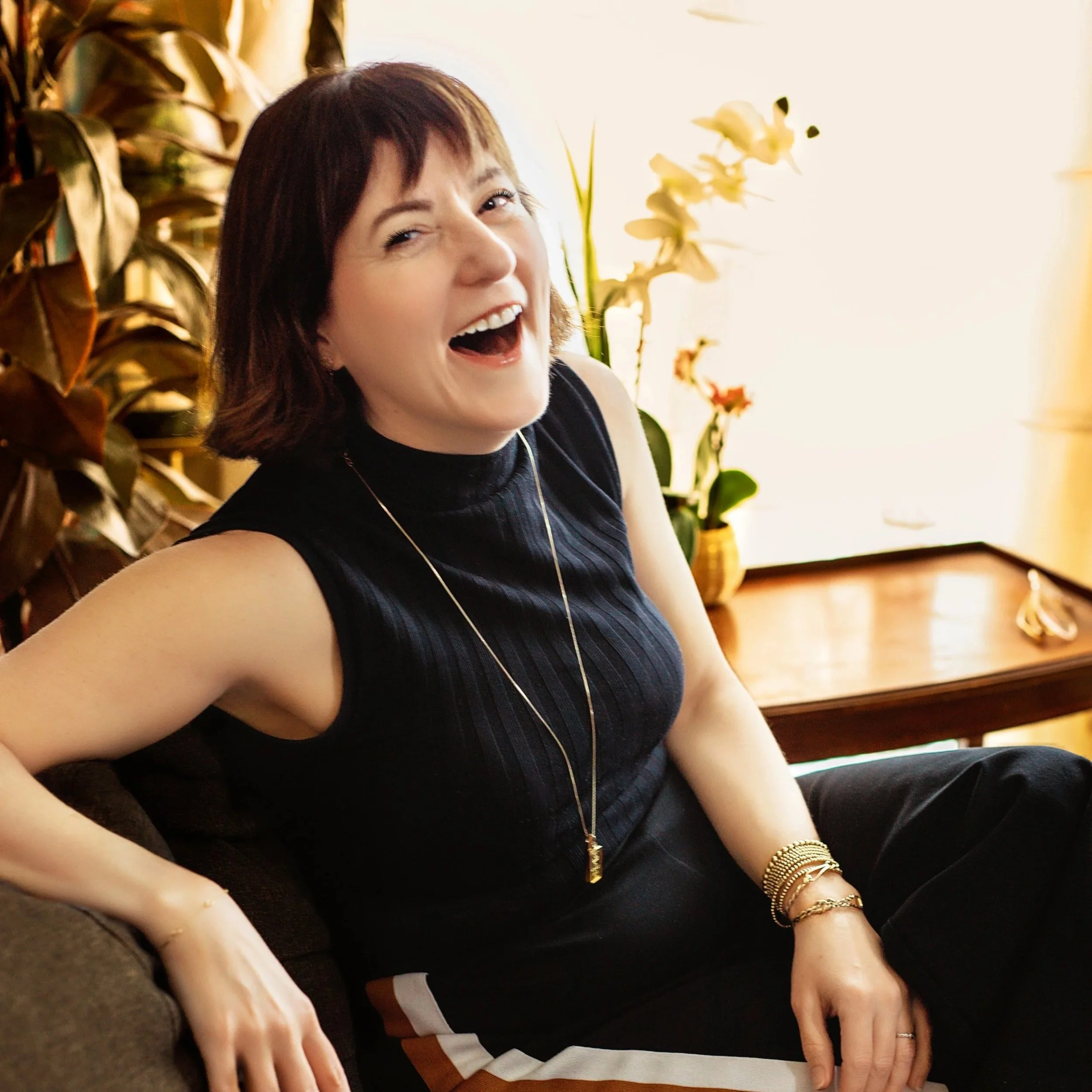
Courage isn’t a personality trait you’re either born with or not. It’s something you build—one real-life decision at a time—especially when you’re done performing, and ready to feel like yourself again.
In this episode of The Energy Fix, Tansy sits down with Aransas Savas for a deep, practical conversation about courage, self-belief, and the kind of community that actually supports you (not drains you).
Aranzas shares insights from her research on women over 40, including her concept of “courage capital”—the internal resources you build through small, consistent actions that prove to you (and your nervous system) that you can trust yourself.
Expect grounded truth, fresh perspective, and doable steps for showing up as your real self in a chaotic world.
Disclaimer: For entertainment and educational purposes only. Not medical advice, diagnosis, or treatment.
Listen & Watch
🎙
Listen & Watch 🎙
What We Cover
In this episode, we talk about:
What it means to embody your true self in a chaotic world
“Courage capital,” and how it’s built over time
Why community matters for growth (and what real support actually looks like)
Navigating life crossroads without spiraling into overthinking
The trap of perfectionism, and why small actions matter more
How curiosity helps loosen fear and resistance
Practical ways to strengthen self-belief, especially in midlife
Key Takeaways
Courage is a skill you build, not a trait you “lack”
Community can meet real needs and reduce the pressure to do it all alone
Progress over perfection creates momentum (and self-trust)
Women over 40 often have more internal resources than they realize
Writing down fears can reveal patterns, triggers, and next steps
Curiosity is a simple way to move through resistance without forcing it
Favorite Quotes & Sound Bites
A few moments you’ll want to remember:
“I want to talk about our voice.”
“Swaggy effortlessly.”
“Accentuating your weird.”
“Courage capital is essential for taking bold actions.”
“Perfectionism can hinder progress; focus on small actions instead.”
“Creating a supportive community is vital for personal transformation.”
Chapters
03:34 – Embodying Your True Self
14:44 – Navigating Life’s Crossroads
25:53 – Researching Women Over 40
36:35 – Building Courage Capital
43:48 – Practical Steps to Courage
Why This Episode Matters
Because courage isn’t always loud.
Sometimes it looks like:
speaking up when you’d rather stay invisible
making a decision without over-explaining it
letting yourself be “a little weird,” instead of sanding it down
taking one small action instead of waiting for perfect confidence
choosing people who expand you, not people who keep you small
And the frustrating part? You can be smart, capable, experienced, and still second-guess yourself into exhaustion.
This episode is your reminder that self-belief is built through practice, not pressure. Aransas makes courage feel human, actionable, and surprisingly available—especially when you stop trying to be perfect, and start choosing what’s real.
About Aransas Savas
Aransas Savas brings a unique blend of research expertise and coaching acumen to her work with women leaders and organizations. For over two decades, she has conducted deep behavioral research and design for companies like Disney, Best Buy, Weight Watchers, US Bank, and The Sierra Club, helping them understand the complex dynamics of human motivation and behavior change. This research background infuses her coaching practice with evidence-based insights into how people navigate transitions and build resilience.
As an acclaimed Wellbeing and Leadership Coach, Aransas has transformed the lives of thousands of women through her empowering group and individual coaching programs. Her dual role as researcher and coach gives her a distinctive lens: she brings a researcher's systematic eye to identifying patterns in how women overcome obstacles, while applying a coach's practical tools to help others replicate those successes. This synthesis of research and coaching enables her to not just inspire change, but to understand and articulate exactly how that change happens.
Organizations including CareFirst, Truist Bank, Assurant, LTK, and SunLife have partnered with her to create transformative employee experiences that blend rigorous research with practical application.
She has authored dozens of prompt journals for self-reflection and personal growth, including the workbook used on Oprah Winfrey's 2020 Vision Tour. Her children's book series, "Wally the Worried Walrus," created for the bilingual education app Encantos, applies research-based insights about anxiety and resilience to help young readers develop emotional intelligence.
As a Board Member of 826NY, she helps young people discover their voices through storytelling, furthering her mission of using narrative as a tool for building confidence and courage.
Her expertise in behavioral research and personal transformation has been featured in Fast Company and Quartz, and she's been a sought-after guest on podcasts.
Today, Aransas hosts the award-winning Uplifters Podcast, where she applies her researcher's ear to conversations with women who are breaking barriers and creating change. Each episode demonstrates her unique ability to identify patterns across diverse experiences, distilling complex personal narratives into practical insights about building courage and resilience. Through this work, she continues to bridge the gap between understanding how change happens and helping others create it in their own lives.
Links Mentioned In The Show
IG: @ aransas_savas
TikTok: @theuplifterspodcast
FB: @aransas
LinkedIn: @aransassavas
Burnout Bracelet: beucrystals.com
Sessions & Energy Healing: https://www.tansyrodgers.com/services
Podcast review promo...Get 15% off a distance energy healing session or a piece of jewelry with a positive review of the show. Email photo of review (after submitted on podcast platform) to info@tansyrodgers.com
Support Beyond The Episode
If this conversation hit home, and you’re craving deeper support (not just ideas, but real integration):
Join the newsletter →
If this episode hit home, follow or subscribe to The Energy Fix so you don’t miss what’s coming next. Reviews help the right people find this show (the ones who need the grounded stuff, not the flashy stuff).
And if you have a question you want answered, or a topic you want covered, send it my way—seriously. Your real-life questions shape what we talk about here.
Transcript
-
Tansy Rodgers (00:13.73)
Welcome back to the Energy Fix, a podcast dedicated to help you balance your energetic body by diving deep into the sweet world of all things health and spirituality. My name's Tansy and I'm an intuitive crystal Reiki energy healer, energetic nutrition and holistic health practitioner, and a crystal jewelry designer. It's time to talk all things energy. Let's dive in. Today's episode is for the-
who wants to do something bigger, braver, more true to their soul, but also has a nervous system that occasionally says, no way, I can't do anymore, I'm finished, I am done. I so know how that feels at times. It can feel like a lot even when you know you want to expand. Well, my guest today, she is Aransas Savas
And I love this conversation with her because it's equal parts inspiring and it's usable. Aransas brings this really beautiful, unique blend of being a behavioral researcher where she's done deep work with brands like Disney and Best Buy and Weight Watchers and the Sierra Club. And she brings that and blends it with this being a wellbeing and leadership coach who has helped thousands of women build
confidence and resilience and real momentum in their lives. And in today's episode, we're going to be talking all about that, but also all about how you can step up with a non-fried nervous system and how to actually approach that expansion that wants to come through.
In this episode, we talked about what she learned from researching, inspiring women over 40, and the seven habits that they build to create renewable self-belief. We step into talking about how to actually break free from people-pleasing and perfectionism without burning your life down, and how to live with more ease and impact.
Tansy Rodgers (02:23.63)
We're gonna talk about turning your struggles into your greatest strength and converting fear into fuel so that you can actually take bold action even when you're not 100 % ready. If you've been craving a fresh perspective that doesn't shame you for feeling fear but also doesn't let you stay stuck in it, you're gonna really, really love this episode today. Now, before we get into this conversation, one quick note.
I like to keep this show simple and really light on the ads. I do that on purpose. If you ever want to support the podcast or you want links to what I personally use, what I'm currently offering or anything mentioned in today's episode is all down in the show notes. So make sure you jump on down there. There's no pressure. It's just there when you need it. And it's there when you know that you need something to maybe help support you.
based off of the content that we talk about in today's conversation. All right, let's get into it. Here is Aransas. Let's dive in.
Tansy Rodgers (03:34.407)
Welcome to the Energy Fix podcast. Thank you so much for being here today, Aransas.
my gosh, thank you so much for having me.
my goodness, when we connected a while ago, I just enjoy your energy so much. enjoy everything about that connection. And I was really excited to have you on the podcast because I think the conversation we're going to have today is quite enriching, quite in depth, and in all honesty, quite needed.
I think so too. It's a conversation I wish I had gotten to have earlier in my life and I feel so grateful to be living in this time where we're actually talking about this stuff.
Yeah, yeah. Well, before we really dive into it, let's get to know you and where you're at right now, because we're going to be talking all about our voice. We're going to be talking about that conversation and just being in your wholeness, right? And so I want to know where you're at. Is there a word or a phrase that you're really embodying right now in this season of your life?
Aransas Savas (04:47.118)
I'll tell you the phrase that sort of became my mantra for this year. And it is swaggy effortlessly.
Tell me more tell me what does that mean?
Fraggy to me is just like this fully embodied whole being right like you know those people who walk in the room and they are just so damn compelling because you're like oh this person is Themself in the world they are giving no F's they have already given them away. They do not have more to give and They are
wearing the whole rich tapestry of themselves without worry or doubt for how how they might be seen or judged or interpreted but are there to stand up and just be whole and solid in themselves and they say all that without meanness right like i think so often i have associated like that sort of person who's just like full of themselves as being
full of themselves and being unconcerned about others well-being. And I actually mean the exact opposite. I mean, being so embodied and whole in ourselves that we don't feel meanness or judgment towards other people's because people's people, I speak English, I promise. We don't feel that judgment towards others because we don't feel that judgment towards ourselves. So that is the swaggy piece of it. It is just like, hi world, this is my place of genius.
Aransas Savas (06:34.58)
This is what I'm really good at. This is what I have to offer. And I'm here to serve. Right. And just being present in that effortlessly is doing it in flow. And instead of kind of trying to force up against a wave that's cascading in another direction, riding with the waves of change. And I talk a lot of my work about the context. Right. Like, so so what's happening?
energetically in the world. What's happening in the news cycle? What's happening in your own body cycle? Like what's happening in your context, your environment, your people, your places. And how do you ride with that constantly asking yourself the question that's really at the core of all of my work, which is what is this moment perfect for? And so when we are in the moment, then things do feel easier.
It doesn't feel like we're constantly like clawing our way up a hill and like all our desire and energy and love and passion just get beaten down by all that efforting. So for me, this year has been about swaggy effortlessly.
Mm, beautiful. But my deeper question to that is, how are you doing that right now in a time that feels like it can be quite chaotic? It can cause us to shut our energy down, our voices down, our authenticity to just move through some of the muck and some of the hard things that have been coming up for so many people. So what are you doing to be swaggy?
easier.
Aransas Savas (08:22.19)
I I think I'll take it from a contextual standpoint first, right? Like, we live in a time that feels super divisive and that is really out of alignment with who I am and what I believe and how I want to live in the world. And we recently moved out of our cute little blue bubble of diversity and at Park Slope, Brooklyn,
where we all came from different religious backgrounds and different countries of immigrant, as immigrants, all, you know, had these very different and diverse life stories. And yet my kids went to a school in one of the most diverse communities in America. And everyone's parents went home and voted the same way. We recently moved to a small suburban town that's still totally commutable to Brooklyn.
but that is much more politically diverse, although everyone looks the same, which is fascinating. and, I, at first with my two queer kids and my, mom who, you know, holds a sign that every protest is as I can't believe I'm still protesting this shit.
you know, in my, my active and engaged family in general for generations, we felt a little like lonely and isolated and we're like, where are the people who are passionate about creativity? Where are the people who are living lives of big courage and curiosity? And we felt a little lonely and isolated. And so we started to do active community building because we looked at what needs we were experiencing in that moment. It was a need for a sense of belonging and our new hometown.
And one of the teeny tiny act of ways that we did that was every week I baked two loaves of sourdough bread, because frankly, that's what the recipe calls for. You can't just bake one. It's a lot of effort and a lot of time. So one loaf just doesn't seem adequate. So I baked two loaves every week. We don't really need to eat two loaves of bread. We could, but it's not really that good on day two anyway. And so we go out into our neighborhood.
Aransas Savas (10:49.134)
And we walk to a neighbor's home and we knock on the door and we say hello and we introduce ourselves and we make connections in our neighborhood that way. And we started out by going to houses that had pride flags because I wanted my kids to feel safe and at home. but now we go to houses that have completely different signage and we say, hello, we're here. We're neighbors. And, and just these small ways try to
build a sense of belonging and community and connection. So like that's so separate from my work. And yet I think it's a decent example of how I am actively working to meet my needs. So, you know, I do it by journaling every morning for half an hour. I'm in a place of grief right now. I just lost my grandmother who is my soulmate, my person, my best friend.
my inspiration, just, she really was my angel. She really saved me when I was a little girl in a very bad situation. And we lost her in April just after I turned 50. And so every morning I journal and I end my journaling with a little message to her. And so that practice is helping me process through those
the loss, but
It's also bridging the gap in loss. I don't feel like I've lost her. I feel like I'm with her every day. And I feel like she is with me in these adventures. And in fact, I end every morning's journaling with, okay, grandma, let's go have an adventure. And so what I'm, I hope I'm doing in these examples and I could give so many more.
Aransas Savas (12:49.29)
is I'm really listening to my own needs and designing my life, my practices to meet my needs. You know, I think as women, we are taught to endure societally. are taught to honestly starve ourselves. And we wonder why so many of us end up burned out and resentful and feeling empty.
And for me, the only way I know to fuel myself is by listening to you, just like I would if it were about my food, right? I'd say, I get a test back or I'm like, I'm really low energy and I get a test, I was like, hmm, you're like really low on vitamin D maybe, right? So then what would I do? I'd like take a vitamin D supplement. I'd go eat foods that have a lot of vitamin D. So if I'm community deficient,
I'm going to go and practice things that help boost my sense of community. If I need that sense of connection, I'm going to do things that boast that sense of connection. I need more creativity. I'm going to invest my time and energy in things that really meet that need head on.
And I'm sure that all of this transformation, this expansion, this embodiment didn't just happen. It didn't just blossom and bloom into this beautiful picture that you just painted for us, right? Sure, I'm sure parts of it are innately who you are, but let's talk about your story.
Because I want to now see what that backside of this is. I mean, what you just painted is so beautiful. But now, how did you get there? What crossroads or wake-up moments really set this path for you and allowed you to expand into where you're at now, doing what you're doing right now?
Aransas Savas (14:54.612)
When I think about the big crossroads in my entire life, they always happen at the intersection with other people.
opening my lens and my perspective. so, you going all the way back to my earliest childhood, which was a rough spot. Like my parents just weren't in a place where they could raise kids. But my grandmother took me in and raised me. I think about where I was in my 20s and I was kind of a hot mess. I was really embracing the side of myself that is curious and wants to taste every apple and try every possible.
uh, experience that the world offers and the grounding and centering of meeting my husband, who is just this like deep centered, curious person really balanced me. Um, but most recently it's happened through my career. I spent about 20 years working in corporate America. was with one company for 18 years.
I had a really cool job. It really relied on a lot of parts of myself that I admire, that feel like strengths. And I got to do a lot of good, meet a lot of good people, and certainly learn an enormous amount. But the last, I'd say, seven years of that career were increasingly marked by a curiosity about what was on the other side.
both for the sake of seeing outside of this little nest that I'd been living in forever, but also because I had worked with this group of deeply curious women and my capacity and innovation. These women were all like half a generation older than me, right? They were 10 to 15 years older. They were all already in this place of like challenging status quo. And they were talking about things like,
Aransas Savas (16:57.422)
What, what do you imagine for your life? What are your dreams? What, what would your perfect day look like? How are you really in your mind, your body? mean, like they were asking all these questions that just frankly don't come up in the routine of getting your kids off to school, getting yourself into the office. I mean, I thought a lot about what outfit I would wear each day that was on the agenda.
You know, what I would feed people was on the agenda. So it's not like I was only thinking, but I wasn't really asking these bigger questions. And so when they started asking them and I started answering them, like so many people, it is this bit of an awakening of like, this feels okay. I could tolerate this. Am I like fully embracing my gifts now? Am I living with.
a degree of purpose and impact that feels deeply meaningful. I mean, it's okay. And so everything in my life, I feel like I would have said, it's okay, because I can tolerate. I'm creative and resourceful and I will get it done and I will make things okay. But these women sort of made me begin to wonder if maybe okay wasn't quite enough. And maybe I wanted something more expansive and meaningful. And so I
Got some new coaching certifications. I changed my job within my company. I started just sort of experimenting and playing with some different stuff. every year I would kind of look on LinkedIn and say, what kind of job could I do outside of here? And was really uncertain, though, about what good I would be in the world outside of this little corporate structure. And
I set a deadline for myself, March 3rd, 2021, was the day I was going to leave my job.
Aransas Savas (19:01.678)
told everyone. It was like a clear strong commitment. And if you know me, the one thing you know about me is I do what I say I'm going to do. I am a real follow through gal. And March 3 2021 came and went and I didn't do what I said I would do. And I tried to sort of push it out of my head that I knew what I'd done.
But conveniently, I got exactly what I wanted and needed just a few days later when my manager and the HR people called me and said, thank you. Here's your severance. Have a nice life. And it was such a pivotal moment for me of both like extreme terror, like where do I go without being told where to go?
Who am I without this job title and the consistency of my insurance and my routine and my schedule and the rules of this corporate structure within which I've existed for so long. The other part of me was like, oh my God, let's go have ice cream and celebrate. And so we went and had ice cream and celebrated. And the next day I was...
just lost and dazed enough that I had the good sense to call a friend and say, so I got laid off. I know this happened for you not long ago. What did you learn? How did you manage it? Tell me everything. And I started to just every day call more people and talk to them about their experiences. And in those conversations, I became increasingly clear about what I did and didn't want to do next. I began to collect this massive
data set of inspiration and women's stories and felt deeply convicted that all I really wanted to do all day was hear and tell these stories. And then I started sharing them on social media and I started sharing like daily updates on how I was. And it was such a beautiful thing because what was happening as I look back on it is I was going through an experience that
Aransas Savas (21:24.28)
could have been laden with shame. How many of us have been laid off and then felt ashamed and judged and maybe even worthless because this company didn't want us. And usually I think that happens because we go through it all alone and we go through it in silence. And so we just make up the worst case scenario for ourselves. But when we open ourselves up and we start to share these conversations with other people and we have them reflected, they become these
just unbelievably powerful cocoons for learning and connection. And so people were coming out of the woodwork and cheering me on and supporting me and sharing and with me. And so I didn't have to do it alone. And so I will always say that the bravest thing I ever did was not go on this ride alone. And so it really is, I just can't say it with enough conviction.
It is other human beings that have always been that turning point for me. Because from that decision to make those phone calls came the honoring of my big lifelong dream, which was to bring women together in community. And over time that became what is the Uplifters podcast, a podcast I've now published.
said I'm consistent 133 times in 133 weeks. And it has had so many like bonkers ripple effects in my life. And I published a sub stack the other day called SOG is my KPI. And what I mean by that is SOG is my like internal acronym for space of genius.
And KPI is, of course, we've worked in business, you know, you've talked about your KPI is your measures of success, your key performance indicators. And so professionally, I measure the success of where I am in my career by how much time I'm spending in my space of genius is a big piece of it because I know that's where I make impact and where I'm good for the world and that this wild, short, magical little life I'm getting to live.
Aransas Savas (23:48.727)
is being lived with intention and purpose.
Quick pause. If your nervous system has been running the show lately, I want you to know you're not alone. Burnout can look like a million things. It can look like brain fog, irritability, this feeling of wondering why you're so exhausted even when you got enough sleep, and maybe even that feeling like you're carrying everyone's stuff, including your own.
made something for that. My burnout bracelet is one of my most loved pieces because it's not just jewelry. It's a wearable reminder to come back to yourself. Something you can touch when you feel like maybe you're spiraling. Something that anchors you when your brain is loud and something that supports your energy when you're trying to move through your day without snapping at the world. I'm not here to tell you a bracelet fixes everything.
but I am here to tell you that having a steady physical cue can help your system remember how to pause, how to breathe, how to soften your shoulders, how to really come back to center. And hey, it doesn't hurt that you're working with Crystal Healing Energy too. And since all of my jewelry and all of my pieces, including the burnout bracelet, is infused with Reiki Healing Energy, you get that as an added bonus.
If you want to check it out, can head down into the show notes and click the link for Burnout Bracelet over at beucrystals.com.
Tansy Rodgers (25:25.078)
You don't have to do this alone. You can have tangible things, tangible pieces, and the energy healing support that you need to help give you a little bit of that extra oomph when you're feeling the extra burn. Head down to the show notes, click the link. All right, let's get back into the show. Wow. Wow. And then that led you into doing your own research.
your own research project where you studied women over 40 and how they could do big, brave things. Exactly. Yeah. Exactly. Let's talk about that. Let's put your researcher hat on here for a second. Let's talk about what inspired you to come into that research project, but also some sample patterns, things that you track, things that you noticed.
Zach.
Tansy Rodgers (26:21.258)
along the way and and yeah just let's just talk about
it. Absolutely. Yeah. I am a researcher at my core. If you ask anyone who has been on my podcast, they will probably tell you that there was some moment where they were like, Whoa, how did you do that? So succinctly? Because the way my brain works, I think all of our brains have superpowers, is that my brain works by seeing patterns. And so for me, as I was
having these conversations, I was, as you described, doing just a giant qualitative research project. And, I was looking for myself for you, for others. was looking for the patterns in these women that I was interviewing who were doing big, brave things in the world to understand what it was that they were doing that we could do too. And, and the, the core takeaway from this is that they were all building
a sense of self-belief and capability. And they were doing it in a very active way. And I think the good news for this and for all of us is that these women, like, and I'm talking about like trailblazers, women like Mly Sword, the first female black commercial pilot in America. talking about women like Catherine Switzer.
the first woman to ever run the marathon. So many people who have done extraordinary things that no one had ever done before them. And when I talked to these women, I think I walked into these conversations sort of as a researcher looking for the things they did that nobody else is capable of doing to sort of explain away how remarkable they really are. But what it turned out is that
Aransas Savas (28:21.75)
They were just doing little things over and over that we are all capable of doing. And I've come to call what they're doing, courage capital. And the reason I call it that is because I think we all understand that if we want to do big, brave things, we need to raise financial capital. We need to have some resources of some sort that enable us to be able to create change. But
I don't think we are talking about how much that is dependent on our own self belief. But just like we would raise, let's say, if you wanted to raise financial capital or change the amount of money in your bank account, what are you going to do? You're not just going to like set around and wish that somebody would just deposit $5,000 in there. Well, you might wish that, but it's very unlikely to happen. You might buy some lottery tickets and hope that you strike lucky. But how do most people do it in reality?
They change their spending habits. They change a little things in their daily lives that allow them to slowly but surely accrue more wealth. The courage capital really works the same way. And it starts with really getting clear about our assets. And so one of the things I talk to women a lot about is really understanding what
their resources are. And I believe women in midlife are far better resource than we give ourselves credit for. And, you know, we can sit around and say, you know, I, don't know all the new social media platforms. don't have millions of followers. don't. And we can think about all the things we don't have, but we forget that we've spent our lives building skills and resources and communities.
And we've learned what works for us. We've learned what works against us. We've learned how our brains work. All of that is really precious data. And so when we start to see how many resources we've accrued, I think we start to shift our sense of self-belief in what we're capable of. And we start to build a tolerance for courage in that understanding. And so the...
Aransas Savas (30:46.038)
The secret to all of this is not just sitting around thinking about this stuff, but acting into it and getting clear on what's getting in our way. we actually, in the books that I'm writing, we've converted the key lessons from these stories into a framework of sorts that spells out courage. And the first one of these is, see, of course, converting questions into actions. And I think we can get so bogged down by
Well, how do I start? Or what's the best way or the right way? But instead, what I encourage folks to do is to really think about how do I take the smallest, most specific action? There's one story that always comes up for me on this, which is Jenny Cheng-Ju, an amazing founder, she's founder of the Dreamweavers Foundation and the founder of
a lush home decor, a multimillion dollar company. She's remarkable. She's done really big stuff in her life, but she also was born in a teeny tiny village in China that was so small and remote that she didn't even have electricity. And she made her way to America, the first person in her village to leave China. She came here not knowing any English.
And she decided because she'd seen Vera Wang's story, she was like, Hmm, that's somebody from China who has forged a career for herself. Maybe I could do that too. So she's got mentors, right? Which is a big part of this seeing stories that, that inspire us, that help us believe, which is what so much of the podcast really aims to do is to just like give people irrefutable proof that others can do it. But Jenny, like she wanted to.
become a fashion designer like Vera. And so she heard about FIT because Vera had gone there and she looked at FIT's enrollment and admissions process and it was like, a portfolio. Before she didn't even speak enough English to know what a portfolio was. She'd never seen a portfolio. She did a little research. And then she went to the library and started pulling things together and sketching and you...
Aransas Savas (33:11.086)
probably already guessed where the story's going. She created a portfolio, got into FIT, graduated, and has had this remarkable career. If she had stopped though with, don't know what a portfolio is, she never would have had any of the success personally or professionally that she has. And so I think our first step for most of us is to start thinking about like, what are the limiting questions that are in my mind?
And maybe they are as simple as, I too old? Am I too late? Am I too poor? Is this the right time? And start turning those into action steps, like doing some research, taking some teeny tiny steps that mobilize us. I'd say the other thing I've noticed in my research is that the desire
for perfection is exceptionally strong. And in humans right now, I think we've become increasingly risk averse as humans. And there's some interesting research about that. But especially for women in midlife, you I talked about how we've done so much by this stage of life that we've developed like some high standards for ourselves. We've maybe gotten a lot of praise for being good.
And oftentimes we feel like we don't want to risk our reputation or our credibility by trying anything new and being bad. so one of the main things I've done in my work is really help both my clients and the folks who I hope will someday be the readers of this book, really challenge that notion of perfectionism and replace it with
a curiosity and excitement about doing things badly. And so I often challenge my clients and I'll challenge your listeners as well to practice finding a way to do something bad every day. And so I have a client who I'm working with on thought leadership platform building right now. And we realized very quickly that the reason she kept putting off launching
Aransas Savas (35:37.774)
social media for the really cool, inspiring platform that she's building is because she felt like she wasn't going to do it well. And of course, as I say that to you, we giggle because it's like, well, of course you're not going to do it. Well, you're new and nobody ever grew without doing something badly. And so we actually like try to dream up like, what's the worst way I could do this? And
How can I allow myself to just get started so that I can learn to tolerate making mistakes? I can learn to tolerate feeling awkward and out of place and uncertain because that tolerance level with time and practice will increase. And with that increases my ability for impact and growth. So there are truly so many ways that we can build our courage capital.
but they are all incredibly active. And so at the heart of all of this is getting out of our heads to stop thinking about doing things differently, stop just thinking about creating change and to actually get in there and just experiment and take a more playful mindset to exploration, learning and growth.
And so these seven habits to courage, these seven habits, you, I'm assuming are those seven habits to help build self-belief, correct? That's exactly right. So you've already mentioned what C stands for. Can you give us just a flyover of the rest of what courage stands for?
Absolutely. So O is opt for progress over perfection. And then from you, is you night with allies and amplifiers, allies being the people who say you've got this and amplifiers being the ones who say, um, what if we make it bigger? R is refusing to hide your gifts. And so really getting allowed about your superpowers. Um, it's an awesome thing.
Aransas Savas (37:46.594)
when you see someone being fully embodied. And that's really kind of what we were talking about, about authenticity and being swaggy in the beginning. Accentuating your weird. This is really about instead of hiding your quirks, highlighting them. Think about where all of your lived experience can knit together to create something uniquely, potently you. Granting yourself permission to redefine success. We talked a little about KPIs, but this is really about...
Looking at new ways of measuring and judging our own success. A big part of that is what we choose not to do anymore. But also how to choose what to do to really orient ourselves to what matters now, which will definitely be different than what mattered to our 20 year old self. And very likely be different from what our parents told us matter. What society tells us matters. What even the
person across the street thinks matters. And then E is experimenting and collecting evidence and allowing our lives to be a continuous practice of data collection so that every one of these data points becomes not something to judge or interpret or make us feel like, you're making a mess, you're doing things badly, but rather we think, okay, I got some more information. Now, what am I gonna do with it?
And that's really critical to keeping us in that activation mode. And as much as that's a lot of stuff and there are a whole bunch of paradigm shifts within it, every single one of them can be practiced every single day in big ways and small. And collectively, they have the power to really rewire our relationship to growth and our relationship to courage and bravery.
And so I definitely want to touch on what some of those tangibles will be here in just one moment. before we put that on as that little cherry on the top of this beautiful ice cream sundae that we're creating, I love talking also about looking at the cues, the tangible things that sometimes go amiss that may be happening to tune us into the fact that
Tansy Rodgers (40:05.378)
We might be stuck in fear or we might be stuck in these places that aren't allowing us to expand and open. So from your experience in those first 90 seconds or so, what a fear I mean, what typically happens in the body, mentally, emotionally, physically, whatever you see is very common. What do you see come out?
Yeah, I mean, I physically, I generally sense a feeling of resistance, right? If somebody, if we are coming back to every idea with what won't work, we are probably in a place of resistance and fear. If we are constantly too busy, it's one thing to honor our energy, but if we are constantly telling ourselves, just don't have time to do what I really want to do.
we are probably in a place of fear. And if we're constantly telling ourselves that we just don't have enough of any resource, frankly, I don't have enough time, I don't have enough energy, I don't have enough friends, don't have enough certifications, that's honestly one of the biggest ones I see is I don't have enough certifications. And so we feel like I need to have eight,
thousand credibility markers before I can take action, you're probably in a place of fear. I don't know what the right answer is. I don't know what the, how to start. I need to find the right way to start. That's usually a sense that, that fear is driving the bus and that you're missing out on an opportunity to just start playing. My grandma,
And her really it started in her seventies. But it was accentuated in her eighties, maybe because she was just so darn cute. But the more she released the old ideas about who she was supposed to be in the world and what good and nice looked like, the more she embraced play.
Aransas Savas (42:25.102)
the more compelling she became. And if you saw her at any moment, you'd probably see her doing a headstand or hula hooping or doing the splits or running and just being silly. And that continued up to the very end. We hula hooped the day she passed just before her 96th birthday. It was so...
much a part of who she was in old age. And it was so powerful to see her genuinely release the expectation of who she was supposed to be and just enjoy things.
Hmm. Hula hooping right to the end. at the very end. It's amazing. Oh, Aransas, this episode today is really just this power episode to expand into courage, to invite each listener to expand into courage. So let's really wrap this up by talking about how to do that.
What are some tangibles? What are some things that somebody can start right now? If they're standing back and saying, I don't know what I want. I don't know where to start. I don't know what to do. Where can somebody start right now to begin fostering this in their life?
I think in general, it is to start to just pay attention to where you are stuck.
Aransas Savas (44:08.418)
paying attention to where you feel.
Like maybe you're withholding a part of yourself where you have that sense of desire and then to get curious what thoughts and beliefs might be getting in the way. And one of the things I have found incredibly powerful and we can do any time, any place is to just literally put a pen on a piece of paper and set a timer for five minutes.
and write every thought, objection, worry, fear that rolls out. But the trick is you can't take your pen off the paper.
Aransas Savas (44:54.104)
Just let it keep moving and see what comes out. And then after you've sort of just let your brain loose a little bit, zoom out and notice what patterns emerge for you. Notice what words stand out as being most important or what themes are laying there just waiting for you to see them.
Such good wisdom. love this. What a great conversation. Aransas, let's talk about where people can find you. Where are you hanging out? What's going on in your work? And what expansion do you have for the listeners to dive into?
So I am on my, on all the podcast platforms. It's the Uplifters podcast and we are there every week with a fresh story of a woman in midlife who's doing big, brave things. They are so freaking incredibly inspiring and amazing. I love them all. And we are also on Substack and I publish there at least twice a week with a new story of a woman in midlife doing big, brave things, but also so much of what I'm talking about.
is delivered there. have both paid and free subscriptions. You can get a ton of value out of either one with the free subscription. You're going to get all of my writing on these topics. With the paid subscription, you get access to our coworking Zooms. It's just $8 a month with practically free. Our coworking Zooms there where we as uplifters get together on Zoom every Friday for two hours. It's a blast. We spend the first hour just
to working silently together after a quick check-in to tell each other what we're gonna do and hold ourselves true to ourselves for that hour. And then we break for three minutes and we do a one song dance party. And then we go back and we work in a really focused way. And then after two hours, we're like, damn, I just got a lot done, yay me. So that's one of the things we get with a paid subscription that you also get reflection prompts every week. So you can do self-guided reflections.
Aransas Savas (46:59.79)
And they're super meaningful. have an eight week series right now that we're doing counting down to the end of the year. because I feel like it's so easy to get caught up in the madness of the end of the year and then just start the new year exhausted. And so we're really walking into 2026 with a lot of intention this year as a community and every week I'm sending out new prompts to help, help guide that.
Mm-mm. Awesome. Well, as always, all of those links will be down in the show notes, so make sure you jump on down there and get into Aransas' world. Do you have any last words you would like to lay on the hearts of the listeners for today?
I am so, so grateful for this opportunity to learn and grow with the community of uplifters that we have built. And I find that
The more I surround myself with inspiring people, the more courageous I become. And so I'd say, if you're going to do nothing else, just go find the people who lift you up and invest your time and energy in them. And that alone will change your life. And there's an extraordinary body of research to corroborate the effects of our communities. And that is something we get to choose who we spend our time with.
You don't have to know them. But if you're pouring a bunch of shit and divisiveness and anger into your head, that is what you will get out. That is what the world will be for you. So if you can fill your brain with uplifters, if you can fill your brain with positive people like Tanze, like, your life will be different because your reality will be different.
Tansy Rodgers (48:59.384)
Thank you so much. Thank you so much for the work that you're doing in this world. Thank you so much for the inspiration you're bringing. I appreciate you.
I appreciate you. Thank you, Tanzee.
Thank you. What a great episode. You know, courage, it really isn't some personality trait that you either have or you don't have, right? It's built. It is created. It's practiced. It's a relationship you develop with yourself, especially in the moments when fear shows up and tries to run the show. So I want to leave you with this question to help carry into your week.
What's one brave step that you can take this week that's small enough to be doable, but real enough to change something? Something that feels heart connected.
If you loved Aransas and you want more of her work, I will link all of her links down into the show notes. You can also go over and check out her podcast called Uplifters. And if the energy fix has been part of your week in a supportive way, I invite you to hop on over to where you're listening to this and subscribe. Leave a review. It's one of the simplest ways that you can help this show reach more people who truly need it.
Tansy Rodgers (50:21.6)
Thanks for being here and for being willing to live your life on purpose, even within the fear. Until next time, keep spreading that beautiful energy you were born to share.
