

Ep. #171: Low Energy, Hormones & Longevity: Rethinking Aging with Dr. Jerry Mixon
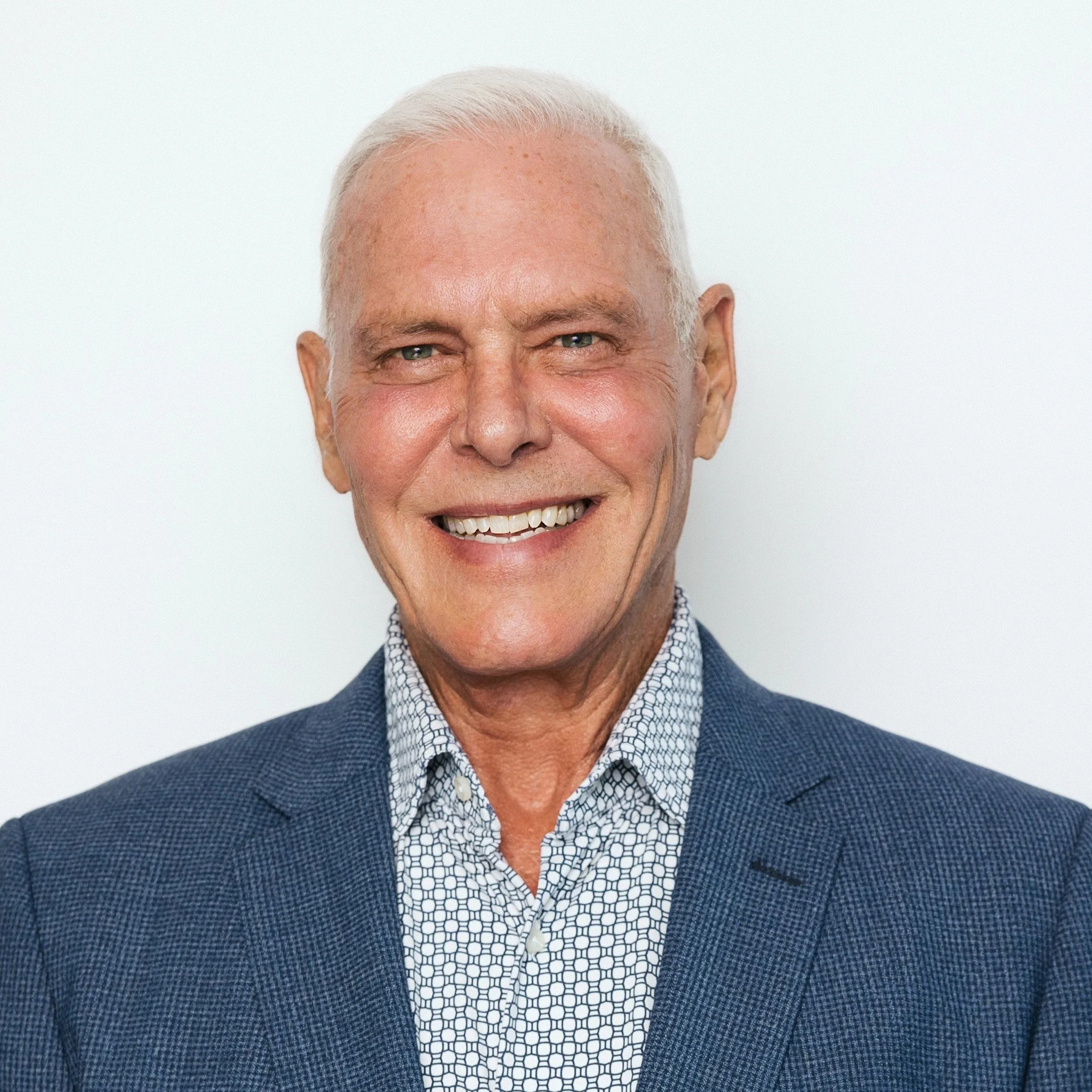
Low energy doesn’t always mean you’re doing something wrong.
Sometimes it means something deeper is being overlooked.
In this episode of The Energy Fix, Tansy sits down with Dr. Jerry Mixon, a physician with over 50 years of experience, to explore what’s really behind low energy—and why it’s often dismissed as “just aging.”
Dr. Mixon shares his perspective on the shift from traditional disease-focused medicine to a model centered on health promotion, vitality, and longevity. They dive into the role of hormones, the impact of senescent cells on aging, and why “normal” lab results don’t always mean optimal health.
This conversation also explores proactive approaches to wellness, including hormone optimization, metabolic health, and the importance of muscle, nutrition, and movement as we age.
If you’ve ever felt like your energy has changed—and been told it’s just part of getting older—this episode offers a different perspective.
Listen & Watch
🎙
Listen & Watch 🎙
What We Cover
In this episode, we talk about:
Why low energy is often overlooked or dismissed
The difference between normal vs. optimal health markers
How hormones impact energy, mood, and overall function
What senescent cells are and how they affect aging
The shift from disease treatment to health promotion
The importance of measuring health, not guessing
Muscle mass and its role in metabolic health
Hormone replacement therapy and early intervention
The role of insulin, nutrition, and movement in aging well
Taking ownership of your long-term health path
Key Takeaways
Low energy is not always something to accept as normal
“Normal” lab results may not reflect optimal health
Hormones play a central role in how we feel as we age
Senescent cells contribute to aging and decline
Muscle mass is critical for long-term metabolic health
Proactive health strategies can shift long-term outcomes
Lifestyle factors like diet and movement still matter deeply
Aging doesn’t have to mean inevitable decline
Favorite Quotes & Sound Bites
A few moments you’ll want to remember:
“We need to shift the paradigm in medicine.”
“If you don’t measure, you don’t know.”
“I don’t want to be normal.”
“Shift the odds in your favor.”
“Don’t accept your decline as inevitable.”
Chapters
1:10 – Early signs of low energy & “normal aging”
7:22 – Why waiting for disease doesn’t work
12:56 – Shift to longevity & hormone optimization
15:56 – Senescent cells & the aging process
24:58 – Hormones, testing & personalized care
30:54 – Immune system & cellular aging
44:41 – What to do if advanced therapies aren’t accessible
47:02 – Measuring health: why it matters
1:00:00 – Starting proactive health earlier in life
1:10:20 – Muscle, metabolism & aging well
1:32:28 – Final perspective: aging as something you can influence
Why This Episode Matters
Because a lot of people quietly accept feeling worse over time.
It can show up as:
lower energy than you used to have
slower recovery after workouts or stress
weight changes that don’t make sense
feeling “off,” even when labs come back normal
brain fog or reduced clarity
a sense that your body just isn’t working the same way
And the frustrating part?
You’re often told this is normal.
This episode challenges that idea.
Dr. Mixon reframes aging as something that can be supported, influenced, and improved—not just endured.
This isn’t about chasing perfection or extremes.
It’s about understanding what your body needs—and making informed choices that support how you want to feel long-term.
About Dr. Jerry Mixon
Dr. Jerry Mixon is a physician with over fifty years of medical experience and the Founder of Longevity Medical Clinic. After two decades as a traditional country doctor, he realized treating diseases after they appear is a failing approach. Since opening his Longevity clinic full time in 1997, he has helped thousands of patients shift from managing decline to getting stronger, faster, leaner and healthier each year. He is a pioneer in the Longevity field with 30 years of clinical experience in the field. His clinics were among the first to provide true comprehensive hormone balancing combined with reducing inflammation, providing growth factors and is on the cutting edge of the newest Longevity discovery, clearing senile or senescent cells from your brain and immune system.
Dr. Mixon believes that aging gracefully is an absolute myth. Aging is usually the progressive loss of grace! Instead of accepting the harsh reality of getting slower, fatter, and weaker, his clinical framework uses real data to restore youthful baselines. At seventy eight years old, he proves his methods work by running three miles daily and generally enjoying having a lean hard athletic body. His mission is to help men and women reject normal aging so they can become stronger, faster, leaner, smarter, sexier, and happier.
Links Mentioned In The Show
YouTube: @longevitymedicalclinic
LinkedIn: @jerry-mixon-61576126
Get his book! "Life Long. Being Stronger, Faster, Leaner, Smarter, and Sexier at Any Age"
Just Thrive Probiotics- Use code TANSY15 to get 15% your order!
Fusionary Formulas- Use code TANSY15 to get 15% your order!
Podcast review promo...Get 15% off a distance energy healing session or a piece of jewelry with a positive review of the show. Email photo of review (after submitted on podcast platform) to info@tansyrodgers.com
Support Beyond The Episode
If this conversation hit home, and you’re craving deeper support (not just ideas, but real integration):
Join the newsletter →
If this episode shifted how you think about energy or aging, follow or subscribe to The Energy Fix for more conversations that blend practical health insights with a deeper understanding of the body.
And if you’ve been feeling off but haven’t found answers yet, let this be your reminder:
You’re allowed to ask more questions.
Transcript
-
Tansy Rodgers (00:13.73)
Welcome back to the Energy Fix, a podcast dedicated to help you balance your energetic body by diving deep into the sweet world of all things health and spirituality. My name's Tansy and I'm an intuitive crystal Reiki energy healer, energetic nutrition and holistic health practitioner, and a crystal jewelry designer. It's time to talk all things energy. Let's dive in.
Welcome back to the Energy Fixed podcast. Thanks so much for joining in with us again today. Today, we're going to be talking about low energy, but not the kind of low energy that you fix with trying harder or drinking more coffee or having a new morning routine. We're not talking about that kind. We're talking about the kind of tired that creeps in slowly and starts getting labeled as quote unquote
normal aging. That's what we're going to be talking about. The kind where your recovery gets worse, your motivation starts to drop, your brain starts to feel foggier, your body starts to feel inflamed, and you start making these quiet questions to yourself of this just must be normal or am I doing something wrong? My guest today is Dr. Jerry Mixon. He is a physician.
with over 50 years of experience and the founder of Longevity Medical Clinic. After decades as a traditional doctor, he decided the whole model was really backwards, know, waiting for disease to show up and then chasing symptoms. He wasn't having that anymore. For the last 30 years, he's focused on helping people move from decline to real, measurable, improved.
improvement through hormone optimization, inflammation reduction, and cellular health strategies. He's also 78 years old, and he runs three miles a day. He lives what he teaches, and you're going to see it. You're going to hear it. You're going to experience it on this episode today. So this isn't just theory for them, for him. This is lived experience. All right, Dr. Mixon.
Tansy Rodgers (02:35.123)
Let's get into this conversation. Let's dive in. Thank you so much for being here.
Dr. Jerry Mixon (02:40.628)
delighted to be here. I love talking about what I do, so why not?
Tansy Rodgers (02:46.57)
And you know, if you are not watching this over on YouTube or any place that you can watch this, will tell you, looking at him, looking at Dr. Mixon, you can absolutely see the light and the longevity and the expansion in all of his health. mean, my goodness.
I feel like we are going to have such a rich conversation today. But, but before we get into it, before we get into it, Dr. Jerry, is there a word or a phrase that you're really embodying right now in this season of your life?
Dr. Jerry Mixon (03:33.037)
Yes.
do we have a question?
Tansy Rodgers (03:37.006)
You know what it is.
Dr. Jerry Mixon (03:39.724)
It's joy, joy. You know, my goal in life is not simply to treat diseases. It's to give people a robust, joyous, good health. I do not want to see people in their 60s, 70s, even 80s, shuffling slowly off to the nursing home, where they can get their diaper changed and be fed and wait for blessed
death as a release. I want people to do what I do. I want them to be out running down the street with a big silly grin on their face, thanking God for all the joy in their life. That's what I want. so yeah, I'm doing everything I can to shift the paradigm in medicine from simply waiting for diseases to occur and then treating them to
positively promoting robust good health. And that's where I think we need to make the shift in medical care. We have the knowledge, we have the technology. What we don't have are the financial incentives. And if you want to see anything or why anything happens on planet Earth, follow the prophet. And that's true for capitalist and socialist countries. The difference is under capitalism,
Wealth gives you power. Under socialism, power makes you wealthy. But money and power go together in every system on earth and always have. It's just the way human beings are made.
Tansy Rodgers (05:24.792)
And you've said and raised up some really big statements right there. And I would love for you to expand on this word simply by the question of how do you continue, Dr. Jerry, how do you continue to stay in that joy when you see behind the veil, you see behind the systems and you know what's going on and you know things can be better?
Dr. Jerry Mixon (05:52.952)
Well...
I learned a long time ago that I'll have the right to be more critical of other people once I get to be perfect myself. But since I'm well aware of my flaws and limitations, and if I ever lose track of them, my wife will remind me. I don't have the right to rag on other folks.
What I do have the right to do is to live my own life in the most productive way I can. To do everything I have the time, energy, and resources to do to make it better for people that I'm in contact with. And, but even there I can offer them my help. I'm not their daddy and I'm not their boss. I offer them my help and they can accept it or not. They're free human beings, you know, you can choose.
pain, misery, depression, disease, disability, and premature death, if that's what you want to do. Or you can make other choices that lead in a widely divergent path in which you can get stronger, faster, leaner, smarter, sexier, and happier the longer you live. I choose that second path. And I encourage other people to do the same.
Tansy Rodgers (07:22.412)
Yeah, well, and you've been a physician for over 50 years. And so we've already touched on this a little bit, but let's expand a little bit deeper. What is that moment, Dr. Jerry, what's that moment that you realize that the wait for disease and then treat it model was really failing people? And was there anything in your own health or life that made that shift even more personal for you?
Dr. Jerry Mixon (07:49.576)
God yes.
Tansy Rodgers (07:51.234)
Hahaha
Dr. Jerry Mixon (07:54.51)
Yeah, two different periods in my life. You know, I was not born in a medical family. My father spent 32 years in military service. So I was born on military bases. I was raised on and around military bases. My own father was deployed much of the time. But because we lived there, I was surrounded with strong patriotic
hardworking young men, you know, willing to serve their country. And so that was my, my male role model growing up. At 17, I was just finishing high school and the Vietnam War was just getting going. And my friends and I were all afraid the war would end before we could get there. So I ran off at 17. My father was deployed at the time. He was out on an aircraft carrier and my
mother signed for me to join up at 17. And I volunteered for the army, volunteered for the paratroopers, volunteered for combat units, volunteered for all sorts of stuff that reflected the fact that I was a young man with way more hormone than brain. And so I set off to do the things my government wanted me to do.
Now that involved extreme violence. I have said I was a combat paratrooper with emphasis on the word combat.
In the process of doing my job, I picked up one gunshot wound in the right forearm that cut most of my extensor tendons. Two rounds through the left arm, one through the elbow, which makes it hard to fully extend that arm. And a hand grenade mess up my left knee through mud and leaves and metal into the joint. And a bullet clipped my right ankle. I took one in the right thigh. A duel with a Chinese 51 caliber round or caliber machine gun.
Dr. Jerry Mixon (10:06.542)
He shot through the log I was hiding behind, bullets skimmed down over my back and blew off most of right side of my ass. I have little pock marks of small shrapnel scattered all up my left side, including one little piece of copper in the diaphragm under my heart. So, been there, done that.
Dr. Jerry Mixon (10:35.15)
The violence I experienced on myself was complemented by the large number, way too many men that I have killed. And so, it triggered some, triggered intense reflection. I had to decide what I wanted to do with the rest of my life. I was no longer fit for a combat soldier. Okay, what am I gonna do?
The only thing I knew for sure is I never wanted to have to kill another human being. But what else? And so that reflection led me to the belief that probably the highest calling I could take was to become a physician and spend my life helping other people to have less pain and more function.
Because at that time, the reason I described all those multiple wounds is I had a lot of pain.
I hurt every hour of every day of my life in those days. So, you know, I started off doing what I have described as the shittiest job in America.
I had no skills, so the only job I could find in Long Beach, California was at the shipyard where the ships were not supposed to dump sewage in the harbor, but they did. And so I had a 14-foot leaky wooden rowboat, a 55-gallon drum and a net, and for $1.72 an hour, I rode around the harbor scooping up shit and putting it in the barrel. Now, you see why I said I've had the shittiest job in America.
Dr. Jerry Mixon (12:26.294)
I did that in the daytime. I started at Long Beach City College at night because my high school experience was not all that academic. I spent most of my high school surfing, skiing, and chasing girls in no particular order. And then that got me into Long Beach State College, which got me into the University of Utah, where I picked up my first degree in microbiology. And then I stayed for my doctorate in medicine.
and then went to Wisconsin for internship and residency and became a country doctor for 21 years. I did major surgery. I delivered hundreds of babies. It was my privilege to hold brand new life in my arms, to be the first person to touch this child before I handed it to its mother. And at the other end of the spectrum,
Being a country doctor, I served in a tiny little town that had 2,500 people and one stoplight in the entire county. So we gave directions to anywhere in the county from the stoplight.
Dr. Jerry Mixon (13:44.61)
Sometimes at the other end of the spectrum, I was the only one to sit and hold someone's hand or even crawl up on the bed and hug them as they left this world and died. So, and in between I did everything I could for everybody that came through my door, often 40 plus people a day.
So that was my early experience in medicine.
And then I did that for 21 years.
but those 70 plus hour work weeks, 70 plus hour work weeks where I 13, 14, 15 hour work days cost me my first marriage.
And so at 50, I was burned out. I was fat. I was depressed. I could not have run out on the block if my life depended on it. I wish I had the capacity in this podcast to show you photographs of me at 50. I was round. I had a round face and a round body. I was a normal sedentary.
Dr. Jerry Mixon (14:57.214)
overstressed, overeating American physician.
Dr. Jerry Mixon (15:03.918)
And so that became the second great aha moment of my life. I was at an endocrinology meeting and I met a physician there from Brussels, Belgium, who was treating the aging process for rich people. Now he was charging, I forget exactly what, $35,000 a year or something for his consultations. Yeah.
So you notice the lights just went off in my office. We have these darn things that if I'm not moving, lights go off. Fortunately, I have lights on my computer.
Tansy Rodgers (15:47.148)
No worries,
Dr. Jerry Mixon (15:49.23)
Anyway, you can still see me, you just can't see my beautiful office.
Dr. Jerry Mixon (15:56.44)
So as I was chatting with him, we went to lunch, we went to dinner. I listened to what he was telling me about what he was doing for the aging process in very rich folks. And as I listened to him, it became clear to me that one of us didn't know what we were talking about. But I was afraid it might be me because what he was saying seemed reasonable.
unusual, not what I was doing, and I kept coming back to, well, if we can really do these things, why aren't we all doing it?
But afterwards, I went home to my country family practice. And about three nights a week, I ended up driving two hours to the city to hit the medical library and pulling papers until two in the morning, which is tough because I didn't finish my work day till nine. Then I drove till 11. Then I pulled papers till two. Then I drove back home and worked again the next day.
It was exhausting. But as I pulled the papers, I started realizing he was right. The knowledge base was there to make a big change in what we're doing and to do it better.
And so I decided that if I could bring this to the middle class, if I could get the cost down from his $30,000 to $40,000 a year to less than the average American spend on their automobile in a given year, there should be a market for it. Insurance was not going to cover it because insurance does not treat aging because aging is not considered a disease. Aging is considered a normal process.
Dr. Jerry Mixon (17:50.326)
So they will treat the diseases associated with aging, dementia, degenerative joint disease, cardiovascular disease, diabetes, kidney failure, strokes, et cetera, but they won't treat the underlying factors that lead you there, which I always thought was a bit bizarre, because anything that kills 100 % of its victims should get the attention of physicians. And old age kills us all.
Some sooner, some later. So I decided I'd try and make that my new focus in life. And that's what led me to Longevity Medicine. I opened my first longevity clinic back in 1997. And I now have three clinics with 10 physicians who work for me.
Dr. Jerry Mixon (18:44.372)
And we're doing very
Tansy Rodgers (18:48.654)
Quick pause for a gut check because gut health is not just about digestion. When your gut is supported, it can impact so many big picture things like immunity and brain support, mood and energy, and even how steady your nervous system feels day to day. And when your gut is struggling, it can show up as more than bloating or bathroom drama. It can look like feeling run down.
more reactive or foggy or anxious or like you're just not bouncing back the way that you used to. And that's why I'm a big believer in supporting the microbiome as part of a real life wellness foundation, especially if you're under stress, if you're in a busy season of your life or your system is already sensitive. One of my consistent staples is just Thrive Probiotics.
I love it because it's simple, it's consistent, and it helps me feel like I'm supporting my body's baseline without turning my routine upside down. Because here's the reality. When you're supporting your gut, you're often supporting everything downstream, like your immune functioning, your nervous system resilience, and how well your body and your brain can actually do their jobs.
If you want to try it out you can use code TANZE15 for 15 % off your entire order. Jump down to the show notes, click the link, and make sure to use TANZE15 for that 15 % off. All right, let's get back into this episode.
Dr. Jerry Mixon (20:25.742)
But you know, back in those days, the only thing we could do that consistently had an impact on the aging process was hormone manipulation. We knew for sure that the hormones were tools our bodies used to carry out specific functions. The anabolic hormones, testosterone, dehydrope andosterone, growth hormone,
They help you to grow new tissue. They grow lean tissues.
Dr. Jerry Mixon (21:04.012)
The neurotransmitter hormones, things like acetylcholine, acetylcholine is a precursor. Again, testosterone, DHEA, pregnenolone, progesterone, estradiol. These all are involved in adolescence and preparing our bodies for reproduction. So we call them sex hormones. But after about 20, their primary function is no longer on sex, it's on brain function.
The pregnenolone, progesterone, those hormones and their derivatives help you to sleep well at night. They decrease your stress, anxiety. They help you to tolerate the stresses of life well. Some of these hormones like the testosterone and DHEA actually protect the stem cells in your body to allow you to heal and recover much later in life.
drive ambitions, self-confidence are again grown by the anabolic side of these, the so-called male hormones, although that's a misnomer. The primary hormone in women is also testosterone. It's not estrogen, which is most people, including most physicians, don't realize. When you were 18 years old, 18 or 20,
If we measured your testosterone, your estradiol, and your progesterone, the three primary sex hormones,
Your testosterone at that age was about 70 to 75 nanograms per deciliter. Your estrogen was 25 to 30 nanograms per deciliter, half as much as your testosterone. Your progesterone varied between early cycles and getting you ready to implant an egg, but it hit about 90 nanograms
Dr. Jerry Mixon (23:12.334)
per deciliter, it was even higher than testosterone, and then it dropped almost to zero a week before your period started, and it was that sudden reduction in progesterone that actually triggered the lining to the uterus to slough off, but it also caused your PMSing. Those monthly bitch attacks that usually occur about a week before a period starts. That's progesterone deficiency.
It's also the reason that many women have real mood problems during menopause. Because by 50, your estrogen is down about 50 % from your youthful handle. It's not gone, but it's down about 50 % from when you were young. Your progesterone is down about 65 to 70%, and that's what stops your periods, not the estrogen deficit.
And your testosterone, the one that provides drive, ambition, self-confidence, stress tolerance, that's down by over 80%. And that's why 50 % of the menopausal women in America are on psychotropics.
We almost treat menopause as though it's a Prozac deficiency instead of a hormone deficiency.
So we knew early that those hormones were important. So what I started doing back in 1997 is we measured eight different hormones. We measured your growth factors. We measured your inflammatory markers in addition to all of the things that are normally checked by your family doc. And
Dr. Jerry Mixon (24:58.766)
we didn't use age-normed values because we know those values are going down and down and down as you age. So we used the mid-range of a healthy 25-year-old as our target. And our goal was to return all eight hormones and your growth factors back to the mid-range of a healthy 25-year-old, even if you were 40, 50, 60, 70, 80 years old.
Dr. Jerry Mixon (25:29.346)
That didn't make you young, but it gave your body back the tools that it used to have to heal and repair. And so we found that doing that shifted people's metabolism away from fat towards muscle.
And that made an enormous change in a lot of lives.
Nevertheless, people continued to age, though they did better with their aging when we were replacing their hormones. But then about six or seven years ago, I started coming across papers on senescent cell therapies. These are cells that in our bodies that have basically become senile. Every cell in your body,
is designed to do a particular job for a particular period of time. The lining of your gut turns over about every 30 hours. Your skin, when you're young, turns over very fast. If you're a mother, you know that if you get a baby whose diaper didn't get changed fast enough and the skin has gotten so damaged that it's raw and red and ready to bleed,
and all you do is protect it with some decadent or something overnight, by the next morning, that baby has fresh new skin. They'll grow new skin overnight.
Dr. Jerry Mixon (27:03.726)
But by the time you're in your 20s or 30s, it takes you two weeks to replace your skin. And by the time you're 60 and 70, it may take you two months to replace your skin. And so your skin is getting damaged worse and worse and worse by solar radiation, chemicals, just plain wear and tear, and it's not being turned over as fast. So our skin looks old because it is old. Okay? That skin that used to get replaced every day is now getting replaced every second month.
So yeah, it looks a lot more shabbier. You know, your bones turn over at different rates. Your brain turns over at different rates. So everything has its own schedule. And so those cells are supposed to, when they get to the end of their lifespan, they're supposed to undergo what we call autophagy, Latin for self-eating. They're supposed to basically commit suicide and die, get broken up.
and then new cells are made to replace them.
problem. Some cells don't die. Some cells are damaged by a wide variety of factors from reactive oxygen species to high blood sugars to solar radiation to chemical damage, shortening of telomeres, all sorts of things. And they're damaged but not quite enough to die. So instead, they go into what we call senescence. They become senile.
They no longer do their job. Your skin cells are no longer doing skin cell jobs. Your gut cells are not doing gut cell. Your brain cells start going downhill, so your cognition starts slowing. Age-related cognitive loss is a well-documented phenomenon. Your bones start thinning out. Your heart doesn't pump as efficiently. Your lungs don't work as well. And so you can't run down the street like you did at 18 when you're 80.
Dr. Jerry Mixon (29:02.446)
You can barely pick your feet up enough to shuffle down the street. So the question became, why is this happening and what can we do about it?
Tansy Rodgers (29:16.502)
Because I'm assuming what you just said, these are really common ways that people normalize this early decline, right? And they just chalk it up to aging. Like, these are red flags.
Dr. Jerry Mixon (29:25.848)
Yes, you go to your family doctor, your internist, you say, Doc, I'm tired. I try to run and my heart is racing and I'm short of breath and my legs are tired and I exercise and all I get is sore and sweaty. And the doctor says, well, what do you expect? You're getting old. Back off. Try to age gracefully. When the reality is aging is the progressive loss of our graces. No such thing as aging gracefully.
So and as the years went on we started looking at what was happening to people and those senile cells those senescent cells are actually building up in our system as we're getting older because our immune system recognizes those senile cells as dangerous because they're kicking out chemicals into your bloodstream that say don't grow don't heal
don't repair. They kick out inflammation. This results in the inflamma gene that you may have heard about with age. the problem with that is that our immune system recognizes these cells are dangerous. And so it goes in and destroys them. And when you're young, those senile cells last less than a day. 20, 25 hours, they're gone. But
In one of God's little jokes, the immune system is especially susceptible to accumulating senescent cells. And as the immune system itself becomes senile, it's less and less effective at reducing those senescent cells in the rest of your body. And so those cells start building up in a man's testicles, so his testosterone level starts to drop.
A woman's ovaries are being infested with increasing numbers of senescent cells. So its function declines. Your thyroid is not working as well. Your adrenals are not working as well. Your pituitary, your hypothalamus, every gland and every tissue in your body is accumulating senescent cells with age and they are actually preventing healthy cells from healing and repairing.
Dr. Jerry Mixon (31:52.75)
Because just like the zombies in the movies, these senescent cellular zombies, producing the chemicals they produce, they actually turn healthy cells into senile cells. And so like the zombie movies, the zombies make new zombies, while the senile cells make new senile cells. And by the time you're about 45 to 50, maybe 55, if you're lean and strong,
your immune system has been damaged badly enough that you are now accumulating senescent cells far faster than you can clear them. And by the time you're 75 or 80 years old, 75 to 80 percent of your immune system is now senile, is senescent. So not only do you have fewer immune cells with aging because you're running out of those produced in youth by your thymus,
you're also making the remaining cells ineffective by turning them into senescent cells. So we finally, about seven or eight years ago, as we were looking at all this latest research, say now we understand why back in the 90s we were seeing this global decline in hormone balance because we're getting a global accumulation.
of senescence within every gland in our body. And all we could do about it in those days was give you the hormones to replace what you had lost. But now we've got some kind of an interesting quandary that I am in the process of trying to solve. And that is, at what point in this progressive damage that our glands are accumulating with age, if we remove the senescence cells,
At what point can the glands recover enough to start doing their job more efficiently? Now we know in experimental animals, know, in elderly mice and rats, they typically live about 25 months. So if I take a 20-month-old mouse, which is the equivalent of a human in their 60s, and I give them medications to abolish their senescent cells,
Dr. Jerry Mixon (34:20.654)
They will suddenly start growing smoother, shinier coats. They will run their mazes faster. Their brain is working better. They can run their treadmills faster and longer. Their muscles are stronger. They start mating again. Their hormone levels kick back in and they act like they're younger mice and we extend their lifespan with one treatment by 36%. A 36 % lifespan extension
with more youthful behavior. Now, we all know rodents are tougher than humans. All right. So I don't expect to treat a human one time and get all the results that I get in a rodent. Compared to rodents, we people are pretty fragile crudders. Got that right. Yeah. And we live a lot longer. But...
Mayo Clinic started publishing their first human studies on senescent cell therapies back in 2019. They treated people who had idiopathic pulmonary fibrosis. This is a 100 % fatal disease in which you start laying down scar tissue and fibrous tissue in your lungs and you slowly over a period of a few years suffocate to death. Well, since the...
NIH, National Institute of Health, will fund research into diseases, not into aging. They got funded to say, happens if we treat senescent cells in people with this fatal disease? Well, they treated people nine days over three weeks. They treated them three days a week for three weeks. And then they just measured to see what happened.
Now it didn't fix their pulmonary disease, that scar tissue. Once it's there, it's scar tissue. It's not going away. But what did happen is these old folks that were suffocating were suddenly able to stand up and walk further and faster. And their grip strength improved, and they felt better, which was pretty amazing. So the next studies they did were on diabetics with kidney failure.
Dr. Jerry Mixon (36:39.372)
And they found that just three days of senescent cell therapy dropped the chemicals produced by these senescent cells that are recruiting other senescent cells and poisoning us, dropped that chemical production by 30 % in three days. Now, those chemicals we refer to as the SASP, SASP, senescence associated secretory phenotype.
That's what it stands for. So these are the destructive chemicals produced and released into your system by the senescent cells. Well, I was fascinated by this, obviously, because it's what I do for a living. And so about four years ago, we started treating a few of our more adventurous patients and myself and most of my doctors, by the way, wanted to get treated with intermittent senescent cell therapy.
And if you tolerated the drugs, because the drugs are potent, okay, these are medicines that were actually designed to treat chronic lymphocytic leukemia.
Tansy Rodgers (37:51.948)
And those drugs are the senescent cell therapy that you're speaking of? Yes. Okay, yeah. So specifically just those.
Dr. Jerry Mixon (37:58.2)
That was the early, well, that's the earliest drugs that were used and they were the most widely documented. So we know the most about them. Their drugs would have been on the market and used in humans for over a decade. So we know the side effects, we know what to watch for, we know the ups and the downs. And so, and instead of taking it every day for years at a time, like the leukemia patients, you give it to the patients for two days or three days, and then you give them a break. You get two or three days, you give them a break. Okay.
So when you give it intermittently for short periods of time, you get very low side effect profile. Because the leukemia patients, A, they're sick to start with and B, you're giving it to them seven days a week for, you know, years at a time. Yeah, you get a lot more side effects when you take something every day for years, as opposed to taking it for three days and stopping for a while. but what we found was our patients
tolerated not just the drugs well as a group, a few had problems, but they got better. They felt better. Their joint pain started diminishing. They felt stronger. Those that go to the gym were able to work out more efficiently and make more muscle. The problem we've had is that nobody knows how long they should be treated, how often they should be treated because
In the research, nobody is actually measuring the senescent cells.
Some research is only measuring how did they do? What are the clinical findings? Well, that's important, but it doesn't tell me how low have I lowered the senescent cells to get this result. You do this, you get that. So a couple of years ago, I started hunting for somebody, anybody that could measure the senescent cells in our system. And what I discovered is there is not a clinical lab in America.
Dr. Jerry Mixon (40:03.37)
in which I can send a blood sample and say, measure the senescent cells in this person's immune system. Didn't exist. So, being impatient, not wanting to wait 20 years, because hell, I'm already pushing 80, I hired a research group to develop a test that I could use in my clinic to measure senescent cells in our immune systems. And we finally...
have come up with this and we're gonna start measuring in me and my doctors first and then our more adventurous patients will actually be able to measure the percentage of their immune system that is senile. Then when we treat them, we can measure them again and see how far we lowered it. So we know that when you're in your 20s and functioning really well, your senescent cell load in your immune system is in single digits.
three, four percent. By 40, it's up around 20 some, maybe 30 percent. And then in your late 40s and 50s, it starts to rapidly accelerate. And by 60, it can be up at 50, 50 to 60 percent. And by the time you're 75 or 80, it'll be 75 or 80 percent of your immune system is replaced by senile cells. And that's why, for instance, when COVID came along, the nursing homes
just died like flies. These old people have no ability to fight a new unknown virus because their immune system just doesn't work. So I have been treated now for three years, intermittently.
Interestingly, 30 years ago when I started on the hormone balance, you know, they gave myself back the hormone balance of a 25-year-old man. My pain diminished. All those old gunshot and shrapnel wounds and my joint damage, it still hurt, but not nearly as bad. But then as I aged, I started getting stiff. You know how it is, old folks, you can't bend down and touch your toes anymore. You're lucky if you get to your knees, sort of thing.
Dr. Jerry Mixon (42:19.784)
when I started treating my senescent cells, that all went away. I can now not only reach down and touch my toes with my knees locked, I can put palms of my hands flat on the floor. All my old man aches and pains and stiffness are gone. Now didn't make me young. I got white hair. I got some wrinkles.
I can run, I can jump, I leap and cavort and dance into the night with a big silly grin on my face. The question I have not been able to answer is how low have I lowered my senescent cells? Are my current senescent cells with the current therapy that of the 20-year-old I'd like? Or the ad of a 40-year-old or a 50-year-old? Or have I simply gone from 78 to 55 or 60? I don't know.
So here in another week or two, I'll be able to start measuring that and see exactly where I am now. And that'll tell me how much more aggressive I want to be with my therapy. And that's what I want from my patients. Our goal is not just to put all your hormones back to a youthful level, although that's nice, that helps. But I want to get rid of all those senescent cells back to that 25-year-old level. And then I want to see how well you can.
And the question is, at what point, at what average age could I get rid of your senescent cells and have your own hormones start kicking back in?
Now I suspect that my 78, almost 79 year old testicles are not gonna start functioning like they were 18 again. Okay, probably. A lot of damage over a lot of decades. All right. But what if, what if the patient comes in and they're only 40?
Dr. Jerry Mixon (44:19.884)
and I measure their senescent cell load and I could take that back to where it was at 18 or 20. Will their younger, less damaged glands kick back in and save them a lifetime of hormone replacement therapy?
Wow, I really wanna know.
So, you know, these are some of the tasks I have set within my own clinics for our patients.
Tansy Rodgers (44:50.734)
Incredible, incredible. so I have a question to kind of explain, I've been thinking this whole time, well, okay, so what is this therapy? And you answered that, what used to be with the drug cocktail that was given, but you specifically said that was years ago, that was from before. So currently, what do we...
Dr. Jerry Mixon (45:15.778)
That's the one that is still mostly used because it's got the most data behind it because we've given it to people for years and years and years and we know the side effects, we know the ups, we know the downs. But there are other things that are on the horizon that are not yet either approved by the FDA for doctors to use at all or there are some supplements that we think have a good chance of being...
maybe not quite as effective as the potent drugs, but they would have a lot fewer side effects. And I could give to people that don't tolerate the prescription drugs. And so one of the tasks, one of the early tasks we will be carrying out here over the next few months is to take those patients of ours who did not tolerate the Dissatinib, which is the potent chemical, who did not tolerate Dissatinib and instead try them on
some of the supplements and measure their senescent cell load before and after therapy and see how effective these supplements that are being promoted as may be effective actually are.
Tansy Rodgers (46:28.915)
And what are some of those supplements? Are you even able to talk about that yet?
Dr. Jerry Mixon (46:32.438)
Of course I can talk about them, but I don't know if they work for it. I'm not going to tell people go out and try it because for one thing, you go home, you buy the supplements, you take the supplement. If you feel better, is it placebo effect? Has anybody measured your senescent cell load before you took it? Did anybody measure your senescent cell load afterwards after a week or two or three? The only clinic in the country right now that can measure that is mine.
So I kind of hesitate to have everybody out, run out, start buying stuff that I think might possibly maybe do some good, but I don't know. I tend to be kind of data driven. And so I want to try this with patients that I know want it. I know they want to reduce their senescent cells. They've tried the Dissatinib. They had adverse reactions, so I couldn't continue it.
Okay, so now let's try the stuff that we think is a lot safer, stuff that doesn't even require a prescription that you can buy over the counter, but let's measure your senescent cell load first and then let's measure it afterwards. Then we'll know if we're doing any good or not.
Tansy Rodgers (47:48.706)
Yeah.
Dr. Jerry Mixon (47:49.944)
I've got four rules of medicine, okay? First rule of medicine, anything strong enough to help is strong enough to hurt. Every decision we make in medicine has an upside and a downside. Your doctor's job is not to give you things that have no risks. They don't exist. Your doctor's job is to give you as many benefits as possible, balanced against as few risks as practical.
second rule of proper dose of anything is just enough to do the job. Because the higher the dose, the higher the risk.
Third rule of medicine. If you don't measure, you don't know.
When I'm dealing with human lives, I want to know. That means I measure. In our clinic, when you first come in, we do a lab panel that gives you about a 70 page printout. We measure things your family doc has never measured in their life. And then we start you on the therapy, and then we bring you back in about six weeks, and we measure it all again.
and we see where are things now, and we make adjustments. And then we bring you back in two to three months and we measure it all again. And we make another adjustment. And we bring you back every three months and remeasure where we are and make our adjustments. And if you have any trouble in between, we don't wait for your three months. We bring you back right away and check what we need to check.
Dr. Jerry Mixon (49:40.386)
You know, our doctors spend at least an hour with every visit. There's no five, 10 minute visits. And we're obviously watching people very, very closely because what we're doing is on the cutting edge of medicine. And so we're very, we're very cautious and very careful. And so I'm doing the same thing with the senesce cell. You know, my more adventurous people signed a release saying, you know,
These drugs here are all the potential side effects we found from using it for years and years. We don't think you're at such risk because we're only going to use it for X number of days this frequently, but you need to know, sign off, promise not to sue me.
Tansy Rodgers (50:24.544)
If you're listening to this podcast episode, there is a really good chance that you're the person who holds a lot. And sometimes the issue isn't that you need more information. Sometimes you need your system to feel safe enough to actually integrate what you already know. That's what my SoulStream and Enlighten Sessions are for. They're intuitive, energy-based sessions designed to help you recalibrate
emotionally, energetically, physically, and in your nervous system so you can move through life with more clarity and less internal noise. People book these when they're feeling stuck, overloaded, anxious, emotionally heavy, or like their energy isn't fully theirs anymore. And we work with that. We work with what's present, clear what's been lingering, and help you come back to center in a way that feels grounded and real.
If you wanna book a session or you want to simply know more, you can head on over to tansyrodgers.com or jump down into the show notes and click the link that will take you directly to those services. And if you're not sure which session is the right fit, send me a message. I'll help you choose. I'll help to guide you in the right direction. All right, let's jump back into this episode.
about it, let's before we go on, let's talk about the whole lab thing, because you emphasize the how critically you look, you and your colleagues look at the labs and you get people back into, I want to talk about the lab problem. You know, it's so, this is so interesting because I just had a conversation with one of my older clients the other day, where she's been having some issues. And I said, you need to talk to your doctor and find out she just happened to be going for blood work.
And I said, you need to talk to your doctor and look at some of the specifics in the levels of what we suspect it might have been off. And she came back to me and she said, they said everything was fine. And I said, were they fine or were they just on the low edge of fine? And she's like, well, that I don't know. And so I would love for you to talk about the difference between these normal labs, quote unquote, and-
Tansy Rodgers (52:45.114)
optimal labs and why do think so many people get told that they're fine when they feel anything but fine, Dr. Jerry?
Dr. Jerry Mixon (52:53.55)
Okay, normal, the definition of normal in medicine is everything within two standard deviations of the mean. So if we want to know what normal blood pressure is, we measure the blood pressure in 5,000 people of different ages and we find the statistical mean and now we go two standard deviations out from that. And that encompasses 95.6 % of the population.
The bottom 2.3 % is considered abnormally low and the top 2.3 % is considered abnormally high. Everything else is normal.
and normal changes with your age. Because young people's bodies function a hell of a lot better than old people's bodies. And so what's normal for an 18-year-old is not normal for a 70-year-old. And so the question is, what are you looking for? And so we have selected the normal range for a 25-year-old as our target.
Because what we tell people is normal is great when you're 18. By 40 normals got drawbacks and by 60 normal stinks. Right? And beyond 60, if you're normal, you're a deep doo-doo. That's just all there is to it. I don't want to be normal. What is normal for my age? You know, am I supposed to have a 13 year old daughter at home? No, but I do.
She was born when I was 65. Okay. Am I normal to get up at five this morning, have my wife fix me a nice breakfast? I drop down on the floor, I knock out my first 70 pushups for the day, do my squats, go out on the trail, knock out three miles, and then come to work. Is that normal for my age? No. Do I wanna be normal? Hell no. All right.
Dr. Jerry Mixon (55:01.678)
The fact is I like having the muscle mass of a man in his 20s. I like having a brain that is optimistic and enthusiastic and tolerates stress. You know, I run three clinics, a supplement company and a clinical laboratory. Okay, I got 50, 60 employees at even time. I got to tell you, the more employees you've got, the more stressors you've got.
Okay. But I love my work and I have a great time and I have a great life and I have no intention of quitting. Now I tell my wife that I want to spend as many years with her as I possibly can. And my philosophy of medicine and of life in general.
is you shift the odds in your favor as far as you possibly can. And then relax and play the game. Because things can happen over which you have no control.
I can keep myself in good shape. But if a bus runs into my car this evening, I have no control over that. I don't control whether the bus driver fell asleep at the wheel or if he got drunk or high on drugs. That's outside my control, okay? So I control what I can control. And then I just relax because God has been good to me. About the only prayer I ever offer.
and frankly I offer it a dozen times a day, is thank you God. Because I have been given so much in my life that to ask for more would just be greed. you know, I, but let me give you one little example. I talked about bringing 40 year olds into the clinic instead of 50 and 60 and 70 year olds. I mean, the oldest patients I've treated are
Dr. Jerry Mixon (57:06.411)
north of 100.
But if you're 100 years old, I'm really kind of limited in what I can do because a lot of damage has already been done. And it's a lot harder to repair damage than it is to prevent it. Okay? If you're 60, I can do a lot more than that 100 year old. And if you're 40, I can do more than the 60 year old. And the younger you are, the less intervention it takes and the better result I can get.
When I met my wife, because I got married at 20 and divorced at 40, and I was single for 17 years, and I met my wife when I was 57 and she was just turning 28.
So there's about a 30 year age gap there.
And one of these days I'll tell you about our intergenerational, intercontinental
Dr. Jerry Mixon (58:07.252)
intercultural whirlwind romance that started with a first date on Crete and then the second date in Venice and etc. But I've been told I should write a book about our romance. anyway, she decided seeing what I do for a living in her early 30s that she wanted to become a clinic patient. And so we have never let her hormones decline.
and we started treating her senescent cell therapy in her 40s.
She's now turning 50. She has a 23 inch waist, a lean hard body. You should see her pump iron or jump rope for an hour. She runs like the wind. People look at her and think she's in her 30s still. You know, she has the smooth, beautiful skin of a 30 year old and the lean hard body. We've never let her undergo, get the damage of aging that is quote, normal.
Now I wish I could start every 30 year old woman on earth on therapy and never let them undergo the damage and the ravages of aging that build up a senescence cells and that decline in their hormone balancing. But 30 year olds don't think age is real. They still say stupid things like, well, this age is just a, it's just an opinion or a matter of mind.
It's an attitude. No, it isn't. Aging is a harsh, biologic, unforgiving reality. No. And if you want to age well, the earlier I can start you, the better you'll do.
Tansy Rodgers (01:00:00.824)
Well, I'm curious. So I love all this. I love all this. It's funny, because I just got told the other day, know, age is just a number. I'm like, yes, technically, but also, but also it's a feeling and it's a lifestyle.
Dr. Jerry Mixon (01:00:15.406)
And it's more. How fast and far can you run? How much can you lift? How many times a week are you making love? There's a lot of things that we can put objective values on and correlate them with declines of aging because all of those things go downhill as you get old.
Tansy Rodgers (01:00:17.358)
and it's more rates.
Tansy Rodgers (01:00:37.324)
Yeah, yeah, yeah. And so I'm really curious, Dr. Jerry. So we talk about the senescent cell therapy, right? And so that is, that to me, that sounds like that is one of the biggest things to really focus on. But if people don't have access to that right now, and they're looking at the current things that they can do in regards to longevity, more energy.
feeling amazing, but also knowing that maybe they need to get testing and to know exactly what to test and so forth and so forth. If somebody is wondering this stuff, what are the core markers that you should look at first for both men and women when energy is low? What should they know to get tested? What are some of the things to really focus on?
Dr. Jerry Mixon (01:01:30.85)
Well, the core things to test are basically that 70-some page printout that we do for our patients. You need to measure eight different hormones. You need to measure your inflammatory markers. You need to measure your growth factors. But all of these things take laboratories, doctors, and money. They're not free, and insurance doesn't cover them.
If you're somebody that is just saying, gee, what can I do to improve myself? Okay, there I can give you some guidelines. First, eat less, move more. Or use a GLP-1 inhibitor. Or all of the above. All right. You should consider that.
There are two competing forces right now in your body, and they are fat and muscle. People tend to think of fat as a cosmetic issue. You you see the the checkout stand at the grocery store, it's get your beach body in two weeks. Pucky, the average American who's 70 pounds overweight is not gonna get much of anything in two weeks. You're looking at two years. Okay, this is a long process.
fat is actually a reaction and a cause, it's a circular mechanism for insulin resistance.
When we overeat, when we drive more sugar into our bloodstream, more glucose, more blood sugar, then the cells can accept at any given moment. Because sugar is the primary fuel that our bodies burn, just like gasoline is for most cars. And when you overeat, your body metabolizes that food, all that blood sugar runs into your bloodstream.
Dr. Jerry Mixon (01:03:39.192)
pancreas kicks out a hormone called insulin. And by the way, insulin is one of the hormones we measure, both fasting and peak insulins. And that insulin carries the glucose, the blood sugar, to the cell wall and tries to drive it into the cell where the mitochondria can burn the glucose to turn it into energy, ATP, ADP, that our bodies can metabolize and actually use to keep us alive.
But every cell has a limit. It can't burn unlimited amounts of sugar. Any more than your car can burn unlimited amounts of gasoline in any given minute. Okay? Because when you try to drive extra sugar in, if your cells metabolize that too much sugar, your body temperature is going up. You've generated more energy and that shows up as heat. Okay? So your cells, when they're presented with more sugar than they need and more sugar they can handle,
They send out signals to the cell wall that says resist. Don't let that insulin in here. Don't let that sugar in here. We've got all we can handle. So that then keeps the sugar and the insulin in your bloodstream. But just like gasoline, we burn for energy. Sugar, glucose, is a high energy compound that literally burns. It damages. We call it glycolization.
It glycolystates every tissue it touches. And so when that sugar is rising in your bloodstream, it's damaging the walls of your arteries. And so now your body says, hey, I gotta get that sugar out of here. So it sends signals and your pancreas ranches up more insulin to drive it back into the cells and the cells say, no, I can't handle this, damn it, stay out. You're developing insulin resistance.
It's now taking you more and more insulin to drive the same amount of sugar into the bloodstream. Okay? Or into the cells, out of the bloodstream. So now, as your insulin levels are rising, in an effort to drive that sugar out of the bloodstream and quit damaging your arteries, your liver kicks in and says, wait a minute, we got a problem here. We got way too much insulin, we got way too much sugar. So let's grab that sugar next time it comes into the liver.
Dr. Jerry Mixon (01:06:10.22)
And let's turn it into triglycerides, short chain fats, three molecule fats. And we dump those triglycerides into your bloodstream and now the triglycerides circulate and the adipocytes, those little fat cells, grab the triglycerides, pull them into the fat cell, and now you're gaining weight. And increasing body fat is a secondary mechanism for your body to lower your blood sugar.
If the insulin can't do the job because the cells can't burn that much sugar, your liver comes to the rescue by making it into fat that you store for later on when hopefully you won't have enough calories coming in and you can convert that fat back into energy and burn it. The problem we've got, unlike our ancestors, is
We have grocery stores, have an unending supply of high calorie food available all the time.
Now that's a problem because our ancestors were not intermittent fasters. They were intermittent eaters. Okay? Because look at your fingernails. Those are our claws. Okay? My little kitty cats got better claws than I've got. Here, look at my fangs. See that little thing? That's my fang. How the hell am I supposed to kill prey with those? All right?
When it comes to hunting and killing animals, we're pretty pathetic creatures. That's why we used our brain to make tools, right? But our ancestors were not yet farmers. They did not yet grow animals we could kill at our leisure. And so they subsisted on roots and berries and leaves and whatever small prey was dumb enough to get caught by us, right? And so what we did...
Dr. Jerry Mixon (01:08:13.856)
or what our ancestors did was they ate everything they could in the summer and the fall when food was available. When the grasses were seeding, that was our early grains, they gathered up the grain and they ate everything they could. And they got as fat as they could every fall because winter was coming. And when winter came, food was going to get really sparse. And if you went into winter skinny, you died and you didn't reproduce the next year.
And as a consequence of the skinnies all dying off, the chubbies inherited the earth. And we are the descendants of those chubbies.
And so built right into our genome is an imperative that says the fattest, the highest calorie foods are the ones that are be the tastiest. You're gonna really crave those, because those taste good, because those are gonna make you nice and fat so you get to survive the winter. And we instinctively go to high calorie, high energy foods.
It's just that now we have an unending supply of those every day of the year, 365 days a year. And we no longer get fat in the fall and skinny in the winter. To survive, we get fat in the fall and fatter in the winter and fatter in the spring and fatter in the summer again. Okay? And when we doctors ask you to eat less than your body is demanding, instinctively, genetically demanding, we're asking you to
commit an inherently unnatural act. That's why diets are so hard for us. As a species, every developed society, when food becomes plentiful, they get fat. It's just that we became the richest the earliest, and so we're the fattest industrial society on earth. For that fat is now killing us.
Dr. Jerry Mixon (01:10:20.416)
It's causing heart attacks and strokes and diabetes and dementia and osteoporosis. So we need to get skinny.
But the traditional methods of saying, just eat less and, you know, use willpower. No, because you're fighting a primary drive. It's not your fault. You're doing what your genetics demand you do.
Dr. Jerry Mixon (01:10:45.058)
But giving me back the hormone balance of a 25-year-old man means that when I exercise, I make muscle like a young man. Well, guess what? Muscle burns five times more calories than fat.
So that puts my energy expenditure equation back into gear. When I damp down my senescent cells so that I make the hormones that I need to make, I kick in gear. Let me digress to an earlier point just for fun. I know I'm taking a lot of your time. I'm sorry. But I love what I do. I love talking about it.
Tansy Rodgers (01:11:25.678)
I can't help this is fantastic. I love, like you're just rolling with it and you are, this conversation is so intriguing. I love it so much. So you go right ahead, Dr. Jerry.
Tansy Rodgers (01:11:41.454)
break because inflammation is one of those root issues that can quietly mess with everything like your energy, your joints, your digestion, your recovery time, your mood, and even mental clarity. And here's the tricky part. A lot of people wait until they feel terrible to actually support inflammation, but inflammation is often a slow build. Things like stress and sleep and food choices
Hormone imbalances, overtraining, under recovering, well, it all stacks up. That's why one of my consistent staples is Turmeric Gold by Fusionary Formulas. It's designed to support a healthy inflammatory response. And I like it because it's practical. There's no complicated routine. It's just a really grounded, steady support that you can actually keep up with. And it is clean products.
If your body has been feeling more achy, stiff, foggy, or reactive than you want it to be, this is a solid option to consider as part of your foundation. And you can use my code, code TANZY15 for 15 % off your entire order. Tumor Gold isn't the only thing they have. They have an array of incredible products that you can explore and try out.
I will link it down in the show notes so that you can easily jump right on over and use that code TANZ15 for 15 % off. All right, let's get back into this episode.
Dr. Jerry Mixon (01:13:20.494)
I have been on hormone replacement therapy since I was, well, 49 actually. I opened the clinic when I was 50. I started my therapy treating myself when I was 49. So I've been on therapy now for 30 years. And typically when you give a man testosterone, say, his own testicles say, plenty of testosterone here. I don't need to make any. So they quit working.
And so typically what happens is once you start these therapies, the feedback loops mean you make less and less, and now you need to be maintained long term. And people say, well, why should I be dependent? Well, because you're already not making enough. You know, where you are now really stinks. Bad stuff is happening to you. So yeah, it's better to be dependent on an exogenous source than to do without.
But what I've discovered over the last three years, it's kind of driving Dr. Umat, my medical director, who is also the doctor who treats me, drives both her and I a little bit bonkers, is that we've had to be cutting my testosterone supplement lower and lower and lower over the last three years. Because it appears that my aged damn near 80-year-old testicles
may not be functioning like they did at 18, but they're functioning better than they used to despite the fact that I am on testosterone supplementation, but I'm needing less and less of it as time goes by because I'm producing more and more of my own.
Tansy Rodgers (01:15:00.108)
because of the senescent
Dr. Jerry Mixon (01:15:02.546)
I'm wiping out the finessing cell therapy. Yes. are recovering. Yeah. Okay. Now don't think they're going to recover to 18, but they're recovering better than they were. Okay. So I take what wins I can get in life. know? So yes. You know, when I was 20, I was six foot four. I'm 78. I'm almost 79. I turned 79 here in a few months. I'm still six foot four. I haven't shrunk.
That age-related compression of my spine has not happened. My bones are still the dents as a young man. My muscle mass is still here. So these are all wins. I'm still aging. That bus can still come around the corner and get me. But I am doing everything I can to shift the odds in my favor as far as I can.
I feel wonderful, I got a great life, I plan to live it. And I'm, I don't know, just enjoying things, I guess.
Tansy Rodgers (01:16:12.044)
Yeah. Well, before we go into the rapid fire questions, I'm really curious because you've talked about this a couple of times and I'm curious any insights. You've talked about that you've been doing, that you've done hormone replacement therapy, that you still have been doing hormone replacement therapy. So I would love some insight on if people are curious about that, where they can start, what they need to know about hormone cycling or therapies or yeah.
I would just love your insights.
Dr. Jerry Mixon (01:16:42.968)
That's a whole nother two hour podcast.
Tansy Rodgers (01:16:44.942)
No, I'm sure, I'm sure. Like even disappoint people in the right direction.
Dr. Jerry Mixon (01:16:51.086)
Okay, so let me give you just a real quick insight into female hormone replacement therapy, just for fun. I told you that when you were young, younger, at my age, anybody under 50 is a kid. So you know, I got ties as old as you are.
There's a couple of studies out there. Donovitz at Mayberry University in Atlanta, Rebecca Glazier in Ohio. These two between them have got like 3,500 people, 3,000 to 3,500 people. Donovitz did a 10-year study, Glazier's done a 15-year study in replacing that...
youthful testosterone load in midlife women.
And once more, if we do another one of these, I will send you in advance a graphic that shows you the dramatic improvement in mood, sleep, joint pain, enthusiasm, cardiac function in midlife women who get put on testosterone. But the critical things our studies were really looking at was breast cancer.
Dr. Jerry Mixon (01:18:19.064)
Breast cancer, like most cancers, doesn't start off as a cancer. What'll happen is somewhere in a woman's breast, as her hormone levels are declining, because she has the lowest risk of breast cancer when she's 15 years old and her hormones are at her peak. Because that's when your testosterone is highest, when you're 15 years old. Which is what every parent in the world shudders at, because that's when their 15-year-old daughter's sex drive is going to be highest.
And we're saying, please, please, no, doesn't care about what we think. It just is. But her breast cancer risk is at her lowest when her testosterone is at her highest. So somewhere in your 30s, probably, as your testosterone is starting to drop and your estrogen is starting to moderate just a little bit, your breast tissue develops.
some atypical cells. Now they're not cancerous, but they're not completely normal. They just show a few odd characteristics. But the atypia over years gets worse and worse and worse as those hormones are continuing to decline. And at some point, they develop what we call dysplasia. And dysplastic cells we can sometimes see on a high resolution MRI. But dysplasia is still not cancer.
but it's getting nastier looking. And at some point, a few more years up the road, one or more of those dysplastic cells will become malignant. Now it's an overt cancer. But it's one cell. We can't find one cell. Too tiny. It's in there with billions and billions of breast cells. Hidden. So it divides and it grows. And its turnover will be anywhere from
It'll double every 30 days if it's a faster growing cancer to every 100 days if it's a slow growing indolent cancer. But on average, it will be five years after that cancer starts before it's big enough for us to find it on a mammogram.
Dr. Jerry Mixon (01:20:35.182)
So when a woman discovers she has breast cancer, she's had that cancer three to five years, maybe as long as 10 years if it's slow growing. So it didn't just start when we found it. It's been there for years.
So this is important for what I'm gonna tell you now about Glazier and Donovitz study. They took women at an average age of 54 and they put them on testosterone pellet implants. I like to use creams because I can adjust the dose on any given day, but they put them on pellet implants that would be secreting testosterone into their system for a three to four month period.
meant they knew the women got the drug because they put it in surgically through a puncture in the skin and you couldn't get it out and it's secreting testosterone for the next three months when you bring it back and you put a new one in. When they did that with these women, over a 10 to 15 year period, they had an 80 % reduction in breast cancer.
80 %
So the women that showed up every three months to got their new implant had an 80 % reduction. The women that just got their implants occasionally and were not reliable, they still cut their breast cancer in half.
Dr. Jerry Mixon (01:22:06.242)
The reason I bring that up is that 80 % reduction in breast cancer. And they didn't start until their mid-50s. And we know that you had that cancer for three to five years before we found it. And when you look at the data when the women found their breast cancer, 90 % of the cancers that were found were within the first four years after they started therapy, which meant
Almost all of them had the cancer before they started the therapy. And even at that, there was an 80 % reduction in the cancers we found over a 15-year period.
What would happen if instead of waiting and starting this therapy in their mid-50s, we started it in their 30s like we have with my wife? And whenever they first started to decline their levels, we gave them just a little touch to bring it back up. And we measured them every three months as the decades go by, and we slowly tweaked their levels as we need to.
And now with our newer therapies, if we never let them build up senescent cells to kill their ovaries, so they needed the tweaking in the first place, that their ovaries and their thyroid and their pituitary and their adrenals all kept functioning like a younger woman.
Dr. Jerry Mixon (01:23:37.388)
You see the opportunities we've got here.
But that's going to require we change, we dramatically change the incentives in medicine. We need a medical care system that rewards doctors for promoting good health, not for treating disease.
Now, we still need to reward doctors when they do treat disease, but we want, I would love to see if 75 or 80 % of the doctors in America were promoting good health and we only needed about 20 % to treat the diseases.
Dr. Jerry Mixon (01:24:22.094)
And I have hope because who's at the head now of the FDA? A fellow by the name of Bobby Kennedy, right? Have you seen pictures of Bobby?
Tansy Rodgers (01:24:35.392)
Yeah, I'm a Bobby fan.
Dr. Jerry Mixon (01:24:37.902)
pictures of this 71 year old man without his shirt, those biceps and those shoulders are not normal for a 71 year old man. Bobby Kennedy is being treated by somebody like me. He's on the hormones, he's on the peptides, he's got all the advantages that I'm giving my patients except his doctor's probably not yet doing senescent cell therapy.
Dr. Jerry Mixon (01:25:08.024)
So when I see the guy ahead of the FDA who's getting hormone replacement and peptide therapies, I'm encouraged. The changes to the system might be headed our way. I hope.
Tansy Rodgers (01:25:25.038)
Oh, wow. This is such an amazing conversation. So inspiring, so inspiring to just put it out there that we can take back our health. is possible and you do not have to succumb to what you think is the norm in aging and in health related conversation. So, yeah, so beautiful.
Dr. Jerry Mixon (01:25:54.296)
But back to your question, what would I tell people to do? Lose weight. You have to fight that genetic component. Yes, we are descended from the chubbies who inherited the world, but we still need to get lean. So use every tool available. every doctor in America now is writing GOP1s. And if that's what you got to do, do it. But find a way to shift your diet.
to lower quantities of lower calorie, higher fiber, more slowly digested food. And the second is do what you need to do to get moving. If all you can do is take your little tiny Pekingese and walk two blocks a day, then get out and walk two blocks twice a day. If you can walk faster, walk faster. If you can jog, jog.
If you can walk a block and jog half a block, walk a block and jog half a block. If you can walk a block and jog two blocks, do that. Over time, ramp up. Do more, eat less. Whatever it takes. Because I told you about fat. Excuse me if I steal five more minutes of your time. I'm going to tell you now about muscle. Muscle.
while fat produces more than 50 adipokines that are destructive and trying to kill you. Working muscle produces over 600 peptides, enzymes, and growth factors that kill cancer, that make muscle, that grow brain cells. So working muscle, the more muscle you've got and the more vigorously and frequently you work it,
the better chance you've got of living a long, happy, robust life. So muscle good, fat bad. And if you can't afford a doctor, okay, you can afford to eat less and you can afford to move more. And I know people say, it costs more to buy really healthy food. No, it doesn't. know, potatoes and veggies are cheap, okay?
Dr. Jerry Mixon (01:28:14.19)
dried beans, legumes, you buy them in a little bag, they're $1.49, and that'll feed you for three days.
If you eat high fiber or not dense foods with good protein loads, it's not expensive. Yeah, chocolate tastes better. I love ice cream. Give me a hot fudge sundae any day instead of beans, but I eat the beans. And I indulge in the hot fudge sundae maybe every three months.
Dr. Jerry Mixon (01:28:48.022)
So...
Move more, eat less because muscle is protective. It protects your brain, it protects your heart, it protects your lungs, it protects your kidneys. Get rid of the fat, that's destructive. Build the muscle. Do what you can do. Start where you can start.
Tansy Rodgers (01:29:10.102)
I love it. I love it. All right, Dr. Jerry, before we figure out where people can find you and resources that you have to help people on their journey, let's do a few rapid fire questions. Just quick fun questions to find out what you would do or what you would say. So first one, what is something you do daily other than the running? Okay, you already talked about that. So that can't be your answer here, all right?
Dr. Jerry Mixon (01:29:11.921)
Alright.
Tansy Rodgers (01:29:39.438)
What's something you do daily that would surprise most people for a 78-year-old physician?
Dr. Jerry Mixon (01:29:50.314)
hold my wife for an hour every evening. You know, I love this woman with all of my heart. The greatest sorrow in my life is that I am 30 years older than her and statistically I'm going to leave her before I want to. But every evening after we send our 13 year old daughter off to bed, or at least to her room where we have no way to make her go to sleep.
Dr. Jerry Mixon (01:30:22.05)
We crawl up in our bed, I put my back against the headboard, I open my legs, she sits between my legs with her back against my chest, and I hold her skin to skin. And we stream a video, and we talk. And every night, we have an hour of just cuddling and holding each other skin to skin, and I can tell her how much I love her.
and how much I enjoy being with her every day. That's something that may surprise people about somebody pushing 80.
Tansy Rodgers (01:31:02.39)
Love that. I love that. All right. Question number two. What is a health myth that you would love to just delete forever? Like you're tired of hearing about it.
Dr. Jerry Mixon (01:31:17.804)
that exercise wears out your joints.
Tansy Rodgers (01:31:21.364)
one for me too! Ugh! Yes!
Dr. Jerry Mixon (01:31:24.214)
Sedentary people develop joint pain far faster and to a greater degree than people who use their joints. Microtrauma, a little bit of trauma to the joint surface on a regular basis triggers healing. It triggers repair. It triggers growth. And so, yeah, you don't want to beat the hell out of the joint to the point that you're in pain.
but you want to use it and provide microtrauma on a regular basis that promotes the growth and healing and repair. For God's sake, don't try to preserve your joints by sitting on the couch. Doesn't work. If you don't use it, you will lose it.
Tansy Rodgers (01:32:07.63)
So. Right there with you, Dr. Terry. I love that one. All right. And the last question. If you could give every 40 to 60 year old or most 40 to 60 year olds one sentence of permission about aging, what would you say to them?
Dr. Jerry Mixon (01:32:28.104)
One sentence, huh? Yeah. I just did you an hour and a half. Yeah.
Dr. Jerry Mixon (01:32:35.438)
40 to what age?
Tansy Rodgers (01:32:37.262)
4060.
Dr. Jerry Mixon (01:32:38.606)
40 to 60, okay.
Don't accept your decline as inevitable or normal.
It is normal. It's not inevitable. There's things you can do.
Tansy Rodgers (01:32:54.495)
Mm. Yes.
Dr. Jerry Mixon (01:32:56.412)
Sorry, more than one sentence.
Tansy Rodgers (01:32:58.166)
No, that's good. That's good. Awesome. All right, Dr. Jerry, where can people find you? What are some resources that they can connect into to get more information?
Dr. Jerry Mixon (01:33:10.04)
Okay, well the easiest way to find me is go to lmclinic.com. That means lm stands for Longevity Medical Clinic.com. So you can type in Longevity Medical Clinic or just lmclinic.com. You'll go to our website. The website will have videos. If you want to stream my radio show,
because I do four hours of radio every Saturday. It's a Dr. Call-In show. We are just putting up on the site this week the link to the radio show so that you can, if you call in when the show is on, you can actually type in on your computer questions or comments live that we can look at and maybe answer your questions as we're going, or you can call us because we're also going to put up a phone number.
and you can call us and talk to us live during the show, or you can stream the show 24-7 for the following week. It's available for you to watch any part of it. You also, you will see things about our doctors, about our programs, the things we do. So, LMclinic.com gets you a lot of information. I know we're getting to the end, but let me expand on that one more time. I was just talking to my company president yesterday and the day before.
My goal over the course of the next year is to make that website the go-to longevity place for the country. I want to put stuff on there for casual folks that are just interested in exploring, for biohackers that are wanting to build up as much of their body they can on their own, and for doctors. So the presentations that I give to doctors at medical meetings, because I speak to doctors on a regular basis.
you can actually see the presentations I give to doctors. So that's not all on there yet. There is a lot of stuff now though, so go ahead, lmclinic.com. You could also go to Amazon or Kindle and you can buy the Kindle version or the hardback version of my book. It is called Life Long.
Dr. Jerry Mixon (01:35:33.784)
Being Stronger, Faster, Leaner, Smarter, and Sexier at Any Age. So that book is a few years old. It doesn't have senescent cell therapy in it yet. I'm just starting a new book that will contain these senescent cell therapy. But I do have a book that's written for lay folks, not doctors. So my website or that, or of course, podcasts like yours.
Tansy Rodgers (01:35:59.446)
As I will have all of those show notes down in the links, plus a few extra other places to be able to find Dr. Jerry. Dr. Jerry, do you have any last words that you would like to lay on the hearts of the listeners for today?
Dr. Jerry Mixon (01:36:17.838)
Spend a life of love and joy. You know, find someone you love and do everything you can to make their life as good as you possibly can so they'll love you in return. That's the most important thing in life.
Tansy Rodgers (01:36:35.256)
Thank you so much for being here and for sharing your heart and your wisdom and everything that you are trying to do with this world. I appreciate you. Thank you.
Dr. Jerry Mixon (01:36:45.1)
You're welcome, my dear. Have a great day.
Tansy Rodgers (01:36:48.364)
The message in this conversation is pretty simple today, but yet it is incredibly powerful. And that is low energy isn't something you're supposed to just accept as getting older. And normal labs, normal labs of what we're told is normal, they don't always mean that you're thriving. They might just mean that you're blending in with a culture that's gotten used to feeling tired and inflamed and run down.
What I loved so much about Dr. Jerry during this conversation is that he really emphasized on measuring what matters, because if you don't measure, you don't know, right? And he pushed, he pushed to help shift the odds in your favor with being more proactive, having more whole person care, and that looks like hormones and muscle work and nutrition and movement and really emphasizing a medical model that's more about
creating health than managing decline. So there's one question I want you to sit with this week as you really ponder what we've talked about in this episode and that's where have you quietly settled for normal when your body is asking for something closer to optimal? You'll find all of Dr. Jerry's links and resources down in the show notes. And until next time,
Keep spreading that beautiful energy you are born to share.
