

There is tired.
And then there is the kind of exhaustion where it feels like your body simply cannot produce enough energy to keep up.
For people living with chronic illness, that distinction matters.
In Part 2 of The Energy Beneath It All, Tansy sits down with Brad Pitzele for a deeply personal and informative conversation about chronic illness, mitochondrial function, oxygen delivery, chronic fatigue, and the healing technologies that became part of Brad’s own recovery journey.
Brad shares his experience navigating serious health challenges, including cancer, autoimmune illness, chronic fatigue, and the profound loss of energy and identity that can happen when illness begins dominating everyday life.
Together, Tansy and Brad explore the role mitochondria play in cellular energy production, why oxygen delivery matters, and how problems with microcirculation may contribute to the feeling that the body simply cannot keep up.
Brad also shares his experience with exercise with oxygen therapy (EWOT) and red light therapy, including why sequencing, oxygen availability, and starting slowly matter when working with an already depleted body.
But this conversation goes far beyond technology.
They talk about the emotional toll of chronic illness, feeling isolated or misunderstood because you “look fine,” the importance of listening to your inner voice, and why becoming your own health advocate can be essential when the standard answers are not enough.
This episode is about cellular energy.
But it is also about identity, hope, self-trust, and finding supportive partners who are willing to help you keep looking for answers.
Listen & Watch
🎙
Listen & Watch 🎙
What We Cover
In this episode, we talk about:
Brad’s journey through cancer, autoimmune illness, and chronic fatigue
What severe energy depletion can actually feel like
Why chronic illness can profoundly affect identity
The isolation of looking healthy while feeling very sick
Why self-advocacy matters in complex healthcare situations
The role mitochondria play in cellular energy production
Why oxygen is essential for cellular energy
Microcirculation and oxygen delivery
Why oxygen delivery may become part of the chronic fatigue conversation
Brad’s experience with exercise with oxygen therapy (EWOT)
Why starting slowly matters when your energy is already depleted
How red light therapy interacts with mitochondria
Red light versus near-infrared light
Why oxygen availability may matter when stimulating cells
The importance of sequencing different healing technologies
Metabolic health and the larger conversation around cancer prevention
Why healing can involve both physical and mental health
Changing your inner dialogue during chronic illness
Health sovereignty and choosing supportive healthcare partners
Why hope remains an important part of recovery
Key Takeaways
Chronic fatigue is different from ordinary tiredness
Mitochondria are central to cellular energy production
Oxygen availability plays an important role in how cells produce energy
Microcirculation influences how effectively oxygen reaches tissues
Chronic illness can profoundly affect identity and emotional health
People with chronic illness often feel misunderstood because their symptoms may not be visible
Health advocacy becomes especially important in complex cases
EWOT is one tool Brad incorporated into his own recovery journey
Exercise and healing technologies may need to be introduced gradually when the body is depleted
Red light therapy interacts with mitochondrial energy pathways
Near-infrared light penetrates more deeply than red wavelengths
Technology is most useful when it is part of a larger, thoughtful healing strategy
Listening to your body is an important part of recovery
Changing your inner dialogue can support the emotional side of healing
Health sovereignty means becoming informed and finding healthcare partners who respect your involvement
Maintaining hope can matter deeply during a long healing journey
Favorite Quotes
A few moments you’ll want to remember:
“You have to be your own advocate.”
“Listen to your inner voice about your health.”
“Chronic illness can take away your identity.”
“Changing your inner dialogue can aid healing.”
“Oxygen is crucial for cellular energy and health.”
“Microcirculation issues can lead to energy crises.”
“Listen to your body; it knows best.”
“Our brain is the most oxygen-hungry organ.”
“The sequence matters in oxygen delivery.”
Chapters
02:00 – Energy and Healing Technologies
08:02 – Brad’s Journey Through Illness
18:05 – Understanding Energy Depletion
25:46 – Misunderstandings Around Chronic Illness
31:28 – Becoming Your Own Health Advocate
34:09 – Oxygen, Mitochondria & Energy
49:50 – EWOT and Oxygen Delivery
58:17 – Red Light Therapy and Mitochondrial Support
01:07:14 – Metabolic Health and Cancer Prevention
01:12:01 – Health Sovereignty and Finding Support
Why This Episode Matters
Because chronic fatigue is not the same thing as being tired. And chronic illness can take over far more than the physical body.
It can affect:
your ability to work or exercise
your relationships
your mental and emotional health
your confidence in your own body
your sense of identity
your willingness to make plans
your ability to imagine a future that feels different
And when you look healthy from the outside, the experience can become even more isolating.
You may hear:
“You look fine.” “Maybe you just need to exercise more.” “You should push yourself.”
Or even:
“Maybe you’re just lazy.”
Meanwhile, your body may be working incredibly hard just to keep basic energy systems functioning.
This episode matters because Brad gives language to that experience while also opening a conversation about mitochondria, oxygen, microcirculation, metabolic health, and cellular energy. It’s not about promising one magical therapy or one universal answer. It’s about understanding that energy production is complex and that healing may require looking beneath the obvious symptoms. And it’s about remembering that you are allowed to keep asking questions.
You are allowed to listen to your body.
You are allowed to become an active participant in your own health journey!
About Brad Pitzele
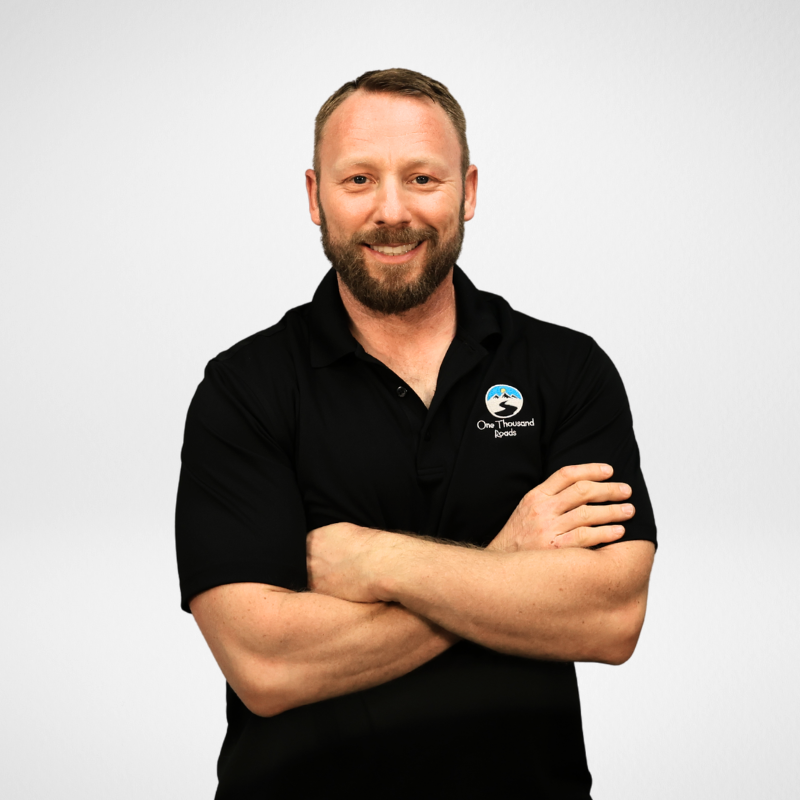
Brad knows what it’s like to be seriously ill and running out of options. While navigating cancer, autoimmunity, and Lyme disease, he could barely walk. EWOT and red light therapy changed the trajectory of his recovery, and he built One Thousand Roads to bring those same tools to others. Today he hosts expert conversations across chronic health recovery, biohacking, and longevity — and is a featured guest on health and wellness podcasts.
Links Mentioned In The Show
Special Listener offer: http://onethousandroads.com/Energy-Fix
Learn More on our YouTube channel: @OneThousandRoadsHQ
Follow Brad Pitzele on Instagram: @bradpitzele
Get 15% off Fusionary Formula- Use Code TANSY15 at checkout!
Podcast review promo...Get 15% off a distance energy healing session or a piece of jewelry with a positive review of the show. Email photo of review (aftersubmitted on podcast platform) to info@tansyrodgers.com
About The Series
The Energy Beneath It All is a 4-part series exploring the deeper layers of energy production, cellular health, mitochondria, chronic symptoms, and the energetic body.
In Part 1, Dr. Pamela Cipriano explored what can happen when persistent symptoms do not match conventional lab results, including the role of Lyme and other tick-borne diseases, mold, gut health, nutrition, and functional testing.
In Part 2, the conversation moves deeper into cellular energy itself.
What happens when oxygen delivery, microcirculation, and mitochondrial function become part of the picture?
And how might supporting those systems help us better understand the profound fatigue that can accompany chronic illness?
The series continues by looking beneath the symptoms to explore what energy really means — physically, cellularly, emotionally, and energetically.
Support Beyond The Episode
If this conversation hit home, and you’re craving deeper support (not just ideas, but real integration):
Join the newsletter →
If you have been living with chronic fatigue or chronic illness, ask yourself:
What is my body actually trying to tell me about its energy needs?
If this conversation resonated, follow or subscribe to The Energy Fix, leave a review, and share it with someone who is tired of being told that chronic fatigue is “just being tired.”
And continue with the rest of The Energy Beneath It All as we keep exploring cellular health, mitochondria, energy production, and the energetic body.
Transcript
-
Tansy Rodgers (00:00.088)
What did chronic illness really take from your identity before you started finding your way back?
Everything is probably the short answer. I was a high achiever, sort of like driven guy. I was really, you know, I loved being a father. I cherished it. I spent so much time with my kids. I liked being social. you know, like, and then it took all of that from me. I didn't want to be social with anyone's too much energy. I didn't care about achieving at work. I cared about survival at work. I I tried to play with my kids, but I had to keep it in a box.
And so then I took my identity. I was a very positive person. And then I became very depressed, very anxious, very filled with guilt and all these negative kind of vibration energies, if you will. It really, it really takes everything. So when my doctor recommended oxygen, I scoffed at it. I'm like, I've tried 200 things and you want me to try oxygen? I've been breathing it the entire time I'm getting sick. This is clearly nonsense.
But I was desperate, so I tried it. And I'll be honest, I didn't believe it at first. It took me a few months to really buy in. And then I became curious. And so I started to research it. There's some really fascinating research, but as we age, and certainly i in chronic illness, one of the key things that declines is.
Tansy Rodgers (01:31.522)
Welcome back to the Energy Fix, a podcast dedicated to help you balance your energetic body by diving deep into the sweet world of all things health and spirituality. My name's Tansy, and I'm an intuitive Crystal Reiki energy healer, energetic nutrition and holistic health practitioner, and a crystal jewelry designer. It's time to talk all things energy. Let's dive in.
Tansy Rodgers (02:00.628)
Welcome back to the Energy Fix Podcast. Thank you so much for being back in this room with us again today. Today, we're going to be talking all about chronic illness, energy, mitochondria, oxygen, healing technologies, and what it truly means to take your health back when the usual answers have not been enough. And friends, you know how that is around here. We are always exploring why.
Things don't seem to come in the very conventional conversations when it comes to healing, right? This conversation is really for that person who knows something is off in the body, but keeps being told that everything looks normal. It's for the person who is tired about being tired, not that they need a nap.
Kind of tired, but they're just tired in their body because it feels like it can't quite produce enough energy to truly live the life that they want to live. And it is for that person who has done the labs, tried the supplements, changed the diet, seen the practitioners and have searched for answers and still wondering why can't I seem to get my energy back? This is for you.
My guest today is Brad Pitzley. He's the founder of 1000 Roads. Brad knows what it feels like to be seriously ill and really running out of options. While navigating cancer, autoimmunity, Lyme disease, and chronic fatigue, he reached a point where he could barely walk. And then he discovered tools like
E W O T, which we're going to be talking about. It stands for exercise with oxygen therapy. And he also dove into some red light therapy. Those tools really help to change the trajectory of his recovery and where he was at. Today, we're going to be diving so deep into all of these conversations. And remember, this conversation is really educational. This is about helping you to explore and open up to
Tansy Rodgers (04:17.934)
other possibilities. All right, Brad. Welcome to the show. Let's dive in.
Thank you so much, Tansy. I appreciate it.
This is going to be a really interesting conversation because around here we talk so much about feeling better, feeling vitality, feeling energetic, feeling this place in our lives to feel grounded and strong and to move forward with as much health, authentic health as we can. But at the same time, being a human can be really, really
Hard. Yeah. And so I want to just dive right into when someone is doing everything that they can do to heal Brad, but their body still cannot seem to produce enough energy to truly function and live life the way that they want to live. What do you see is going on underneath the surface?
It's actually really astonishing. it goes down a little bit into science, but we all have heard of mitochondria. They produce the energy that our body uses. That's not just about feeling energetic, Tansy. That's about your body having the energy to repair, to do all of its natural d detoxification functions and every other what I'll call operational function it has. but what happens in times of stress, in times of inflammation.
Brad Pitzele (05:50.228)
As we age and with illness, all of these things actually can cause our oxygen delivery to those mitochondria to drop. And that creates a bit of an energy crisis in the cells because when mitochondria don't get the oxygen they need, they can only produce about five or 10% of the s energy they do when they have oxygen. And so you get the kind of the chronic stress, chronic sort of
Difficulties you see with folks, which is things like brain fog, things like lack of motivation, feeling low in energy. It some of that's actually your body's protective mechanisms, basically telling you to keep your butt on the couch, stop thinking so much, stop doing so much because there's not enough oxygen being delivered and energy produced to keep up with all of the demands.
And so it's basically rationing energy to the core functions.
Well, okay, so this is really interesting. As you were talking, I was thinking to myself that whole concept of chronic fatigue. Do you feel that there is really this whole concept of chronic fatigue, or is this really a mitochondria oxygen delivery issue?
Most chronic fatigue is actually, I believe it starts with a chronic smoldering infection, not a big like go and get a bunch of antibiotics, but it can be like a viral infection or bacterial infection that's not gonna turn you into sepsis. It's not gonna, it's not necessarily deadly, it's just kind of slowly draining you. And usually for these infectious agents, they wanna make your body as hospitable to themselves.
Brad Pitzele (07:33.366)
Which means they turn down your energy production. So you don't have enough energy for your immune function. You don't have enough energy to repair all the damaged tissue that they're inhibiting, et cetera. So we find a lot of folks, yes, it is a mitochondrial issue that starts with an infectious agent effectively tweaking their oxygen status to make it more hospitable for them, which then obviously when you tweak it back the other way, makes life difficult on those infectious agents.
Yeah. it's fascinating. All right. Brad, let's talk about the your journey before we really get into the tools and dive even deeper here. I want to know about you. What happened on this journey? What happened with cancer autoimmune autoimmunity, Lyme disease, chronic fatigue that eventually led you to 1000 roads?
Well, they say necessity is the mother of invention and that's for me. I was I had like weird things happening during my childhood. I developed psoriasis fairly young, and then I had all these other weird things that would kind of come and go. I'd go to a doctor and get a label and it would be gone two months later. So there was no treatment, but it went away sort of thing. Didn't affect my overall quality of life. But in my mid-thirties, I started to develop what's known as psoriatic arthritis, the kind of a
yeah.
Brad Pitzele (08:53.75)
Arthritis you get when you have psoriasis. And that was kind of weird to me because my psoriasis was incredibly mild. I just got a few patches like on my scalp, maybe sort of thing. Or maybe when I got a cut, I would get a little psoriasis in the healing process and then go away. So I never thought I would develop like the arthritis that comes with it, but I did and kind of in a big way. the doctors tried all the medications, some of them worked for a while.
they were generally immune-suppressive medications, which is what they use. The traditional belief with autoimmunity is your body is just erratically over-attacking itself and causing this damage, which, you know, when you think about humanity being around hundreds of thousands of years, if we had this defective immune system, it's kind of strange that it has popped up more in the recent decades. But in any case, I believed it. I took the drugs, they helped for a while, they would wear off and I'd be in a worse.
scenario, then they would like double the dose and then it'd be worse. And so I kind of kept taking the stair step down with each time they would change or or modify the drugs. And after about two years of this, two or three years, I ended up developing melanoma. And that was a side effect of those medications because they they turned down your immune system. And the particular immune component they turn down is something called tumor necrosfactor, TNF.
Literally tumor necros, meaning kill. So the part of your immune system that attacks tumors. And they turned mine off. And eventually I developed melanoma, a known side effect of this. So I went back to my rheumatologist after I had the melanoma treated and asked, What do I do? like if I keep taking these drugs, I'm probably gonna get cancer again. And if I don't take them, I'm gonna die crippled. And I kind of
feel like I'm, you know, between a rock and a hard place. And he didn't have a very good answer for me, Tanza. He was just like, hey, we'll try another drug in the same class and hope it doesn't react to your body the same way. and that was kind of a a jump off the cliff moment. I walked out of that office. I was completely afraid. I had this premonition of myself being on my deathbed with cancer, saying, I shouldn't have listened to that doctor. And I just sat in my vehicle
Brad Pitzele (11:15.886)
like thinking for 10 minutes in the silence, like, what the heck do I do? I had a young family. I was a single breadwinner. I was like like my quality of life was slipping away. And I thought about the two options and I just said, well, I don't know what it is, but I just gotta try a third way, whatever that is. And I like that gave me comfort in the moment, although I had no idea. so I started doing research. I was on PubMed doing research. I was in like
Patient groups and communities of people with chronic illness who had similar sort of symptoms and trying different things. I became my own kind of guinea pig, if you will. new diets, new supplements. I recently made a list of all the things I tried. I tried like 200 different things over the course of the next several years. and then
I started going and seeing a functional medicine doctor. And at one point he was trying everything. And he's like, here's my big gun. This is gonna work. And it did nothing for me. And I just became more and more depressed and anxious, like as I watched my health slipping away. At this point, the bottoms of my feet were the worst symptoms. The back of my legs were like so stiff. I felt like I'd run four marathons every morning when I woke up and I would turn the shower to scalding hot and try to bend down and touch my toes.
try to stretch it out like that was gonna help, but it never helped. the bottom of my feet felt like the best way to describe it was like they were beaten with a meat hammer. Like every step was punishing. I even to get out of bed to go to the toilet in the middle of the night, I had to put on a special pair of shoes to make it tolerable. So I was like in really bad shape and he was trying everything he could. Nothing was working. and then he's like well I think I'm gonna test you for Lyme disease.
And I I remember laughing inside. I was like, Doc, I've never been bit by a tick. I didn't have that bullseye rash thing. I'm like, I don't have Lyme disease. He's like, Well, you're gonna do this test. It's five hundred bucks. And I just remember thinking, I'm just gonna throw five hundred bucks at this test because it'll show him I don't have it so we can focus on the real thing. And lo and behold, it came back that I had Lyme disease and a co infection known as Bartonella Hensley.
Brad Pitzele (13:33.582)
And I didn't believe it. So I went back to him and I'm like, hey, what's the chance of a false positive, Doc? And he's like, well, this is test is a DNA PCR. You had the DNA of both these bacteria in your urine. What do you think is the chances? I was like, I now I had to accept it. And he's like, Bad news, I don't treat Lyme disease. He's like, I you're gonna have to find what they call a Lyme literate doctor. Only certain doctors play in this pool. And
I can't really help you. I'll still be your general kind of integrative doctor, but I I I'm not gonna be able to help you on your Lyme journey. And, you know, he kind of said at one point as I was leaving, one of these appointments, he said, Hey, you know what you should try is you should try oxygen, either like hyperbaric oxygen or exercise with oxygen therapy. And I walked out of that appointment and I went home and researched both of them, the hyperbaric.
what he was recommending was gonna be somewhere between fifty and seventy-five thousand dollars. And I didn't really have that. Well, even if I did have it, having tried so many things that did nothing, like the thought of like throwing that kind of money at something and like, how am I gonna feel at the tail end of spending that kind of money worried about how I'm gonna support my family? And now what if nothing works? Like I just drained my family's, you know, resources. So I just
And it wasn't just the money. It was you had to spend 90 minutes inside of a hard shell hyperbarrack, which is the type that you can only do in a doctor's office. And he's like, Well, I can get you cheaper if you want to f go live in Florida for eight weeks. And I was like, Well, then I gotta you know, rent a place and I was on a special diet, and it needs to be a place with a kitchen where I can self-prepare all my food and I need to rent a car and I'm gonna lose my job because they're not gonna let me take eight weeks off. So there just wasn't it wasn't practical for me. So I looked at,
This other thing called exercise with oxygen therapy. I'd never heard of it. The only information on the website was a couple of providers who their websites were filled with hyperbole and their prices were at least $5,000 up to $25,000. And I again, I was like, I there's no one on on the internet talking about this. It's all filled with hyperbole. If the thing worked, why are they using all this hyperbole? And
Brad Pitzele (15:55.308)
You know, like I just can't see spending that kind of money on an experiment just to find out it doesn't work. So I just got up from my computer and I was like, I'm I'm out. I'm not doing either of these things. but then I kind of had to reckon with it. I was like, well, now what do you do? You're out of ideas. What do you do? And I thought about it a little bit more. And I kind of came back. I was like, well, I was started bargaining with myself. I was like, would you do it if it wasn't that expensive? And I'm like,
Well, yeah, it's only 15 minutes to do this thing. So like, and I could do it my house. So I could fit it in my life. I just don't know if I want to bet the farm on it. And I was like, well, I'd spent the first 10 years of my career as an engineer. I was no longer an engineer at this point, doing mechanical engineering. And so I was like, what if you just kind of built your own? And then I went back to the computer and started researching it and ended up building my own. and
Went back and saw that doctor maybe about a year later. And he walked in the door and immediately he saw how much better I was. Like he like he before I said a word. And I didn't I took me a long time to understand how the heck he figured it out. But he could just see it and I didn't know it. You know, because when you're getting better, it was it was kind of progressive over time. It's not like a a big event, like, now I'm better. You know, it was kind of like I it took me years to get ill and it took me a period of time to get better. And it was gradual. And and I knew I'd gotten a lot better, but
That was kind of like a defining moment for me. And then he's like, so are you using the oxygen? I'm like, I am, Doc. And he's like, Well, who'd you get it from so I can tell my patients? And I was like, sorry, doc. I just kind of made my own. I figured he was gonna be annoyed with that. And he looked at me like I was crazy. And then he's like, Would you consider making these for my patients? And that was kind of the birth of 1000 Roads. At the moment, I told him, No, I'm still healing and I don't want to overextend myself. And I got a day job and a family.
But over the next six or nine months I just thought about it more and eventually decided like this is some way I could kind of pay it forward because it was a pretty hard journey and I felt like there were, you know, a lot of difficult moments and there's a lot of folks who could benefit from it.
Tansy Rodgers (18:05.996)
Wow, incredible story. And so as you were talking, I was thinking to myself, how so how you were going through this journey, you were feeling the levels of health depletion. But I think that most people don't really understand what that actually feels. Because on the outside, you probably, for the most part, look like every other human being, right? But but
How do can you explain the difference to someone who's never lived inside this level of depletion and what you were actually experiencing?
It was kind of wild. You know, it started, so the arthritis started in my hands. And I remember the first thing I noticed is I would go to the gym and like I didn't have any grip strength. I was trying to do a pull down and I couldn't hold on to the bar. and that kind of like was like striking. It's kind of psychological warfare because like
I go to the rheumatologist and they put me on these drugs. First, no they make first they put you on these drugs that they know aren't gonna work and they make them insurance makes you do them for a while, or they're not gonna help a lot. They don't stop the progress of the disease, as they put it, like you're still getting more and more injured, so to speak. And then they finally step you up to the big drugs. And at this point, I was filled with anticipation, like, yes, now I get better. And then I realized like I got better, but not not all the way better. And like
Then you start reckoning with, well, this is my life now. For from now until the day they put they bury me, I have pain in my body. Like there's nothing I can do about it. And I'm a young father, you know, young kids. And like getting on the floor to play with them just would exhaust. I'd get on the floor to play with my kids and I'd be exhausted. I'd have to lay on the couch for the rest of the afternoon. And then, you know, the next day I was depleted for twenty 15, 20 minutes on the floor with them, which was crazy.
Brad Pitzele (19:56.12)
But then it got even weirder. It was like, I s I first had arthritis in my hands, then I had it in my toes. And then I started to have that leg and that bottom of the foot pain I described. And I remember going to my rheumatologist and being like, This is arthritis too, I assume, right? And he looked at me like I was crazy, like, no, that's not arthritis. Arthritis doesn't do that. And I was like, What are you talking about? Like my toes look like little sausages. They're so swollen. And now the bottom of my foot, like,
right next door to it is hurt too and you're saying it's not related. I was like, this like I I just felt like the medical system didn't know and didn't care. It was like there was a recipe book. It was like, why not just use AI at this point? I got this and this and this. Then you're gonna get this. Like it's kind of like picking a menu at McDonald's sort of thing. It just felt very mechanical and so that was isolating total lack of energy. I would be at work.
Work was tough. I worked at this one job where I had to walk a long distance from my parking lot to my desk. And I used to be a really fast walker, just naturally. And I was walking so slow with that foot pain. Like it was the hardest part of my day. And I just remember this morbidly obese guy like walking twice as fast as me into the office. And I was just like shocked. It was just one of those moments you when you realize how far I had fallen. And then I was hiding in my office because I didn't want anyone
I would didn't have the energy to engage with people. I didn't want them to know it. I would get into a meeting and my brain fog was so hard. Someone would ask me a question and I couldn't process it. So I'd act like I was multi- I'm sorry. I was looking at my email. Like could you repeat yourself? And I I wasn't looking at my email. I just couldn't like process what they were saying. I couldn't pay attention. I didn't have the reserve.
So I would plan out my days and block parts of my calendar, like when I knew I was gonna be at my worst. I was abusing coffee for part of it just to like get my head above the clouds for that little minute before I got jittery. and it was the same thing on the weekends. I just slept all weekend basically, trying to build up enough energy reserve to fake it through the week. And then all the guilt because you're like, I I can't do anything with my my kids and my family.
Brad Pitzele (22:16.024)
They asked me to do things after work and I'm always looking for an excuse to get out of every social interaction because I just feel incredibly horrible. And for me, I needed to hide it all. I was working in corporate America and I knew it would be unforgiving. Like I thought about getting that handicapped parking placard so I didn't have to do that walk. And I'm like, they'll look at me different, they'll start scrutinizing me, they'll recognize I'm not putting in enough, I'll lose this job sooner. I just have to hold on to it as long as I can.
the thought of going to a new job where you have to perform extra and you know demonstrate yourself and kind of win over the crowd early on. I just couldn't even imagine trying to do that. So it became very isolating. It was isolate it was very depressing, a lot of anxiety for me, for my family. a lot of like everything was uncomfortable. There was never a moment where I just felt comfortable inside my body. I didn't have energy to do anything really.
And when I had when I was forced to do things, it would just deplete me for days. and then there's just all this guilt because you're never present as if it was by choice. Y you know, like you just like I'm not I'm nowhere for anybody because I can't even be here for me. yeah. It's it and it's a downward spiral, Tansy. Like it just keeps getting worse and dark and the thoughts get darker. and they got pretty dark. I mean, it was
It was pretty scary. I I was I knew at some point there were times I was like, It's just a matter of a a you know, a year or two at the most, may eighteen months, six months probably, before I'm gonna have to go find a family member and live in their basement with my family. And I don't know who's gonna be willing to take us in and what's our life gonna look like. Are we gonna be living on food stamps or like like all those thoughts were going through my head. I just didn't know what that path looked like.
A quick pause for your gut because hey, it's the holidays. If you're anything like me, this time of year means your routine probably is gonna go out the window. You're gonna have more sugar, more snacks, more sure, I'll have another one of those, and a whole lot more stress on your system in general. One thing I refuse to leave behind when life gets busy is my gut support. For me, that's just Thrive Probiotics.
Tansy Rodgers (24:38.912)
I love them because they focus on actually helping your gut stay strong through real life. Things like travel, holiday food, late nights, all of it. Supporting your microbiome isn't just about digestion. It ties into mood, immunity, energy, overall health and vitality. Basically, how human you feel when your calendar is full and your nervous system is really, really loud.
If you want backup for your gut heading into the holidays, check out Just Thrive using the link in the show notes. And if you click on that link and use code TANSI15 at checkout, you're gonna get 15% off your entire order. They have an incredible lineup of so many different products that are incredibly supportive for your gut and for your overall health and vitality. So again, head down to the show notes, click the link.
And use code TANSY15 to get 15% off your entire order. Here's to a happy gut this holiday season.
What you said two words that I think are really important to highlight. One of them was mechanical, especially when you were at the doctor's offices, everything felt mechanical, you said. like there were scripts that they almost needed to follow. you also said the word isolation, specifically about your family and yourself. And so when it comes with complex illnesses, dealing with complex illnesses, what do you think?
gets misunderstood the most? This could be from doctors or family, friends, yourself, whoever, but what do you think really gets misunderstood and gets swept under the rug?
Brad Pitzele (26:25.718)
Yeah. The you know, people will come up to you and tell you, Well, you look fine sort of thing. And that that's actually that's incredibly like difficult to hear because like, yeah, I'm dying in here, but you're like, you physically look good. Like it doesn't really matter. Like the insides are in tatters. and it's kind of a slap in the face sort of thing. It almost takes away from your your right to to feel the way you do.
Like maybe you're just lazy, or maybe you just need a toughen up buttercup or like, you know, so doctors are in the medical system more difficult because they compartmentalize everything in our traditional medical system and and they have a name and it it doesn't feel like it often goes after root cause. It goes after symptoms. you got a symptom, here's a treatment. And in my
My family, I had several folks who worked in the pharmaceutical industry and the sales, and I knew what that looked like. And I also, my oldest daughter has special needs, and I had done some disability advocacy. And with that, I'd spent time in Washington, D.C. And all the people who ever trained us, and anyone who was ever in a advocating or lobbying in a a politician's office that I walked in.
Almost every single one of them went through the pharmaceutical industry. I'm not s like that's not an exaggeration. And so these doctors are educated by pharmaceutical representatives. Literally, the pharmaceutical representative walks in with their their study and mentions the things that are favorable for their drug. That's their job, and the and that's how the doctor is educated. And the pharmaceutical rep might have a sociology.
or or s a marketing degree and they were just taught to memorize a script. And that's that's the education they're getting on these sorts of things. So there is difficulty because it's what we call a standard of care. You know, you hear all these things about individualized medicine. There is no individualized medicine in the America under our s our healthcare system. It's standard of care. And oftentimes that's a big hammer that if a doctor even wanted to go outside standard of care, they're risking their license. So there's a
Brad Pitzele (28:43.276)
you know, a kind of a coercion to it. and I would say a layer on top of that, Lyme disease is really difficult as well, because it's a disease that traditional medicine refuses to even acknowledge exists. And I've had to have the conversations I've had with doctors, I literally had to stop a doctor when I mentioned that arthritis was caused by Lyme disease. And she said to me, she goes,
I said, wait, she kind of made this look and I said, wait, I need to step back. I need to make sure we're still operating in the same universe. Because if we're not, then it doesn't make sense to have any conversation. I said, Do you agree that Lyme disease is a real disease? Meaning the bacteria that causes Lyme disease infects humans and causes Lyme disease symptoms. Is that real or is that imaginary? She's like, Well, yeah, but it's just not that common. I said, Well, funny you should say that. I'm like,
You know, I keep hearing about tuberculosis all over the news, and I think there's like six people in America that have it. I said, when I got diagnosed, there were 30,000 people who had it, according to the CDC. And then they came back and said, we made a mate a mistake. It's not 30,000, it's 300,000. And then they came back a couple of years later and said, whoops, it's not 300,000, it's a half a million. And I said, now do the math with me. I was like, if a half million people get it every year and we live to 80 on average, that means like over the course of a lifetime, maybe 40 million people have it.
That's like one in eight Americans. I'm like, how uncommon is it? And she she didn't like that because I was using CDC numbers and like just doing math for her. That's the engineering side of my brain. But like I've had to have like, that's the challenge is sometimes you walk into a doctor's office and it doesn't have to be Lyme and they just don't think it exists. They're like, maybe you just need some Prozac. Maybe you're just depressed. And it's like, no.
The pain isn't depression. The pain may be causing some depression, but it the depression is not causing the pain. It's the other way around. so it becomes difficult and you just have to advocate. And then as far as like family and everything or friends, some folks under will try to understand. Some folks will be like, You look fine, like maybe, maybe he's just a you know, like they don't really believe it sort of thing. Is he cooking this thing up?
Brad Pitzele (31:03.478)
Which is harmful for folks. And then there's this other second folks that try to understand. It's like, well, you know, maybe maybe try like a a supplement for your energy or something. You know, like they're trying to be helpful, but you're like, you know, it's like it's like you're in this hole that's a hundred feet down and they're like, Hey, do you think maybe a stepladder would help? And you're like, maybe. I mean, I'll be ninety-eight feet down now, but
Which this whole conversation is just testament to the fact that you have to be your own advocate. Yes. And really stand firm in what you know about your body because you are so aware of really what is going on. I remember when I worked in physical therapy full time and and I had a
A patient, I was sitting with a patient in the room and we were having conversation. He was a very, he was like in his 80s. He was a very old school doctor. and we started talking about health stuff, and we got into the conversation about organic foods. And he goes, that stuff, he goes, Toxin overload, that's hogwash. And I'm like, what?
Right. You're right.
What? Okay. And so, and so I again, you just have to really be strong in what you know to be true about your own body, what you know to be true within your own soul, and through and through what just your intuition is telling you. So
Brad Pitzele (32:43.22)
I always tell folks, I'm like, you have to listen to that inside voice. Yes. Because a doctor can look at your blood work and see certain things that you can't, but your body has more than five senses. And there's a lot more in here. And if you listen to it, it will tell you and it will tell you kind of like, and it took me until that crisis moment when I had that premonition of myself on my deathbed to re finally like wake up and be like, wait.
This is this is not gonna go well for me. I have to find a different way than these I can't just outsource my health to my doctors. I have to own it. and I think that was, yeah. I and ever since then I've realized like anytime I go to a doctor and they just or a care provider or something, they say something that doesn't sit sit with me, I just I'm like, that's not right. I you know, I I refuse to absorb that. That's not right. I'm gonna go find another way. and I I encourage folks to do it all the time. Like
There's something inside you and it knows. So just listen to it. You will never regret listening to it. I can tell you there's often you will regret not listening to it.
Yeah, yeah. Well, listen, I want to get into the sciences. I want to get into the tools, but I still have one more question for you because I think that this is really, really important, especially when it comes to chronic illnesses, when you can't see it on the outside. And this goes from mental health stuff too, but really, it truly all blends together this this n attack on the nervous system, right?
What did chronic illness really take from your identity before you started finding your way back? Like what did it start to loosen for you?
Brad Pitzele (34:22.336)
You know, everything is probably the short answer. It you know, I was a high achiever, sort of like driven guy. I was really, you know, I loved being a father. I cherished it. I spent so much time with my kids. I liked being social. you know, like and then it took all of that from me. I didn't want to be social with anyone with too much energy. I didn't care about achieving at work. I cared about survival at work.
I I tried to play with my kids, but I had to keep it in a box. And so then I took my identity. I was a very positive person. And then I became very depressed, very anxious, very filled with guilt and all these negative kind of vibration energies, if you will. it really, it really takes everything. You know, they s the best way to put it is there's an old saying, which is a healthy person has a thousand wishes and a sick person only has one. And it's true.
When you're that sick, all you're thinking about 24-7 is how do I feel? How can I get better? What should I try next? gosh, am I going the wrong way? The whole internal conversation is just about your disease state in a different vectors of that disease state. How do I get better? Am I feeling worse? You know, can't do I have enough energy to do the thing people are asking me to do?
And so it really takes it takes over your life. It becomes almost a job just managing it and not just a 40-hour week job either, unfortunately. so yeah, it's it it's much bigger than people realize. But I think the other thing is true. I realized later in my healing journey, Tansy, was like I stopped taking ownership for the disease and I started.
To police the thoughts between my ears and what I would let, you know, live there rent-free, so to speak, and what I wouldn't, and started to change my inner dialogue because I realized something, and it's actually rooted in science. It's not as woo-hoo as it first sounds, which is a lot of these infectious agents that cause chronic illness, and they're at a lot more they're at the root of more illnesses than we talk about. They intentionally
Brad Pitzele (36:44.29)
physically depress your body. They deplete it of energy. They put it in an energetically depressed state to deplete your immune system to make it a more effec more hospitable place to them. And the emotional depression, anxiety, negative feelings help further depress your immune system. There's a clear linkage there and there's plenty of research on it. And when I realized they were like doing that to me, they were like messing with my neurochemicals to cause that.
That kinda made me a little feisty. I was like, you know what? I'm spinning this thing the other way. And that's when I started to kinda like, I don't it's not my Lyme disease. I don't own it. I I'm I'm giving it less less space in my mind. I'm I'm going to purposefully start spinning those emotions the other way as best I can, finding joy in things, finding forgiveness in things, finding time to see positive things, just because I'm
sorry, I'm not gonna li I'm not you're I I'm not going down without a fight sort of thing. And I think it was it was a helpful part of my healing as well.
Yeah. All right. So you talked about oxygen, mitochondria, energy optimization. Let's get into it. We've been getting into it, but let's really get into the nitty-gritty with why this stuff matters. Can you walk us through that connection in a really grounded way? Like tell us why or how they all flow together. And also why does ax oxygen matter so much when we're talking about cellular energy?
Yeah. So when my doctor recommended oxygen, I scoffed at it. I'm like, I I've tried two hundred things and you want me to try oxygen? I've been breathing it the entire time I'm getting sick. This is clearly nonsense. This is the you know, we've definitely gone up the deep end here. But I was desperate, so I tried it. And I'll be honest, I didn't believe it at first. It took me a few months to really buy in. luckily for inertia, I kept doing it after I knew it wasn't doing anything like everything else.
Brad Pitzele (38:47.68)
And then I became curious. And so I started to research it. So when we think of oxygen, most of us like, well, my cells aren't starved of oxygen. I'm breathing fine. If I put a pulse oximeter on my finger, it shows 99%. I got plenty of oxygen in my blood. What are you talking about? And that's all true, except oxygen in the blood is not oxygen in our cells. So this is really there's some really fascinating research, but as we age,
And certainly i in chronic illness, one of the key things that declines is something called VO2 max. Okay, you may have heard it. So it used to be a performance metric primarily. You'd look at athletes who had really high VO2 max, and the V stands for volume. It's literally the maximum volume of oxygen your body can consume. And because oxygen is the gating factor for how much energy you can produce. So an athlete who had a higher VO2 max.
Could produce more work with their body and they could perform at a higher level. We now see it as also a longevity thing. As we age, we and in chronic illness, more we there's an accelerated loss of VO2 max. So our body is able to consume less oxygen. And as a matter of fact, like every year past the age of 25, our body loses about 1% of its ability to utilize oxygen.
One of the reasons for that is our microcirculation. So, and this doesn't get talked about f often enough. We there's a lot of talk nowadays about mitochondria. There wasn't a decade ago, and I'm thankful for that. But microcirculation is probably equally and maybe more important than mitochondria. So at the end runs of our circulatory system is our capillaries. They're thinner than a human hair, and they're actually thinner than a red blood cell.
So, in order for a red blood cell to deliver oxygen to our tissues, it has to fold up like a taco to squeeze into these things. It has to deform itself. but what happens as we age and in chronic illness is inflammation builds up in these capillaries. And so now they they become smaller. And now some of the red blood cells can't get through, or maybe all of them. And all the tissues downstream now go into what I'll call oxygen starvation. The medical term is hypoxia.
Brad Pitzele (41:07.202)
So they go into hypoxia, a low oxygen state, and our mitochondria becomes starved of oxygen. And when they become starved of oxygen, they have a backup generator. So they don't die. We don't have like sepsis in our body because we didn't get oxygen to these tissues. They kick on these backup generators, which is they burn glucose without oxygen, glycolysis, and it's very inefficient. It can only produce about 10% of the energy as you could with oxygen.
And so that's the reason why oxygen was needed for us to have multicellular life three billion years ago. They go back to the old way, they go back to glycolysis. And the problem with glycolysis is a, it's a low energy state, two, it produces a massive amount of metabolic waste like lactic acid. So if you've ever worked out hard and you felt stiff two days later, that's lactic acid. That means those muscles ran out of oxygen at the end and they turned to glycolysis and they produce lactic acid.
but then a cell that's in this low energy state, it can't detox. It stop it doesn't have enough energy to do even essential functions. And one of the n first things it stops doing is detoxifying. So it lets all this metabolic waste develop inside the cell. And this metabolic waste causes free radical damage and it damages the mitochondria.
And it damages the cell in general, and the cell doesn't have energy to repair itself. So it's kind of this zombie cell filled with toxins, slowly strangling itself, trying to survive. and then that inflammation caused by that cell leaks back out into our microcirculation, causing even more swelling. And it's what I call this doom loop, which is you have this what I'll call an insult to your microcirculation, causes swelling.
causes oxygen delivery to drop, causes more inflammation, and causes more oxygen to drop. And so it's just a self reinforcing cycle. and so that that's happening in everyone who as we age to a greater or lesser degree, and that's why our cells can be starved of oxygen even while our blood supply looks like it's filled with oxygen.
Tansy Rodgers (43:24.458)
fascinating. So how do you know when you're real like what are some of the first signs that you're having a microcirculation issue?
Well, it's all the things that you can think about even in aging. Think about, you know, how your memory's not as sharp as it used to be. Well, that's because your brain doesn't have as much energy as it used to. It's not that you've you're you the neurons don't have the memory, because when you feel energetic, you can remember that thing. When you're feeling a little bit sluggish, all of a sudden you can't remember the thing. That's a a small, what I'll call a small energy crisis in your brain. You think about healing and how, you know, you used to get a cut and it would be healed within a half week.
And now it takes a week and a half as you get older. geez, well, that's an energy crisis of healing right there on your skin. you think about how some and now this isn't only caused by this, it can be caused by thyroid and other things, but you think about how maybe you have cold hands and feet. you're you're less able to regulate your temperature as you get older. Part of that can be caused by an energy crisis. sports performance, right? You can't run as fast.
You can't lift as hard. You can't, you know, you used to climb two flights of stairs before he got winded, and now maybe you're lucky to get up to the top of the first flight. That's all all of that is the same sort of thing. and the fascinating the way Ewatt started was in the 1950s and 60s, there was this gentleman, Manfred von Arden, who was a prolific inventor. He invented like the scanning electron microscope. He helped commercialize the original CRT.
Television sets in the 1930s. and he became interested in a Nobel Prize winner's work on cancer named Otto Warburg. Otto Warburg showed that he could turn any regular cell into a cancer cell by depriving it of oxygen. And so Manfred von Arden became interested in this. And so he started experimenting with oxygen and exercise as an anti cancer treatment. And what he discovered was
Brad Pitzele (45:26.444)
Beyond cancer, what he found was he would just have elderly folks do what now is known as Iwatt for just a few sessions. And he could cause this anti-inflammatory effect inside of the capillaries and re-establish more youthful blood flow, not just when they were doing EWAT, but like you'd have them do a few sessions and you had them come back weeks later and they still had this better, you know, circulation. And so that was kind of the birth is really interesting. And
So when I started studying all this, it was kind of like a rabbit hole. I kept falling deeper down. And it's just shocking how important oxygen is for our health. It's it's not just for energy production, although that it's super critical for that. there's a lot of linkage between ox lack of oxygen and cancer. They c there's plenty of current studies on it showing the survival rate of a of someone with a tumor is directly correlated to the the oxygen status of that tumor.
And so much other research on that. we need oxygen for detoxification. we need oxygen for energy production, we need oxygen for brain health, we need it for immune health. There's just so many places there's not really a a system in your body that is does not desperately rely on oxygen to function appropriately.
Yeah. these symptoms that you talked about with the microcirculation issues, would they be the same kind of system or symptoms that would show when your mitochondria are struggling as well?
Yeah, so there's a there there that's that doom loop. One big one begets the other. so if you have damaged microcirculation, it's gonna cause damage to your mitochondria. And if you have damaged mitochondria that are spitting out a lot of inflammation, eventually it's gonna damage your microcirculation. But so then the question becomes chicken or egg sort of thing. there's a lot of really fascinating research out there. And
Brad Pitzele (47:32.458)
I believe the microcirculation is many times more fragile than our mitochondria, although both are relatively fragile. And I'll give you some of the research. So they have folks do like, they've had folks do rest studies, like just 10 minutes of inactivity, and they they basically cut off circulation to their leg muscle, and then they release that, they release the circulation. What should happen in a healthy tissue
is it should overperfuse. It should cause a a gush of blood into those tissues to reoxygenate everything. And they find even after 10 minutes of inactivity, it's dysfunctional. And but they can reverse it by just a short stint of walking or doing muscle clenching exercises while it's you know, while it's being occluded from or not getting blood flow. And they found that, so then they did these longer bed rest studies where they had folks
For minutes, for days, and for weeks. And within minutes, we have microcirculation dysfunction. Then they looked at the downstream impact on mitochondria, and it's probably days to more like weeks. Well, actually, it's more like weeks before they people being on bed rest, like no activity, until they started to see a reduction in mitochondria. And even after 60 days in bed.
with no activity, they still didn't have mitochondrial dysfunction. So think about that. Your microcirculation with just 10 minutes of inactivity already starts to feel the heat. Your mitochondria don't really become dysfunctional until after two months of that same sort of natural stressor that happens in our modern world. And so that's that's kind of my basis when I say the microcirculation is often at the is often the earlier thing for many folks. Now
In chronic illness, it depends because different infections or different health issues can affect different parts. And I don't I think it's it's less relevant there because it's it's a loop. And as long as you can interrupt the loop somewhere, you can start to improve it. eventually if you can cut off the inflammation, you you can start to heal the the endothelial cells in the microcirculation and improve the microcirculation, et cetera.
Tansy Rodgers (49:50.23)
Yeah. And so you talked a lot about EWOT so far. You've talked about what it is and why it's important, but what is really the basic idea behind it? I mean, how how do you work with it? How do you use it? How how do you get it to help you?
Yeah.
Well, the what it looks like, just for your your listeners, is you basically do fifteen minutes of exercise. It doesn't have to be super intense. For our people with chronic illness, it can be anything as mild as like jumping on a rebounder, slow walking or marching in place, calisthenics. We even have passive options for people who are sick. They'll do it with like an in infrared sauna blanket. for people who are healthier, we try to just do fifteen minutes of cardio, whatever's comfortable for you.
While you're breathing through a mask near pure oxygen. what that does is well, when you exercise, your body immediately goes into an oxygen deficit. It's like, gosh, we can't keep up this energy production to keep you exercising. And it causes a cascade of physiological changes. You start breathing faster and deeper to bring more oxygen in. Your lung membrane thins out to allow more to diffuse through into your blood, your heart starts beating faster and deeper, your blood vessels dilate.
And even your blood pressure goes up. and it goes up to increase the drive of oxygen out of the blood and into the tissues. And so what we do is we breathe near pure oxygen. While we're doing that, we're basically hijacking all these physiological benefits of exercise, and then we increase our oxygen uptake from what we have at room oxygen, it's like 21% oxygen. We breathe instead 93% oxygen. So
Brad Pitzele (51:35.51)
It's a massive spike. And what that does is it allows it allows oxygen, not just oxygenate your red blood cells. Those are already at capacity, but it drives oxygen into our blood plasma. Now, blood plasma typically doesn't carry very much oxygen, maybe 2% of all the oxygen in our body. It's that, it's like a clearish yellow liquid that all the red and white blood cells ride on. It's the part that makes our blood liquid. And
So what we do is we actually drive oxygen into that blood plasma, and that's important for two reasons. One, it increases the oxygen carrying capacity of the blood overall. But more importantly, blood plasma is like 10,000 times thinner than a red blood cell. So if you're imagining those capillaries that are clogged shut and they can't get a red blood cell through, all of a sudden all that blood plasma still can get through because it's, you know, it's the difference between a grain of sand and a semi-truck.
You can't get the semi-truck through, but a grain of sand fits through just fine. And so you're able to deliver immediate oxygen downstream and you know, re-oxygenate the cells. And oxygen is an incredibly powerful anti-inflammatory. So anywhere in your body you have inflammation, you have what's known as local hypoxia, oxygen starvation. You can't have inflammation without oxygen starvation. And the flip is also true. Anywhere in your body you have.
oxygen starvation, inflammation follows. So you ha it's can't have one without the other. So when we reoxygenate through that swell swollen capillary, we cause an anti-inflammatory impact that helps reopen it and re-establish more youthful blood flow.
And so without getting more oxygen into the body, I want to take just a step back for one second, without getting more oxygen into the body, especially if we're thinking about people with chronic fatigue or autoimmunity or you know, post-ilness depletion, whatever it is. How how do you think about intensity for that person? Do you think that pushing harder can backfire when the system is already overwhelmed? Or
Tansy Rodgers (53:49.87)
'Cause that's what most people do, right? Most people are like, I'm tired, I'm just gonna push harder.
Yeah. No, absolutely not. This is not a we are not training for the Olympics. We are trying to get better. If you overdo it, you will set yourself back. Your body is in an e energy deficit. So the goal is I always tell folks, start slow, listen to your body. Those are the two mantras. The nice thing about exercise with oxygen therapy is when you're breathing the oxygen, the exercise is a lot easier.
That's the first benefit at most folks notice is immediately if you could do, you know, X amount of of exercise, you can do X plus plus. And so, you know, for me, like when I started, I was at a resistance of 12 on my elliptical. And the first session I had to put it up to 14. The next session I had to put it up to 15. Today I do it at like 17 out of 20. And it doesn't feel qualitatively any different than it did when I used to do it at 12. So
You'll be able to do more oxygen immediate or more exercise immediately. And over time, your capability of doing exercise will go up quicker than you would normally experience if you were just doing regular exercise. However, you need to start at at a level and listen to your body. You may not be able to do 15 minutes on your first session. That's fine. And for many folks with chronic illness, we have them start with just passively breathing oxygen for several sessions, see how their body responds.
And then maybe slowly add one minute of exercise, then two minutes of exercise, and slowly build up to that 15 minutes. and that can be starting as slow as like, you know, walking or stretching or whatever you can tolerate, one of those $49 under-the-desk pedal bikes. and don't worry about intensity. Your body will just like naturally tell you, you'll be doing it at whatever you feel comfortable with. And then one day you're gonna make, you know what? I don't feel like I'm getting enough out of this anymore. I need to increase the intensity a little bit.
Brad Pitzele (55:48.95)
And so you kind of naturally throttle yourself upwards when your body can handle it. But early on, the goal is just, you know, increase the circulation a bit while we're breathing the oxygen.
All right. So I'm gonna ask this question because I know this will resonate with a lot of listeners. And so thinking about what we just talked about right here, people that are used to pushing themselves or that are used to being in burnout. Yep. And they just think that that is normal living, like they don't necessarily know the difference between healthy versus burnout symptoms. Yeah. How do you know if you're overdoing it versus it?
creating a setback like how can you tell that difference?
Well, if you overdo it, usually you'll notice it either that day or definitely the next day for most folks. Cause what's gonna happen is when you overdo it, like physiologically, what's happening is you're depleting more energy than you're putting into the system. So net net, now your body has less energy to recover from that exercise, less energy to do everything else it was trying to do. When you're in a burnout state.
You're over you're overextending yourself. So you're already in a lower energy state. All that stress all causes inflammation in your body. it it puts your body on high alert so it's never in rest and repair mode. So you kind of have all of this, you know, like this parts of your body that just are not getting the attention they need. And so
Brad Pitzele (57:24.416)
If you overextend yourself, you're just gonna you're just gonna add to that deficit. So what we're trying to do is if you in the sweet spot is getting your circulation up, getting this oxygen in where it's a net benefit, it's starting to add more energy to your ecosystem than the exercise itself takes away. And what happens over time is that rebuilds your mitochondria. You build new healthy mitochondria, you build your capacity, you repair your microcirculation.
So now that whole doom loop is running in reverse. You even can build new capillaries to the muscles that are needing it. And over time, all of this oxygen delivery leads to a greater energetic system in our body. And with that greater energetic system, when we're not using it doing ewater exercise, it now can be repositioned into healing and repairing. And that's effectively what we're trying to do.
Mm, yeah. Interesting. Okay. All right. So we've talked a lot about Ewatt and we talked about the oxygen therapy. Let's talk now about red light therapy because that was another big tool that worked for you and that you bring into your repertoire. So red light therapy, it's become really popular, but I know even for a lot of people it can still feel really c confusing. Like how is it working? How long do I do? How often do I do? You know.
Do like what what do I need to do? So what do you think people need to understand about red light therapy and how it can support them on their healing journey? What do you think is the most important thing?
Well, you know, for me, I started doing it maybe three or six months into my healing journey. At first I didn't get a whole lot out of it until I kind of figured out there was a sequence to it that that was really made it an amplifier. I did the Ewatt first, and then when I put red light immediately after, I noticed a bump in my healing speed. Yes. In in that exact sequence. and I'll talk about that in a little bit. What's interesting is
Tansy Rodgers (59:20.664)
So you combine them.
Brad Pitzele (59:29.612)
why we need it. So red and near infrared light, we get all light, full spectrum from the sun, everything from UV to red and near infrared. And historically that's how our bodies have worked. They've adapted it's not just light for our eyes, it's a signal for our entire body on that spectrum. then we moved indoors obviously and so we're getting less light. Now we're mostly indoor creatures.
But something happened more recently, which is we shifted from incandescence to LED bulbs. And the reason was energy efficiency. So the way they're one of the major reasons why they're more energy efficient is they've you they've taken out all the red and near infrared light because red and near infrared are experienced by our bodies is heat. So they want a lighting source that doesn't waste electricity on heat. And so now you're indoors.
And the light you're getting, unlike incandescent lights, which did have heat, they did have reds and near infrareds, you're now starved of it. And it's a signal for your body. So we naturally get reds and near infrareds early in the day or late in the evening when the sun is low on the horizon. That's when that comes through deepest. And that's when our body expects it. so if you're going to use it, those are clearly the best two times to use it. What it does is really fascinating.
it it actually interacts with our mitochondria and it causes them to become more efficient at utilizing oxygen. So what it does is it causes the mitochondria to suck in more oxygen, which means it produces more energy. And that's any benefit you hear about it, whether it's skin benefit, whether it's healing benefits, whether it's brain benefits, you know, there's tens of thousands of studies done on it showing the benefits.
And all of them come back to basically that same mechanism, causing your mitochondria to produce more energy. So if your skin is producing more energy, it's got more energy to produce more collagen. And so it can look more youthful, it can make wrinkles fade, et cetera. If your bone is absorbing it, it can produce new new osteocytes. So it can heal a fractured bone faster. If your brain, same thing. our brain is the most oxygen hungry organ in our body. It's like 2% of our body weight.
Brad Pitzele (01:01:52.218)
And it uses 20% of all the oxygen we breathe. So it's like a 10x, you know, that's how much energy it needs. So that's how red light works is by causing more oxygen utilization. But take that back and compare that to what I said, which is a lot of us, the issue isn't first at the mitochondria, it's at the microcirculation. So a lot of folks will go out and do red light and they'll be like, yeah, I noticed a little something, but you know, it wasn't what everything talked about.
And there's a reason for that because if there's not oxygen being delivered sufficiently to the cell, stimulating it to use more is like trying to rev you know the engine of a car with no gas, right? So, like, what are you gonna do? You got a crimped gas line, you're revving the engine, you're not gonna go much faster. You might get a little of something, just not a lot. and that's why the sequence matters. So, what I have folks do is I have them do Ewatt, they're flooding their body with oxygen.
immediately afterwards, like don't cool down, don't go do a shower, like immediately just get right underneath that red light. And that way now we're telling our body all this excess oxygen that's still floating in my body, use as much of it as possible to produce energy. And so reds usually focus on more superficial tissues like our skin and near infrareds can penetrate much deeper several inches into our body. So bones, brain
you know, organs, et cetera, fascia, all of that. So that's kind of how and why we use it. Your point about it can become confusing. it it's certainly also like mitochondria, it's become much more in vogue in over the last 10 years. And with that hype, you get I think there's a little too much hype because if people don't understand how it works, sometimes it it's oversold like by itself. I like I said, I I see it as
It is a helper, but it's not like night and day helper because you're basically it's that whole fuel line kind of analogy. But what what's interesting too about it is the way it works is it works on something called a biphasic dose response. A really fancy term that means the benefits over time are it's Goldilocks and the three bears. Too little and it's not good. Too much, it's not really good. You need to be in the sweet spot. Now
Brad Pitzele (01:04:15.19)
If you do too much, it's not bad. Neither one is bad. It doesn't harm you in any way. It just negates the benefits. So you need to kind of dial in exactly how much you do. And the way you have to do that is by how close you are to your to your light source, how powerful is your light source, and how much time you spend under it. Those are kind of the three variables for an end user. For we don't you know, there's we don't want our our
Our folks having to do a bunch of math because anyone I was joking, anyone's got to do that much math, they're just not gonna do it. So for our our lights, for instance, we just have them stand, stand or sit six to twelve inches from the panel. And if they're doing it right after an EWAT session, they only have to do it for like seven to 10 minutes. If they're doing it away from an Ewatt session, they can do it for like 10 or 15 minutes.
Break because inflammation is one of those root issues that can quietly mess with everything, like your energy, your joints, your digestion, your recovery time, your mood, and even mental clarity. And here's the tricky part a lot of people wait until they feel terrible to actually support inflammation. But inflammation is often a slow build. Things like stress and sleep and food choices.
Hormone imbalances, overtraining, under recovering. Well, it all stacks up. That's why one of my consistent staples is turmeric gold by fusionary formulas. It's designed to support a healthy inflammatory response. And I like it because it's practical. There's no complicated routine. It's just a really grounded, steady support that you can actually keep up with. And it is clean products.
If your body has been feeling more achy, stiff, foggy, or reactive than you want it to be, this is a solid option to consider as part of your foundation. And you can use my code, code TANSI15 for 15% off your entire order. Turmeric Gold isn't the only thing they have. They have an array of incredible products that you can explore and try out.
Tansy Rodgers (01:06:30.004)
I will link it down in the show notes so that you can easily jump right on over and use that code COTETANSY15 for 15% off. Alright, let's get back into this episode.
Tansy Rodgers (01:06:45.324)
All right, so we've talked about oxygen therapy. We've talked about red light therapy, we've talked about bringing them together and why that is so important. I love how you explained everything. I also want to talk a little bit about metabolic health. And I want to talk about that from your perspective of why metabotic metabolic health matters so much when we talk about prevention, resilience, recovery, especially for my cancer and metabolic health.
perspective. cancer's on the rise. I, Brad, it is incredible the amount of people that I and listen, I'm in this holistic health field too. I'm surrounded by this these conversations and the understandings and the knowings about protecting the body and working to prevent cancer. But I will tell you,
the amount of people that have passed in my life just over the past few years from cancer, the amount of people in this past year that I just heard have got diagnosed with some form of cancer. It is unbelievable. And so I want to really just touch on this because I think that this is going to is going to hit home for a lot of people because it is so prevalent in so many people's lives.
Yeah. Yep. absolutely. And i it's the it's it's two things. It's very prevalent and it's so scary. Everyone since our youngest age, the most scary thought is of passing away from cancer of that frail person who looks gaunt in their bed and like they're just they're no longer themselves and there they are just in pain for s months and right. And like I know my my grandfather passed that way. He had cancer.
And he beat it and we had a few good years with him, but he was never quite the same. The treatments really took it out of him. And then he got it again and, you know, it was quick. Once a and but just watching him and like having to go visit, he was, you know, up an hour away and I would travel up there to go to the hospital and just seeing it. It was just it was rough. and that's like the scariest thing in the world for us be like the there's no death worse in in our our brains the way it's been fed to us than cancer.
Brad Pitzele (01:09:09.666)
I was kind of shocked, Tansy, when I started researching this. Like, if you look up the Warburg effect, again named after Otto Warburg, it's it's well known. As a matter of fact, if you look at resistant tumors, they're they have a low oxygen status. And the reason is if you're doing traditional therapies, radiation and chemotherapy, they're oxidative stress.
Therapies, meaning they require oxygen to work. They combine with oxygen to create a burst of free radicals in order to eradicate the cancerous cells. So if there's no oxygen, there is no cancer killing capabilities. and yet it it's shocking that like the average cancer patient isn't aware of this linkage, and it's not really talked about. And
I mentioned Manfred von Arden did some work on it too. And he showed he could take a precancerous lesion and he would he did his EWAT. He also gave a a thymus pill, which a desiccated organ pill, and he was able to unprime the, you know, the precancerous lesions with it. there's tons of research on just the link between oxygen status and cancer. So we have folks using EWAT as part of
complementary to their traditional therapies, for instance, for two reasons. One, because the oxygen helps those work. Two, because Ewatt is an incredibly powerful detoxifier and it works through several pathways. people don't know this, but your lungs are actually your biggest detox organ. 70% of all detoxification happens through your lungs. And a proof point for anyone who's like, that doesn't sound right, is just think about the last time you walked near someone who drank too much the night before, had too much
garlic the night before you can smell it. There's other things besides carbon dioxide coming out here. and it works through lymphatic movement, which is exercise. It works through sweating, which is great for taking the detoxification load off our elimination organs. It works because our liver requires oxygen to oxidize things and break them down so that we can get them out of the body. And of course
Brad Pitzele (01:11:32.126)
Detox is incredibly energy intensive, which energy requires oxygen. So we have folks using them to reduce their symptoms from their traditional treatments. We also have folks who are choosing to go the a more holistic route altogether. And there's actually a ton of alternate cancer centers out there that are using oxygen therapies, including Iwatt, throughout the country and with some pretty astounding benefits as well.
Yeah. Yeah. All right. And so thinking about that and thinking about 1000 roads, I want to just kind of bring all this together in this big, beautiful, nice little package with a bow and actually bring back something we talked about in the very beginning health sovereignty. So we have these tools. You know, you you've done the research, you're on your own journey and in the people that you help you.
You've done the research, you have these tools that have really been making a difference. We have some language, some understanding around some of these really big illnesses like cancer, for example.
Where's the line between health sovereignty and trying to do everything by yourself versus looking and finding the support, like maybe through 1000 Roads or through some of these doctors who are more literate in these conversations?
I yeah, I think health sovereignty is so important. That doesn't mean you can't get help and advice from outside folks. Absolutely not. Quite the opposite. It means you should go out and find s someone, a partner in your health that you feel comfortable with, that you feel confident in, you feel is listening to you, you feel understands not only where you are, but where you're trying to get and what your boundaries are. Like, hey, I won't do this, I will do that.
Brad Pitzele (01:13:33.164)
Because when you feel comfortable and open with them and can share more, it should lead to better outcomes. So they have more information to make those decisions. And again, it's just part of listening to that part inside you that that I think is really important. as far as I I try to be a a you know, a a power for good on the healing journey. Our name 1000 Roads is
is meant to invoke a couple things. One, we wanted to help and pay it forward. I wanted to help a thousand folks. That was my initial goal when I started this company back in 2018. the other reason the roads was just recognizing everyone has their own healing journey. I we're not here to tell you it's a one size fits all. It's exactly what you said. It's about having your own sovereignty, making your own decisions. The important thing I just think everyone needs to understand is
Nobody can be an advocate for you like yourself. They can have a degree. They can know more in certain topics. Their job is to educate you enough so that you can make a, you know, a a well decision. And after they educate you, I recommend you you go home and you, you know, do your own research, Google, PubMed, AI, whatever it is, and go, go seek alternate opinions.
Although I will tell you AI has become pretty much an echo chamber of the common narrative in my experience. so be careful with that one. I still think Google is a much safer bet. You can go down and find people who have a a variety of opinions. AI is gonna produce the opinion that's right at the center and it's gonna tell it to you very confidently as if there are no other opinions on it. So you just have to be careful with that and how you ask things. But I think it's really important.
Take a little time. Don't think you're not smart enough. And even if you can't understand everything, you can boil it down to a way that makes sense to you. Just make sure you're not just blindly saying, I'm gonna let someone else decide to tinker with my gears and hope it all turns out well because you just don't know. And they don't have to be poor meaning. They don't have to be a bad person. They could be as well meaning as possible. I can tell you that rheumatologist who told me we'll try another drug and hope for the best.
Brad Pitzele (01:15:55.896)
He was the best doctor I'd had up to that point. He had so much empathy. He was such a good listener. I felt like everything came from the heart, but there was a point where I, you know, what I needed was beyond his boundaries and he didn't know what to do. And so all he knew was his tools. And so if all you've got's a hammer, everything's a nail. And so I don't think he was he wasn't evil. He wasn't a bad person. He wasn't trying to harm me. It and they don't need to be. Sometimes they just don't know what they don't know.
that's the frailty of being human, I suppose. And you just have to listen to yourself because there's so much more intelligence going on inside your body that you cannot even transpose and share with medical care providers. It's just a sense.
Yeah. Yeah. I was gonna say it too. Just because a doctor or a health professional will give you one opinion, it is based off of what they know, right?
That's right. Yeah. And if you were to ask a million, you might get however many thousands of different answers, right? So that's your answer. You just happen to pick one card out of the, you know, out of the deck. You just don't know which one.
Yeah. Well, for somebody who is feeling like they're a little discouraged because they've tried so many different things, can you offer maybe a first starting point if they want to get curious again? They want to try to move forward, to get past the obstacle that they're at on their journey road. What is a good first step?
Brad Pitzele (01:17:27.714)
Yeah.
I will tell you the hardest thing for me when I was sick was losing hope. I didn't give myself permission to have hope because hope was expensive. I'd been let down so many times before. It felt draining. and eventually I got to the point where I just was knew like this is it. Like today I'm miserable today, and this is probably the best day for the rest of my life, sort of thoughts. And I can't tell you how important it is to maintain hope.
to maintain the possibility that you can get better and really believe it because it changes your body in ways that even science can't fully explain yet. And science doesn't need to be able to explain it to be your benefit. So that would be my first thing. If they're curious about these modalities in particular, I would say a
A few different things. We're always glad to talk to folks. You know, I don't have anyone on my team who's a hard the hard sell. I always tell them we're not used car salespeople. We're here to help folks. so we'll have a conversation. And if it doesn't sound right, we're we're fine with that. But also if you want to just try it, because I know the situation where you've spent so much on your health and you haven't gotten anywhere and you're you're reticent to go spend a bunch more money on something that may or may not work, I have lived that.
I'd say th certainly for Ewot, reach out to us too. Where we can help you find a provider near you where you can go out and try it. And maybe I would recommend at least do three, probably maybe even ten sessions and see how it feels before you invest. And that's perfectly fine. We'll be glad to help you. Now it's not everywhere, but we do have a pretty good list of folks who who do provide it. So that's a great way to kind of put your foot in the water. I do think once you get going.
Brad Pitzele (01:19:23.608)
For most folks, they would want it in their home. And the reason is it's just adherence. Like if it's 15 minutes a day and it's in your extra bedroom or your basement or your garage, you can do it. And all you need to do is like three or five times a week. But once I we start putting people in centers, I think it becomes more challenging because life just gets in the way. It's a, you it's another 20 minute drive there and another 20 minute drive back. And, you know, kinda is it are they open before work or when the kids are, you know, whatever it is. So
I think logistically that was kind of our goal is to make something that was affordable so people could do it in their home and get the benefits from the consistency.
Yeah. Well, before we find out where we can check out more about 1000 Roads and also look at these amazing tools, I want to just do a few rapid fire questions. I want to dive into the brilliance of you, Brad, and what you've noticed on your own journey. All right. Okay. Okay. So question number one: What is one healing tool that really surprised you the most?
Iwat was the one that surprised me the most. I was very certain that thing was not gonna work. I was scoffing at it the whole time. honestly. I probably only had of the 200 things I did, I probably only had like six or eight things that had any impact. There was a couple, there was a you know, an antibiotic, there was another pharmaceutical that helped a little bit. There were some herbs. I will say there was probably a couple adaptogenic herbs early on that really helped me.
the first day I took one, one of them, I think it was Rhodiola. I'd never taken any before. I remember being at work and telling this lady at work, I'm like, my gosh, I feel like I can run through a wall. Is this what you guys operate on? I was like, this is work's gonna be easy. Unfortunately for me, it only, you know, I only felt that good for about two or three weeks before it stopped working, but it was a pretty cool two or three weeks.
Tansy Rodgers (01:21:25.646)
All right. Question number two. What is one recovery mistake you see people make all the time?
I would say recovery is such a full time job. So it's really easy to keep stacking one thing on top of another, like, hey, none of this stuff is working. One more pill, one more modality. And then it becomes six hours of your day and it's all consuming. And then you're like, even if this is helping a bit, I just I don't have six hours every day. And they kind of throw the baby out with the bathwater. and I'm always that's why I'm always like,
recommend folks stick to kind of a a a streamlined protocol if you can, because when people start getting too many complex things, it just be and it's too time consuming. I was referred to as like ceremonies, like every night I'm counting pills and then, you know, I had to plan this supplement before a meal and this one with a meal and this modality here and that. It was like it was a whole thing. It was almost like a r religious ritual or something. and it just became overwhelming. So
Trying not to sometimes, you know, especially for folks who are burnt out, th they're kind of high achievers and so they're like, Well, more and I was that way too. And sometimes more isn't more.
Yeah, yeah. Do you know how many supplements I have literally put back on the shelf or I've said no, thank you, because they can be in my normal routine. Like they have to come before, after a meal or two hours after you eat. Forget about it. It's just too much.
Brad Pitzele (01:22:57.23)
We used to have moving boxes filled with the supplement graveyard, if you will. Like every once in a while, like a year later, you know, I I go back opening
All right, last question. What is one thing that your body taught you during recovery that you could not have learned any other way?
the biggest thing it taught me was really to appreciate it, appreciate my body and r appreciate my person more. like I said, that whole thousand wishes for a healthy person and one for sick person and just realizing how precious it is to have good health. you know, and it's even funny because as I've gotten older, every once in a while someone would tell you one of these, you're getting older jokes, and I kinda laugh. I'm like, when I was 35, I felt ninety-five. So like I feel great today compared to that.
And I relish it more. I I do. I, you know, I appreciate the fact that like there was a time, Tansy in my healing, I remember this. I had this epiphany. I was working full time at a job, I was running this company, I was helping start another company, and I was my kids' assistant wrestling coach. And I was at this wrestling tournament and it just hit me. I'm like,
How am I doing all this? Like I could barely get out of bed a few years ago. And like, like, how did this happen? And it was like, and I don't run out of energy anymore. You know, like it was just one of these, like you knew it, but it was just this reflective moment. And that really struck me. And I, you know, I try to so I try to like take those moments, not just in that, but in everything in life, and just like take a moment to recognize like what a good, you know, there's always things you want more of. There's always things that aren't right. There's always things you have to do.
Brad Pitzele (01:24:41.784)
But recognizing what's so great about right now, and really appreciating it.
Yeah. Well, Brad, where can people find you? Where can they get into your world and to check out your products that you got going on?
Yeah, they can go to our website, 1000roads.com. It's all spelled out like this sign. they can also we'll send your listeners a a special offer. so they can find that in the show notes. And then if they would just want to learn more, we also have a great YouTube channel we're posting weekly. So it's 1000 Roads HQ all spelled out. And or they can find us on any of their favorite social media channels.
Well, you know how it works around here. All of those links will be down in the show notes for easy access to get into Brad's world. Brad, do you have any last words that you would like to lay on the hearts of the listeners today?
No, I think it's been a great show. And like I said, if anyone out there is dealing with a chronic health challenge, my my number one recommendation is is have hope and believe that you can get better. You don't have to buy the narrative someone else has told you about your health. You you don't have to believe that narrative and that voice inside your head that says this is this is the end, this is how it's going to be. your body is incredibly capable of healing when you give it all of the right tools.
Brad Pitzele (01:26:02.87)
And you have the right belief set. I think that's really important. But I would also say, on your healing journey, one of the things you have to do is examine what sort of behaviors or things were going on in your life and why that got you there. Cause oftentimes you'll find there's something going on in your life or past in your life, and some of the behaviors that came out of that or thought patterns that came out of that that often precede the the illness. And not
as a reason to feel guilty or blame yourself, by the way, but as a reason to feel empowered and understand what those things are so you can change them and not go back to what caused it in the first place.
Yeah. Well, Brad, thank you so much for being on the show today. And thank you so much for coming here, sharing your heart and your passion. I appreciate you.
Thank you so much, Tansy. I appreciate it.
Chronic illness can really shrink a person's world in ways that are so hard to explain unless you've truly lived it. It can take your energy, it can take your confidence and your trust in your body, your sense of normal, and sometimes even your belief that anything can truly change. What I'm taking from today's conversation is that healing is not always just one road. Sometimes it really is 1,000 roads.
Tansy Rodgers (01:27:27.35)
It's curiosity and it's listening and it's learning what your body truly needs and finding those tools that are gonna help to support you. If you're in a season where your body feels depleted or you feel like you've already tried everything, I hope this episode reminds you that you are not crazy for continuing to look for answers and you are not failing because your healing has been so complex. You are simply on your own personal journey.
And until next time, keep spreading that beautiful energy you are born to share.
