

We often turn to therapists, healers, and other professionals because we're searching for guidance, understanding, and relief.
But what happens when the very people or approaches meant to support our healing begin influencing how much we trust ourselves?
And how do we recognize the difference between receiving meaningful guidance and handing over our personal authority?
It’s the 200th episode here at The Energy Fix podcast!
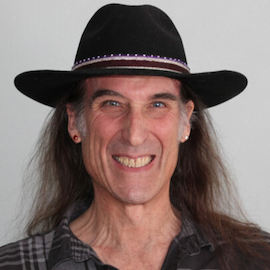
In this episode, Tansy sits down with Mark Michaels for a thought-provoking conversation about therapy, psychedelics, personal agency, and the often-overlooked power dynamics that can influence our healing experiences.
Mark brings an unconventional perspective to the conversation, drawing from his personal history with reproductive technologies, his extensive experiences with psychedelics, and his ongoing exploration of consciousness, personal growth, and therapeutic relationships. Describing himself as an "uncontrolled experiment," he shares how his experiences have shaped his understanding of healing, identity, and the importance of questioning traditional models of care.
Together, Tansy and Mark explore the idea that healing should be a collaborative process rather than something an expert simply does to us.
They discuss how power imbalances can develop between therapists and clients, why therapists need to acknowledge their limitations and mistakes, and how even well-intentioned therapeutic relationships can unintentionally create dependence rather than empowerment.
The conversation also examines the importance of the therapeutic alliance and why trust, education, communication, and shared decision-making are essential components of a supportive healing environment.
But these dynamics aren't limited to traditional therapy.
Tansy and Mark also explore the growing use of artificial intelligence for mental health support, including the potential risks of relying on AI-generated guidance without understanding its limitations.
They also examine the growing excitement surrounding psychedelic-assisted therapy, the difference between personal experiences and reliable therapeutic guidance, and why informed decision-making is especially important when exploring powerful or emotionally intense healing modalities.
Throughout the episode, one question continues to surface:
Is the support you're receiving helping you understand and trust yourself more deeply, or is it encouraging you to place your authority somewhere outside yourself?
This conversation invites listeners to think differently about therapy, psychedelic experiences, and the people or tools we trust to guide our healing.
Because the right kind of support should help us develop greater self-awareness, confidence, and agency rather than creating another relationship in which we feel powerless.
Listen & Watch
🎙
Listen & Watch 🎙
What We Cover
In this episode, we talk about:
Why healing should be a collaborative process
The therapist's role in facilitating discovery rather than dictating healing
Understanding personal agency within therapeutic relationships
Mark's unconventional personal journey and experiences with psychedelics
Why Mark describes himself as an "uncontrolled experiment"
How psychedelic experiences have influenced his understanding of healing
The importance of the therapeutic environment
How power imbalances can develop between therapists and clients
Why therapeutic expertise doesn't eliminate the possibility of mistakes
The importance of therapists acknowledging their limitations
How clients can become overly dependent on professional guidance
The role of trust, collaboration, and shared decision-making in therapy
What makes a healthy therapeutic alliance
Why personal experiences are an important part of the healing process
How attachment patterns and vulnerability may influence therapeutic relationships
Why psychoeducation helps people become more informed participants in their care
The growing role of AI in mental health conversations
Potential risks of relying too heavily on AI for emotional guidance
Why AI cannot replace the judgment and accountability of qualified mental health professionals
The current excitement surrounding psychedelic-assisted therapy
Why psychedelic experiences aren't universal roadmaps for healing
The importance of informed consent and understanding potential risks
How to recognize support that encourages personal agency
Why self-trust and self-awareness are important parts of long-term healing
Key Takeaways
Healing works best when the person seeking support actively participates in the process.
The therapist's role is to facilitate understanding and growth rather than dictate every aspect of healing.
Power dynamics can influence therapeutic relationships, even when intentions are positive.
A healthy therapeutic alliance involves trust, communication, collaboration, and mutual respect.
Therapists and practitioners should be willing to acknowledge mistakes and limitations.
Clients deserve to have their concerns, experiences, and preferences taken seriously.
Expertise is valuable, but it shouldn't automatically replace a person's ability to make informed decisions.
Psychoeducation can help clients better understand their treatment options and participate in their care.
Feeling vulnerable can make it more difficult to recognize when authority is being handed over.
Psychedelic experiences are highly individual and shouldn't be treated as universal treatment instructions.
Psychedelic-assisted therapy is an evolving field that requires informed consent, appropriate screening, and careful consideration of risks.
AI may provide information, but it cannot replace qualified mental health care or a responsible therapeutic relationship.
Self-exploration helps people better understand their experiences, patterns, and needs.
Healthy therapeutic support should encourage increasing self-awareness and personal agency.
Trusting a professional and maintaining your own voice can exist together.
The right kind of help should bring you closer to understanding yourself, not further away from your own judgment.
Favorite Quotes
A few moments you’ll want to remember:
"Healing is a collaborative process."
"The environment matters in therapy."
"Power dynamics are prevalent in therapy."
"The therapist's job is to facilitate discovery."
"You have to trust the therapist, trust the process."
Chapters
03:40 – Reclaiming Personal Agency in Therapy
07:20 – Mark's Journey as an "Uncontrolled Experiment"
15:14 – Psychedelics and Personal Healing
20:28 – Challenging Traditional Therapy Models
28:11 – Reclaiming Yourself in Therapeutic Spaces
34:32 – Expertise, Authority & Power Dynamics
42:44 – Personal Healing and the Role of AI
49:53 – Power Dynamics in Therapeutic Relationships
56:29 – Why Psychoeducation Matters
01:01:12 – Psychedelic Therapy: Hype vs. Reality
01:08:22 – Creating Supportive Healing Environments
01:11:58 – Self-Trust and Personal Agency
01:18:53 – Healing, Empowerment & Self-Authority
Why This Episode Matters
Because when we're struggling emotionally, mentally, or spiritually, it's natural to look for someone who can help us find our way forward.
Sometimes, when we're overwhelmed or desperate for relief, we may be willing to hand over more authority than we normally would. We trust the therapist, healer, expert, and the process.
And increasingly, we may even turn to artificial intelligence for guidance about our emotional experiences. But trust and authority aren't necessarily the same thing!
A healthy therapeutic relationship should offer guidance without requiring us to surrender our ability to question, participate, or make informed choices.
Unhealthy power dynamics aren't always obvious.
They may show up as:
Feeling uncomfortable questioning a therapist or practitioner's recommendations
Assuming someone else's education automatically makes their interpretation more accurate than your lived experience
Becoming dependent on external validation before making personal decisions
Feeling pressured to continue an approach that doesn't seem right for you
Believing a therapist should have all the answers
Hesitating to express concerns because you don't want to damage the therapeutic relationship
Treating someone else's psychedelic experience as a roadmap for your own healing
Relying on AI-generated advice without questioning its accuracy or limitations
Confusing trust in a professional with giving up your own voice
This episode matters because Mark encourages us to look more closely at what makes a therapeutic relationship genuinely supportive.
Perhaps one of the most important questions to consider is whether the person helping you is also encouraging you to become more capable of navigating your own life. Healing isn't simply about finding someone who knows more than you do…
It's also about learning how to use the knowledge, support, and experiences available to us while continuing to develop our own understanding, discernment, and self-trust!
About Mark A.Michaels
Mark A. Michaels identifies as an uncontrolled experiment. He belongs to the first generation of test tube babies, as so-called sperm donor offspring were known in the 1950s. He has published in a variety of fields, from law to ornithology to self-help, and has written for theater and film. He came of age at CBGB and Max’s Kansas City in the 1970s. He is coming of age again at 66. Recent work has appeared or will be appearing in The Brussels Review, The San Antonio Review, Bitter Melon Review, Closed Eye Open, Quarter(ly) Review, and TrashLight.
Links Mentioned In The Show
Website: https://markamichaels.com/
Learn more about Intuitive Crystal Reiki & beU Complete services
Just Thrive & Just Thrive Probiotics: Save 15% off your order by clicking here!
Podcast review promo...Get 15% off a distance energy healing session or a piece of jewelry with a positive review of the show. Email photo of review (aftersubmitted on podcast platform) to info@tansyrodgers.com
Support Beyond The Episode
If this conversation hit home, and you’re craving deeper support (not just ideas, but real integration):
Join the newsletter →
If this conversation resonated, take a moment to consider:
Is the support I'm receiving helping me become more confident in my own judgment, or am I becoming increasingly dependent on someone else's interpretation of my experiences?
There is tremendous value in learning from people who bring knowledge, training, and experience to the table. But there is also value in remembering that your own experiences, questions, and preferences belong in the conversation. You can trust a professional while still asking questions. You can explore new approaches while maintaining discernment. And… you can receive support without surrendering your ability to participate in your own decisions.
If you enjoyed this conversation, subscribe to The Energy Fix and share this episode with someone who might benefit from thinking differently about therapy, psychedelics, personal agency, and the hidden power dynamics that can influence the healing process.
Transcript
-
Mark Michaels (00:00.12)
The therapist's job often is to kind of help the client see what they can't or won't see. And that's a big responsibility on the therapist's part. And a lot of people come in, I think, feeling like I'm here in therapy, I'm just gonna hand everything over to this other person and they're gonna know what to do and how to solve my problem. And you know, sometimes that's true if it's a simple kind of problem, but when
When you're getting into really complicated emotions and trauma and difficult situations and and inner conflict
Tansy Rodgers (00:51.202)
Welcome back to the Energy Fix, a podcast dedicated to help you balance your energetic body by diving deep into the sweet world of all things health and spirituality. My name's Tansy, and I'm an intuitive Crystal Reiki energy healer, energetic nutrition and holistic health practitioner, and a crystal jewelry designer. It's time to talk all things energy. Let's dive in.
Before we jump in today, make sure that you're following the show so that these conversations keep showing up for you week after week. And if at any point someone pops into your mind while you're listening, send this episode on over their way because sometimes the simplest share is exactly the nudge that somebody else needs. Welcome back to the Energy Fix Podcast. Thank you so much for being here again today and sharing in this conversation.
Today we're going to be talking all about therapy, healing, psychedelics, agency, and what happens when the systems meant to help us can sometimes become another place where we hand our power away. We're going to be asking some really important questions today, like who gets to be an expert in your healing?
What happens when therapeutic culture becomes too centralized around authority, diagnosis, protocol, interpretation, or somebody else's framework? And how do we reclaim agency without pretending we have to figure everything out alone? My guest today is Mark Michaels, and he identifies as an uncontrolled experiment.
He belongs to the first generation of test tube babies, as so-called sperm donor offspring were known in the 1950s. He has published across fields ranging from law to orthodology to self-help. He's written for theater and film. He came of age at CBGB and Max's Kansas City in the 1970s, and now says he is coming of age again at 66.
Tansy Rodgers (03:10.888)
His work explores what it means to reclaim agency in the age of experimental psychotherapy, including the paradigm problems that he sees in both traditional and psychedelic therapy, and why expert expertise has become so centralized in therapeutic culture. We're really going to be diving in at the heart and soul of therapy and how you can embrace it with more sovereignty.
All right, Mark, let's welcome to the show. Let's dive in.
Mark Michaels (03:45.687)
Let's thanks for having me.
Tansy Rodgers (03:48.492)
So we're gonna just jump right into a question that I think is underneath this entire conversation that we're gonna have today. And that is, Mark, what do you see happen when healing becomes something that is done to a person instead of something that is discovered within them?
Mark Michaels (04:10.101)
I think that
Especially in the therapeutic system, healing is really a collaborative process. And I think that is almost completely lost in a lot of the discourse. And so I I'm really not I'm a very relational person and I don't think that we have total control of ourselves at all. It's really all about the dynamics and the interpersonal dynamics that are happening.
And I think far too often, and and the therapeutic model is over-medicalized so that the therapist definitely has some specialized training and hopefully experience and knowledge, but it's still treated not really as something that that's a collaborative process, where the relationship between the therapist and the client or patient or whatever you want to call it is really the core of where the healing happens.
There's very good research on this, but it's it still gets kind of swept under the rug. That that it really isn't in the in the the term is therapeutic alliance where where the benefits are.
Tansy Rodgers (05:24.994)
Yeah, yeah. And so and so I agree with you. I mean, I've been in this world for quite some time in different capacities, more conventional, more holistic, now you know, moving into the combination of with more energetics, working with my with with clients myself, but then also myself working with so many practitioners. And I agree. I feel like I feel like there that we are in a time.
Where you really have to stand on your own two feet and create your own agency and create a dynamic where there isn't this power struggle. There isn't this hierarchy. It is a collaboration to really bring true health forward for yourself, but also then for how you influence out into the world.
Mark Michaels (06:16.396)
Yeah, and I think too few therapists are aware of that element. And I think too few clients are as well. I I think it's really easy to go into these settings with the idea that I'm just gonna this person is gonna fix me, or this this group is gonna fix me, or and and there's a you know, it's a both and situation because yeah, the environment matters all.
And getting into an unhealthy one is going to do a lot of damage. But what I think I I've found is that therapists who are willing to openly make it a collaborative process to give their authority back to the client repeatedly, to use their knowledge to inform the client, to help educate the client, but not to be the person who's sitting there knowing ahead of the client what the, you know, what the truth of the client is.
And unfortunately I've I've found that that's really, really prevalent in the in the therapy world.
Tansy Rodgers (07:20.428)
Yeah. Yeah. Well, Mark, let's talk about your story. What brought you to be so passionate about the work that you're doing right now? I mean, you describe yourself as, like I said, an uncontrolled experiment, and you've lived many creative intellectual and personal chapters in your life. So tell us what brought you into this conversation around experimental psychotherapy and
The work that you're doing right now.
Mark Michaels (07:51.266)
Well, the uncontrolled experiment thing is is kind of a joke because what it's referring to is the fact that when reproductive technologies and specifically artificial insemination were developed, and still unfortunately to a very large extent, there's conditions were created where no follow-up on the products of this process could be done. So
My parents were told, keep this a secret, you'll forget about it. success is a live birth. And and the identities of donors still are usually are are too frequently obscured and made made unavailable to the offspring. And there's really been very little w research on the psychology of what happens because the institution
prevented that from happening. So I say I'm an uncontrolled experiment because there was it's a massive social experiment. And it's important because it's it's like until nine the 1950s really, sex and reproduction, some kind of sexual act and reproduction were were connected, whether it was consensual or not, there still was a sexual act behind it. All of a sudden,
We're doing this technological intervention to make babies. And nobody's really thinking about the consequences of that. They're just produce babies, produce babies. And so it's an uncontrolled experiment because there were no studies. And the and the institutions prevented studies from being done. And so that's that's why I call myself an uncontrolled experiment. I do think that that origin story has been really important in terms of my.
My personal psychology and that that has always been one of I I I call myself a self-experimenter and and I you know that's been my approach with psychedelics. It's been kind of my life story in a lot of ways. And it I mean, it's I'm I'm actually now sixty-seven. I I wrote that in when when I was still sixty-six, but I've aged a little since. so, but I've always had this kind of
Mark Michaels (10:20.398)
probing nature and and and a nature that was all about self-exploration too. I first took LSD as a 13-year-old. And I wasn't taking it, I mean it was the early 70s. It wasn't that unusual, but it wasn't like, I want to get high. It was really like I'm hearing that this is really powerful and you can have mystical experiences through these
medicines and I wanna see what that's all about. And that's just been a continuing theme ever since I was a kid.
Tansy Rodgers (10:58.932)
You know what's interesting? as you were talking about when you first took LSD at 13, I remember my first experimentation with psychedelics, LSD and medicinal or I'm sorry, mushrooms, psilocybin. When I first experimented with them, I was like, you know, early college age, like early 20s. And I remember at that point.
I did not have any awareness that there was anything where it was going to deepen me into my spiritual awakening, that it was going to deepen me into my intellect, that it was gonna unlock something within me. I had no idea about this. I was purely taking it for recreation because my friends were too, to be honest. However, Mark, here's what's really interesting.
As the years went by, I remember thinking to myself over and over and over, I am so glad that I did that. There was no, there was no reason, there was no research that I did. It was a knowing inside of me. I am so glad I experimented with that because something shifted inside of me. I now understand from psychedelic therapy and becoming more aware of that research. I now understand.
what it was doing. However, at the time, it was literally a knowing within myself that helped to expand and open me as a human being. and that was like at that point, that was short-lived. It wasn't something that I did a lot of, but it was enough for me to say there is something about that that felt way different than anything else that I tried and I didn't know what it was. I couldn't put a finger on at that point.
Mark Michaels (12:56.95)
Yeah, I mean I I was different. I went into it knowingly. I ended up having being very stupid with it as a ninth grader and taking too much LSD and going to a re-release of 2001 at the Ziegfeld Theater in Manhattan by myself. And I had a
probably 14 hour terrifying experience. And I didn't take LSD again until college. And and that at that point it was like I'm I'm just doing this to see if I can handle it. and I I returned to psychedelics much later in life. And and now I I'm primarily work with ketamine, both for therapy and and for creative purposes. And I'm
I'm quite devoted to ketamine, but it's not the only thing that I do right now. But it it was something that coming back to later in life was has been it's had its significant downsides, and we can talk about that some. But but as I've developed now my own practice that that works, it's been really profound. And the bad trip that I had as a ninth grader is something that.
I've continued to return to for sort of understanding some aspects of my psyche and where I can get stuck with things. And you know, so the point being that even that really terrifying experience as a a fourteen year old, I think, yeah, thirteen or fourteen, still still has value, you know, sixty plus year or fifty plus years later.
Tansy Rodgers (14:52.734)
Yeah. So where you started on this journey to where you're at now in the work that you're doing, what do you feel has really changed within you?
Mark Michaels (15:14.388)
What's happened in the last couple of years and really since I started in this new round of therapy that I started doing largely as a consequence of marriage falling apart and and therapy that was not helpful. And I had been using psychedelics for years in the marriage and and as an adjunct to therapy. But I came to a very stuck place where I was pretty much
Dealing with suicidal ideation every day. And this had been four months after my ex-wife left, and I was just not getting better. And the therapy was at an impasse. It was probably doing more harm than good. I was working with psychedelics, but getting limited benefits because the rest of the environment wasn't supporting them. And I kind of reached a breaking point where I was like,
I need to do something else. And I started exploring other possibilities, continuing to work with with a psychedelic sitter who I'd been working with before, but otherwise looking for a different therapeutic approach. And the therapist I was seeing at that time was not willing to be collaborative and be supportive around this new c constellation of things. So sh I found someone to work with.
And I wanted to continue at least transitionally for a couple of months to see whether the new approach would work or not. But the therapist I was seeing basically kind of threw me out. And I mean, I I I think she behaved very badly, but it it in a lot of ways was for the best. And it allowed me a lot more freedom. And this new model that I was working with, which
Which also for me has included a lot a lot of work with artificial intelligence. And I like to joke that, you know, I the abbreviation for artificial insemination is AI. And and now the abbreviate. So I I'm kind of uniquely qualified to to work with artificial intelligence. And that's been a an evolving process that I'm still doing. I'm I'm doing different things with it now, still using it as kind of an adjunct to therapy.
Mark Michaels (17:33.536)
Not something I advise for other people. I want to be very clear about that. There are a lot of dangers. You have to be very patient, and it's a moving target. But I was able to use it in a way that was very supportive and actually kind of led to the composition of the paper, which is the main reason I'm on the show. so I was in this situation of of
Kind of desperation with with therapy that wasn't working, with a psychedelic practice that was still carrying a lot of baggage from the marriage and the way that we worked and and a lot of trauma in the psychedelic therapy world as well. I mean, I've I've encountered a lot of bad psychedelic therapy as as much as bad conventional therapy. And so fortunately the person that I chose for my primary therapist is just extraordinary.
And we I'm still in that process, though less frequently, and you know, with with much more of a kind of maximizing focus rather than you know focusing on what was challenging. And I've just gone through in in the it's about a year, a little over a year since that change happened, a massive kind of process of growth and
Creativity that I have, I have like more work than I can fill in the rest of my life with now in the creative department. And so it's really kind of figuring out what's priority right now, what can be on the back burner. I have so many things going. And I'm a lot less worried about proving myself and
Yeah, I feel like I'm I'm in a place where I can start to make art that matters to me, that speaks to me, that I, you know, I still care about getting it out there and and getting it received, but it's not like I I need it to prove anything anymore. And I think kind of everything that I was doing until this period in my life was really still sort of in a I I need to prove something mode.
Mark Michaels (19:57.351)
And and that's shifted dramatically.
Tansy Rodgers (20:00.91)
I feel like so many people, when they get into healing spaces, are trying to prove something. Maybe prove something to themselves, but also proving themselves, dare I say, worthy to the practitioner themselves or the therapy or like what whatever it is that you're using. Like there, there definitely is that proving thing. Now, I
I'm curious. I want to go back to you said that there were problems in the traditional therapy and in psychedelic therapy. When you say that there are these paradigm problems in both of those kinds of therapies, what exactly do you mean by that?
Mark Michaels (20:42.424)
There are lots of problems. one of the big problems is kind of ideology. And therapists, I think, generally speaking, don't have broad enough education. So to give you know concrete example in with the therapy that I left.
Mark Michaels (21:06.888)
I had wanted to explore kind of more rapid and intensive therapeutic models, including EMDR. And the person I'm working with does EMDR en ketamine. And I I was unaware when I was exploring this that there's a lot of good research on it. And
Tansy Rodgers (21:29.378)
Where that that therapist fuses it together? Yeah. okay. Okay, great. Yeah.
Mark Michaels (21:33.976)
So and I'm actually taking the same dosage when I'm doing it at home for a psychedelic session as I'm doing for EMDR. But in in the home practice I put on headphones and eye shades and I allow the medicine to take me a lot more than I do in the EMDR session. I can generally take the same amount of ketamine and be present for the EMDR.
And what the EMDR does or or what the ketamine does is lower some of I I mean, I don't even like the term defensive defenses, but it puts you in a more open state so that you can get more benefits from the EMDR. Now, one of the problems with this is you need like a three hour time window to do that. And most therapy doesn't allow for it. And it's sort of in between, you know, the more extended psychedelic session.
which wouldn't encompass EMDR and and and a typical therapy session, which is 45 minutes or 50 minutes. And it's it's great. It's been incredibly effective. And my the model, the thing that I brought to it from my knowledge of psychedelics was that I try to stack the sessions so that I'll do
Mark Michaels (23:01.89)
The order has varied, but I'll do an a ketamine and EMDR session, I'll do an MDMA session or an MDMA and psilocybin session. And then I'll do a solo ketamine session in a in a five to seven day window of time. So there's kind of a compounding effect of the therapy and and the medicines. And each experience is a little bit different.
You know, home alone, I I'm recording myself and what I'm experiencing in the in the psychedelic space, but it's entirely personalized and it's much more out there because ketamine can really take you out there. the session with a sitter, he is a trained therapist. He's also been through the MAPS training. So it follows kind of the more conventional psychedelic therapy model. And then the ketamine EMDR session.
so that's kind of how I've worked, but it's been personalized. It's my own model. Again, it's not like I'm I'm recommending this for everyone. I'm not your typical psychedelic therapy candidate because I have a lot of experience and knowledge. So I think a lot of the problems is not broad enough knowledge, an unwillingness to be collaborative, to share knowledge, to acknowledge when you don't know something and say, I want to learn about it.
So the prior therapist that I was going to said, well, I don't know about anything about EMDR, so I can't recommend it. I do know that antidepressants work for a lot of my patients. And we had kind of been through, I had I'd been on antidepressants in the 90s. They were very helpful short-term, not so helpful long term. I tried antidepressants again briefly in this other therapeutic setting. I found that I was getting very limited benefits.
They interfered to some degree with the psychedelic work. And I just, I was like, I did them for a couple of months and I was like, no, not for me. But she presented this, like, I don't know about EMDR, but I do know about antidepressants, as a value neutral statement, which it clearly isn't. I mean, she's making a recommendation by of sorts, and she's not willing to learn about EMDR either, because it's outside of her training orientation.
Mark Michaels (25:27.594)
And I think that's all too common. I think, and in the psychedelic world, people get the maps training, they sort of buy a lot of things without exploring other ideas. There's still a really big power dynamic in a lot of those situations, especially if the provider is providing the medicine. Some states have have made that a a dual process where the provider isn't doing that. I think that's generally a really a good thing.
because if you're relying on the provider as the prescriber, it it gets kind could get kind of messy. for for my sitter does provide the medicine, but he's very clean about it.
Tansy Rodgers (26:17.088)
If you're listening to this podcast episode, there is a really good chance that you're the person who holds a lot. And sometimes the issue isn't that you need more information. Sometimes you need your system to feel safe enough to actually integrate what you already know. That's what my Soul Stream and Enlightened Sessions are for. They're intuitive, energy-based sessions designed to help you recalibrate.
Emotionally, energetically, physically, and in your nervous system so you can move through life with more clarity and less internal noise. People book these when they're feeling stuck, overloaded, anxious, emotionally heavy, or like their energy isn't fully theirs anymore. And we work with that. We work with what's present, clear what's been lingering, and help you come back to center in a way that feels grounded and real.
If you want to book a session or you want to simply know more, you can head on over to tansyrogers.com or jump down into the show notes and click the link that will take you directly to those services. And if you're not sure which session is the right fit, send me a message. I'll help you choose. I'll help to guide you in the right direction. All right, let's jump back into this episode. Yeah. Well
Thinking about that and and thinking about reclaiming yourself when you're doing the therapy. I mean, that's one of the things, regardless of what the therapy is that you're doing, that's one of the things that I think is really important, but it's a fine line that when you're doing the therapy, you are helping yourself to reclaim yourself. You're helping yourself to heal.
But it can be really easy that when that person that is receiving the service, whatever it is, or the medicine, whatever it is, they can get into that place of accidentally taking their therapists or their influencers' interpretation of the experience and just owning it as their own. And so I'm really curious, where do you see therapy?
Tansy Rodgers (28:38.114)
helping people to reclaim themselves. And then also where do you see it accidentally teaching people to depend to depend on somebody else's interpretation of their experience in that situation?
Mark Michaels (28:50.762)
I think broadly it tends to do the the second a lot more than the first. And I think that it's largely
On the therapist.
Mark Michaels (29:08.31)
And on the therapist to be one who is constantly empowering the client and constantly acknowledging their uncertainty, their humanity, their willingness and even desire to learn from the client. I mean, I it's talked about in therapeutic training a lot, as far as I understand. But
in practice, I find it ex exceedingly rare that therapists will do that. And I th I mean it I think it's often a hard thing because they've spent a lot of money on their training. You know, th there's a whole I I'm trained as a lawyer. I know there's there's a whole lot of kind of professional initiation that happens and and the identity of of being in that role can be can have a real grip.
But the therapists that I've seen who are brilliant are the ones who are constantly giving back, who are constantly and willing to acknowledge error. You know, I it's it's rare among therapists to see them do that. it's interesting. I mean, I I saw my sitter yesterday and we were talking about something that happened that had caused a little bit of a bump in in a prior session.
And I I it I had wanted to bring it up with him and I hadn't seen him in a in a couple of months. And so we're meeting and we're talking. There's no no medicines involved in this one, and I I brought it up. And he did kind of defend his position a little bit. And, you know, and he said, Well, we could get into a long discussion about transference and I I could explain to you what I mean by it, and we could, you know, we could debate it. And
You know, I felt okay, he's being a little defensive here, but but then he said the really important thing is that there was a misattune.
Mark Michaels (31:19.294)
And that's what we need to, you know, focus on here and what what we need to repair. And I I thought that was I I really had to reflect on it a little bit, a l a lot. And because I because I felt a little bit like, well, he's defending his position. And that pisses me off. But when I when I kind of sat down and really thought about it, I was like, okay, you know, yeah, he might have been defending his position a little bit. That's kind of
understandable. He's had this training. He has he has a way of seeing the world. And it's there's legitimacy there. But what he did that was brilliant was to bring it into what's salient in the relationship and the interaction and to go, yeah, I didn't read you right. You know, I said something and that's what needs to be addressed. And so that's it's really, I think
That's where the bravery happens. It it doesn't necessarily mean like, yeah, you're right as the client, but it's it's pointing to what the most important thing is in the interaction and where the healing is really likely to happen. Because we might never agree about the theoretical thing, but it's the relational part of it that where if the therapist can really acknowledge their part in that.
And then try to work it through, that's giving over power. That's recognizing that there are two people in the room. And even if I have ideas about theory that differ from yours, or you're reacting to some other, you know, trauma around around theorizing that that's happened to you, which certainly has. But to get into what's really central, I think that's the the sign of a good therapist.
And it and it is a way of giving the power or sharing the power and performing the role, like really getting to what matters. Because as a client and as someone who's dealing with something that's distressing anyone, it's it can be easy to lose the threat. And so if somebody gives you the threat again, that's that's great.
Tansy Rodgers (33:40.32)
Yeah. Well, you know, as you were talking, I was thinking, you know, transference and reactions, they often come from a certain perspective from that therapist or that practitioner's expertise, right? Like you only know what you know what you don't know, you only know what you know. And what you don't know, it depends on how open you are to researching and learning and and being in that relationship.
with that other person sitting across from you in that room. And so thinking about this, because you and you brought you talked about you you mentioned this a little bit just not too long ago. Why do you think that this expertise has become so centralized in therapeutic culture?
Mark Michaels (34:28.472)
I mean.
Mark Michaels (34:32.237)
It's been a characteristic since day one. You know, Freud was all about medicalizing it. And it's just the nature of professionalization, I think. and it's it's a self-protective mechanism too. being in that position of professional authority.
not acknowledging error, not not really looking at the relationship.
I mean, in the in the realm of transference, I've often said, and I I really I do believe this, whatever you may think about transference and whatever that particular interaction might have involved, counter-transference is really, really where it's at. And I think that in my experience, therapists almost never really deal with countertransference.
And really acknowledge and own countertransference. And I don't know that they always need to acknowledge and own it to the client, but they darn well need to be aware of it in themselves and and call themselves out all the time on it.
Because I really think that 80% of the bad therapeutic behavior is rooted in a in a lack of self-accountability in the therapist. And I'd say the same with psychedelic facilitators and sitters and just kind of across the board. There's not nearly enough focus on that.
Mark Michaels (36:23.616)
I might even go so far as to say that in that the transference as a as an element in therapy is way, way overemphasized. And and the I think the dynamic that's happening in the therapy and and really kind of the attachment elements that are manifesting in the therapeutic relationship are much more important than transference in in
Whether it's working or not.
Tansy Rodgers (36:56.14)
Yeah. Well, and so and so I want to actually take it back just a little bit because we started this whole string of conversation. We started all of this talking about, you know, well, what happens, what happens when the person comes in and they're accidentally allowing this information to be their interpretation, right? When they're not really reclaiming.
What their personal interpretation is. And so when you had talked about that, you had originally said, it's really kind of the therapist's job. I mean, they need to take ownership of that. But I'm also curious, Mark, what about the client? What about the receiver? Regardless if it is a therapy, a medicine, a method, whatever it is.
How can somebody shift the experience for themselves? So they are saying, okay, wait, no, that is theirs. This is mine. This is how I can trust myself. This is how I can shift the dynamic.
Or just or do they just leave their therapist? You know?
Mark Michaels (38:09.548)
I think it's really hard. I mean, I think that the therapist's job often is to kind of help the client see what they can't or won't see. And that's a big responsibility on the therapist's part. And a lot of people come in, I think, feeling like, I'm here in therapy. I'm just gonna hand everything over.
to this other person and they're going to know what to do and how to solve my problem. And, you know, sometimes that's true if it's a simple kind of problem. But when when you're getting into really complicated emotions and trauma and difficult situations and inner conflict that maybe isn't resolvable. And maybe the client just has to live with being in in inner conflict.
I think it can be very hard to see those things. And so I as I see it, the therapist's job is to facilitate, to discover with the client what's going on. And again, to emphasize the collaborative nature. I think the client, as someone going into therapy, especially going fresh, it's hard for me to project myself back to that. I I was sent to therapy as a five-year-old.
So I've had a lot of experience. But I think really recognizing that no, I'm not going there to sort of give myself over to someone. But I'm in some ways, yes, I want to feel safe enough to do that. But I also want the person to treat me at some level as someone who is potentially at least an equal, who can learn, who can work with.
You know, that we can work with each other to discover stuff that maybe I don't know about myself. But to assume that going in that the person is going to tell you stuff you don't know about yourself because they've had all this training, I you know, that's where I think the surrender, the the dangerous kind of surrender happens. And I think the other thing is if things start to feel wrong, they probably are.
Tansy Rodgers (40:29.516)
Yeah. Well, okay, so how do we honor our lived experiences without actually dismissing the value of trained support and skill and outside perspectives?
Mark Michaels (40:48.782)
I don't know I ha I don't know that I have an answer for the how. I mean, I I especially again for someone who who doesn't have experience with it. It's been a very, very hard road for me, even with all of this experience. And it's really easy to get gaslighted in in psychedelic circles and in therapy circles, because you are open and vulnerable and and if you're on medicine even more so.
And people who have problems with power seeking are often drawn to the healing professions. And so or they have their own, you know, deep woundedness to deal with and they and they're working out their own traumas and pains through other people, that's really dangerous and it can be extremely hard to see. It's a lot easier to see in the rearview mirror than when it's right in front of you. So again, I mean, I think it's it's
it's really about being mindful. It's about recognizing when things feel off and bringing it up. I mean, as I did yesterday in this in this setting with my sitter. And, you know, I've I mean I've I've known him for two and a half years, worked I've worked with him and, you know, it's a very he's seen all sides of me at this point. And it still was hard to
To bring it up. I mean, I knew that I had to, and it was all good. But, you know, taking that kind of agency back takes a lot of strength. And I don't I don't have an easy answer. And I think that's why I'm saying a lot of my critique is is aimed more at at the therapists than at and and at the at the the institutions and and the way the profession is conducted. I I don't think there's a
You know, I I like to say my trip report is not a roadmap. And I think that applies, you know, across the board. What I ended up doing in this process that I developed was really good for me. But I you know, I it it is a don't try this at home. I mean, I I I have the privilege, I had the time, I you know, I had the ability to pick and choose, and I had the
Mark Michaels (43:13.538)
the knowledge and knowledge of myself and the knowledge of therapy and theory, broad range of theories, facilitated by the my primary therapist, Elizabeth, who is very knowledgeable in across the board and has introduced me to ideas that I was unfamiliar with. So that was really, you know, psychoeducation is very important to look for in a therapist. But I figured these things out
A lot on my own. The work that I was doing with AI, I think would be potentially really, really dangerous for someone who's not as sophisticated. Because I got some bad, bad suggestions from AI. And the platform that I use for transcription has actually gotten worse in since since I started, in that.
It now does the transcription just as badly as it was doing it two years ago or even five years ago, because I was using it for other things like five years ago. It that that feature has not improved. But they're offering more and more services and more and more interpretations of of the transcripts that are just nutso and that draw on, you know, not just
Therapeutic literature, but popular ideas about therapy. So you get stuff about, say, attachment theory or narcissism that are not really informed by the state of the art in the in the disciplines. They've got all kinds of other stuff fed into them. And if you're not knowledgeable and you're not discerning, you're going to get caught on that. And I mean, the AIs are.
really a moving target. I'm doing another I'm working on another project and it it seems as though it changes every day almost in terms of the capacities.
Tansy Rodgers (45:18.754)
That's very true. And you know, I I think that you bring up a great point with AI. It can be so helpful. It can be so supportive when when it is used correctly. However, it can be a little bit of a concern when you are solely giving your power away to whatever comes through on that end. I have used it.
Myself for many, many, many things, including just brainstorming and and trying to help to unlock some places that I was feeling a little stuck or or or clogged up at mentally and emotionally. And some of the stuff that came back, I'm like, some of it was was genius. I'm like, I never even thought of that. Yes. Other stuff that came back, I was like, I literally said on A to A, I'm like, stop gaslighting me. That is what you're doing.
No more gaslighting. And you know, it's like you have you have to be aware because it can easily happen.
Mark Michaels (46:24.886)
Yeah. And I I mean, I'm using it for a research project and very intensively. And I'm I've learned a great deal. I've gotten a lot of great information. I've I tune out a lot of the stuff that I just think is BS, you know, and it but but it still makes mistakes and I still sometimes it hallucinates. And I, you know, I s sometimes I trust it too much.
And I think in the realm of doing therapy or therapy adjacent work with AI, it's it's really potentially dangerous. And I I would not recommend it. You know, I I mean, I think it's becoming more and more of a thing because it's like therapy without paying for it, potentially. But the danger is if you don't know how to
How to communicate with AI, you don't know what the limitations are, you trust it, you put stuff in. You know, I mean I know I know there are horror stories out there about it, and I I I can see why, because I would have gone down some pretty dark roads with it. And it's it's it's and the way that it's designed to keep you engaged, you know, you you gotta really be good at self monitoring at at
you know, kind of managing that aspect of it, because it'll keep on answering you. And I I mean, Google I find to be horrible because it just will tell you stuff and you give it a slight correction and it'll tell you you're the, you know, you're the genius in the field. And then it'll give you more bad information. So the the platforms matter a lot and and your knowledge going in and your ability to
monitor it matter a lot. I would not advise it for somebody without, you know, a good, secure therapeutic setting t to to work with it in.
Tansy Rodgers (48:28.79)
Yeah. I always I'm laughing over here because everything you said with with like Google AI is so true. And it cracks me up because this is where my neurodivergent brain really comes in handy. Because that like it starts it just keeps asking me questions. I'm like, I'm done, I'm bored, I'm out. And I stop. But yeah, yeah. I wanna go back a little bit because
When you had talked about how do we honor the lived experiences without dismissing the value of the trained support and the skills and so forth, right? You had talked a little bit about, well, a large part of that depends on how the person is showing up. And as you were talking, I thought, well, yeah, that really matters a lot. These triggers can easily allow you to give your power away. And that can say a lot really about how you're showing up. Don't you think, Mark? Like,
If you notice, if you become aware enough to even notice when you're starting to give your power away, that almost is like a little bit of a tick to say, okay, wait, let me turn that mirror back. Why am I giving my power away? Am I trying to people please? What is my attachment style? what else do I write down? am I am I being dismissive of self-trust?
Right. Like there's so many things that can come to that. But I guess my biggest question for you here now, Mark, like thinking about all that stuff, what if somebody comes in and they are genuinely really confused or overwhelmed or they don't fully trust themselves yet? How can they sit down and just say, okay, let's have this dynamic, this relationship, when in reality they're
probably gonna be more likely to give the power away because they just don't know what to do.
Mark Michaels (50:26.552)
Well, I think in that situation, giving power away is okay. I mean, if you're really, you know, in kind of desperate straits and you don't have for whatever reason lose self-awareness to to manage those desperate straits has left you. you know, it may be the healthy healthiest thing in the world to give your power away in in that, you know, in that situation. I mean, if you, you know, if you have a terminal illness, you're not gonna
I mean, you're going to want to know about it, but you're going to want to get the best care that's appropriate for your situation, whatever that is. And so there are times when giving your power away is totally valid. I think the the benchmark really should always be: how willing is the other person in the room to give power back, to empower me, to, you know, really genuinely do that?
not to build more dependence. Because usually someone who's abusing power in some way or another is going to want to build more dependence, not encourage more freedom. And, you know, and in the case of the therapist that I left, she couldn't tolerate the independence. I mean it's at a certain level anyway, she couldn't tolerate the independence. Now I was very aware that it was really at an impasse anyway at that
Point. But, you know, that that to me is a sign. If the therapist is wanting to be controlling in some way, is not saying, you know, you, you have the power. I want you to know that, you know, give it back, give it back, give it back. That can be a real place where even in the early stages where you're feeling vulnerable and needy, you can still look for that move toward empowerment.
And I and I think that can be a really good marker for for people who who need a a more intensive kind of intervention.
Tansy Rodgers (52:31.63)
Quick pause for your gut because hey, it's the holidays. If you're anything like me, this time of year means that your routine probably is gonna go out the window. You're gonna have more sugar, more snacks, more. sure, I'll have another one of those, and a whole lot more stress on your system in general. One thing I refuse to leave behind when life gets busy is my gut support. For me, that's just Thrive Probiotics.
I love them because they focus on actually helping your gut stay strong through real life. Things like travel, holiday food, late nights, all of it. Supporting your microbiome isn't just about digestion. It ties into mood, immunity, energy, overall health and vitality. Basically how human you feel when your calendar is full and your nervous system is really, really loud.
If you want backup for your gut heading into the holidays, check out Just Thrive using the link in the show notes. And if you click on that link and use code TANSI15 at checkout, you're gonna get 15% off your entire order. They have an incredible lineup of so many different products that are incredibly supportive for your gut and for your overall health and vitality.
So again, head down to the show notes, click the link, and use code TANSY15 to get 15% off your entire order. Here's to a happy gut this holiday season. That makes total sense. It's like, it's like when you break a leg and you have to use crutches at first. You are relying on an outside force to support you until you're able to fully stand on that leg again and walk by yourself. It's the same concept.
But I love what you said there. It depends, is that therapist, that practitioner willing to empower that person back?
Mark Michaels (54:35.478)
I think that's really important. And the the education part of it, I think, is really central. And, you know, I went into this treatment. I'd had some experience with EMDR. I had a lot of knowledge about psychedelics. And I brought my knowledge and developed this, you know, individualized kind of approach. But if I were going in cold as a total newbie to a new therapist, I think still.
The education part. What's your, you know, what's your theoretical background as a therapist? How does this treatment work? What are, even what are our goals? I mean, I had never before this round set goals for myself in therapy. And this time, when I was starting with the intensive model, I was like, okay, I what I want from this is the following. And
I mean, within I'm I'm still doing the treatment again, like less frequently with different objectives. And I haven't revised that list really. But within two months, all of the items on that list had either been resolved or had significantly improved. And I think having those kind of markers as a client going in, and then you can go.
well, we, you know, we hit some of them, we didn't hit all of them. Is that satisfactory for me? Is it not? So, I mean, that is something that a client can start with, is is real clarity around what they want. And then the therapist educating and explaining, and, you know, maybe even giving some reading homework. you know, I think that's an important piece of it too. So that you're an informed consumer.
Tansy Rodgers (56:29.994)
Yeah. Yeah. okay. So I want to just expand just a little bit with this. All right. So I love everything that you're saying here. It all makes complete sense. But my biggest question is, is do you feel that there are certain therapeutic ideas or labels that can be super helpful at first, but then become just another box for somebody else to have to climb out of?
Mark Michaels (56:55.416)
I think so. I mean, I'm neurodivergent too. I am very uncomfortable with the term neurodivergence and the idea that it becomes an identity. and I think I mean, I have an unusual type of neuro neurodivergence, but I I worry about that, you know, the the taking on even the term is sort of defining.
defining yourself against a a statistical norm. And so if you if that becomes who you are, I can see that as being a very limiting idea. You're not your diagnosis. And I think it's really easy to to I I mean i a really concrete personal example of that is around attachment theory. I knew a lot about attachment theory. I'd read a lot, yeah
Some of it good, some of it not so good. I had never heard of the adult attachment interview. And I had a belief that my fundamental attachment style was anxious. And there there were good reasons for that. Some of them related to the way that the marriage fell apart, but some of them really predating that and and family dynamics and and so on.
But when I did the adult attachment interview, I came down quite squarely in the securely attached category. So my fundamental attachment pattern was secure. That doesn't mean that in relations, other attachment behaviors can manifest, or that a relationship can turn into one in which the attachment is anxious or avoidant or dismissive. But
The fundamental pattern was secure, and that really forced me to rethink a tremendous amount, both in sort of the identity that I had absorbed around it and the stories that I told myself about. My childhood. There's there's a lot of trauma in my childhood, no doubt. But there was enough good that that fundamentally and I do trust the the metric.
Mark Michaels (59:20.128)
Which unlike a lot, you know, the self-reporting types of metrics, I'm more skeptical of. But the way the adult attachment interview works, it's around linguistic formations. It's used as a predictive measure in terms of how new parents will, you know, interact with their offspring. And in that context, it's close to, I think close to 90% accurate predictively. So it's a really, really robust.
evaluation and and I do trust it. And that that's another way in which like a a diagnosis or even a an invented diagnosis, a speculative diagnosis, can really be toxic in in in terms of your taking on as who you are.
Tansy Rodgers (01:00:08.684)
Yeah. And and I agree with you. I feel I feel that a lot of the labels, I think they can be really helpful in the grand scheme of it. I really think they can be helpful, but what because because it's information, right? It's information to help you understand yourself a little bit more. And also when that information becomes identity, well, now we do kind of have a little bit of a problem because that identity can really
It can really handicap you in ways that will make it so much harder for you to actually heal and move forward on your journey.
Mark Michaels (01:00:48.172)
Yeah, yeah. And I I agree with you about information. It's all you know, it's it's more information is generally a good thing. And and more information about your the way that you're made and the way that you operate in the world, that's it's all valuable. But taking it on as identity or or definitive of you is where it starts to get problem.
Tansy Rodgers (01:01:12.908)
Yeah, yeah. I want to shift a little bit and go back to the psychedelic therapy. Cause I psychedelic therapy is having such a major cultural moment right now. You it is you hear about it all over the place, and there is so much talk. I would love for you to talk a little bit about what do you think that people are getting right about psychedelic therapy?
Where do you think that there needs to be more caution or humility or deeper questioning to help it really be helpful and have the impact that it's meant to have?
Mark Michaels (01:01:54.68)
That's a huge question, and there's there's a lot there. I I think there there's definitely too much hype. There's the idea that, you know, it's a magic bullet that you can reset your brain, that you can, you know, go to Peru and take ayahuasca and come back a different person. you know, on and on and on with kind of the hype that's attached to it. For me, psychedelics have been a really hard road.
Tansy Rodgers (01:01:59.167)
I'm known for this.
Mark Michaels (01:02:24.922)
And I've experienced a lot of harm in the psychedelic world. And I I mean, I think all of the things that we're talking about in the therapy world are are present. Sometimes they're even worse. I think the magic bullet idea is probably the, you know, the worst one in my book. the idea that having a mystical experience is gonna heal you from trauma, that, you know, one breakthrough is it.
You know, there's we've been through this with psychedelics once before. They're powerful. Same thing happened with antidepressants and and SSRIs in the 90s. I mean, there was a whole like this is going to change the world. We're going to cure depression. And then, you know, and then the the good data comes in and it's it's much less robust than than they thought at the outset. And I think that that that's almost inevitably gonna happen with psychedelics.
so I I think again, right now the EMDR ketamine protocol is one that I think is broadly very safe. It at a lot of levels, because it's very process-oriented, it strips away a lot of the kind of power dynamics that can happen in a more conventional psychodynamics sort of model. And you're you're really
kind of leveraging the the neuroplasticity of of the ketamine in the moment to create change. And I I think that right now is kind of for most people going to be the best form of psychedelic therapy. the others, it's real complicated.
And you've got to have someone who's who's grounded and good and and has worked out their own shit, you know, very, very well. Because I and and again, I kind of have some big disagreements with the dominant models in psychedelics, but the term nonspecific amplifiers is is very accurate, I think. Psychedelics generally amplify whatever's going on in the room. And
Mark Michaels (01:04:47.202)
That can be for good or it can be for really, really bad, and you know, everything in between.
Tansy Rodgers (01:04:55.34)
Yeah. Yes. And so when somebody has a really powerful experience, they have that amplification, but the meaning of that experience gets interpreted too quickly by another person or a system or somebody who has not cleaned up their own shit. what can happen? Like what what can happen for that person? How can that
shift their experience or make it maybe not so helpful.
Mark Michaels (01:05:29.634)
Well, I mean, you're in an altered state, you're vulnerable. And with ketamine, that the the vulnerable time is relatively narrow. With with MDMA and psilocybin and LSD, etc., your neuroplasticity lasts longer. And during that time, you're highly suggestible. So these
Interpretations can take on a really, really excessive weight. And that's where a lot of the danger lies. So I I I I try to record the experience.
I I don't get too caught up in interpreting it. and you know, when AI does interpret I mean, I'm I had a really, you know, I I have enough experience of just like my last solo ketamine, I recorded it and I I let the platform I read the platform's like default output for their analysis. And it was so hilarious. And so because it was like
God, it was it was like very business meeting oriented and action plan oriented. And here's what you should do with the experience and what and I and then I I kind of I I used I used Chat GPT for my other for most of my AI work. And I had a big laugh with ChatGPT about it actually. Because it's like this is the worst thing it could do. This is hilarious. And yeah, because I I've
I've had the platform knows me well enough now to kind of get so I but but you know that's because I'm really experienced with it. If I weren't and I took that stuff seriously and and was trying to interpret, not just having fun and like I I actually introduced the whole thing with chat saying I'm gonna do an experiment now and see how this goes. So I can be, you know, I can be playful and not take it too seriously after a lot of experience. But
Mark Michaels (01:07:46.048)
If you're just starting out, you gotta, you gotta be really wary of of getting interpretations laid on you. In the in the days after, it's not just like right away, especially with with other psychedelics. And I think that's where it can get really problematic. That's where journey groups can be really problematic too. Because then you're also getting other people's trips kind of.
fed in and their interpretations and how much of that are you going to take on? How safe is that environment?
Tansy Rodgers (01:08:22.646)
With your experimental therapeutic process that you have been designing, what did you know you did not want to recreate from other traditional therapeutic models? What did you not want to bring in?
Mark Michaels (01:08:42.374)
I wanted someone who would really be there to assist me, to facilitate me, to connect with what strengths I knew that I had, but I had lost touch with. And
I didn't have
Mark Michaels (01:09:05.964)
I didn't have that clear of an idea going in. it emerged through a few conversations before the the treatment course started. And I so the first the first part of the treatment course, the the way that this program works is normally a week-long intensive. And I did two and a half days.
And I don't think I do I may have done ketamine on the second day. I didn't know going in that ketamine could be part of it. And so in the first day, we kind of corrected some things from the intake that I because I presented as a lot more fundamentally unstable than I am, because the symptoms were so acute. And so we spent the first day sort of untangling some of that and figuring out that.
No, I don't have major dissociative issues and I'm pretty solid in these ways. And and so there was some recalibration that happened. Then I went the second day and and then by plan I did the third day, it was a half day, and then followed with an MDMA session. And then I did a solo ketamine session at home, I think on the Saturday after. And I can't remember exactly the timeline. But so it sort of developed.
improvisationally with these two very flexible and open therapists willing in this situation to go, you know, he's been around a lot, he know, you know, he's he's worked with these medicines. He knows a lot. Let's figure it out together. And the other therapist was not willing to be involved with that at all. And so it was it was improvised. And and the degree to which I worked with AI is something that also
evolved as it was it was part of the process. But the thing that I wanted was people that would be flexible, would be supportive, that were really aimed at getting results, not at endless talk.
Tansy Rodgers (01:11:17.74)
Yeah, which is why we're doing whatever the work is that we're doing is to get the results. But it's so easy to fall into that endless talk. my goodness.
Mark Michaels (01:11:28.866)
Yeah. Yeah.
Tansy Rodgers (01:11:29.622)
Yeah.
So, Mark, for the listener who has been in healing spaces for years and years and feels like they've collected so many frameworks over the time that they've lost touch with their own voice, what do you feel is one of the first steps for them to come back and take their agency back?
Mark Michaels (01:11:58.548)
I think finding an environment and finding people who will facilitate and encourage that, to notice where people are taking it from them. And I I mean, for me, I've, you know, it was really like I had reached a breaking point.
I've I've look at other times in my life where where this has happened, and it does tend for me to be like I'm just fed up with taking this.
I I hope in the future to be a little bit more mindful well before reaching that point and to take steps. But in therapy, it's really hard because there is that power dynamic. And you are, you know, I mean, the basic thing is you've got to trust the trust the therapist, trust the process, and when to stop trusting it is not always that easy to see.
Tansy Rodgers (01:13:07.123)
No, it's not. No.
Mark Michaels (01:13:09.204)
I think if you're feel if you've been in therapy for six months and it's not feeling right, you know, and it's not just a passing like, they pissed me off last time. or, you know, I've I've been pissed off for two or three weeks and it's the same thing that's pissing me off. If that's the case, then you gotta bring it up. Don't don't sit on it. But if it's if it's an ongoing thing that's been going on for months,
The likelihood is that you should leave. I mean, try to work it out, try to bring it up first, but don't don't don't waste months trying to figure it out.
Tansy Rodgers (01:13:51.35)
Yeah. Such an interesting conversation. And I think so needed. I mean, more and more people, especially with all of the all of the change that we're going through as a collective and in humanity, and all of the shifting and all of the
Things that we've experienced over the past six years or so, it has been a lot for a lot of people. And more and more people, I think, are seeking out support and help and healing in so many different capacities. But I also see, again, because I'm a practitioner myself, I see things, I see how people react. It's so easy to give your power away. And I think that having this conversation is critical.
Because once we can step into these containers, but also do them in a way where both of us both of us are are are are feeding off of each other and having that relationship that helps to elevate, that's that's what's needed here.
Mark Michaels (01:15:06.806)
Yeah, absolutely. Absolutely.
Tansy Rodgers (01:15:09.974)
Now, before we go into the logistics of where people can find you, let's do a few rapid-fire questions, Mark. I just want to see what you have to say. And remember, this doesn't have to be anything that is super deep. It can be whatever comes to your mind right off the bat. Okay. Pop quiz. Back in school. Here we go. All right, Mark.
What is one question that you wish more people would ask before they enter into any healing space?
Mark Michaels (01:15:46.626)
Tell me what your training and theoretical orientations are and explain them in detail.
Tansy Rodgers (01:15:54.474)
that is a good one. That's a good one because you need to make sure that you align with that.
Mark Michaels (01:16:03.32)
Yeah. And is it and and then you can go. And if the person says, I'm a psychoanalyst, maybe that's not what you want. You can you can sort of learn what that means and explore what the alternative says.
Tansy Rodgers (01:16:15.926)
Yeah. Okay. Question number two. Okay. What is one framework, phrase, or maybe even a cultural assumption that you would lovingly like to put on pause for a while because you're just so tired of it?
Mark Michaels (01:16:40.812)
I think that one dose of psilocybin is gonna cure your ills.
Tansy Rodgers (01:16:46.198)
Yeah. I think that that's pretty is a pretty common thought that if I just try it, I'm gonna be great.
Yeah. Okay. All right. Question number three. Last one. If agency, if personal agency had a sound, an image or a feeling in the body, what would it be for you?
Mark Michaels (01:17:17.194)
I think it feels like settling into a really comfortable chair.
Tansy Rodgers (01:17:24.066)
Yeah. I like that. Like a contentment.
Tansy Rodgers (01:17:32.207)
I like that. Yeah. All right. Mark, where can people find you? Where can they get into your world? And what do you have going on in your work that you'd like to share with us today?
Mark Michaels (01:17:44.586)
well, I I've written this paper that that is involves a collaboration with AI, and it's it's a really interesting, I think was a really interesting experiment. And I I'm treating it sort of as, you know, both a scientific paper and a kind of conceptual art project. And it's currently available as a preprint. and it is under review at a at a pretty good peer-reviewed journal, and I'm optimistic that.
very actually very good peer reviewed journal and I'm I'm optimistic that it will get publication. That is part of what I, you know, my hope for the paper is. But it the preprint is available. They can people can go to my website, markamichels.com. And the main link is now to the preprint. and there is space for comments on the on the preprint itself. there's a lot of my other writing and a lot of other stuff about me on the website as well.
Tansy Rodgers (01:18:44.142)
Awesome. Awesome. Well, do you have any last words that you would like to lay on the hearts of the listeners for today?
Mark Michaels (01:18:53.554)
I just want to reiterate that read the paper and my trick report is not a roadmap, it's my experience, but I hope that you'll find things that inspire you to develop your own personal roadmap to healing.
Tansy Rodgers (01:19:09.57)
Thank you so much, Mark, for being here and for sharing your heart and your passion. I appreciate you.
Mark Michaels (01:19:16.248)
Thank you, Tansy. Great talking to you.
Tansy Rodgers (01:19:20.514)
Healing is such a tender territory. When someone is in pain or they're confused or grieving or feeling traumatized, it can be easy to look outside of themselves and say, tell me who I am, tell me what this means, tell me what to do. Support can be incredibly valuable, but it should not require us to abandon our own inner authority.
The right kind of help should bring us closer to ourselves, not further away. For everyone listening, maybe this is an invitation to gently ask yourself: where have I handed over my knowing? Where have I mistaken someone else's framework for my truth? And where am I ready to become an active participant in my own healing journey again? And until next time.
Keep spreading that beautiful energy you are born to share.
